

We may earn a commission when you buy through links on this page, at no extra cost to you. Learn more.
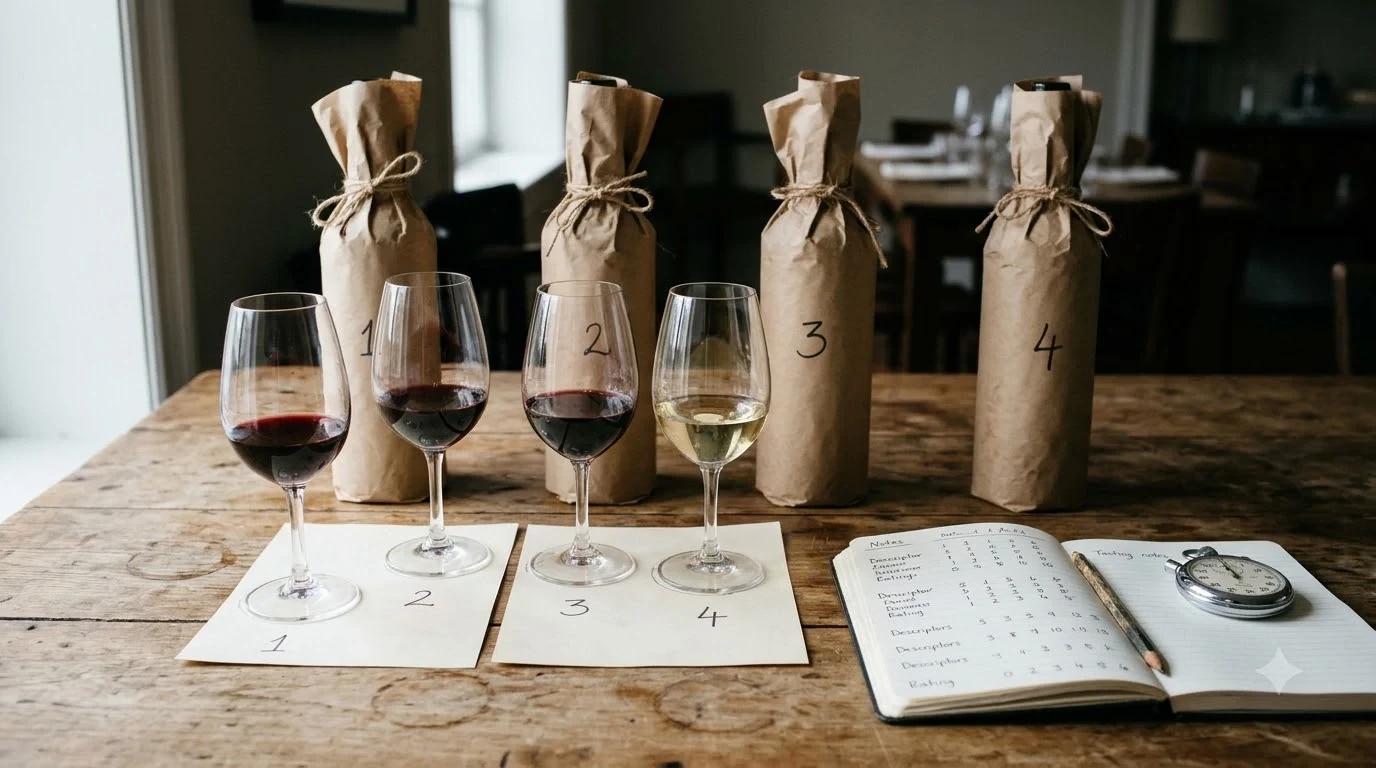
How to do a wine tasting at home comes down to three steps: pick three to six wines, pour small two-ounce samples, and taste them in a set order from lightest to fullest. Guests compare the wines side by side, so the evening feels organized without needing any special training or expensive bottles.
This guide walks through planning a home tasting, setting up glasses and pours, a simple way to taste each wine, and how to take notes so everyone remembers what they liked. It is written for a small group of friends or family, with no formal wine background needed.
Choose the Right Number and Type of Wines
The number of wines matters more than the price. A tasting works best with three to six bottles. With fewer than three there is little to compare, and with more than six the palate starts to tire and the last wines get less attention than the first. Guidance from the Coravin team, a company that sells wine preservation systems, calls three to six wines the sweet spot for a home tasting.
Pick wines that differ in a clear way. A good starter set might include a sparkling wine, a crisp white, a light red, and a fuller red. You can also keep the theme simple by tasting one grape in different styles, such as two Pinot Noirs from different regions, or by comparing wines from one country. A theme gives the evening a story and makes the differences easier to notice.
Budget does not need to drive the choice. Several moderately priced bottles often show more variety than one expensive bottle poured three times. If you are new to a style, a short primer helps, and the Wine by Type section explains how grape and region shape flavor before you choose your bottles.
Before guests arrive, pour a small test glass of each bottle so you know how it tastes at the temperature you plan to serve. Whites and sparkling wine usually show best cool rather than icy, and reds tend to open up when they are a little below room temperature rather than warm from the kitchen. Set the bottles out in serving order with the labels covered, so the reveal at the end is a surprise for everyone.
Set Up Glasses, Pours, and the Serving Order
Preparation is what makes a home tasting feel smooth. Plan on pours of about two ounces, which is the size Coravin suggests for tasting samples. One standard 750 ml bottle pours roughly 10 to 12 samples, so a bottle serves about three to four people for a single round. If you want a second round, open a second bottle of the same wine rather than pouring larger glasses.
Stemmed glasses make swirling and sniffing easier, but any clear glass will work. The most useful setup is more than one glass per guest, so each person can compare wines side by side without rinsing between every pour. If the glasses do not match, have each guest bring two identical glasses to swap, which keeps the comparison fair.
Serving order follows a simple rule: move from light to full-bodied, from dry to sweet, and from white to red. Start with any sparkling wine, since its acidity and bubbles refresh the palate. End with rich or sweet wines, because a big, sugary wine poured early can flatten the lighter ones that come after it. For more on glass shape and how to hold it while you taste, see how to hold a wine glass.
| Order | Style to pour | Why it goes here |
|---|---|---|
| 1 | Sparkling or a light, crisp white | Clean and bright, sets the palate |
| 2 | Lighter red or a fuller white | Builds body without overwhelming |
| 3 | Fullest red or a rich, sweet wine | Big flavors go last so they do not hide the rest |
Taste Each Wine With the Five S’s
A repeatable method keeps the tasting focused. The Five S’s method gives every wine the same five steps, which makes it easy for beginners to notice differences. Coravin’s guide describes it as see, swirl, sniff, sip, and savor, and it works for any style on the table.
Start by looking. Hold the glass against white paper to judge color and clarity. Young whites tend to look pale and green-tinted, while older whites turn deeper gold, and reds shift from purple toward brick as they age. Next, swirl gently to release aromas, then sniff. The guide notes that much of what people call taste is actually smell, so the nose often reveals the most at this stage. Each of the five steps takes less than a minute, so a full round of three wines still fits comfortably inside a relaxed hour of conversation.
Take a small sip and let the wine coat your mouth, then savor the finish. Pay attention to how long the flavors linger after you swallow. Notice whether the wine feels light or heavy, whether its acidity makes your mouth water, and how dry or rounded it tastes. These sensations are the core of how wines compare, so they matter more than the exact words you use to describe them.
Take Notes and Score the Wines
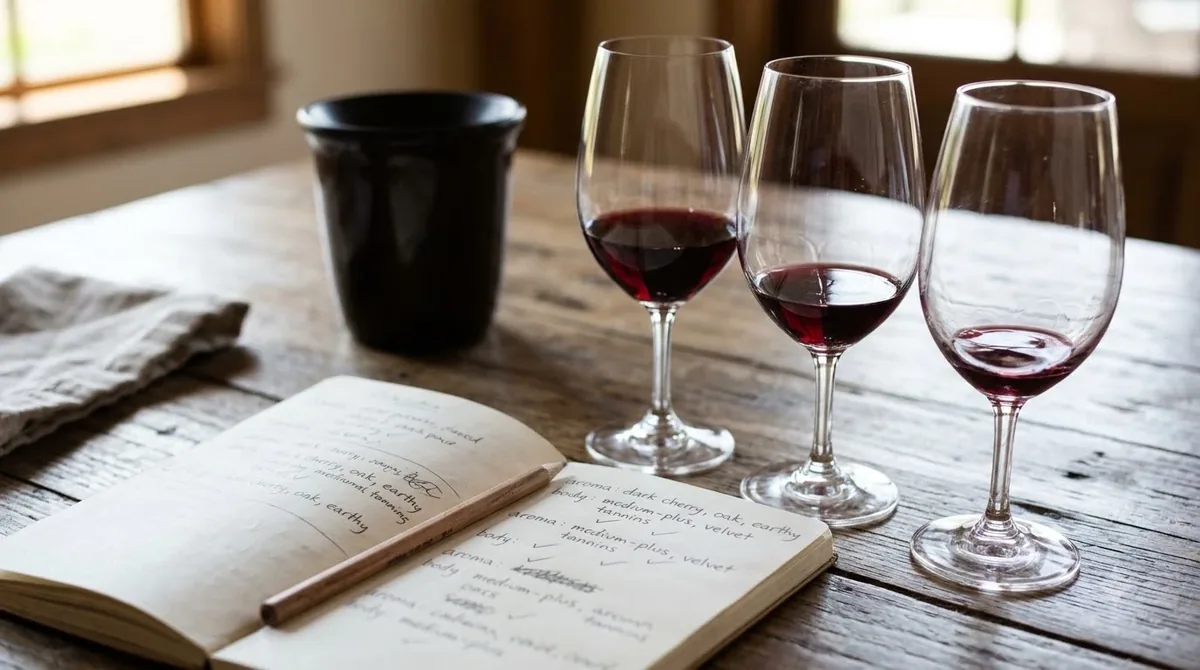
Notes turn a pleasant evening into something guests can compare later. For each wine, write down its color, two or three aromas and flavors, whether the acidity and tannin felt high or low, and whether you liked it and why. A short phrase such as “bright cherry, high acid, liked it” is enough. Keep the notes brief so people stay engaged with the wine rather than the paper.
If you want a light competitive element, use a simple scoring grid. Coravin offers a free printable tasting mat that scores appearance, aroma, flavor, body, and finish, with one sheet for every three wines. The page does not set a numeric scale, so decide one before the evening starts, such as one to five points per category, and keep it the same for every wine.
Reveal the labels only after everyone has tasted and written their notes. Blind tasting removes the influence of price, region, or a famous name, and it often leads to surprises that make the evening memorable. Once the labels are on the table, compare the notes with the bottles and talk about what stood out.
Set a steady rhythm for the evening. Give each wine enough time for everyone to finish their notes before the next pour, and keep water and plain crackers on the table to reset the palate between wines. If the group is large or the lineup is long, offer a spit cup or a dump bucket so guests can taste without finishing every pour. Guests who only want to try a sample can simply leave the rest in the glass, which keeps the evening relaxed rather than competitive.
Frequently Asked Questions
How many wines should a home tasting include?
Three to six is the usual sweet spot. Fewer wines give little to compare, and more wines tire the palate, so guests start to lose focus by the last pour.
How much wine do I need per bottle?
Plan on about two-ounce pours. A standard 750 ml bottle gives roughly 10 to 12 samples, which is enough for three or four people to taste one round. Open a second bottle of the same wine if you want more.
Do I need special glasses for a wine tasting at home?
No. Any clear glass works. Stemmed glasses make swirling easier, and each guest should have more than one glass so they can compare wines side by side.
What order should I serve the wines in?
Start with sparkling or a light, crisp white, then move to lighter reds or fuller whites, and finish with the richest or sweetest wines. Serving big wines last keeps the lighter ones from tasting flat.
A home tasting does not need a sommelier or a large budget. Choose a few wines with clear differences, pour small samples in a sensible order, and use the Five S’s to taste each one. Keep the notes short, reveal the labels at the end, and most groups will want to do it again. Keep a note card with your favorite bottle from each round, so the next tasting can start from what everyone already liked and build a shared list of favorites over time.
More in Wine Types & Grapes
 Zinfandel Sugar Content: Dry Red vs. White Zinfandel GramsUpdated Nov 21, 2026
 Best Zinfandel Substitute Options for Sipping and CookingUpdated Nov 21, 2026
 Zweigelt Food Pairing: Best Dishes, Cheeses, and Serving TipsUpdated Nov 21, 2026
 Zinfandel Tannins Explained: How Structure Shapes Every BottleUpdated Nov 21, 2026
 Zinfandel Sweetness Level: Dry Red vs. Sweet White Zin ExplainedUpdated Nov 21, 2026
 Xinomavro Food Pairing: Best Dishes, Styles, and Serving TipsUpdated Nov 21, 2026