

We may earn a commission when you buy through links on this page, at no extra cost to you. Learn more.
Chardonnay grape is a green-skinned white variety that originated in Burgundy, France, and now grows in nearly every wine-producing country. It is one of the most widely planted white grapes in the world, and its flavor shifts strongly with climate and winemaking. Cool regions tend to give crisp green apple and lemon, while warm regions produce riper peach, mango, and pineapple notes. Oak and malolactic fermentation can add butter, vanilla, and toast.
Chardonnay is one of the first grapes many people learn to recognize, yet it is also one of the most misunderstood. The same grape can make a sharp, mineral wine in Chablis and a lush, buttery wine in California. This guide explains where the grape comes from, how it changes with climate and winemaking, and how to pick a style you enjoy. If you want the wine side of the story, see our guide to chardonnay wine.
Where the Chardonnay Grape Comes From
The grape is generally traced to Burgundy in eastern France, where it has been grown for centuries. Its parentage is still discussed by researchers, but it is widely described as a cross involving the Pinot family and an older white variety called Gouais Blanc. Early plantings in Burgundy gave rise to clones that spread across France and then around the world.
One of the most important moments in its modern story came in California. According to the producer histories cited by wine writers, the Wente family in California propagated a Burgundy clone in 1912. Many of the Chardonnay vines planted in America trace back to that selection, which helps explain why the grape is so consistent across the state.
Today, Chardonnay grows in France, the United States, Australia, Italy, and Chile, among many other countries. Its adaptability is a big reason for its success. The vine can ripen in cool coastal vineyards and warm inland ones, so producers can make very different wines from the same variety.
Vineyard management matters too. Yield, canopy shape, and harvest timing all change how much acid and sugar a grape carries into the cellar. Growers who pick earlier keep more acidity and a leaner profile, while later picks give riper fruit and a fuller texture. Because of this, two wines from the same valley can taste quite different depending on the vintage and the choices made in the vineyard.
The grape also has a long record of clonal selection. Growers have chosen different clones for cold sites, for disease resistance, and for particular styles of wine. That history is one reason you will see a wide range of Chardonnay styles, even within a single country. Reading about the clone and the site on a producer’s website can tell you much more about the bottle than the variety name alone.
How Climate Shapes the Flavor
Climate is the first thing to look at when you want to predict how a Chardonnay will taste. The grape is neutral enough that the site often matters more than the variety name on the label.
Cool-climate Chardonnay is typically lean and crisp, with high acidity and chalky or mineral notes. Expect green apple, pear, lemon, and citrus, sometimes with a hint of oyster shell. Chablis in Burgundy is the classic example, and Sonoma Coast and Yarra Valley in Australia produce wines with a similar freshness.
Warm-climate Chardonnay is fuller and more generous. The fruit tends toward peach, apricot, mango, and pineapple, and the body feels rounder. Napa Valley and the warmer parts of California make wines of this type, as do many regions in Australia and South America.
How Winemaking Changes the Grape
Winemaking can change Chardonnay as much as climate does. Two decisions matter most: whether the wine sees oak, and whether it goes through malolactic fermentation.
Oak aging adds vanilla, spice, coconut, and toast. American oak usually gives coconut and sweet vanilla, while French oak tends to add subtler spice. Barrel size and toast level also shape the result. Unoaked wines stay closer to the fruit and feel brighter on the palate.
Malolactic fermentation converts sharp malic acid into softer lactic acid. The change makes the wine feel creamier and rounder, and it produces the buttery aroma many people associate with rich Chardonnay. Stirring the lees during aging can add a silky texture along with brioche and biscuit notes.
| Style | Typical climate | Common aromas | Body and feel |
|---|---|---|---|
| Lean and unoaked | Cool coastal or high-altitude | Green apple, lemon, chalk | Light, crisp, high acid |
| Balanced and lightly oaked | Moderate climate | Pear, citrus, hints of vanilla | Medium, smooth finish |
| Rich and oaked | Warm inland or ripe sites | Peach, pineapple, butter, toast | Full, round, creamy |
Serving Temperature and Glassware
Serving temperature has a big effect on how Chardonnay tastes. A common guideline from wine educators is to serve lighter styles a little cooler than fuller ones. The range most often recommended for still Chardonnay falls between about 45 and 55 degrees Fahrenheit. Too cold, and the aromas tighten and the wine tastes thin. Too warm, and the alcohol can feel heavy.
Glassware is a smaller factor, but many tasters prefer a medium-sized white wine glass with a moderate bowl. That shape gathers aroma without concentrating too much alcohol at the rim. Oaked Chardonnay often shows best in a slightly wider glass that lets the toast and vanilla open up.
Food Pairings for Chardonnay Grape Wines
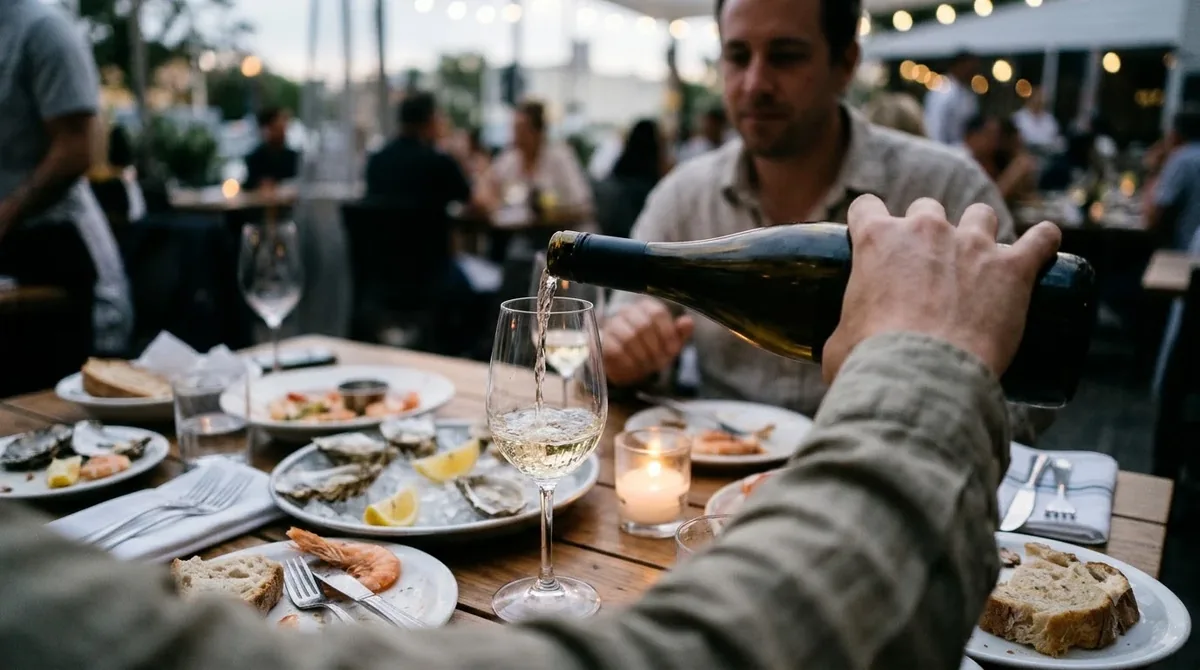
Pairing depends on the style. Lean, unoaked Chardonnay suits raw and lightly cooked seafood, and it is a classic match for oysters and sushi. A squeeze of lemon on grilled fish works well with the same crisp profile.
Richer, oaked versions handle heartier dishes. Roast chicken, creamy pasta, crab cakes, and pork tenderloin with apples are all good choices. Vegetable dishes with starchy or earthy ingredients, such as corn, squash, or mushrooms, also pair well with fuller Chardonnay.
For a broader look at matching white wines with food, the guide to wine by type covers how different grapes behave at the table.
How to Choose a Bottle
When you are picking a Chardonnay, read the label for the region before the producer. A Chablis from Burgundy, a Sonoma Coast bottle, and a Napa Valley bottle will taste different even though the grape is the same. If you want freshness, look for cool-climate regions. If you want richness, look for warm regions or wines that mention barrel aging.
The phrase “unoaked” on a label is useful, but many producers do not print oak information. Winery technical sheets and critics’ tasting notes often describe the style more clearly than the front label does. If you want to compare with a red variety that shows a similar range of climate effects, the guide to pinot noir grape is a useful companion read.
Wine writers at Wine Folly describe Chardonnay as a versatile white that rewards experimentation. Trying one lean and one rich bottle side by side is often the fastest way to learn your own preference.
Price is not a reliable guide to style, so it helps to ignore the number on the shelf tag and focus on the region and the oak description. Look for words such as “barrel fermented,” “sur lie,” or “malolactic” if you want a richer, creamier wine. Look for “stainless steel” or “unoaked” if you want something crisp. Many good bottles fall between these two extremes, which is why tasting several styles is the most practical way to build your own sense of Chardonnay.
Frequently Asked Questions
What does chardonnay grape taste like?
The taste depends on where it grows and how it is made. Cool-climate versions show green apple, pear, and lemon with crisp acidity. Warm-climate versions and oaked versions show peach, pineapple, butter, and vanilla.
Is chardonnay grape the same as pinot blanc?
No. The two are separate varieties, although they are related and can look alike in the vineyard. Chardonnay is the more widely planted of the two and is known for its range of styles. For a closer look at how the grape is described in practice, the Tasting Table guide to Chardonnay covers the main style differences.
Where is chardonnay grape grown most?
France, the United States, Australia, Italy, and Chile are among the largest growers. France remains the spiritual home, especially Burgundy and Chablis.
Should chardonnay be served chilled?
Yes, but not ice cold. Most guidelines suggest serving it between about 45 and 55 degrees Fahrenheit, with lighter styles at the cooler end and fuller styles slightly warmer.
Chardonnay grape is a flexible variety that can be lean, bright, or rich depending on where and how it is grown. Start with a cool-climate bottle if you like crisp wines, or a warm-climate, oaked bottle if you prefer a fuller style. Once you know which direction you like, the rest of the Chardonnay family becomes much easier to explore.
More in Wine Types & Grapes
 Zinfandel Sugar Content: Dry Red vs. White Zinfandel GramsUpdated Nov 21, 2026
 Best Zinfandel Substitute Options for Sipping and CookingUpdated Nov 21, 2026
 Zweigelt Food Pairing: Best Dishes, Cheeses, and Serving TipsUpdated Nov 21, 2026
 Zinfandel Tannins Explained: How Structure Shapes Every BottleUpdated Nov 21, 2026
 Zinfandel Sweetness Level: Dry Red vs. Sweet White Zin ExplainedUpdated Nov 21, 2026
 Xinomavro Food Pairing: Best Dishes, Styles, and Serving TipsUpdated Nov 21, 2026