

We may earn a commission when you buy through links on this page, at no extra cost to you. Learn more.
Champagne alcohol content is typically about 12% ABV, and most bottles land between 11.5% and 13%. The number on the label is the most accurate figure for a given bottle, but the typical range is narrow because all Champagne is made from a similar process and grape blend. Most labels read 12% or 12.5%, and a Brut style usually sits right around 12%. Compared with many other sparkling wines, Champagne is usually a little stronger, which matters when you plan how much to pour.
If you have ever wondered how strong a glass of Champagne is compared with a glass of wine or Prosecco, this guide gives you the answer in plain terms. It explains the typical ABV, why the number varies slightly, and how to read the label on the bottle in front of you.
What Champagne Usually Contains
Champagne sits in the middle of the sparkling wine range. According to Vinovest’s guide to Champagne alcohol content, Champagne tends to be about 12% alcohol, and most labels read 12% or 12.5%. Figures of 11.5% or 13% are described as rare, so a bottle outside that range is worth checking.
That narrow range is not an accident. Champagne is made from a small set of permitted grapes and goes through a long fermentation and aging process, so producers tend to land in a similar place. The alcohol comes from the sugar that yeast converts during fermentation, and the final number depends on how much sugar was left or added before the bottle was sealed.
For a practical reading, a bottle at 12% ABV means that 12% of its volume is pure alcohol. A bottle at 12.5% is slightly stronger, and the difference is small enough that most people will not notice it on the palate. The bigger difference usually comes from how much you pour.
Champagne Alcohol by Style and Sweetness
Sweetness and alcohol are connected, but they are not the same thing. Dry styles tend to ferment more fully, while sweeter styles keep more residual sugar. In Champagne the sweetness level matters for taste and for how the wine feels, yet the alcohol number stays within a fairly tight band.
| Wine | Typical ABV | What the source says |
|---|---|---|
| Champagne (general) | About 12% | Most labels read 12% or 12.5%; 11.5% and 13% are rare |
| Brut Champagne | About 12% | The typical figure for a dry style, per the same guide |
| Veuve Clicquot Yellow Label Brut | 12.5% | An example of a widely sold Brut that lists a slightly higher figure |
| Prosecco (most) | About 11% | Usually about one point lower than Champagne |
The table shows that a Brut Champagne and a widely sold Brut from a major house can differ by half a percentage point. That is a normal range within the category and a good reason to check the label rather than rely on a single average.
The Brut label is a sweetness description, not an alcohol description. It tells you the wine is dry, but you still need the ABV figure to know how strong it is. Treating those two numbers as separate pieces of information avoids most of the confusion people have about Champagne strength.
If you want to compare with another sparkling style, the Prosecco alcohol content guide breaks down how the Italian style usually sits lower, while Champagne stays higher in the same range.
Champagne Compared With Prosecco and Other Bubbles
Champagne and Prosecco are the two sparkling wines most people compare, and the difference in alcohol is easy to remember. Most Prosecco is about 11% ABV, while Champagne is usually about one point stronger, around 12%. That gap is small but real, and it adds up over a long evening.
Other sparkling wines fall across a wider range, from lighter styles to stronger ones, so the label is always the best guide. Champagne’s alcohol content is a useful benchmark because it is so consistent, and it gives you a reference point when you read the label on a different bottle.
For a comparison outside the grape-wine category, the sake alcohol content guide shows how a rice-based drink sits in the same conversation about strength and pour size. Comparing across categories helps you judge how much alcohol you are getting from a glass.
How to Read the ABV on a Champagne Label
The alcohol figure on a Champagne label is shown as alcohol by volume, usually written as ABV or with a percentage followed by the words alcohol by volume. It is the most reliable number for the bottle you are holding, and it is more accurate than any general average, including the one in this guide.
If you buy online, the listing should match the figure printed on the bottle. Mismatched numbers are uncommon, but they are worth a second look before you order, especially for a gift or a celebration where the strength of the bottle matters.
Look for the figure on the front or back label, often near the producer’s name or the sweetness level. Some importers add a separate sticker, so check both sides if the front is unclear. If the label is missing or damaged, a retailer listing or the producer’s website is the next best source.
Pay attention to the sweetness level too, since it tells you what the wine will taste like even if the alcohol number is similar. A Brut and a Demi-Sec can share a similar ABV yet feel quite different in the glass, so reading both numbers gives you a fuller picture.
Pacing a Bottle of Champagne
A 12% wine is stronger than many light beers and weaker than most spirits, so the way you pace a bottle matters more than the number alone. The pour size is the single biggest factor in how much alcohol you actually drink. A wide flute or coupe holds more wine than a narrow glass, and the difference adds up quickly across a celebration.
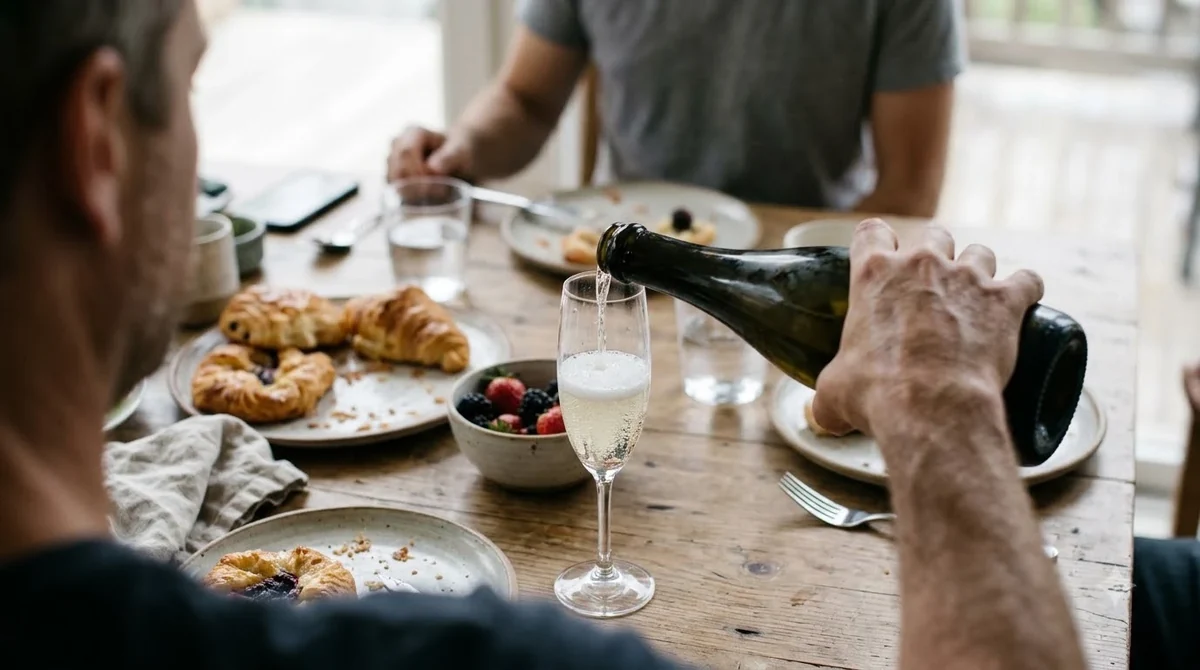
Champagne pairs well with food, and a glass with a meal tends to be paced more slowly than a glass on its own. A simple plate of snacks gives the bubbles some context and is an easy way to slow down over the course of the evening.
Plan the evening with pacing in mind. Pour smaller glasses, alternate with water, and eat something while you drink. Responsible drinking keeps the bubbles enjoyable for the whole evening and makes it easier to remember what you liked about each bottle.
If you are hosting, a simple rule is to plan for a bottle to last longer than expected by using smaller pours, which also spreads the Champagne across more courses. That approach keeps the mood relaxed and the guests comfortable from the first toast to the last.
Frequently Asked Questions
What is the typical alcohol content of Champagne?
Champagne is typically about 12% ABV, and most labels read 12% or 12.5%. Figures of 11.5% or 13% are described as rare, so the usual range is narrow.
Is Champagne stronger than Prosecco?
Usually, yes. Most Prosecco is about 11% ABV, while Champagne is generally about one point higher. The gap is small, but it does add up over a full bottle.
Does a Brut Champagne have more or less alcohol than other styles?
A Brut Champagne is typically about 12% ABV, which is in the same general range as other Champagne styles. Sweetness affects taste and feel more than the alcohol number, so check the label for the exact figure.
Where can I find the exact alcohol content on a bottle?
The ABV is printed on the label, usually written as a percentage followed by alcohol by volume. If it is hard to find, check the back label or the producer’s website, since the printed figure is more accurate than any general average.
For most bottles, plan around 12% ABV, check the label for the exact figure, and pace your pours. For the broader picture of sparkling styles, the Wine by Type guide is a helpful next read.
More in Wine Types & Grapes
 Zinfandel Sugar Content: Dry Red vs. White Zinfandel GramsUpdated Nov 21, 2026
 Best Zinfandel Substitute Options for Sipping and CookingUpdated Nov 21, 2026
 Zweigelt Food Pairing: Best Dishes, Cheeses, and Serving TipsUpdated Nov 21, 2026
 Zinfandel Tannins Explained: How Structure Shapes Every BottleUpdated Nov 21, 2026
 Zinfandel Sweetness Level: Dry Red vs. Sweet White Zin ExplainedUpdated Nov 21, 2026
 Xinomavro Food Pairing: Best Dishes, Styles, and Serving TipsUpdated Nov 21, 2026