

We may earn a commission when you buy through links on this page, at no extra cost to you. Learn more.
If you are wondering what is welschriesling, it is a crisp, high-acid white wine grape grown across Central and Southeastern Europe that shares zero genetic connection with German Rhine Riesling. Known locally as Olaszrizling in Hungary, Graševina in Croatia, and Riesling Italico in northern Italy, it produces everything from snappy dry table wines to sparkling Sekt and honeyed dessert bottles. Its natural brightness makes it a staple on European dinner tables and an underrated value for white wine drinkers.
For American wine shoppers, seeing the word “Riesling” on a label immediately triggers expectations of floral aromatics and German or Alsatian heritage. Welschriesling operates in a completely different lane, acting as a versatile, food-friendly workhorse across the former Austro-Hungarian regions. Understanding its aliases, regional styles, and serving quirks unlocks an entire category of European white wines that rarely gets spotlighted in mainstream wine shops.
What it is
Welschriesling is a green-skinned Vitis vinifera grape variety that likely originated in northern Italy before spreading throughout Central Europe and the Balkans. Despite carrying the Riesling name, DNA profiling confirms it is completely unrelated to true Rhine Riesling, with the ancient white grape Elbling standing as its closest known genetic relative.
The prefix “Welsch” comes from an old Germanic term meaning “foreign” or “Romanic,” which historically distinguished imported grape varieties from native German plantings. According to Austrian Wine, the variety accounts for roughly 2,774 hectares of vineyard land in Austria alone, making up just over six percent of the country’s total vine area. Rather than sharing Rhine Riesling’s intense petrol and stone-fruit perfume, the welschriesling grape is prized for reliable acidity, thin skins, and clean citrus-and-orchard fruit.
Because the grape crossed borders for centuries, nearly every producing country gave it a localized translation of “Italian Riesling.” As noted by Decanter, this proliferation of regional pseudonyms often disguises the grape on international shelves, even though it ranks as the single most widely planted white variety in both Croatia and Hungary.
Flavor and styles
In its classic unoaked dry form, welschriesling wine delivers brisk green apple, lemon zest, and white blossom aromas backed by mouthwatering acidity and a light-to-medium body. Winemakers also use the variety to craft traditional-method sparkling wines, barrel-aged dry bottlings, and world-famous botrytized dessert wines.
Young, stainless-steel fermented dry versions typically sit between 11% and 12% ABV, offering an energetic, thirst-quenching profile with subtle herbal and saline undertones. When growers reduce yields on older vines and age the wine on its fine lees or in neutral oak casks, the texture broadens considerably. These gastronomic expressions trade simple citrus snap for toasted almond, wet stone, and savory spice while holding onto their vibrant acidic backbone.
At the opposite end of the spectrum, Welschriesling excels when affected by Botrytis cinerea (noble rot). Because the grape berries have thin skins, autumn mists easily concentrate their sugars and acids, yielding lush Beerenauslese and Trockenbeerenauslese dessert wines. These sweet styles burst with dried apricot, wildflower honey, and candied pineapple, balanced by enough natural tartness to keep the finish clean rather than syrupy.
| Style | Sweetness | Typical ABV | Key Tasting Notes |
|---|---|---|---|
| Classic Dry (Unoaked) | Dry | 11%–12% | Green apple, lemon peel, gooseberry, brisk minerality |
| Single-Vineyard / Lees-Aged Dry | Dry | 12%–13% | Yellow apple, crushed herbs, almond, saline finish |
| Sekt (Sparkling) | Brut / Extra Dry | 11.5%–12.5% | Crisp citrus, white peach, fine mousse, refreshing tartness |
| Trockenbeerenauslese (Noble Rot) | Lusciously Sweet | 9%–11.5% | Dried apricot, honeycomb, mango, candied orange peel |
Where it grows
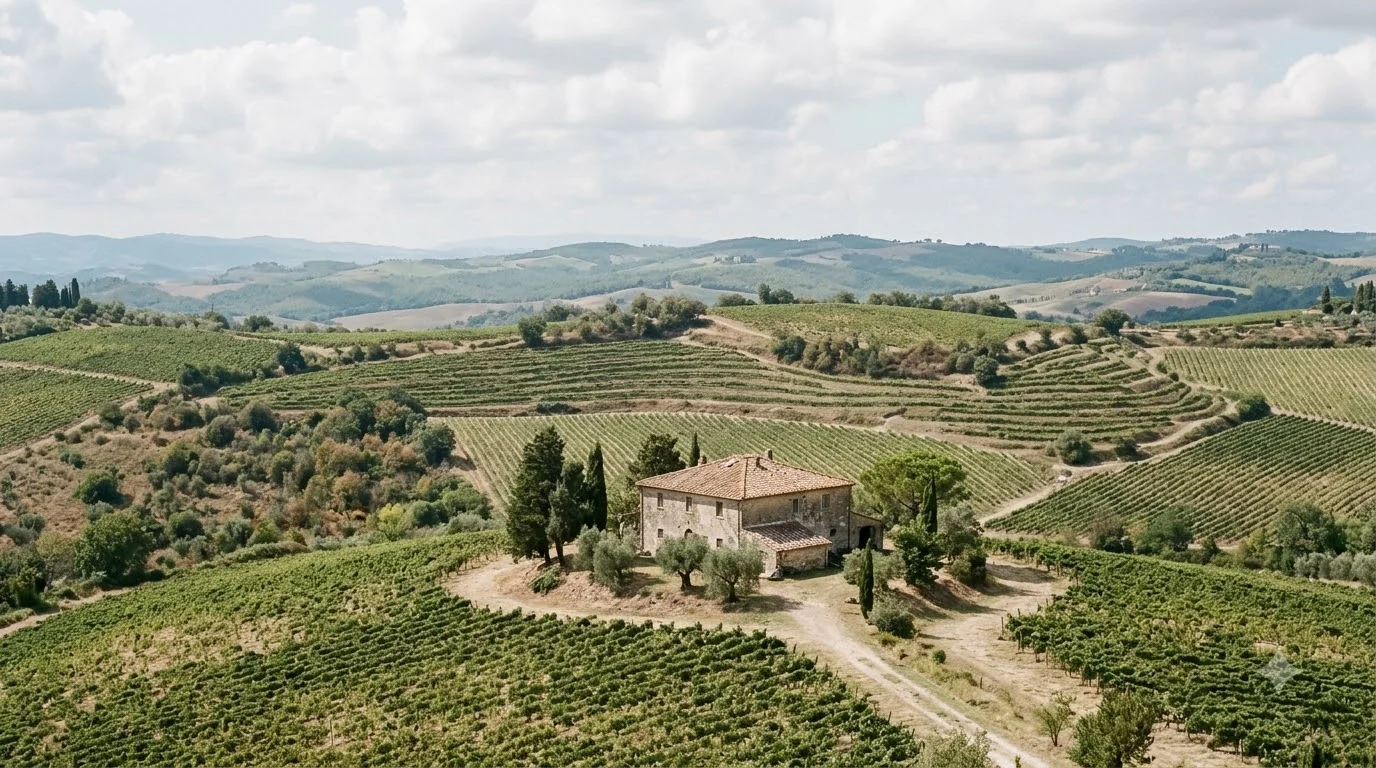
Welschriesling thrives in continental climates where warm summer days ripen the fruit and cool nights lock in its trademark acidity. Its heartland stretches from eastern Austria across Hungary, Croatia, Slovenia, the Czech Republic, Slovakia, and northern Italy.
In Austria, cultivation centers on three main areas: Niederösterreich (Lower Austria), Burgenland, and Steiermark (Styria). Cool vineyards around Poysdorf in the Weinviertel subregion supply crisp base wines for Austrian Sekt, while steep, mineral-rich slopes in southern Styria yield razor-sharp dry whites. Around Lake Neusiedl in Burgenland, shallow lake waters generate morning fogs that encourage noble rot, producing Austria’s celebrated sweet Welschriesling bottlings.
Across the border in Hungary, the grape goes by Olaszrizling and anchors white wine production around the volcanic slopes of Lake Balaton, particularly in Badacsony and Csopak. Further south in Croatia, where it is called Graševina, the variety dominates inland Slavonia around Kutjevo and Ilok, producing structured, fuller-bodied dry whites alongside late-harvest specialties.
How to serve
Proper serving temperature and glassware make a noticeable difference in highlighting Welschriesling’s crisp acidity without muting its delicate aromatics. Chill dry and sparkling versions well before pouring, while giving richer oak-aged or sweet dessert bottles slightly more warmth to open up.
Serve young, unoaked dry Welschriesling and Sekt cold at 43°F to 46°F (6°C to 8°C) straight from the refrigerator, allowing the wine to warm slightly in the glass over twenty minutes. Single-vineyard dry wines aged on lees or in large wooden casks show more nuance between 46°F and 50°F (8°C to 10°C). Botrytized dessert styles perform best slightly warmer, around 50°F to 54°F (10°C to 12°C), so their honeyed and tropical aromatics can fully emerge.
Choose a standard tulip-shaped white wine glass or a tall, narrow Riesling glass, which directs subtle orchard-fruit aromas toward the nose and channels the wine cleanly across the palate. Decanting is rarely necessary for fresh, stainless-steel bottlings, though a quick thirty-minute splash in a carafe can help older, lees-aged dry examples shed any initial reduction.
Tip: When shopping at wine retailers or browsing restaurant lists, check the back label or ask staff for Olaszrizling, Graševina, or Riesling Italico—these are exact synonyms for the same grape.
Food pairing
Welschriesling acts as an all-purpose dinner wine because its high natural acidity cuts cleanly through rich fats, fried coatings, and creamy sauces without overpowering delicate ingredients. It bridges the gap between crisp aperitif whites and structured gastronomic bottles.
Light, everyday dry bottlings shine alongside raw oysters, steamed shrimp, sushi, and goat cheese salads dressed with lemon vinaigrette. In its native Central Europe, dry Welschriesling is the classic table partner for traditional Wiener Schnitzel, pan-fried freshwater fish like pike-perch or carp, and herb-roasted chicken, where its citrusy snap refreshes the palate between bites.
More structured, lees-aged dry styles from Styria or Hungary’s Lake Balaton handle richer dishes such as mushroom risotto, pork tenderloin, and creamy pasta sauces. If you open a sweet Beerenauslese or Trockenbeerenauslese, skip heavy chocolate and pair it instead with salty blue cheeses like Roquefort, seared foie gras, or simple stone-fruit tarts.
How to choose a bottle
Selecting the right bottle of Welschriesling comes down to matching the regional label clues and winemaking cues to the occasion you have in mind. Because the grape spans everyday picnic whites to cellar-worthy dessert wines, reading the front label carefully prevents surprises at the table.
For a crisp, patio-ready white, look for regional classifications like Südsteiermark DAC or Weinviertel from Austria, or basic dry Graševina from Croatia, ideally from the most recent one or two vintages. Check the alcohol percentage on the label: bottles listing 11% to 12% ABV almost always signal a light, zesty, stainless-steel style meant for immediate drinking rather than long-term cellaring.
If you want deeper texture for dinner, seek out single-vineyard designations (often marked with “Ried” on Austrian labels) or bottles from Hungary’s Badacsony and Csopak regions with 12.5% to 13% ABV. For a celebratory dessert pour, look for the terms “Beerenauslese” or “Trockenbeerenauslese” from Burgenland’s Neusiedlersee area, or explore broader Wine by Type categories to compare how noble-rot whites stack up against other sweet styles.
Frequently Asked Questions
Is Welschriesling the same grape as Riesling?
No, Welschriesling and true Rhine Riesling are completely different grape varieties with no genetic relationship. Rhine Riesling is famous for intense floral, peach, and petrol aromatics, whereas Welschriesling offers lighter, greener citrus and apple notes with crisp acidity.
Is Welschriesling wine sweet or dry?
Most Welschriesling produced for everyday drinking is bone-dry, crisp, and refreshing. However, winemakers in regions like Austria’s Burgenland also use the grape to craft world-renowned, lusciously sweet dessert wines affected by noble rot.
What are the other names for Welschriesling?
Depending on the country, Welschriesling appears on labels under several local synonyms. The most common names are Olaszrizling in Hungary, Graševina in Croatia, Laški Rizling in Slovenia, Riesling Italico in Italy, and Ryzlink Vlašský in the Czech Republic.
How long can you age a bottle of Welschriesling?
Entry-level dry Welschriesling is crafted for freshness and should be enjoyed within one to three years of the vintage date. Structured single-vineyard dry bottlings can develop nicely for five to eight years, while sweet Trockenbeerenauslese versions can age gracefully for decades.
Once you look past the confusing name, Welschriesling proves itself to be one of Central Europe’s most reliable and versatile white wine grapes. Whether poured ice-cold as a bright weeknight aperitif or savored slowly as a golden dessert wine, it offers crisp acidity and genuine regional character without unnecessary pretension.
More in Wine Types & Grapes
 Zinfandel Sugar Content: Dry Red vs. White Zinfandel GramsUpdated Nov 21, 2026
 Best Zinfandel Substitute Options for Sipping and CookingUpdated Nov 21, 2026
 Zweigelt Food Pairing: Best Dishes, Cheeses, and Serving TipsUpdated Nov 21, 2026
 Zinfandel Tannins Explained: How Structure Shapes Every BottleUpdated Nov 21, 2026
 Zinfandel Sweetness Level: Dry Red vs. Sweet White Zin ExplainedUpdated Nov 21, 2026
 Xinomavro Food Pairing: Best Dishes, Styles, and Serving TipsUpdated Nov 21, 2026