


We may earn a commission when you buy through links on this page, at no extra cost to you. Learn more.
A good champagne substitute is a sparkling wine made by the same traditional method, such as Cava from Spain, Crémant from France outside Champagne, or Franciacorta from Italy. These wines get their bubbles from a second fermentation inside the bottle, so they share the fine, persistent bead and the toasty, bready notes that people look for in Champagne. If you want something lighter and fruitier, Prosecco made by the tank method is the usual alternative.
Champagne is a protected name, so only sparkling wine from the Champagne region of France can carry it. That does not mean you cannot enjoy a similar style from somewhere else. This guide explains which sparkling wines work as a substitute, how they differ from Champagne, and when each one makes sense for a toast, a dinner or a cooking recipe.
What Makes Champagne Taste the Way It Does
A substitute works best when you know what you are replacing. Champagne is made with the traditional method, also called the Champagne method. The wine goes through a second fermentation inside the bottle, then rests on its dead yeast cells, called lees, before the bottle is riddled, disgorged and topped up with a small amount of sugar and wine called dosage.
That process gives Champagne its fine bubbles and its notes of brioche, toast, almond and baked apple. The long contact with lees is the main reason traditional-method wines feel richer than wines made in a tank. Most people also associate Champagne with a dry, crisp finish, and the Brut style is the most common version on store shelves.
Traditional-Method Substitutes
The closest substitutes are sparkling wines made the same way. The Champagne method cannot be used on the label outside the region, so these wines are described as traditional method instead. Several countries make excellent examples.
Cava is Spain’s main sparkling wine. Most of it comes from the DO Penedès in Catalonia. According to the regional rules, Cava must age on its lees for at least nine months before it is released, which gives it a fuller texture than many people expect from a bottle at this level. Cava is often made from local white grapes such as Macabeo, Xarel-lo and Parellada, so it tastes a little different from Champagne, with more citrus and orchard fruit and less biscuit.
Crémant is the name used for traditional-method sparkling wine from French regions outside Champagne. The main ones are Alsace, Bourgogne and the Loire. Crémant d’Alsace is often made from Pinot Blanc or Pinot Gris, and it tends to be more fruit-forward than Champagne while keeping a similar structure.
Franciacorta, from Lombardy in northern Italy, is another strong choice. It is made with the same method and often uses Chardonnay and Pinot Noir, which is why many drinkers find it close to Champagne in style. Vinepair names Cava, Franciacorta and Crémant as some of the best traditional-method wines made outside Champagne, which is a useful starting point when you are shopping. The guide to sparkling wine methods explains how the method shapes the final style.
| Wine | Method | Where it comes from | Typical character |
|---|---|---|---|
| Champagne | Traditional | Champagne, France | Brioche, toast, fine bead, crisp finish |
| Cava | Traditional, at least nine months on lees | Mostly DO Penedès, Spain | Citrus, orchard fruit, clean finish |
| Crémant | Traditional | Alsace, Bourgogne, Loire, France | Fruit-forward, balanced acidity |
| Franciacorta | Traditional | Lombardy, Italy | Creamy texture, close to Champagne |
| Prosecco | Charmat (tank) | Veneto and Friuli, Italy | Light, fresh, fruity, often Extra Dry |
Prosecco and Other Tank-Method Options
Prosecco is the best-known sparkling wine made by the Charmat method, which is also called the tank method. The second fermentation happens in a pressurized steel tank rather than in the bottle. The result is a lighter wine with a fresh, fruity profile that drinks easily on its own. The grape used is Glera, grown mainly in Veneto and Friuli.
Prosecco is not a one-to-one replacement for Champagne. It lacks the bready, yeasty character that comes from long lees contact, so it tastes brighter and more immediate. That makes it a good choice for brunch, spritzes and parties where you want something crisp and uncomplicated. Many bottles are labeled Extra Dry, which is a sweeter style than Brut even though the name sounds drier. If you prefer a dry finish, look for Brut on the label.
How to Pick the Right Style
The right substitute depends on what you plan to do with the bottle. For a formal toast or a celebration where people will compare it with Champagne, a traditional-method wine from Spain, France or Italy is the safer choice. For a casual party, a mimosa or a spritz, Prosecco is easier to share and pours well by the glass.
Dryness matters as well. Brut is the most common style and suits most food. Extra-Brut and Brut Nature are drier still. Demi-sec is the sweetest standard style, and it is the one that pairs best with fruit desserts. If the bottle you pick says Extra Dry, expect more sweetness than a Brut Champagne.
Serving Sparkling Substitutes
Serve traditional-method sparkling wines cold, but not ice-cold. Wine Folly’s Chardonnay guide gives 38 to 45°F (3 to 7°C) as the range for sparkling styles made from the grape, and the same range works well for most sparkling wines. A flute keeps bubbles lively and concentrates aromas, while a wider glass lets the wine open a little more if you want to taste the yeast-driven notes.
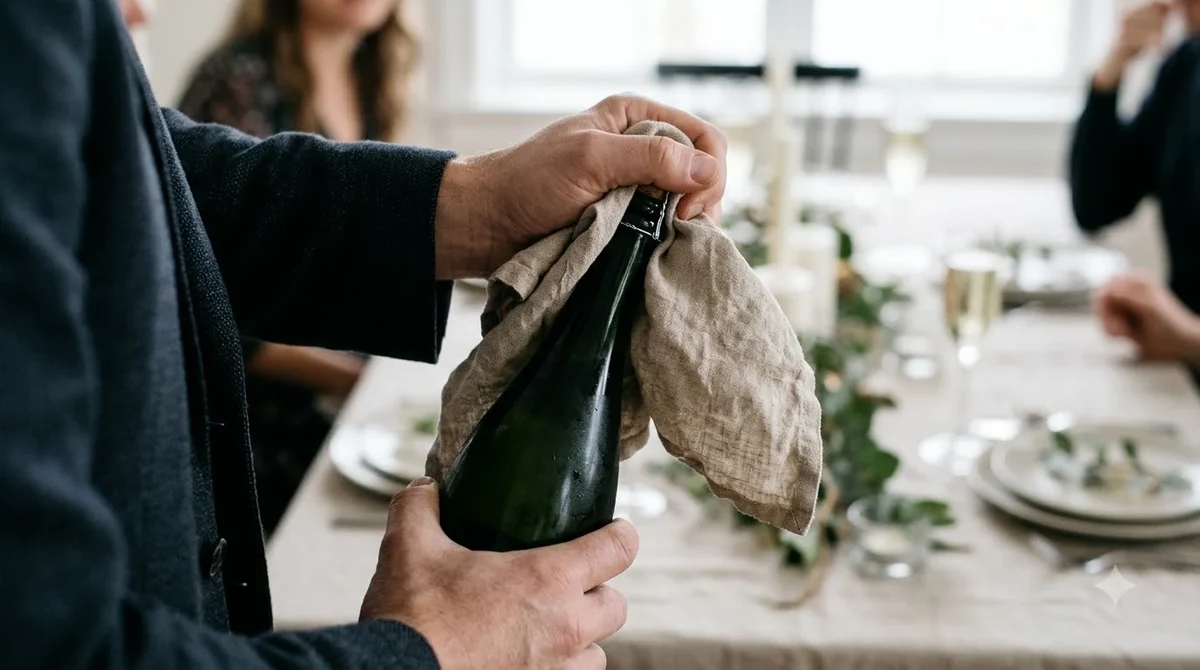
Open the bottle with care. Remove the foil, keep your thumb on the cork, and turn the bottle rather than the cork. Tank-method wines such as Prosecco often lose their fizz faster once opened, so finish them within a day or two and keep the bottle sealed with a stopper in the fridge. A traditional-method wine with a little more structure can hold its bubbles a bit longer.

Cooking With a Champagne Substitute
A sparkling wine can stand in for Champagne in a sauce, a batter or a deglaze. The main rule is to match the sweetness. A Brut substitute gives a dry, clean result in a risotto or a seafood sauce, while an Extra Dry Prosecco adds a touch of sweetness that suits fruit-based sauces and dessert recipes.
Use about the same volume you would use of Champagne, and reduce it on the stove if you want a more concentrated flavor. Bubbles disappear during cooking, so the wine works mainly for acidity and aroma. For more ideas on where sparkling wine fits in the kitchen, see cooking with champagne, which covers recipes that use the wine in sauces and desserts.
Pairing a Substitute With Food
Sparkling wine is one of the most flexible drinks at the table. Its acidity cuts through rich and fried foods, and its bubbles refresh the palate between bites. Oysters, sushi, fried chicken and salty snacks pair well with a dry traditional-method wine. Richer dishes such as roast chicken with cream sauce or mushroom risotto suit a Crémant or Franciacorta, which have more body.
Demi-sec and sweeter Prosecco styles work with fruit tarts and creamy desserts. Pungent cheeses can pair with a slightly sweet sparkling wine, and Vinepair notes that demi-sec Champagne is often served with strong cheeses for this reason. If you want to explore pairings for a specific wine style, the guide on wine by type groups bottles by style so you can match them to a menu more easily.
Frequently Asked Questions
Is Cava a good substitute for Champagne?
Yes, for many people. Cava is made with the same traditional method and must age on its lees for at least nine months. It usually shows more citrus and orchard fruit than Champagne, which makes it a practical choice for everyday drinking.
Can Prosecco replace Champagne in a recipe?
Prosecco works in recipes where you want fizz and a light fruit flavor, such as a sauce for seafood or a cocktail base. Because it is made with the tank method, it lacks the toasty notes of Champagne, so the finished dish will taste brighter and less yeasty.
What is the difference between Crémant and Champagne?
Both use the traditional method. The difference is geography: Champagne can only come from the Champagne region of France, while Crémant comes from other French regions such as Alsace, Bourgogne and the Loire. Crémant often shows more fruit and less biscuit than Champagne.
Should a Champagne substitute be dry or sweet?
For most meals, a Brut style works best because it is dry and balanced. If you are serving dessert, a demi-sec or Extra Dry sparkling wine will match sweet dishes better. Read the label, since the terms Extra Dry and Brut describe very different levels of sweetness.
A good substitute can cover most of the occasions where you would reach for Champagne. Start with a traditional-method Cava, Crémant or Franciacorta for a toast or a meal, and keep a bottle of Prosecco for lighter moments. Once you know which style you enjoy, explore the rest of the wine by type section to find your next bottle.
More in Wine Types & Grapes
 Zinfandel Sugar Content: Dry Red vs. White Zinfandel GramsUpdated Nov 21, 2026
 Best Zinfandel Substitute Options for Sipping and CookingUpdated Nov 21, 2026
 Zweigelt Food Pairing: Best Dishes, Cheeses, and Serving TipsUpdated Nov 21, 2026
 Zinfandel Tannins Explained: How Structure Shapes Every BottleUpdated Nov 21, 2026
 Zinfandel Sweetness Level: Dry Red vs. Sweet White Zin ExplainedUpdated Nov 21, 2026
 Xinomavro Food Pairing: Best Dishes, Styles, and Serving TipsUpdated Nov 21, 2026