

We may earn a commission when you buy through links on this page, at no extra cost to you. Learn more.
Iowa wine comes mainly from French hybrid and native American grapes grown in the northeast and the western Loess Hills. The state has a long winemaking history that peaked in the late 19th and early 20th centuries, was interrupted by Prohibition, and has since rebuilt into a set of small farm wineries. Iowa wines tend to be fruity and cold-hardy rather than built on European vinifera, and they are best understood as a regional style.
This guide explains where Iowa grapes are grown, which varieties define the state’s wines, and what to expect when you taste them. It also covers the climate challenges that shape the industry and the practical side of visiting Iowa wineries.
What Iowa Wine Is
Iowa is listed as a wine region and appellation, and the Wikipedia article on Iowa wine gives 1846 as the date of its establishment. The state is not a single growing zone. Northeastern Iowa lies within the Upper Mississippi Valley AVA, a federally recognized American Viticultural Area that crosses several states. The western part of the state falls within the Loess Hills District AVA, which is shaped by windblown soils along the Missouri River bluffs.
Because the state’s climate is cold in winter and humid in summer, the commercial industry grew around grapes that can survive low temperatures. Most of the wine made in the state is therefore based on French hybrids and native American varieties rather than the vinifera grapes that dominate California or Europe. That shapes the style of the wine and the way local producers market it.
Grape Varieties and Flavor
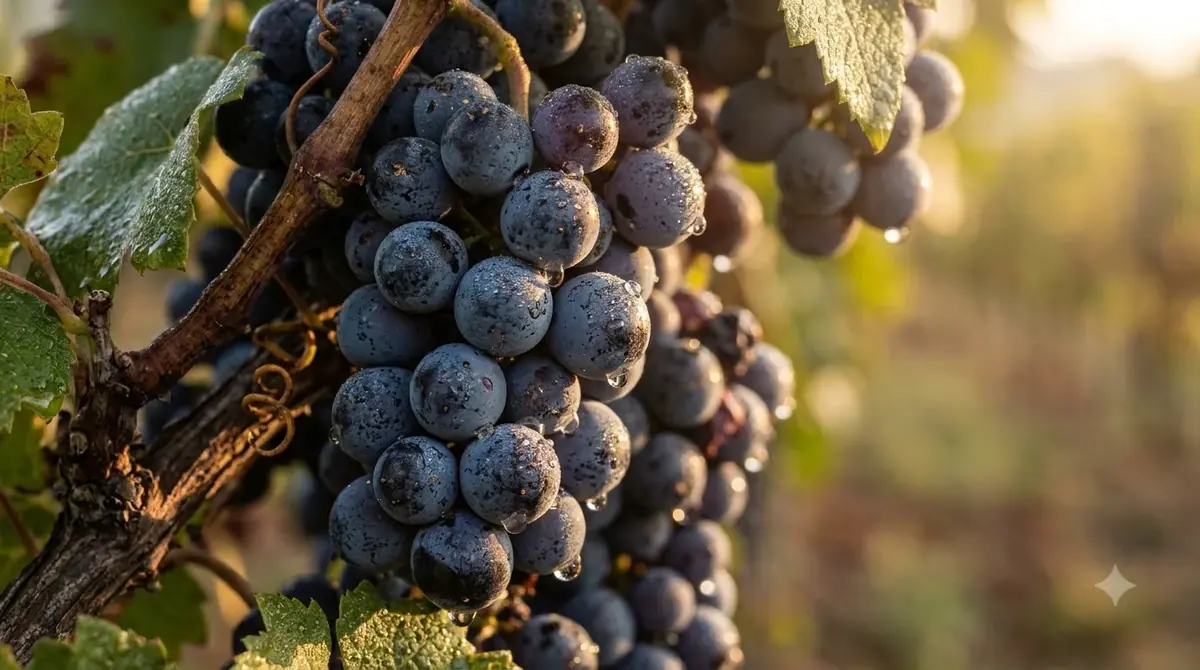
The Wikipedia article reports that about 26 cultivars are used in Iowa winemaking, and that most commercial production relies on French hybrid and native American varieties with only a few vinifera plantings. Common names include Catawba, Concord, Frontenac, La Crosse, Marquette, Norton, Traminette, and Vidal blanc. Some wineries also import grapes or juice from other states and countries, which means a bottle labeled Iowa may not be made entirely from Iowa fruit.
Those varieties give Iowa wines their characteristic profiles. Whites such as Traminette and Vidal blanc often show floral and tropical-fruit notes with lively acidity. Reds such as Norton and Marquette tend to be deeper in color with dark berry and spice notes. Concord is the best-known native grape and is often used in sweeter, fruit-forward styles. Expect a range of sweetness across the state’s wine list, and read the label or ask the staff about residual sugar if you prefer dry wines.
| Grape group | Examples named in the article | Typical style |
|---|---|---|
| White hybrids | Traminette, Vidal blanc | Floral, aromatic, bright acidity |
| Red hybrids | Norton, Marquette, Frontenac | Deeper color, dark berry and spice |
| Native American | Concord, Catawba | Fruit-forward, often sweeter |
| Vinifera (few plantings) | Not named as a main category | Rare in commercial production |
Climate, Vineyards and the Industry
The climate is the main constraint on Iowa viticulture. The Wikipedia article notes that hot summers can encourage fungal diseases in vines, while extremely cold winters can kill many grapevine varieties. The infobox classifies the state’s climate as Ib, with 2,222 growing degree days and annual precipitation between 2.51 and 4.15 inches. Those numbers explain why growers focus on cold-hardy varieties and why vineyard management is so important.
The industry size is reported in more than one place, and the figures do not fully match. The lead of the Wikipedia article describes the state as home to 100 commercial wineries and more than 300 vineyards. The infobox gives 97 wineries and 316 vineyards. The planted area is also given as 1,200 acres or more in the lead and 1,300 acres in the infobox. The safest reading is that Iowa has roughly a hundred commercial wineries and a planted area of around 1,200 to 1,300 acres.
Tip: If a winery says its wine is made from Iowa grapes, ask which vineyard the fruit came from. Some producers blend local fruit with imported grapes or juice, and the label should show the origin.
History of Iowa Winemaking
Iowa was one of the country’s largest wine producers in the late 19th and early 20th centuries. Vineyards and wineries were spread across the state, and the industry was a noticeable part of rural economies. Prohibition ended that production, and the commercial industry had to be rebuilt much later. The modern wave of farm wineries is based on a mix of hybrid varieties, local fruit, and a renewed interest in regional food and drink.
That history is useful for visitors because it explains the setting of many tasting rooms. Some are on working farms with orchards or pastures nearby. Others are in towns along the Mississippi or in the western hills, where the landscape is shaped by the soil and wind patterns that define the Loess Hills.
How to Visit Iowa Wineries
Plan visits by region rather than trying to cover the state in one trip. The northeast corner is closest to the Upper Mississippi Valley AVA, so river towns and bluff views make natural day trips. The western part of the state has a different landscape and a separate AVA, so it is worth planning it as a second outing. The Wikipedia article does not mention a formal state wine trail or regional trail system, so you will need to build your route from individual winery listings.
Call ahead to confirm hours, since many farm wineries open only on weekends or during the warmer months. Ask about tasting fees and whether the winery takes walk-ins. Plan your return route before the first tasting, since rural roads can be long and the distance between farm wineries is often greater than it looks on a map. For a comparison of how other states organize their wine tourism, the Illinois wine trail guide shows how a state can build regional routes around hybrids and river valleys. You can also place Iowa in a national context with the Wine Regions guide, which explains why many Midwest states rely on cold-hardy grapes.
Festival weekends are another option. Some events in other states, such as the Fredericksburg wine festival in Texas, show how wine weekends draw visitors to small towns, and a similar approach works in Iowa when local events are scheduled.
Frequently Asked Questions
What grapes are used in Iowa wine?
Most commercial wines use French hybrid and native American grapes such as Concord, Catawba, Frontenac, Marquette, Norton, Traminette, and Vidal blanc. Vinifera grapes are planted only in small amounts.
How many wineries are in Iowa?
The Wikipedia article says the state is home to about 100 commercial wineries and more than 300 vineyards in its lead, while its infobox lists 97 wineries and 316 vineyards. The exact count changes over time, so check a current winery directory before you plan a trip.
Is there a wine trail in Iowa?
The Wikipedia article does not describe a state wine trail or regional trail system. Visitors usually plan routes from individual winery listings and group nearby stops by region.
Why are Iowa wines made from hybrid grapes?
Iowa winters are extremely cold and can kill many vinifera vines. Hybrid and native varieties are bred or selected to survive those temperatures, and they handle the state’s humid summers and fungal disease pressure better.
Iowa wine is a regional story built on hardy grapes, long history, and small farm wineries. Start with one region, check the hours, and taste the hybrids and native varieties that define the state. The result is a visit that feels closer to a farm outing than a formal wine tour, which is part of its appeal.
More in Wine Regions
 Willcox Wine Trail: Discover Arizona’s High-Elevation Wine CountryUpdated Nov 20, 2026
 Yakima Valley Wine Region: Find the Best Styles to TryUpdated Nov 20, 2026
 Vosne Romanee Wine Tasting: Identify Aromas and Choose Better PairingsUpdated Nov 20, 2026
 Yakima Valley Wine Festival: Find the Best Seasonal Wine EventsUpdated Nov 20, 2026
 Wales Vineyards: Discover Cool-Climate Wines and Where to VisitUpdated Nov 20, 2026
 Yountville Wine Festival: Discover Napa Wines and Local FoodUpdated Nov 20, 2026