

We may earn a commission when you buy through links on this page, at no extra cost to you. Learn more.
Ribbon Ridge wine comes from a small sub-appellation in Oregon’s Willamette Valley, and pinot noir is by far the dominant style. The area was established as an American Viticultural Area in 2005, sits in Yamhill County about 22 miles southwest of Portland, and grows grapes on hillside sites that are slightly warmer and drier than the valley floor. Most of the wine is light to medium-bodied red with bright red-fruit character.
If you have seen the name on an Oregon label or a tasting room map and wondered what makes it different, this guide covers the basics. It explains where Ribbon Ridge sits, what soils and climate shape the wines, which grapes are planted, how to serve and pair the bottles, and how to choose one when the label lists the sub-appellation.
Where Ribbon Ridge Sits in Oregon
Ribbon Ridge is a sub-appellation of the Willamette Valley AVA, which is the best-known wine region in Oregon. It lies entirely inside the Chehalem Mountains AVA, midway between the towns of Newberg and Gaston, at the northwestern end of the Chehalem range. That position matters for the wine. The surrounding hills give the area an island-like feel, and the vineyards on the ridge get more sun and drainage than sites on the valley floor.
The sub-appellation was formally recognized in 2005. Before that, the area was already known to growers, and some of its vineyards were planted decades earlier. Ridgecrest Vineyards, established in 1980, is one of the early names associated with the ridge, and Yamhill Valley Vineyards began using Ridge fruit in its winemaking in 1985.
Soils and Climate That Shape the Wine
The soils here are marine sediments, mainly the Willakenzie series. These were laid down when the land was under the sea, and they tend to be well drained, which keeps vine roots from sitting in water through the winter.
The climate is cool and maritime, but the valley is still warm enough to ripen fruit fully in most years. Reference data for the area lists a growing season of about 233 days and roughly 10 inches of annual precipitation. The hillside vineyards receive a bit more heat and drainage than the valley floor, which helps the grapes reach full ripeness while keeping acidity bright.

Grape Varieties Grown on the Ridge
Pinot noir is the signature. Reference material for the sub-appellation says pinot noir is planted on about 90 percent of its vineyards, so almost every bottle with the Ribbon Ridge name is a pinot noir or a pinot-based blend. The grape suits a region with long, cool growing seasons, and it shows the ridge’s character clearly.
Smaller plantings include Auxerrois Blanc, Chardonnay, Muscat Canelli, Pinot gris, and Gamay Noir. These appear in fewer bottles, so if you want a white from the area, check the label carefully and look for the grape name rather than assuming the sub-appellation covers every style.
| Feature | What it means for the wine |
|---|---|
| Established | 2005, a sub-appellation inside Willamette Valley and Chehalem Mountains |
| Dominant grape | Pinot noir, on about 90 percent of vineyards |
| Soils | Marine sediment, mainly Willakenzie series, well drained |
| Typical red style | Light to medium body, red fruit, high acidity |
| Location | Yamhill County, between Newberg and Gaston |
What Ribbon Ridge Pinot Noir Tastes Like
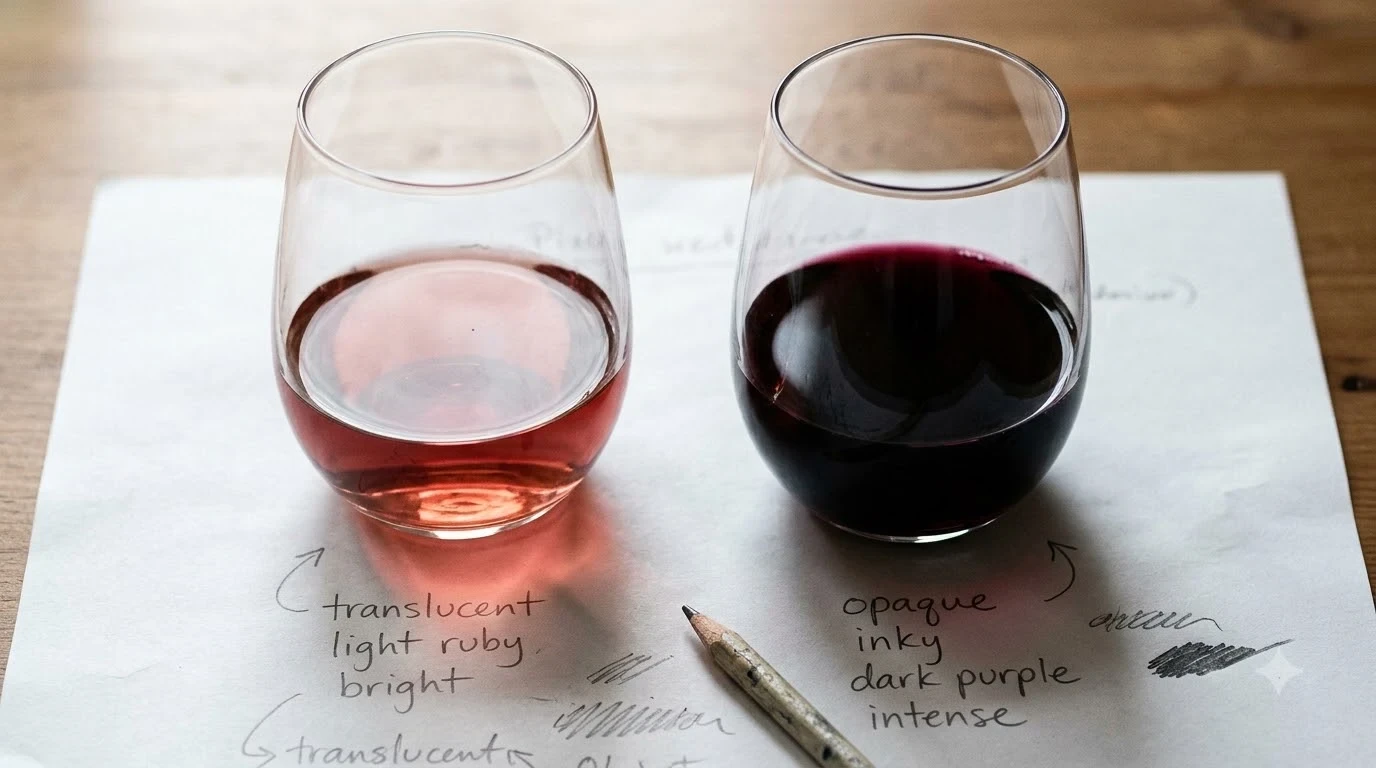
Pinot noir from the region tends to show red fruit first, with cherry and raspberry notes that can turn toward earthy and savory tones with age. Oak-aged bottles often carry vanilla and light smoke. The usual profile is light to medium-bodied, with low tannins and fresh acidity, which makes the wines easy to drink with food and gives them a longer life in the glass than their color suggests.
Because the hillside sites are slightly warmer and drier than the valley floor, growers in the sub-appellation have a reasonable base for ripe fruit with firm structure. Each producer’s winemaking style still changes the result, so the sub-appellation name alone does not settle how a particular bottle will taste.
How to Serve and Pair Ribbon Ridge Wine
Pinot noir is at its best when served a little cool. Wine Folly’s pinot noir guide recommends serving it between 55 and 60 degrees Fahrenheit, which brings out the aromas and keeps the alcohol from dominating. Most pinot noir runs about 12 to 14 percent ABV, so a slight chill in the glass is helpful on warm evenings.
Young bottles can benefit from decanting for about 30 minutes, which lets the aromas open up. Older bottles with sediment should be poured carefully instead. Use a wide glass with a generous bowl so the fruit and earth notes have room to show.
For food, the wine is versatile. It is light enough for salmon, a classic Pacific Northwest match, and complex enough for richer dishes like roast duck. Earthy mushroom dishes and roast chicken also suit it well, because the acidity cleans the palate between bites.
How to Choose a Bottle
When you shop, read the label for the sub-appellation name and the vintage. A bottle labeled Ribbon Ridge should list the sub-appellation as the source of the grapes, and that tells you the fruit came from the ridge rather than a broader Willamette blend. Check the grape on the label too. Most bottles will say pinot noir, but the same name can appear on a blend or a rosé.
Storage matters too. Pinot noir is sensitive to heat, so keep bottles in a cool, dark place away from the stove or a sunny window. A stable temperature protects the fruit better than a frequently changing one, and a bottle that has been left in a hot car or warehouse may taste flat even if the label looks fine. If you plan to keep a bottle for several years, ask the shop how it was stored before you buy.
For a first bottle, pick a recent vintage from a producer that publishes tasting notes and winemaking details. Producers that explain their vineyard sources and aging choices give you more useful information than a generic label. If you are curious about other American regions with a similar cool-climate approach, the wine regions guide lays out how climate and soil shape styles across the country. If you prefer to taste in person, regional events such as the Fredericksburg wine festival show how producers present their wines to visitors.
Frequently Asked Questions
Is Ribbon Ridge a separate region from the Willamette Valley?
Not exactly. Ribbon Ridge is a sub-appellation inside the larger Willamette Valley AVA, and it also lies entirely within the Chehalem Mountains AVA. A label that says Ribbon Ridge tells you the grapes came from that smaller area, which is more specific than a general Willamette Valley label.
What grape is most often grown in Ribbon Ridge?
Pinot noir is the main grape, planted on about 90 percent of vineyards in the sub-appellation. Smaller plantings include Chardonnay, Pinot gris, Auxerrois Blanc, Muscat Canelli, and Gamay Noir, so the white wines are less common.
How should I serve Ribbon Ridge pinot noir?
Serve it slightly cool, around 55 to 60 degrees Fahrenheit, in a wide glass. Young bottles can be decanted for about 30 minutes to open the aromas. The wine is light to medium-bodied, so it pairs well with salmon, duck, and mushroom dishes.
How do I tell if a bottle is from Ribbon Ridge?
Look for the words Ribbon Ridge on the front or back label, which indicates the sub-appellation. If the label only says Willamette Valley or Oregon, the grapes may come from anywhere in the larger region. Check the producer’s website for the vineyard source if the label is unclear.
Ribbon Ridge is a small area with a clear identity, built on pinot noir, marine soils, and a cool hillside climate. Start with a recent vintage, serve it lightly chilled, and pair it with salmon or mushrooms to see what the ridge does best.
More in Wine Regions
 Willcox Wine Trail: Discover Arizona’s High-Elevation Wine CountryUpdated Nov 20, 2026
 Yakima Valley Wine Region: Find the Best Styles to TryUpdated Nov 20, 2026
 Vosne Romanee Wine Tasting: Identify Aromas and Choose Better PairingsUpdated Nov 20, 2026
 Yakima Valley Wine Festival: Find the Best Seasonal Wine EventsUpdated Nov 20, 2026
 Wales Vineyards: Discover Cool-Climate Wines and Where to VisitUpdated Nov 20, 2026
 Yountville Wine Festival: Discover Napa Wines and Local FoodUpdated Nov 20, 2026