


We may earn a commission when you buy through links on this page, at no extra cost to you. Learn more.
The best 48 bottle wine rack is a modular, floor-standing or wall-mounted system that holds four full cases of standard 750 ml bottles on their sides, built from solid wood or powder-coated steel with a sturdy base. Wood suits a traditional cellar or dining room, metal grids suit kitchens and modern living spaces, and stacking cube systems give the most flexibility when the collection keeps growing. Measure the wall or floor first, because a 48-bottle unit takes up far more room than a small countertop rack.
A 48-bottle rack is a serious piece of storage furniture. It suits collectors who buy by the case, households that keep a mix of everyday bottles and aging wines, and anyone who wants to store wine horizontally so the cork stays in contact with the wine. Most racks in this size class are designed around the standard 750 ml bottle, so the number on the label is a capacity guide rather than a promise, since wide-shouldered Burgundy and Champagne bottles take more space than slimmer Bordeaux or Riesling bottles.
Quick Comparison
Each 48-bottle rack style trades off footprint, flexibility, and how well it handles weight. The table below compares the main types so you can narrow the list before looking at specific models.
| Rack Type | Typical Setup | Floor or Wall Space | Main Strength | Watch For |
|---|---|---|---|---|
| Solid wood floor rack | Freestanding, fixed grid | Large floor footprint | Classic look and stable weight distribution | Heavy to move once filled |
| Metal grid rack | Freestanding or wall-fixed | Medium footprint | Clean lines that fit kitchens and dining rooms | Can rattle if bottles are not seated well |
| Stacking cube system | Modular cubes stacked to size | Adjustable, can split across a wall | Easy to add or remove sections | Joints need checking for tightness |
| Wall-mounted grid | Fixed to studs or masonry | Uses vertical wall space | Keeps the floor clear | Requires secure anchoring for full loads |
| Heavy-duty steel rack | Industrial frame, open shelves | Large floor footprint | Handles weight and humidity in cool storage | Plain appearance, not built for display |
Best for Long-Term Cellaring: Solid Wood Floor Racks
Solid wood floor racks are the traditional choice for a 48-bottle collection. Wood is a stable material for holding bottles, it absorbs vibration well, and it looks at home in a finished basement or a formal dining room.
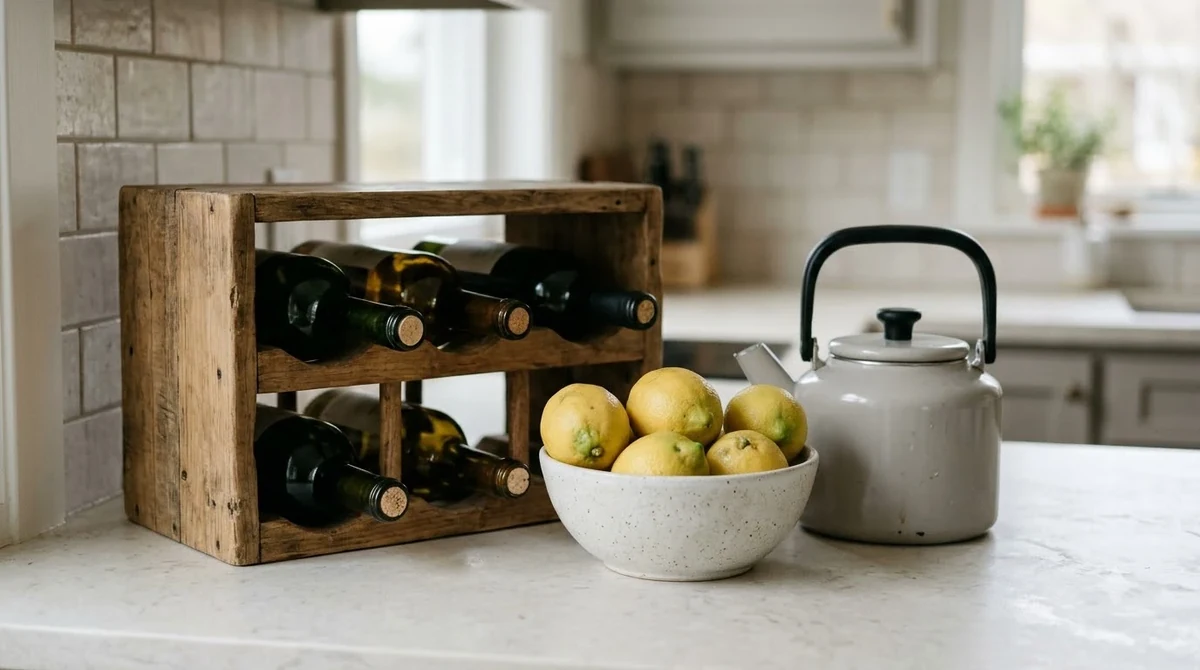
Why it stands out: A wooden floor rack spreads its weight evenly across the floor, which matters when a full rack holds roughly four cases of glass. Wood also avoids the metallic contact that can scratch labels, and a well-built unit keeps bottles at a steady angle so corks stay moist. Wine storage guidance from the Wine rack article notes that wood is the most popular material for racks, with cedar, redwood, and oak among the common choices.
Keep in mind and best for: Cedar gives a pleasant aroma, but a strong scent can reach the cork over time, so check the finish and choose a sealed or lightly finished wood if you want a neutral environment. Wood racks are heavy and rarely break down easily, so decide on the final spot before the first case goes in. This style suits a dedicated cellar room or a corner of a basement where the rack can stay put for years.
Best for Kitchens and Dining Rooms: Metal Grid Racks
Metal grid racks bring a cleaner, more modern look to a 48-bottle collection. They fit kitchens, open-plan living areas, and dining rooms where the wine sits in view.
Why it stands out: Stainless steel and powder-coated steel resist moisture, do not warp in a humid kitchen, and clean easily. The open grid lets you see labels at a glance, which saves time when you are choosing a bottle for dinner. Many metal designs can be bolted to a wall or set on a floor base, so you can adjust the layout after the first install.
Keep in mind and best for: Metal racks can make a faint ringing sound when bottles knock against the frame, so fit thick felt pads or choose a model with fixed cradles. The grid can also let bottles slide if the spacing is wider than the bottle neck. This style works well for households that drink from a rotating collection and want the wine to be part of the room’s décor.
Best for Tight Spaces: Wall-Mounted Modular Grids
Wall-mounted modular grids take up vertical space instead of floor space. They suit apartments, narrow hallways, and rooms where a large freestanding rack would block the way.
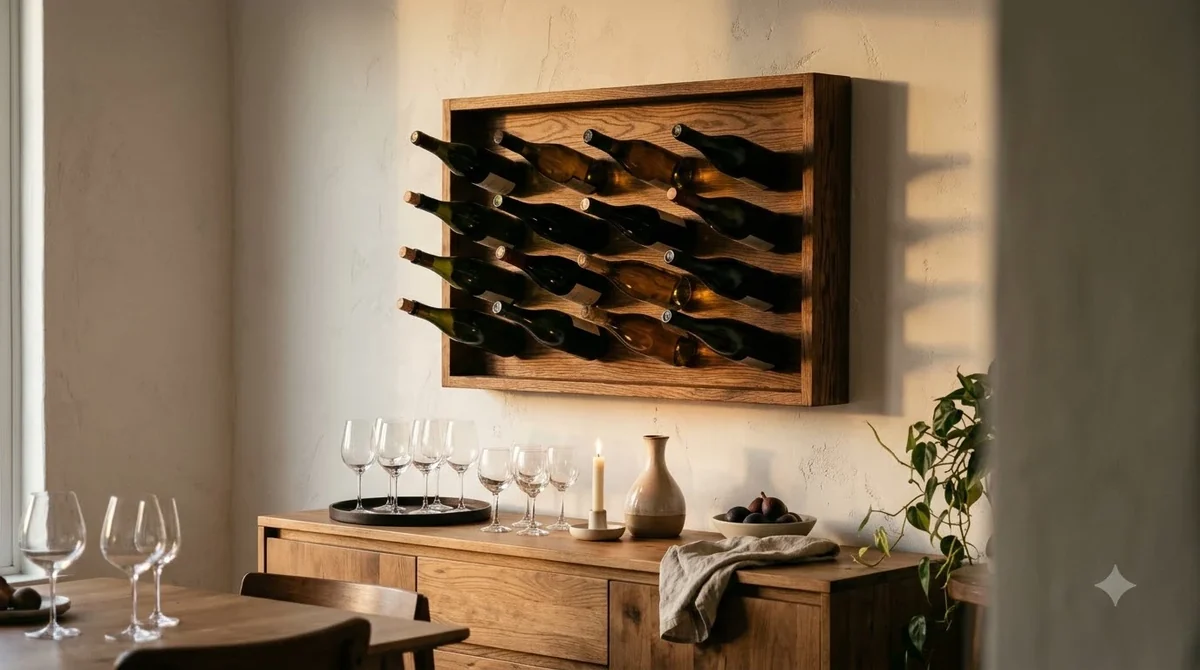
Why it stands out: A modular grid can be built out section by section, so you can start with one panel and add more as the collection grows. Fixing the frame to wall studs or masonry keeps the floor clear, and it lets you place the rack beside a window or a kitchen counter without loss of usable space. The tradeoff is that a full wall of bottles needs firm anchors, since the combined weight is far more than a picture frame or a single shelf can hold.
Keep in mind and best for: Before buying, check the stud spacing, the wall material, and the manufacturer’s listed load rating for the bracket type. Heavy bottles at the top of a tall grid add stress to the fixings, so store the heaviest bottles on the lower rows. This style suits renters who can get permission to mount a unit, and anyone who wants wine on display without a large footprint.
Best for Growing Collections: Stacking Cube Systems
Stacking cube systems are the most flexible option for a 48-bottle target. Each cube holds a set number of bottles, and the cubes lock together into a wall, a corner unit, or a freestanding tower.
Why it stands out: Because each cube is a separate unit, you can start small and grow the rack over time without buying a second frame. Cubes also let you split the collection by wine type, with reds on one side and whites on the other, or keep a section for bottles waiting to be opened. Replacing one cube is cheaper than replacing an entire rack if a joint or panel fails.
Keep in mind and best for: Stacking systems depend on the quality of their connectors, and loose joints can make the whole structure sway when you slide bottles in. Check that the interlocks snap firmly and that the top cubes sit on level ground. This option fits collectors who expect to add bottles every month and want a rack that adapts to the room.
Best for Basements and Garages: Heavy-Duty Steel Racks
Heavy-duty steel racks are built for cool, unfinished spaces where looks matter less than weight capacity and durability.
Why it stands out: Industrial steel frames handle heavy loads and resist the moisture found in basements and garages. Open shelves let air circulate around each bottle, and the rack is easy to clean. For a 48-bottle collection that includes older bottles or cases stored long term, a steel frame is a practical choice.
Keep in mind and best for: Steel racks are plain, and they show dust and scuffs more than finished wood. Garages can swing between hot and cold temperatures, which is hard on wine no matter the rack, so pair any steel rack with a steady, cool storage area. The guidance from the Wine rack article covers the main materials, but the final choice depends on the room. This style suits practical storage where the rack will hold cases for years without much attention to design.
How to Choose
Start with three checks: the space you have, the way you buy wine, and how often you open bottles. Measure the full footprint, including clearance for pulling bottles out, and leave room behind the rack for airflow. If you buy by the case, look for a design that stores full cases on their sides in fixed rows. If you buy one or two bottles at a time, a modular grid is easier to adjust.
Tip: Measure the widest bottle you own, not just the standard size. Burgundy and Champagne bottles can need more room than the listed capacity assumes.
Also check how the rack is held together. Bolted frames stay firm under heavy loads, while glued or loosely fitted joints can loosen over time. A rack that will hold four cases should have a base sized for the full weight, so look at the manufacturer’s stated capacity before you buy.
Frequently Asked Questions
How many bottles fit in a 48 bottle wine rack?
A 48-bottle rack is sized for 48 standard 750 ml bottles stored horizontally, which equals four cases of 12. Wide-shouldered bottles and magnums take more space, so the real capacity can be lower.
Should wine be stored horizontally in a rack?
Horizontal storage keeps the cork in contact with the wine, which helps prevent it from drying out. For bottles you plan to drink within a few weeks, the position matters less, but for longer storage horizontal racks are the common choice.
Is wood or metal better for a large wine rack?
Wood suits a cellar or dining room and gives a classic look, while metal handles moisture and is easier to clean. Both can hold a 48-bottle collection when the frame is properly built and the floor or wall can take the weight.
Can a 48 bottle wine rack be mounted on a wall?
Some modular grids can be mounted on a wall, but a full load needs firm anchors into studs or masonry. Check the manufacturer’s load rating and the wall material before you start drilling.
A 48-bottle rack is a long-term purchase, so spend time on the room and the frame before you buy. If your collection is smaller, the 12 bottle wine rack guide covers compact options, and the 6 bottle wine rack guide suits a countertop or small cabinet. For more styles, browse the Racks & Storage section.
More in Racks & Storage
 Best Wine Barrel Racks for Distinctive Bottle StorageUpdated Nov 20, 2026
 Best Wine Storage Tower: Sizing, Protection and Room LayoutUpdated Nov 18, 2026
 Best Pyramid Wine Rack: Materials, Sizes and Where It FitsUpdated Nov 18, 2026
 Best Kitchen Cabinet Wine Rack Insert for Built-In Bottle StorageUpdated Nov 18, 2026
 Best 16 Bottle Wine Rack Options for Kitchens, Bars and CellarsUpdated Nov 18, 2026
 Best 30 Bottle Wine Rack Styles for Large CollectionsUpdated Nov 18, 2026