

We may earn a commission when you buy through links on this page, at no extra cost to you. Learn more.
The best 30 bottle wine rack is a sturdy, freestanding floor unit with individual cradles, a stable base, and enough shelf depth to hold standard 750 mL bottles without crowding. Diamond-cell and cube-style racks give the most storage per square foot, while wall-mounted or lean-to designs suit homes where floor space is limited. The right choice depends on how many bottles you rotate, how heavy your bottles are, and whether you plan to store them for drinking within a year or two or for longer aging.
A 30 bottle wine rack is a common step up for households that have outgrown a small countertop display but do not need a full cellar. Thirty bottles is roughly two and a half cases, so the rack is large enough to hold a working collection of reds and whites for everyday dinners and a few special bottles for guests. Because the rack is a bigger piece of furniture, the main questions are material, stability, and how easily you can reach the bottle you want without moving the others.
Quick Comparison
Thirty-bottle racks come in a few main styles. Each one trades off footprint, access, and how well it holds heavier bottles, so the table below groups them by the way they are usually used at home.
| Rack Style | Typical Footprint | Bottle Access | Best Placement | Main Strength |
|---|---|---|---|---|
| Freestanding diamond-cell rack | Medium, floor-standing | Good, with one bottle reachable per cell | Dining room, pantry, or kitchen corner | Stable and easy to load |
| Stacked cube rack | Compact, floor-standing | Fair, bottles often sit deeper in the stack | Closets, corners, and small rooms | Holds many bottles in little floor space |
| Wall-mounted rack | Low, on the wall | Good for the front row only | Kitchens and bars with wall space | Keeps the floor clear |
| Lean-to or tiered rack | Medium, floor or counter | Very good, with bottles angled forward | Home bars and display areas | Easy to see labels at a glance |
| Metal modular rack | Adjustable | Good, with fixed or sliding shelves | Garages, basements, and utility rooms | Sturdy and expandable |
Best for Large Collections on a Budget: Freestanding Diamond-Cell Racks
Diamond-cell racks are the classic thirty-bottle layout. Each bottle sits in its own angled cradle, which keeps the labels visible and makes it simple to pull one bottle without disturbing the rest.
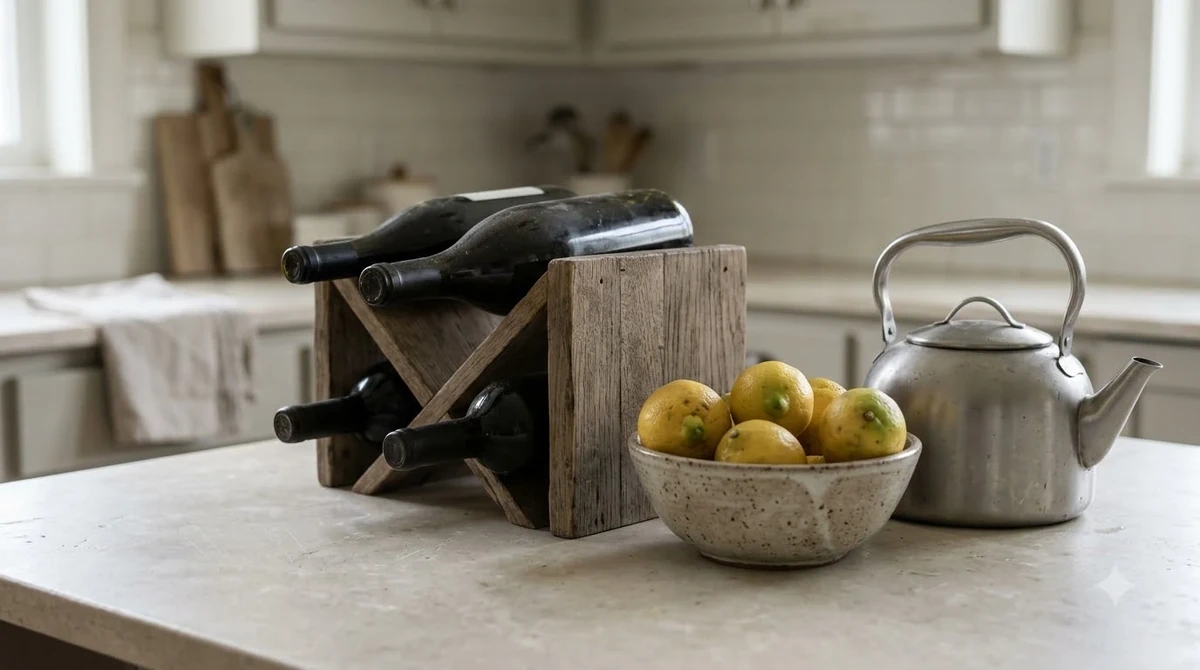
Why it stands out: The cell design spreads the weight of the bottles across the whole frame, so a well-built rack stays steady even when it holds a full set of heavier red wines. Many of these racks are made from wood or metal and can be assembled without tools. Their open design also lets air move around the bottles, which helps keep the rack from feeling closed-in.
Keep in mind and best for: Diamond cells take up more floor space than a stacked design, and a cell that is too shallow can let a bottle slip forward. Check that the cradles are deep enough for the bottle shapes you own, especially wider Burgundy or sparkling wine bottles. This style suits households that drink from a steady rotation and want the labels facing out.
Best for Tight Spaces and Closets: Stacked Cube Racks
Cube racks hold bottles in a grid that can be stacked to a height of several rows. They are often the most efficient choice when the floor is limited but the ceiling has room.

Why it stands out: Because each cube is a fixed opening, the rack can hold a wide range of bottle shapes, from slender Rhine bottles to straight-sided Bordeaux. The overall footprint stays small, which makes this style a good fit for a pantry corner or a hallway closet. Wood cube racks are a popular choice for their warm look and light weight.
Keep in mind and best for: Bottles in the lower or back rows of a stacked cube rack are harder to reach, so you may need to move a few bottles to get to the one you want. Cedar is common in wood racks, but its aroma can pass through the cork over time, so many storage guides recommend a neutral wood or a metal frame for long-term storage. This style works best for people who buy in bulk and want to store bottles by type.
Best for Kitchens and Bars: Wall-Mounted and Lean-To Racks
Wall-mounted and lean-to racks move much of the storage off the floor. A wall rack uses fixed brackets, while a lean-to design tilts each bottle forward for easy viewing.
Why it stands out: Wall racks keep the floor clear and can be placed above a counter or beside a fridge. Lean-to designs show the labels clearly, which helps when you are choosing a bottle for a meal. Many of these racks also include a wine glass holder, so bottles and glasses share one spot.
Keep in mind and best for: Wall-mounted racks are usually better for display than for long-term storage, because they often hold only the front row of bottles and are not set up to control temperature. Make sure the wall anchors can take the full weight of a loaded rack, since wine bottles are heavy. This style suits a home bar or kitchen where the collection is rotated quickly.
Best for Long-Term Storage and Expansion: Metal Modular Racks
Metal modular racks are built from steel or aluminum frames with adjustable shelves. They are a practical choice for garages, basements, and utility rooms where the rack may be loaded and unloaded often.
Why it stands out: Metal frames resist moisture and do not release any scent into the bottles, which makes them a neutral option. Stainless steel is often recommended for humid rooms because it holds its finish over time. Modular systems can also grow with the collection, so you can add a second section when the bottle count increases.
Keep in mind and best for: Metal racks can feel cold and industrial in a living space, and the bare frame can scratch bottles if the cradles are not padded. Look for coated shelves or rubber-lined cradles. This style fits collectors who want a rack that stays practical as the collection grows.
Best for Mixed Collections: Tiered Display Racks
Tiered display racks use stepped shelves so that each row sits higher than the one in front of it. They work well for a mix of bottle sizes and for a collection that you want to show off.
Why it stands out: The stepped layout lets you see the label of every bottle, which is useful when you keep a mix of everyday wines and special bottles. Tiered racks often have a smaller footprint than a diamond-cell rack of the same capacity, so they fit well against a wall or in a dining nook.
Keep in mind and best for: Tiered designs can be less secure for heavy bottles, and the top shelves can be hard to reach without a step stool. Check the load rating and the shelf depth before you buy. This style suits households with a varied collection who value looks as much as storage.
How to Choose a 30 Bottle Wine Rack
Start with the space you have, then match the rack to the way you use your bottles. A rack that looks good in a catalog may not suit a narrow hallway or a damp basement.
Tip: Measure the bottles you own before you buy. Standard 750 mL bottles are the common size, but many wines come in other shapes, and wider bottles need deeper cradles.
Consider these factors when you compare racks:
- Stability: A full rack of thirty heavy bottles carries a lot of weight, so the base should be wide and level.
- Access: Racks with angled or open cells make it easier to reach the bottle you want.
- Material: Wood gives a warm look, metal resists humidity, and both should be checked for finish quality.
- Storage conditions: A rack in a warm kitchen will not keep wine as stable as a cool, dark space.
Wine storage guidance from the Wine Folly temperature guide puts the ideal range at 55 to 59 degrees Fahrenheit with 55 to 75 percent humidity, and it notes that a rack in a hot room does not solve temperature swings. A rack is a way to organize bottles, not a substitute for a stable storage environment. If you plan to age wine for many years, a cellar or a temperature-controlled cabinet is a better home than a rack.
Frequently Asked Questions
How much space does a 30 bottle wine rack need?
The footprint depends on the design. Stacked cube racks use less floor space and more height, while diamond-cell racks spread out more. Measure the area you have, and leave room to lift bottles out without bumping the rest of the rack.
Is wood or metal better for a wine rack?
Both work well. Wood looks warm and suits dining rooms, while metal resists moisture and is a good choice for humid rooms. Avoid cedar for long-term storage, because its aroma can affect the wine through the cork.
Can a wine rack hold sparkling wine?
Yes, but check the cradle size. Sparkling wine bottles are often wider and have a thicker base, so a diamond-cell or deep cradle is more secure than a narrow cube.
Should wine be stored lying down on a rack?
Storing bottles on their side keeps the cork moist, which is useful for bottles with natural corks that you plan to age. For bottles you will drink within a few months, the position matters less. Many racks hold bottles on their side for this reason.
A 30-bottle rack is a practical way to organize a growing collection. Compare the styles above against your space and your drinking habits, and if you plan to store wine for years, look at guides on smaller racks for starter collections and 12-bottle options before deciding.
Outside reference: the Wine rack article on Wikipedia lists the main rack types, from standard and cube racks to wall-mounted and glass racks, along with the materials each one is usually made from.
More in Racks & Storage
 Best Wine Barrel Racks for Distinctive Bottle StorageUpdated Nov 20, 2026
 Best Wine Storage Tower: Sizing, Protection and Room LayoutUpdated Nov 18, 2026
 Best Pyramid Wine Rack: Materials, Sizes and Where It FitsUpdated Nov 18, 2026
 Best Kitchen Cabinet Wine Rack Insert for Built-In Bottle StorageUpdated Nov 18, 2026
 Best 16 Bottle Wine Rack Options for Kitchens, Bars and CellarsUpdated Nov 18, 2026
 Best 48 Bottle Wine Rack Options for Cellars, Kitchens, and Tight SpacesUpdated Nov 18, 2026