
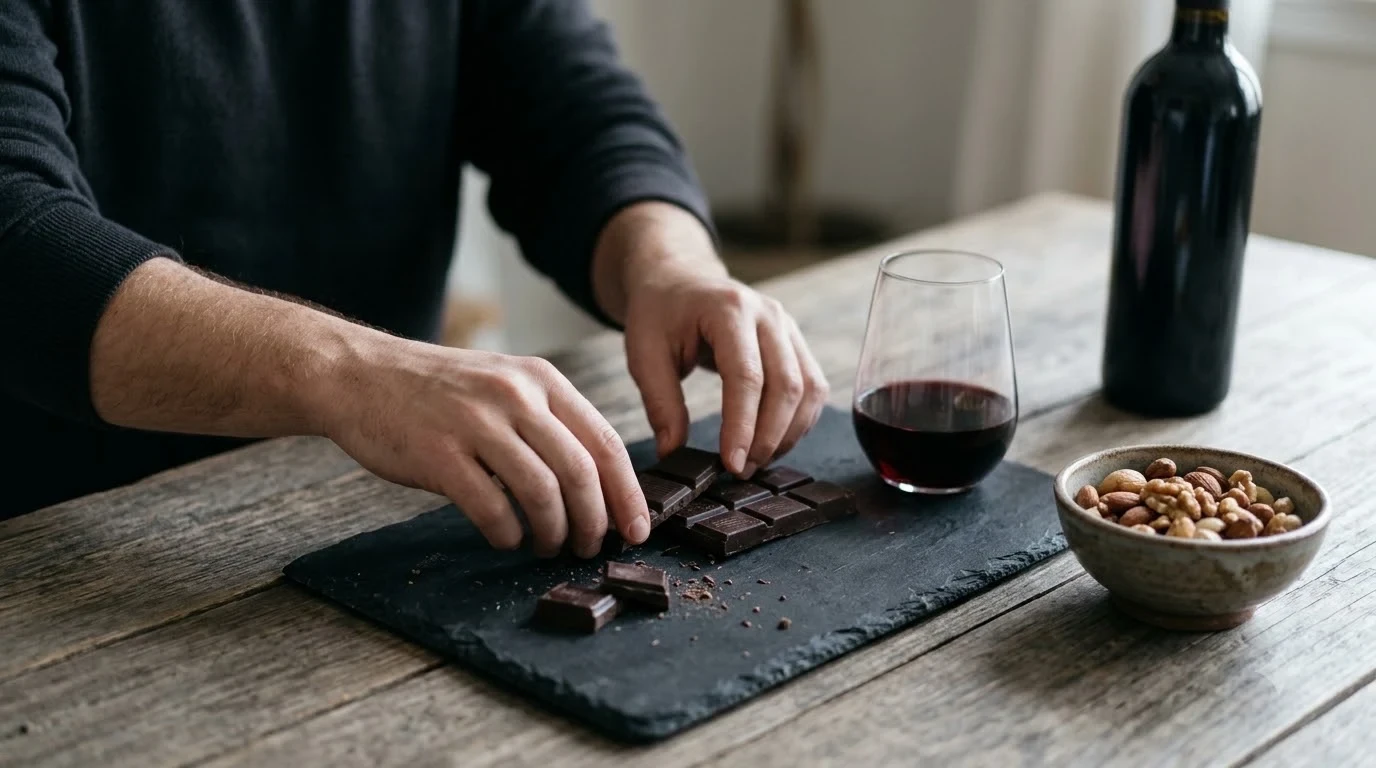

We may earn a commission when you buy through links on this page, at no extra cost to you. Learn more.
What is vin santo? It is a rare, very sweet Italian dessert wine, made mostly in Tuscany from grapes dried on straw mats. The name translates roughly as “holy wine,” and the style is known for dried fig, raisin, almond, and toffee flavors. It is usually poured in small amounts, often with a simple cookie, and it is one of the most distinctive sweet wines Italy produces.
If you have seen vin santo on a dessert menu or a wine shelf and wondered how it differs from other sweet wines, this guide explains the basics. You will learn how it is made, what it tastes like, how to serve it, and what to pair with it.
What vin santo is
Vin santo is a traditional Italian dessert wine. According to Wine Folly’s vin santo guide, it is a rare dessert wine mostly made in Tuscany. Its production is slow, which is one reason the style is usually sold in small bottles and treated as a special occasion drink.
The style sits in a different category from most dessert wines that people drink with a meal. It is meant to be sipped slowly, often at the end of a long dinner or with a plate of biscuits. Because the wine is so concentrated, a small glass goes a long way, and the flavors develop as the glass warms slightly in the hand.
How vin santo is made
The process starts in the vineyard and continues in the cellar. Grapes are dried on straw mats after harvest, which concentrates their sugar and flavor. This drying step is the reason the wine becomes so sweet, since the water leaves the fruit and the sugar stays behind. Fermentation can take up to four years, which is far longer than most wines take.
After fermentation, the wine is aged for a long time, often in small barrels. This slow aging is what gives vin santo its nutty, caramelized, and oxidized character. Wine Folly lists a cellaring window of five to ten years, so bottles on the shelf are often already mature when they reach a shop. The long process explains why the wine is best treated as a special occasion drink rather than a casual pour.
How vin santo tastes
Vin santo is very sweet, with a full body and high acidity. The acidity keeps the wine from feeling cloying, which is important when the sugar level is so high. Tannins are absent, so the texture is smooth and rounded rather than drying. Alcohol typically falls between 13.5% and 15% ABV.
The aroma is one of the first things people notice. Many bottles show perfume, dried fig, and raisin, with notes of almond and toffee on the palate. These flavors develop through the drying and aging described above. Because the wine is layered, it can be a good introduction to aged dessert wines for people who find very sweet wines too simple.
How to serve vin santo
Serve vin santo chilled, at about 55 to 60 degrees Fahrenheit (12 to 15 degrees Celsius). Pour it into a small dessert glass rather than a large wine glass, since the wine is intense and a little goes a long way. Decanting is not needed. The bottle can be opened and poured directly.
Vin santo sits alongside many other dessert styles, and the Wine by Type guide is a good place to compare how each one handles sweetness and acidity. If you enjoy lighter sweet wines, you may also like the more floral and fruity profile of a auslese wine, which shows a different kind of sweetness.
Food pairing for vin santo
The traditional match is biscotti, the hard almond cookie from Tuscany. The nutty, caramelized notes in the wine echo the flavors in the cookie, and dipping the biscuit into the glass is a classic ritual. Wine Folly also names this pairing as the standard choice, and it is a simple way to start.
Beyond biscotti, vin santo works with aged cheeses, dried fruit, and simple desserts that are not too sugary. A nutty cake, a plate of walnuts, or a bowl of figs all make good partners. Because the wine is so sweet, avoid pairing it with very sugary desserts, which can make both the dish and the wine taste flat.

Vin santo at a glance
The table below gives the main features most vin santo shares. Producers will differ in how long they age the wine and how they finish it, but these points give you a clear sense of the style.
| Feature | What to expect |
|---|---|
| Sweetness | Very sweet |
| Body | Full |
| Acidity | High |
| Tannin | None |
| Alcohol | 13.5% to 15% ABV |
| Serving temperature | 55 to 60 F (12 to 15 C) |
| Typical flavors | Dried fig, raisin, almond, toffee |
Tip: Pour vin santo in small amounts and serve it after the main meal. A few sips with biscotti is the simplest way to see how the wine’s acidity balances its sweetness.
Where vin santo comes from
Tuscany is the region most closely tied to vin santo, and it is the place where the style is most often discussed. The Tuscan countryside has long been known for its dry red wines, so a sweet, slow-aged wine made from dried grapes is a different kind of local tradition. The wine is a reminder that Italian winemaking has never been limited to one style.
Because the drying and aging take so long, the wine is easier to find in specialty shops and wine bars than in large supermarkets. If you want to try it, look for a bottle from a producer that describes its drying process and aging time on the label or the website. Those details tell you more about the style than the name alone.
How to store and open vin santo
Vin santo keeps well once opened, but it should be stored sensibly. Keep the bottle upright in a cool, dark place, and reseal it tightly after each pour. Because the wine is so sweet and concentrated, a small amount left in the bottle will usually stay good for a while, though the flavors can slowly shift over time.
When you open a bottle, pour a small amount to start. A few tablespoons is often enough for a single serving, since the wine is intense and a little goes a long way. If you are hosting, set out a small plate of biscotti and let guests take a few sips at the end of the meal rather than pouring full glasses.
Frequently Asked Questions
What does vin santo mean?
Vin santo translates roughly to “holy wine” in Italian. Today the wine is mainly enjoyed as a slow-sipping dessert after a meal, and the name is the most common way it is introduced to new drinkers.
Is vin santo the same as a dessert wine?
Vin santo is a type of dessert wine, but it is made with a specific drying and aging process that is typical of Tuscany. It is usually richer and more concentrated than most other sweet wines.
Do you need to decant vin santo?
No. Vin santo does not need decanting. Serve it chilled in a small dessert glass, and pour it directly from the bottle.
What should you eat with vin santo?
Biscotti is the traditional pairing, and it works because the nutty flavors match. Aged cheese, dried fruit, and nut-based desserts are also good choices, as long as the dessert is not too sweet.
Vin santo rewards patience, both in the making and in the tasting. Start with a small glass, a simple cookie, and a quiet moment after dinner. Once you know its dried-fruit and toffee character, you can compare it with other sweet styles and see how each one handles sugar and acidity in its own way.
More in Wine Types & Grapes
 Zinfandel Sugar Content: Dry Red vs. White Zinfandel GramsUpdated Nov 21, 2026
 Best Zinfandel Substitute Options for Sipping and CookingUpdated Nov 21, 2026
 Zweigelt Food Pairing: Best Dishes, Cheeses, and Serving TipsUpdated Nov 21, 2026
 Zinfandel Tannins Explained: How Structure Shapes Every BottleUpdated Nov 21, 2026
 Zinfandel Sweetness Level: Dry Red vs. Sweet White Zin ExplainedUpdated Nov 21, 2026
 Xinomavro Food Pairing: Best Dishes, Styles, and Serving TipsUpdated Nov 21, 2026