

We may earn a commission when you buy through links on this page, at no extra cost to you. Learn more.
The champagne sweetness level is set by how much sugar is added at the end of production, and it runs from bone dry to clearly sweet. Brut nature and zero dosage sit at the dry end, brut and extra dry sit in the middle, and demi-sec and doux taste noticeably sweet. Knowing the terms on the label lets you pick a bottle that matches your taste and the food on the table.
This guide explains the sweetness scale used for champagne, how the level is decided, how it differs from the sweetness you taste in a glass, and how to match each style with food and occasions.
How the Sweetness Level Is Set
Champagne is made by a second fermentation inside the bottle. Once that process finishes and the yeast deposit is removed, the wine is topped up with a small amount of wine and sugar. This final addition, called the dosage, is the main lever winemakers use to set sweetness. A producer who adds little or nothing will make a very dry style, while a producer who adds more will make a sweeter one.
Because the base wine is already fermented to dryness, the sweetness on the label reflects a deliberate choice. That is why the same grapes and the same region can produce a crisp bottle and a rich, sweet bottle from different houses.
The Champagne Sweetness Scale
The main terms, from driest to sweetest, are brut nature or zero dosage, extra brut, brut, extra dry, dry, demi-sec, and doux. Each term gives a rough idea of the sugar level, although the exact limits are set by rules and differ slightly by producer. Brut nature and zero dosage have little or no added sugar and taste sharp and mineral. Extra brut is also very lean. Brut is the most common middle ground, with a clean finish and a touch of fruit.
Extra dry is a source of confusion. The name suggests a drier wine, but the term describes a wine that is a little sweeter than brut. Dry and demi-sec are noticeably softer, and demi-sec is the sweetest style most people will find on a shelf. Doux is the sweetest category and is usually served with dessert.
| Label term | Sweetness on the palate | Typical pairing |
|---|---|---|
| Brut nature / zero dosage | Very dry, sharp | Oysters, raw fish |
| Extra brut | Dry, lean | Fried snacks, salty bites |
| Brut | Dry with soft fruit | Most meals and toasts |
| Extra dry | Slightly sweet, fruity | Brunch, spicy food, fruit |
| Demi-sec | Clearly sweet | Fruit tarts, soft cheese |
| Doux | Very sweet | Rich desserts |
Tip: When in doubt, pick brut for a flexible bottle. If the label is unclear, a glass from a bottle marked brut will rarely taste sugary.
Sweetness Is Not the Same as Sugar
The sweetness you taste depends on more than the sugar number. VinePair notes that a wine has no residual sugar when fermentation finishes fully, and that a wine with residual sugar tastes slightly sweet. The same article points out that some dry wines taste fruity, but the fruit flavor is not the same as sweetness.
Context also shapes the impression. The same glass can taste drier with a rich, salty snack and sweeter with a dish that has little fat or salt. For a wider look at how sweetness works across styles, the Wine by Type guide places champagne alongside still wines and dessert styles.
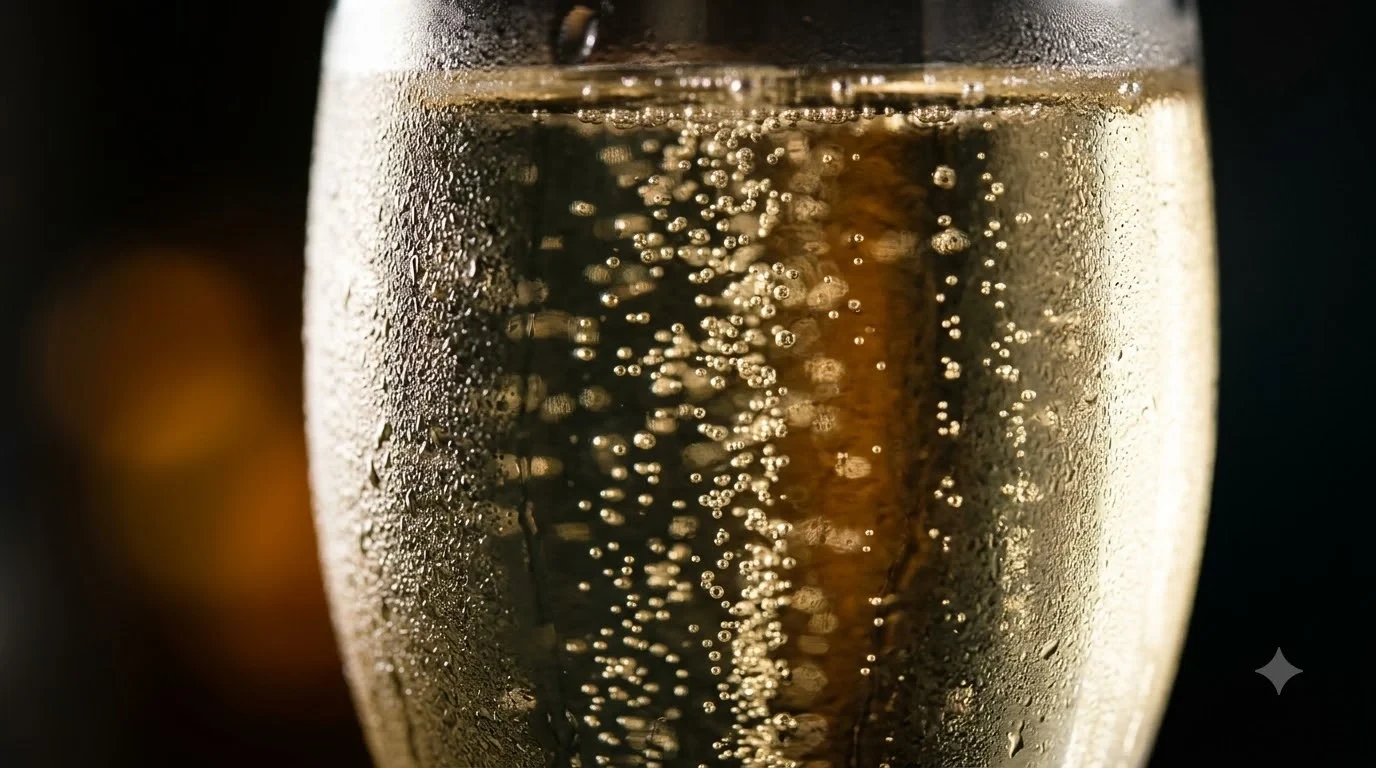
Two other factors change how sweet a champagne seems. Acidity is the first. A champagne with bright acidity will taste crisper even when it has some sugar. Fizz is the second, because bubbles lift the aromas and can make a sweeter wine feel lighter on the palate. For this reason, two bottles with similar dosage can taste slightly different depending on how they were made.
Serving temperature also matters. Winefolly gives a champagne serving range of about 38 to 45 degrees Fahrenheit. Within that range, a colder glass tends to make the wine taste drier, while a warmer glass lets sweetness and fruit come forward. A sweeter bottle served too cold can taste flat, so it helps to pour it a little warmer than a brut.
Dry Wine Versus Sweet Wine
Dry wine is defined by the absence of residual sugar. Winemakers let fermentation finish so that yeast consumes nearly all the sugar, and what remains tastes like fruit rather than sweetness. Champagne follows the same logic in its brut styles, where the added dosage is minimal.
A common mistake is to link dryness with tannins. In red wine, a drying feeling in the mouth comes from tannins, not from sugar. Sparkling wine has little tannin, so its dry feel usually comes from acidity and bubbles. That explains why a brut champagne can feel bracing even though it is not astringent. A clean palate also makes it easier to notice the difference between two bottles, so tasting a dry style before a sweeter one helps you judge where each sits on the scale.
Which Champagne Level to Choose
Start with the occasion. A celebration with a mix of guests usually works best with brut, which is familiar and goes with a wide range of food. For oysters, sushi, or other raw seafood, brut nature or extra brut shows its sharpest and cleanest side. For brunch and spicy dishes, extra dry gives a little more fruit without becoming heavy.
When you host, a short range of styles often serves a group better than a single bottle. One brut covers the guests who like dry wine, and one demi-sec gives a sweeter option for those who find brut too sharp. Serving the drier style first and the sweeter one later in the meal also keeps the palate fresh, because a very sweet wine can make a dry one taste thin if the order is reversed.
Sweeter champagnes suit dessert. Demi-sec works with fruit tarts and light cakes, and doux works with rich desserts where the wine can stand up to the sugar. If you are unsure, check the back label or the producer’s description, which often explains the style in plain language.
Frequently Asked Questions
What is the sweetest champagne level?
Doux is the sweetest champagne category, followed by demi-sec. Both are usually served with dessert or on their own, and they taste clearly sweet compared with brut.
Is extra dry champagne sweeter than brut?
Yes. Despite the name, extra dry is sweeter than brut. It is a useful style for drinkers who want a little more fruit and softness.
Does brut nature taste sweet at all?
No. Brut nature has little or no added sugar, so it tastes dry, sharp, and mineral. Many people who find sweet sparkling wine too heavy prefer this style.
How can I tell the sweetness level before buying?
Read the sweetness term on the label. Brut is the most common, and the other terms show where a bottle sits on the scale. If the label is unclear, the producer’s website usually describes the style.
Before you open a bottle, it helps to remember that the label is the most reliable guide you have. The front label may show a brand and a vintage, but the sweetness term is usually printed on the back, often near the importer details or the description. Reading that one word takes seconds and is the simplest way to avoid a surprise at the table.
Champagne sweetness level comes down to the dosage and the term on the label. Choose brut or extra brut for dry, crisp drinking, save demi-sec or doux for dessert, and serve sweeter bottles a little warmer for the best balance. For more on how sweet and dry wines differ, read VinePair’s guide to dry wine, and explore champagne history or champagne with dessert for more ideas.
More in Wine Types & Grapes
 Zinfandel Sugar Content: Dry Red vs. White Zinfandel GramsUpdated Nov 21, 2026
 Best Zinfandel Substitute Options for Sipping and CookingUpdated Nov 21, 2026
 Zweigelt Food Pairing: Best Dishes, Cheeses, and Serving TipsUpdated Nov 21, 2026
 Zinfandel Tannins Explained: How Structure Shapes Every BottleUpdated Nov 21, 2026
 Zinfandel Sweetness Level: Dry Red vs. Sweet White Zin ExplainedUpdated Nov 21, 2026
 Xinomavro Food Pairing: Best Dishes, Styles, and Serving TipsUpdated Nov 21, 2026