

We may earn a commission when you buy through links on this page, at no extra cost to you. Learn more.
White wine with seafood usually means a dry, high-acid white such as Sauvignon Blanc, Muscadet, Chablis, or Champagne, because acidity brightens shellfish and white fish without overwhelming them. Heavier shellfish dishes in cream or butter sauces can take a fuller white such as Chardonnay or white Burgundy. The best choice depends on how the seafood is prepared and how much salt, fat, and sauce it carries.
Seafood covers a wide range of flavors, from delicate white fish and sweet shrimp to briny oysters and rich lobster. A single rule does not fit all of them, so this guide sorts white wine choices by preparation and sauce, with reasons you can apply at the table.
Why acidity matters most with seafood
Acidity is the main tool for pairing white wine with seafood. A bright, crisp white refreshes the palate after each bite and softens the impression of salt and oil. It also lifts the sweetness of shellfish, which can taste flat next to a heavy or sugary wine.
Body is the second factor. Light fish and simple preparations need a light wine, while richer seafood dishes can carry a white with more texture. Choosing a wine that is too heavy for the dish is a more common mistake than choosing one that is too light.

Light whites for white fish and shellfish
For delicate white fish such as sole, cod, or halibut, and for lightly cooked shrimp or scallops, a light white with clean acidity is the natural fit. The wine should complement the fish without masking its flavor.
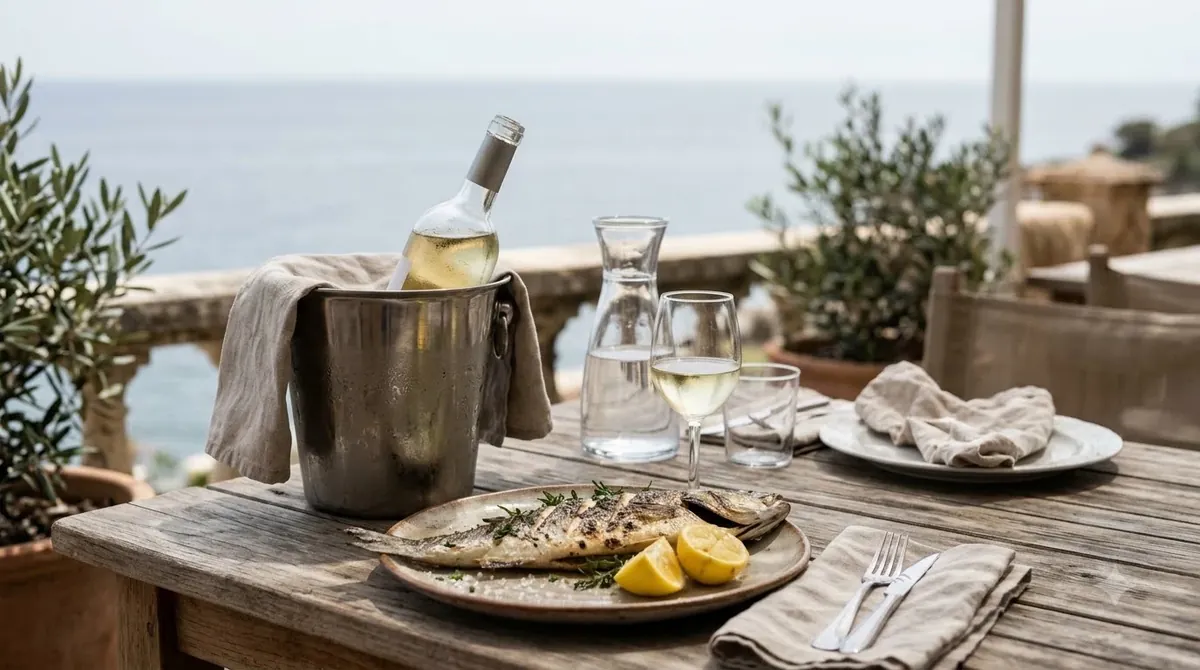
The Wikipedia overview of wine and food matching lists light whites that suit poached and lightly prepared fish, including Pinot Gris, Pinot Blanc, Riesling, Sauvignon Blanc, Chablis, Grüner Veltliner, Vinho Verde, and Muscadet. Muscadet is a particularly good match for shellfish because its crisp, saline character echoes the sea. Chablis, which is made from Chardonnay in a lean, mineral style, is another classic choice for oysters and shellfish.
For a more complete background on the styles, the Wikipedia overview of wine and food matching is a good place to start, since it explains how weight and acidity drive these choices.
Shrimp and scallops show how much the preparation matters. Plain poached or steamed shrimp suits a light, crisp white, but the same shrimp in a garlic and chili sauce needs a wine with more aromatic lift to hold its own. Scallops seared in butter are sweeter and richer than steamed ones, so a fuller white or a sparkling wine with some body usually works better than a very lean style.
Oysters and raw shellfish
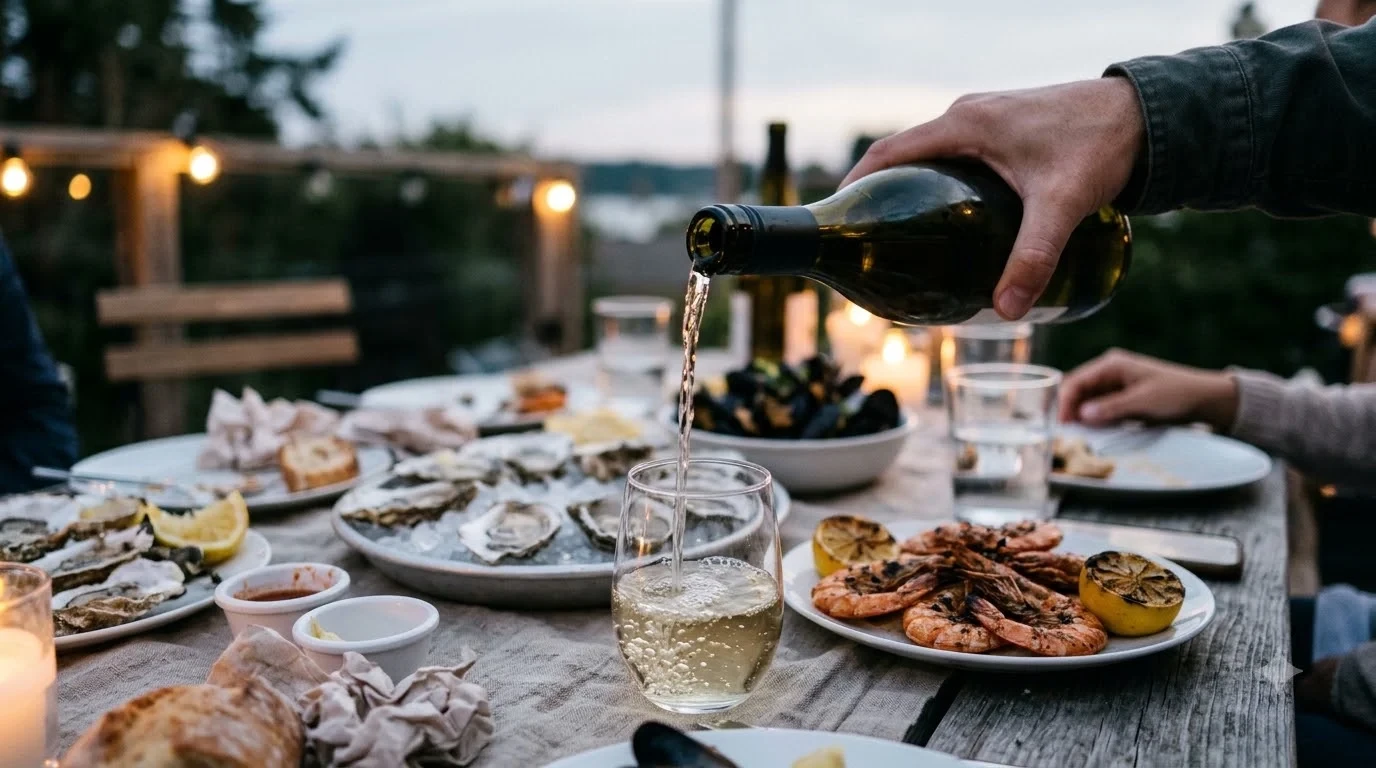
Oysters are a special case because they are raw, briny, and often served with lemon. The overview gives an example: lemon’s acidity makes the oysters seem less briny, which suggests that a high-acid white is the natural partner. Sauvignon Blanc, Muscadet, dry Riesling, and dry sparkling wine are all common choices.
Champagne and other dry sparkling wines are often served with oysters for the same reason. Their acidity and bubbles cut through the saltiness, and the fine texture suits the delicate flesh. Keep the glass cold and pour in small amounts so the wine stays crisp through a long tasting of several oysters.
Shellfish in butter and cream sauces
Lobster, crab, and scallops served in butter or cream sauces are richer and call for a fuller white. Oaked styles and wines with rounder texture can stand up to the fat, and their creamy notes echo the sauce.
The overview points out that a creamy, buttery Chardonnay can complement a rich fish dish, while a crisp, acidic Sauvignon Blanc can cut through the same creaminess. For a lobster or crab dish in a rich sauce, a Chardonnay or a white Burgundy often reads as the more harmonious match. For a dish finished with lemon or herbs, a crisp Sauvignon Blanc keeps the plate bright.
| Seafood style | White wine that fits | Why it works |
|---|---|---|
| Oysters and clams with lemon | Muscadet, dry Riesling, dry sparkling wine | Acidity softens brininess and refreshes the palate |
| Light white fish (sole, cod) | Pinot Gris, Pinot Blanc, Vinho Verde | Light body matches delicate flesh |
| Grilled shrimp or scallops with herbs | Sauvignon Blanc or Grüner Veltliner | Crisp acidity echoes fresh herbs |
| Lobster or crab in butter sauce | Chardonnay or white Burgundy | Texture complements the richness |
Fish and seafood in tomato or spicy dishes
Seafood stews and dishes with tomato, garlic, or chili change the picture. Acidity is still useful, but a wine with some fruit can balance the spice. A dry white with a touch of aromatic character, such as a Riesling with a little sweetness, often handles spicy seafood better than a very austere wine.
When the dish is very sweet, as with glazed shrimp, a slightly sweeter white can work. A small pour of auslese wine is one example, though most seafood dinners are better served with a dry style.
How to serve white wine with seafood
Serve seafood whites cold, but not ice cold. Light whites and sparkling wines are best toward the cool end of the white range, while richer, oaked whites benefit from a bit more warmth so their texture comes through.
Pour modest glasses so the wine does not warm too quickly, and keep the rest of the bottle chilled. This is especially important for a long seafood meal, where the wine may sit on the table for an hour or more.
Common mistakes with seafood and white wine
The most frequent mistake is choosing a heavily oaked white for delicate seafood. Strong toast and vanilla can overpower light white fish and shrimp, leaving the wine tasting louder than the food. A lean, unoaked white is usually the safer choice for simple preparations.
Another mistake is serving a very sweet wine with a dish that is not sweet. Seafood is naturally savory and often salty, so a sugary wine can make the food taste flat. Dry whites and dry sparkling wines keep the balance.
People also tend to forget the sauce. A plate of shrimp with garlic butter, a platter of oysters with mignonette, and a bowl of mussels in tomato broth each call for a different wine, even though all three are seafood. Looking at the sauce first narrows the choice quickly.
Finally, serving white wine too warm is a common problem at seafood dinners, especially outdoors. Keep the bottle in an ice bucket or the refrigerator until it is poured, and refill from the chilled bottle rather than leaving a glass out for a long stretch.
Frequently Asked Questions
What is the best white wine for seafood?
For most seafood, a dry, high-acid white such as Sauvignon Blanc, Muscadet, or Chablis is a dependable choice. Richer shellfish dishes in butter or cream sauces suit a fuller white such as Chardonnay.
What wine goes with oysters?
Muscadet, dry Riesling, Sauvignon Blanc, and dry sparkling wine are common choices. Their acidity balances the brininess of oysters, and the lemon often served with them pairs naturally with that acidity.
Can you drink Chardonnay with seafood?
Yes, particularly with lobster, crab, or scallops in a buttery or creamy sauce. A creamy, buttery Chardonnay complements those dishes, while an unoaked or lean Chardonnay can suit lighter preparations.
Is red wine ever a good choice with seafood?
It is less common, but the Wikipedia overview notes that heavier seafood dishes with cream sauces can call for a fuller white or a light red. For most seafood meals, a white remains the better match.
Seafood is one of the most flexible foods to pair with white wine. Start with a crisp, high-acid white for simple preparations and move to a fuller style when the sauce gets richer. The Wine by Type section is a good next step for comparing the styles side by side.
More in Wine Types & Grapes
 Zinfandel Sugar Content: Dry Red vs. White Zinfandel GramsUpdated Nov 21, 2026
 Best Zinfandel Substitute Options for Sipping and CookingUpdated Nov 21, 2026
 Zweigelt Food Pairing: Best Dishes, Cheeses, and Serving TipsUpdated Nov 21, 2026
 Zinfandel Tannins Explained: How Structure Shapes Every BottleUpdated Nov 21, 2026
 Zinfandel Sweetness Level: Dry Red vs. Sweet White Zin ExplainedUpdated Nov 21, 2026
 Xinomavro Food Pairing: Best Dishes, Styles, and Serving TipsUpdated Nov 21, 2026