

We may earn a commission when you buy through links on this page, at no extra cost to you. Learn more.
If you are wondering what is gsm blend, it is a classic red wine made by combining three grape varieties: Grenache, Syrah, and Mourvèdre. Originating in the Southern Rhône Valley of France, this trio creates a medium- to full-bodied red that balances bright red fruit, dark berry depth, peppery spice, and firm tannins. Winemakers across California, Washington, Australia, and Spain also produce GSM wines, adjusting the percentages to match local climates and house styles.
Understanding how these three grapes interact makes shopping for red blends far easier. Rather than relying on a single variety to carry every element of a wine, a GSM blend divides the work among three distinct partners, resulting in a bottle that is approachable on its own yet structured enough for rich dinners.
What Is a GSM Blend?
A GSM blend takes its name from the first letters of Grenache, Syrah, and Mourvèdre, the three primary red grapes of Southern Rhône appellations like Côtes du Rhône and Châteauneuf-du-Pape. While French appellation rules allow up to 19 grape varieties in certain Southern Rhône reds, these three anchor the style.
According to Wine Folly, each grape plays a specific structural role in the glass. Grenache typically makes up the largest share of a traditional Southern Rhône blend, bringing lighter color, higher alcohol potential, candied red fruit, and a warm, lingering finish. Because Grenache can feel soft or high-toned on its own, winemakers bring in darker, denser varieties to round out the mid-palate.
Syrah steps in to supply bold, up-front dark fruit flavors, deep purple color, and savory spice, though its presence can fade quickly on the finish. Mourvèdre—often used in smaller proportions—closes that gap by adding firm tannin structure, floral aromatics, and an earthy, meaty bass note. Together, the three varieties form the template for most classic rhone blend wine styles produced around the world.
| Grape Variety | Alternative Names | Primary Fruit Notes | Structural Role in Blend |
|---|---|---|---|
| Grenache | Garnacha (Spain) | Raspberry, strawberry, red cherry, orange peel | Body, alcohol warmth, juicy mid-palate, long finish |
| Syrah | Shiraz (Australia) | Blackberry, dark plum, black olive | Deep color, mid-range weight, white and black pepper spice |
| Mourvèdre | Monastrell (Spain), Mataro (Australia) | Blueberry, wild bramble, dried fig | Firm tannins, acidity, floral lift, earthy and savory finish |
Flavor Profile and Styles
Most GSM blends sit in the medium- to full-bodied category with moderate acidity, medium-plus tannins, and alcohol levels typically ranging from 13% to 15% ABV. On the nose and palate, you can expect layers of raspberry, black cherry, plum, baking spices, dried Mediterranean herbs, and cracked pepper.
Reviewers at Wine Enthusiast compare blending GSM to cooking with complementary ingredients: red-fruited, balanced Grenache meets savory Syrah and gamey, bramble-scented Mourvèdre. Because winemakers are free to shift the exact ratios—and even flip the order so Syrah or Mourvèdre leads—no two GSM bottles taste identical.
Climate and oak aging further divide GSM wines into two broad stylistic camps. Cooler or more restrained expressions emphasize dried herbs, rocky minerality, red currant, and subtle spice, often aged in neutral oak or large concrete vessels. Warmer-climate versions lean lush, plush, and jammy, frequently incorporating newer oak barrels that layer vanilla, cocoa, and sweet toast over ripe blackberry and cherry fruit.
Compared to a structured what is bordeaux blend built on Cabernet Sauvignon and Merlot, a GSM generally feels rounder, spicier, and slightly juicier in its youth. That natural warmth and generosity make it a standout category within the broader world of what is red blend styles.
Where GSM Blends Grow Best
GSM grapes thrive in warm, sun-drenched regions with dry summers, low rainfall, and well-drained stony or limestone soils. These conditions allow late-ripening Mourvèdre and Grenache to reach full phenolic maturity without losing their natural herbal freshness.
France’s Southern Rhône Valley remains the historical benchmark. In villages across Côtes du Rhône, Gigondas, Vacqueyras, and Châteauneuf-du-Pape, bush-trained old vines rooted in stony clay and limestone produce wines famed for garrigue—the wild thyme, rosemary, and lavender scent of the Mediterranean hillside.
Outside France, Australia’s Barossa Valley and McLaren Vale have championed the blend for generations, often labeling Syrah as Shiraz and Mourvèdre as Mataro. Old-vine Grenache in South Australia gives these bottles a concentrated, velvety core of sweet red berry fruit backed by rich chocolatey Shiraz and spicy Mataro.
On the American West Coast, Paso Robles in California and the Columbia and Walla Walla Valleys in Washington have become major hubs for Rhône-style reds. In Paso Robles, calcareous limestone soils mirror those of the Southern Rhône, yielding bold, opulent GSMs alongside more restrained, high-acid bottlings from cooler coastal-influenced pockets.
How to Serve a GSM Blend
Serve GSM blends slightly below room temperature, ideally between 60°F and 65°F (15°C to 18°C), in a large, wide-bowled red wine glass. Keeping the bottle slightly cool prevents the higher alcohol from feeling hot on the palate and sharpens the floral and herbal aromatics.
If your bottle has been sitting in a warm kitchen or dining room, placing it in the refrigerator for 20 to 30 minutes before opening brings it right into the ideal serving window. A large Bordeaux- or Syrah-style bowl gives the wine plenty of surface area to breathe, funneling aromas of crushed berries, pepper, and dried herbs toward the rim.
Younger, tannic GSM blends—especially those with a higher proportion of Syrah or Mourvèdre—benefit from 30 to 60 minutes in a decanter before pouring. Aeration softens the youthful grip of Mourvèdre’s tannins and allows savory notes of leather, roasted meat, and baking spice to open up. Once opened and recorked in the fridge, most bottles stay fresh for three to five days.
Tip: If a GSM blend tastes overly alcoholic or heavy when you first pour it, chill the glass or bottle for 15 minutes; a slight drop in temperature immediately brings the red fruit and acidity back into focus.
Food Pairing Ideas
The combination of juicy fruit, savory spice, and moderate acidity makes GSM blends remarkably versatile at the dinner table. They bridge the gap between lighter reds suited for poultry and heavy, tannic reds built for marbled steak.
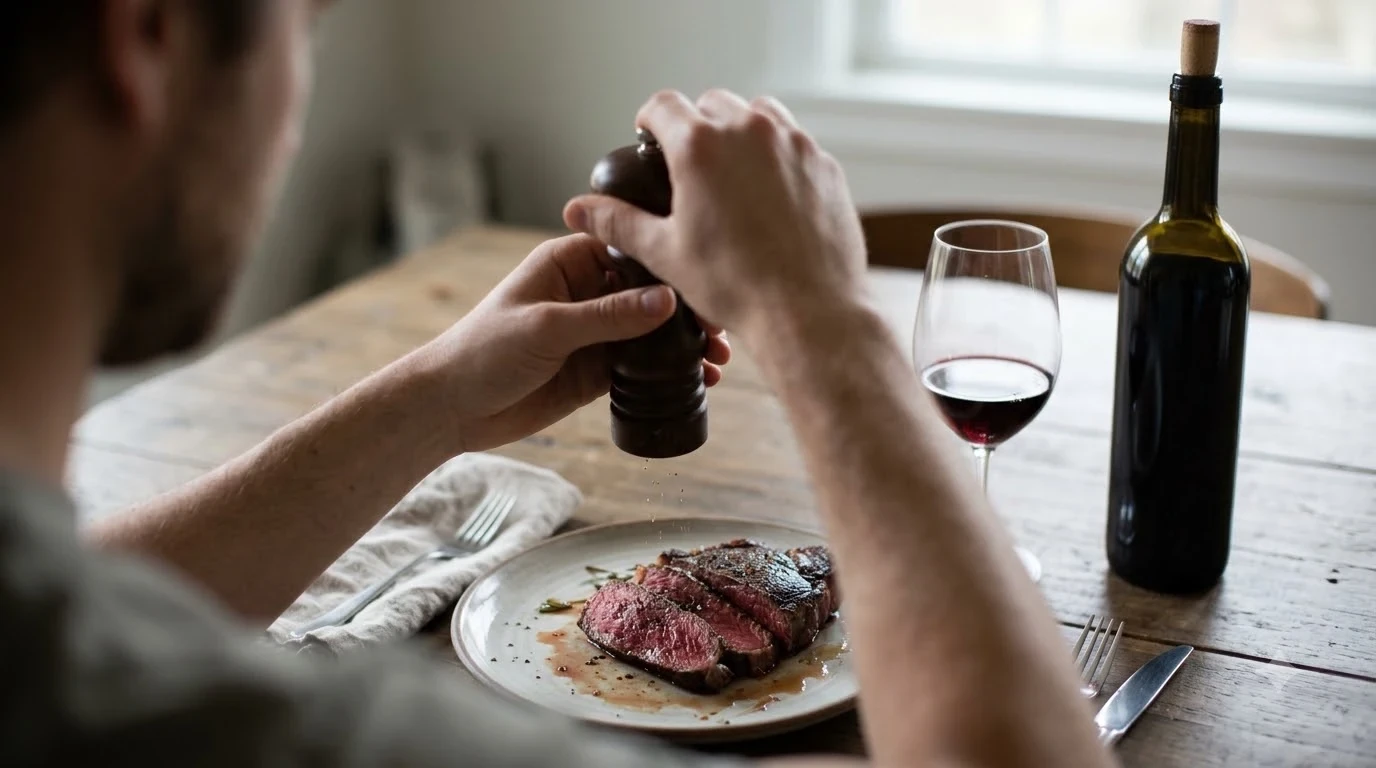
Grilled and smoked meats are classic partners. The natural sweetness of Grenache and smoky depth of Syrah stand up effortlessly to barbecued pork ribs, brisket, burgers, and herb-crusted rack of lamb. Charred edges on the grill echo the peppery, roasted-fruit notes in the wine without clashing with its tannins.
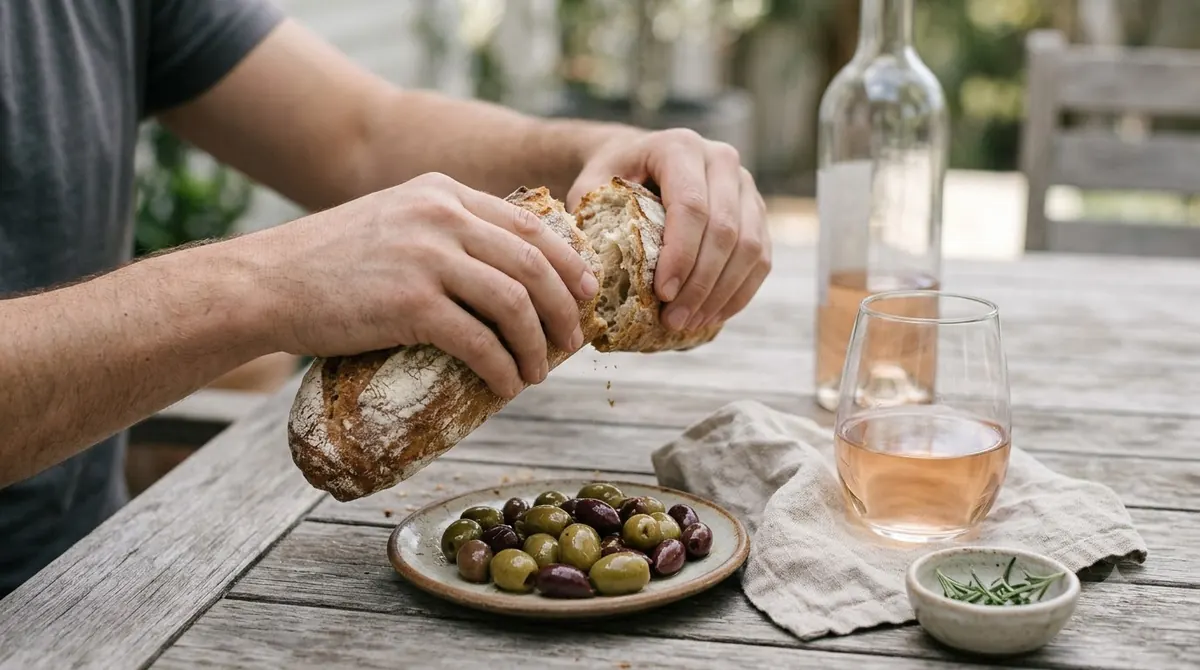
Mediterranean and roasted vegetable dishes work equally well, reflecting the blend’s Southern Rhône roots. Try pairing a bottle with mushroom risotto, ratatouille, lamb gyros, roasted root vegetables, or pizza topped with sausage, olives, and oregano. For further context on how red blends compare against single-varietal reds at the table, explore our guide to Wine by Type.
How to Choose a Bottle
Reading the back label for grape percentages and regional origin is the fastest way to predict how a GSM blend will taste before you buy it. Even when two bottles carry the same three-letter acronym, slight shifts in the recipe dramatically alter the texture and flavor.
Look for Grenache-dominant blends—typically 50% or more Grenache—when you want a lighter-colored, aromatic, red-fruited wine with softer tannins and bright drinkability. Choose bottles with higher percentages of Syrah or Mourvèdre when you prefer dark blackberry fruit, denser color, firmer tannic grip, and savory, earthy complexity.
Region also provides a reliable clue to style. Pick a French Côtes du Rhône or Gigondas for herbal, earthy restraint; reach for Paso Robles or Barossa Valley when you want riper, bolder fruit and a plush, full-bodied mouthfeel.
Frequently Asked Questions
What does GSM stand for in wine?
GSM stands for Grenache, Syrah, and Mourvèdre, the three signature red grape varieties of France’s Southern Rhône Valley. Winemakers blend them so Grenache provides red fruit and body, Syrah adds dark fruit and spice, and Mourvèdre contributes tannin structure and an earthy finish.
Is a GSM blend dry or sweet?
GSM blends are fermented dry, meaning virtually all natural grape sugar is converted into alcohol during fermentation. However, ripe Grenache and warm-climate fruit flavors like raspberry jam and cooked plum can give the wine a perception of fruity sweetness on the mid-palate.
How does a GSM blend differ from a Bordeaux blend?
A GSM blend relies on warm-climate Rhône varieties—Grenache, Syrah, and Mourvèdre—that emphasize ripe red and black berries, cracked pepper, and dried herbs. A Bordeaux blend centers on Cabernet Sauvignon and Merlot, which generally deliver firmer tannins, higher acidity, and flavors of cassis, cedar, and graphite.
Can you age a GSM wine?
Entry-level Côtes du Rhône and everyday GSM blends are crafted for enjoyment within two to five years of the vintage date while their fruit is vibrant. Well-structured bottles from Châteauneuf-du-Pape, Gigondas, or top Paso Robles and Barossa estates—especially those with higher Mourvèdre content—can age gracefully for 10 to 15 years.
Once you understand how Grenache, Syrah, and Mourvèdre balance one another, a GSM blend becomes one of the most reliable bottles to keep on hand for weeknight cooking or weekend grilling. Pay attention to which grape leads the blend and where it was grown, and you can easily match the bottle’s weight and spice to whatever is on your menu.
More in Wine Types & Grapes
 Zinfandel Sugar Content: Dry Red vs. White Zinfandel GramsUpdated Nov 21, 2026
 Best Zinfandel Substitute Options for Sipping and CookingUpdated Nov 21, 2026
 Zweigelt Food Pairing: Best Dishes, Cheeses, and Serving TipsUpdated Nov 21, 2026
 Zinfandel Tannins Explained: How Structure Shapes Every BottleUpdated Nov 21, 2026
 Zinfandel Sweetness Level: Dry Red vs. Sweet White Zin ExplainedUpdated Nov 21, 2026
 Xinomavro Food Pairing: Best Dishes, Styles, and Serving TipsUpdated Nov 21, 2026