

We may earn a commission when you buy through links on this page, at no extra cost to you. Learn more.
Maconnais wine comes from the Mâconnais, a district in southern Burgundy named after the town of Mâcon, and it is mostly white. Chardonnay dominates the vineyards, and the district is valued as a source of good-value Burgundy Chardonnay. Gamay and Pinot noir make the red and rosé bottles, which are a smaller share of the output.
This guide covers where the Maconnais sits in Burgundy, why Chardonnay leads, how the Mâcon, Mâcon-Villages, and Pouilly-Fuissé appellations differ, and how to serve and pair these wines. The figures below come from a reference overview of the district, so they describe the region as a whole rather than any one producer.
Where the Maconnais sits in Burgundy
The Mâconnais is a district in southern Burgundy, on the western side of the Saône river. It is the southern end of the Burgundy wine country, so it sits south of the Côte d’Or and the famous Côte de Beaune. The district takes its name from Mâcon, the town at its heart, and it is often treated as a bridge between the northern Burgundy villages and the Beaujolais hills further south.
Visitors who know Burgundy from the Côte de Nuits usually notice the difference quickly. The Mâconnais has more open landscapes and a broader mix of villages, and its wines tend to be made in a more direct, fruit-forward style that suits everyday drinking.
Why Chardonnay leads the district
Chardonnay is the main grape of the Maconnais, and almost all of the district’s production is white. The reference overview gives the vineyard area in 2010 as 6,991 hectares, and most of that was planted to Chardonnay. In practice, that means the district’s identity rests on the way Chardonnay grows on its limestone hills and how winemakers handle it in the cellar.
Many buyers look for the Mâconnais because it offers the richness of white Burgundy at a more approachable profile. The wines typically show ripe orchard fruit, a bit of citrus, and a creamy texture when they are aged in oak, though many bottles are made in a lighter, unoaked style for early drinking.
Vintage conditions also play a role. A warm, sunny year tends to give riper fruit and a fuller texture, while a cooler season brings more acidity and a leaner finish. Reading the year on the label helps you predict whether the bottle will feel rich or crisp, and the producer’s back label often explains the style they were aiming for.
Red and rosé from Gamay and Pinot noir
Red and rosé are a much smaller part of the story. Gamay and Pinot noir are used for these wines, and they are allowed to make up no more than 30 percent of the district’s production. Red and rosé Mâcon tends to be light and fresh, with red berry fruit and a clean finish rather than the deep structure of the Côte d’Or reds.
If you are curious about the reds, look for bottles that say Gamay or Pinot noir clearly on the label. Their lighter body makes them a good match for lunch, picnic food, and dishes with tomatoes or grilled vegetables.
Appellations from Mâcon to Pouilly-Fuissé
The Mâconnais uses several appellation names, and each one signals a different level of style and price. The simplest is Mâcon, which covers white, rosé, and red. Mâcon-Villages is a step up and is limited to white wine from named villages. The most sought-after white is Pouilly-Fuissé, with Pouilly-Loché and Pouilly-Vinzelles as junior partners, and Saint-Véran and Viré-Clessé are other well-known names.
| Appellation | Colour | What it signals |
|---|---|---|
| Mâcon | White, rosé, red | The basic district appellation, widely available |
| Mâcon-Villages | White | White wine from named villages, often more body than basic Mâcon |
| Saint-Véran | White | Fresh, fruity Chardonnay with a lighter style |
| Viré-Clessé | White | Richer Chardonnay from a defined village area |
| Pouilly-Fuissé | White | The best-known and most sought-after white of the district |
Soils, slopes, and the limestone hills
The best wines of the Mâconnais come from limestone hills, and the reference overview points to Mont de Pouilly as a key example. The alkaline clay soils suit Chardonnay, which tends to give more minerality and a firmer structure when grown on these slopes. Flatter land and lower-lying vineyards usually produce softer, rounder styles.
The district’s production is large by Burgundy standards. In 2010 the reference overview recorded about 342,648 hectoliters of wine, of which 316,725 hectoliters were white and 25,933 were red and rosé. That scale is one reason so many Mâcon bottles reach shops and restaurants across the world at a steady quality level.
Tip: When you buy a Pouilly-Fuissé or Saint-Véran, read the producer’s note on the cellar, the oak use, and the vintage. Those details often tell you more about the style than the appellation name alone.
How to serve and pair Maconnais wine
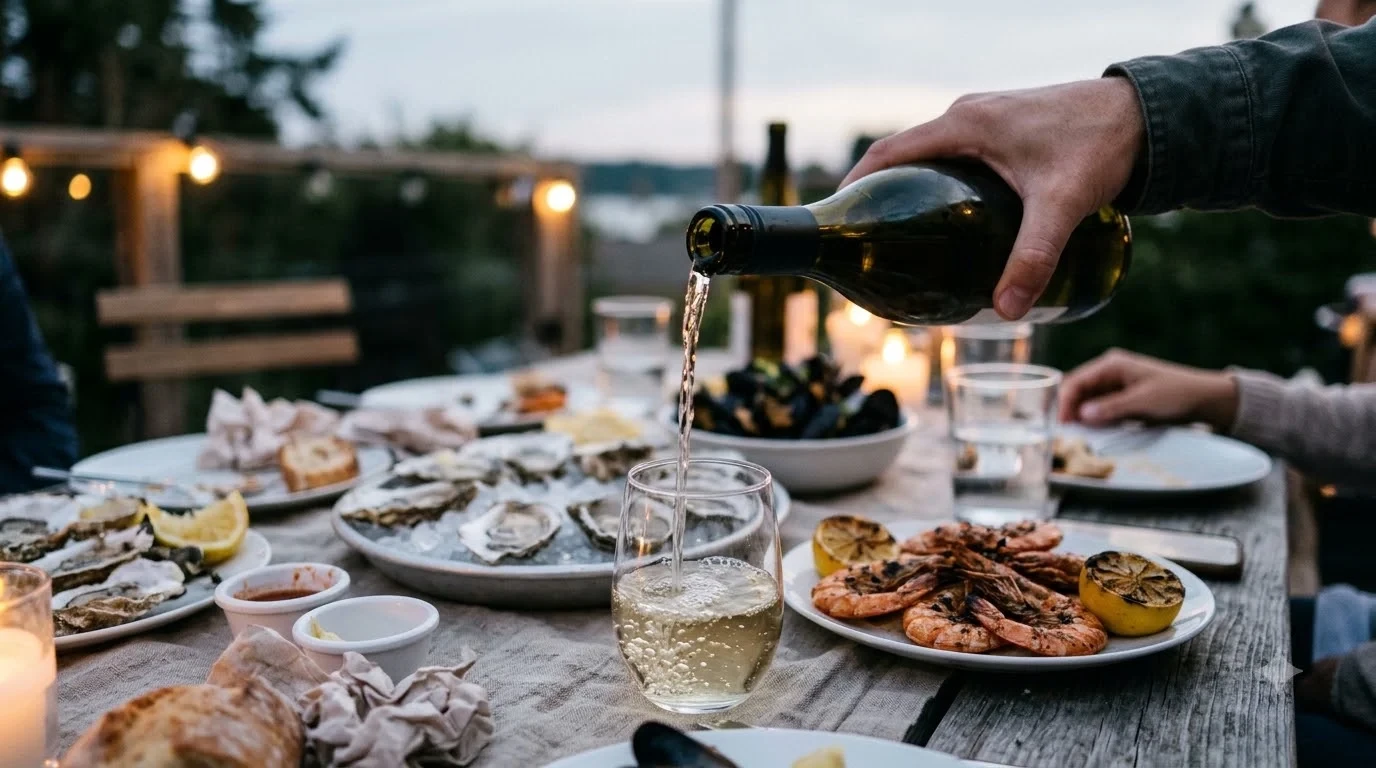
Serve white Mâcon and Mâcon-Villages well chilled, but not ice cold, so the Chardonnay fruit and texture can show. A standard white wine glass works well. Pouilly-Fuissé and other richer whites can be served slightly warmer, which brings out more of the creamy and savory side of the wine.
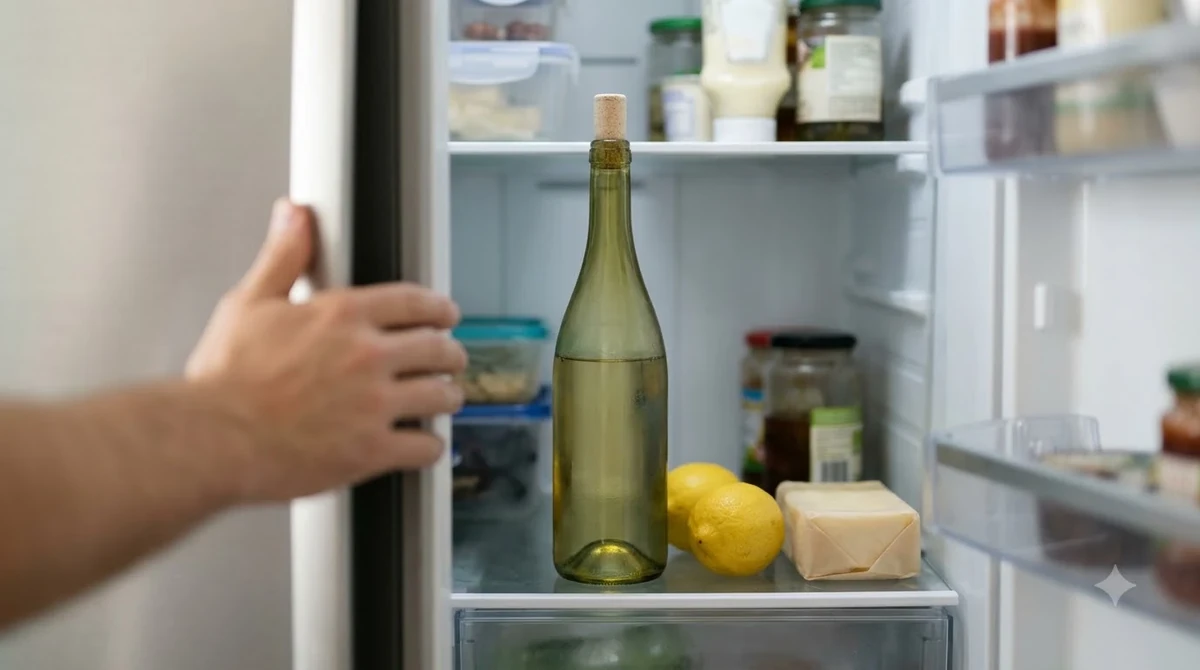
Red and rosé are best served cool. A short rest in the fridge before pouring keeps the fruit fresh. Recork leftovers and keep them chilled for a day or two, since the lighter styles lose their bright character quickly once opened.
For food, Mâcon whites suit roast chicken with herbs, creamy pasta, grilled fish, and soft cheeses like brie or goat cheese. Richer Pouilly-Fuissé is a good match for pork with apples, roast poultry with mushrooms, and lobster or crab with butter sauce. Gamay-based reds work with picnic food, charcuterie, and grilled sausages, while rosé fits salads and light seafood dishes.
Frequently Asked Questions
Is Maconnais wine the same as Chablis?
No. Both are white Burgundy made from Chardonnay, but Chablis is a separate district further north with its own soils and style. Maconnais wines are usually rounder and fruitier than most Chablis.
What is the difference between Mâcon and Mâcon-Villages?
Mâcon is the basic district appellation and can be white, rosé, or red. Mâcon-Villages is a white-only appellation for wine from named villages, and it generally has more body and character than basic Mâcon.
Is Pouilly-Fuissé the best wine of the Mâconnais?
Pouilly-Fuissé is the best-known and most sought-after white of the district, so it is often the top choice. Quality still varies by producer and vintage, and Saint-Véran and Viré-Clessé also offer good value.
Should Maconnais white wine be served cold?
Serve it well chilled, but not ice cold. Very cold temperatures mute the Chardonnay aromas, so a short time out of the fridge before pouring helps the fruit and texture come through.
The Maconnais is a useful next step for anyone who enjoys white Burgundy and wants to explore beyond the Côte d’Or. Start with the broader wine regions guide to compare the district with other areas, and then try a Mâcon-Villages or a Saint-Véran to taste how the limestone hills shape the wine.
For background on the district’s size, grapes, and appellations, the reference entry on the Mâconnais on Wikipedia gives the vineyard area and the production split between white and red. If you want to compare Chardonnay from a different part of the world, the guide to anderson valley wine covers a cooler California region known for its Chardonnay and Pinot noir.
More in Wine Regions
 Willcox Wine Trail: Discover Arizona’s High-Elevation Wine CountryUpdated Nov 20, 2026
 Yakima Valley Wine Region: Find the Best Styles to TryUpdated Nov 20, 2026
 Vosne Romanee Wine Tasting: Identify Aromas and Choose Better PairingsUpdated Nov 20, 2026
 Yakima Valley Wine Festival: Find the Best Seasonal Wine EventsUpdated Nov 20, 2026
 Wales Vineyards: Discover Cool-Climate Wines and Where to VisitUpdated Nov 20, 2026
 Yountville Wine Festival: Discover Napa Wines and Local FoodUpdated Nov 20, 2026