

We may earn a commission when you buy through links on this page, at no extra cost to you. Learn more.
Melon de Bourgogne wine is a dry, light white from the western Loire Valley, most often sold as Muscadet, and it is valued for its crisp, clean style with seafood. The wine is meant to be drunk young and cold, and it is one of the most practical pairings for oysters, shellfish, and simple grilled fish. Its character comes from the Atlantic-influenced Loire rather than from oak or heavy fruit.
This guide looks at the finished wine: how it tastes, how to read a Muscadet label, how to serve it, and which dishes suit it best. It focuses on the wine style and how to choose a bottle, rather than on the grape’s history or vine characteristics. If you want the background on the variety, the separate wine by type overview is a useful starting point.
What Melon de Bourgogne Wine Tastes Like
Melon de Bourgogne wines are dry and light-bodied, with crisp acidity that makes them feel fresh and clean. Many examples show citrus, green apple, and a faint saline or mineral edge, which many drinkers connect with the Atlantic coast. The fruit is restrained rather than exuberant, and the wine is usually lean rather than round or creamy.
Because the flavors are subtle, the wine works best when it is young and cold. A young bottle shows bright, lively fruit and a clean finish. Over time, the wine can become more textured, but most bottles are not made with long aging in mind. Drinkers who enjoy understated whites often find it one of the most satisfying choices on a warm afternoon.
Reading a Muscadet Label
Most Melon de Bourgogne wine is sold under the Muscadet name. The label may also show a sub-region, which tells you more about the place the grapes came from. Within the Muscadet family, the wines are broadly similar in style, though small differences in soil and vineyard management can change the texture and the length of the finish.
Look for the vintage and the producer, and read the back label for tasting notes. Many Muscadet estates are family-run and describe their wines plainly, which helps you compare bottles. Because the style is light, the producer’s approach to the wine, such as whether the wine has been kept on its lees, can make a noticeable difference in texture.
| Label clue | What it usually tells you |
|---|---|
| Muscadet | Standard style, dry and light |
| Sub-region name | A more specific place, often with a slightly defined character |
| Sur lie on the label | The wine was aged on its lees, adding texture |
| Vintage year | Drink young, ideally within a year or two |
How to Serve Melon de Bourgogne Wine
Serve Melon de Bourgogne cold, straight from the refrigerator, and pour it into a standard white wine glass. Cold temperatures keep the wine crisp and make the acidity feel lively. The VinePair guide to serving temperatures places light, aromatic whites in the cold range, which is the right target for this style.
There is no need to decant, since the wine is meant to be drunk fresh. Pour modest amounts and refill from the bottle as needed, rather than leaving a full bottle on the table where it will warm up. Keep the bottle in an ice bucket if you are serving it outdoors.

Best Food Pairings for Melon de Bourgogne
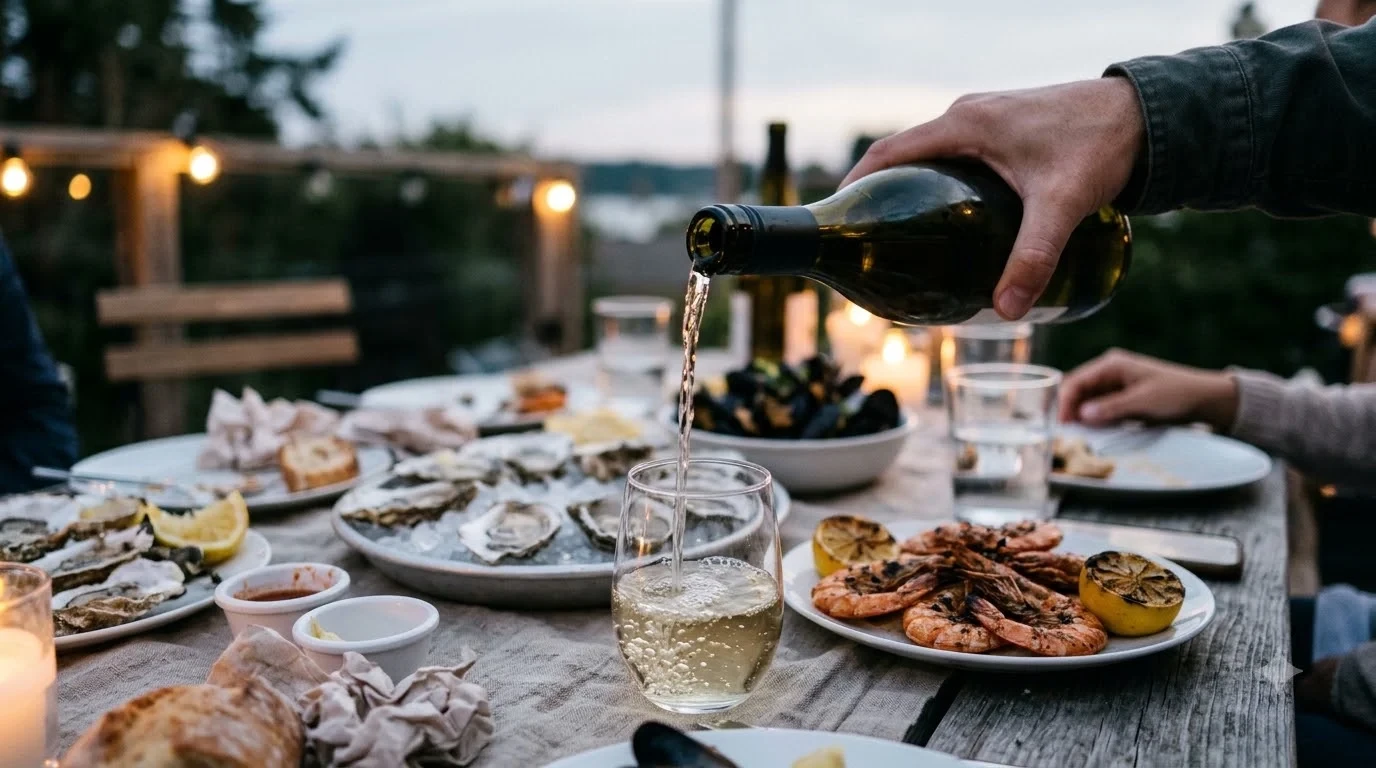
The classic partner is shellfish. Oysters, mussels, clams, and shrimp all suit the wine’s acidity and clean finish, and it is the standard choice for a seafood platter in the Loire. Lemon and herb dishes also match well, since the wine echoes the citrus without overwhelming the food.
For a simple dinner, Melon de Bourgogne works with grilled white fish, goat cheese salads, and light pasta with olive oil and herbs. It is a good match for dishes that would clash with a bold red, and it can take the place of a Sauvignon Blanc when you want something similar but more restrained.
Buying Melon de Bourgogne Wine
Melon de Bourgogne is widely sold as Muscadet, so you will often find it in wine shops and seafood-focused restaurants. When buying, choose the most recent vintage available, since the wine is meant to be drunk young. A bottle from a producer who describes the vineyard and the winemaking clearly is usually a good sign, even at a modest price point.
If you are building a selection for a dinner, pair one bottle of basic Muscadet with a more textured sur lie version. Serving both lets guests compare the crisp, lean style with the rounder, more textured one, which is a simple way to understand how much the winemaking shapes a light white.
Storing and Keeping Melon de Bourgogne
Store unopened bottles in a cool, dark place. Because the wine is made to be drunk young, there is no need to cellar it for years. Once opened, reseal the bottle, keep it in the refrigerator, and plan to finish it within a day or two, since the fresh fruit and acidity fade as the wine sits.
How Melon de Bourgogne Compares With Other Light Whites
Melon de Bourgogne belongs to the same family of lean, dry whites as many Atlantic-style wines. If you like its freshness but want something with more aromatic lift, auslese wine is a very different style, sweeter and more perfumed, and it can show you the range of white wines available. For a sweeter option with lively aromatics, a black muscat wine offers a more fragrant experience.
The main point of comparison is structure. Melon de Bourgogne is light and crisp, so it suits drinkers who want a white that refreshes rather than fills the glass. That makes it a useful reference point for anyone exploring the Loire.
Why the Style Suits Seafood
Coastal wines tend to share a few traits: bright acidity, a lean body, and a clean finish. Those qualities are exactly what seafood needs, since fish and shellfish are delicate and easily overwhelmed by oak or heavy fruit. A glass of Melon de Bourgogne cuts through the richness of oysters and butter sauces and resets the palate between bites.
That practical logic is why the wine remains a regional standard. People in the Loire have long drunk it with the food from the local coast, and the match feels natural because the wine and the seafood come from the same kind of landscape.
Getting the Most Out of a Bottle
To taste the wine at its best, open the bottle close to serving time and let it sit in the refrigerator until you pour. Taste a small amount first to check the balance, then decide whether it needs more time in the cold. A bottle that tastes too sharp at first often softens slightly as it warms a few degrees in the glass, so pour in small amounts and taste as the evening goes on.
Keeping a couple of bottles chilled is a simple habit that pays off. Muscadet is an easy choice for an unplanned dinner, and it fits neatly beside a plate of oysters, a salad, or simple grilled fish without any extra preparation.
Frequently Asked Questions
Is Melon de Bourgogne a dry or sweet wine?
Melon de Bourgogne wine is usually dry. It is light-bodied with crisp acidity and little residual sweetness, which makes it a good match for seafood.
What is Muscadet made from?
Muscadet is made from Melon de Bourgogne grapes grown mainly in the western Loire Valley. The name is used for the regional style of dry white wine.
What food goes best with Melon de Bourgogne?
Oysters, mussels, clams, and shrimp are the classic pairings. The wine also suits grilled white fish, goat cheese salads, and dishes with lemon and herbs.
Should Melon de Bourgogne be aged?
Most Melon de Bourgogne wines are meant to be drunk young, within a year or two of the vintage. The fresh fruit and acidity are the main attraction, and they fade over time.
Melon de Bourgogne wine is a practical and food-friendly white that rewards a simple approach. Chill a bottle of Muscadet, pair it with oysters or grilled fish, and you will see why it remains a favorite wherever seafood is on the table.
More in Wine Types & Grapes
 Zinfandel Sugar Content: Dry Red vs. White Zinfandel GramsUpdated Nov 21, 2026
 Best Zinfandel Substitute Options for Sipping and CookingUpdated Nov 21, 2026
 Zweigelt Food Pairing: Best Dishes, Cheeses, and Serving TipsUpdated Nov 21, 2026
 Zinfandel Tannins Explained: How Structure Shapes Every BottleUpdated Nov 21, 2026
 Zinfandel Sweetness Level: Dry Red vs. Sweet White Zin ExplainedUpdated Nov 21, 2026
 Xinomavro Food Pairing: Best Dishes, Styles, and Serving TipsUpdated Nov 21, 2026