

We may earn a commission when you buy through links on this page, at no extra cost to you. Learn more.
Livermore Valley wine comes from an American Viticultural Area in Alameda County, California, centered on the city of Livermore in the Tri-Valley region east of San Francisco Bay. The valley was approved as an AVA in 1982 and expanded in 2006. Its cool marine winds and morning fog set it apart from hotter inland vineyards, and it is best known for Sémillon, Petite Sirah and a range of Cabernet Sauvignon and Chardonnay.
This guide looks at the valley itself: where it sits, how its climate shapes the grapes, which varieties have a history here, and what that means when you are choosing a bottle. For how these wines taste, serve and pair, the Wine Regions hub is a good companion read.
Where Livermore Valley Sits and How It Was Recognized
Livermore Valley is one of California’s smaller and more distinctive appellations, tucked into the Tri-Valley area of Alameda County. According to Wikipedia’s entry on the Livermore Valley AVA, the Bureau of Alcohol, Tobacco and Firearms approved the designation on September 1, 1982, and the boundaries were expanded in 2006. The valley is named for the city at its center, and the wine region’s identity has grown up around that town.
An AVA is a legal place name for wine, so a bottle labeled Livermore Valley must meet the rules tied to that boundary. The size of the designation is modest compared with some California regions, which is part of why the valley feels like a close-knit wine community rather than a large commercial district.
Because the valley is inland but still receives cool marine winds, its conditions sit between two very different wine worlds. That mix helps explain why the grapes grown here range from warm-climate reds to crisp white varieties.
The Climate That Shapes Livermore Valley Grapes
The valley has what Wikipedia describes as a moderate coastal climate, with cool marine winds and morning fog that moderate daytime temperatures. Those influences keep the growing season from becoming too hot, even though the summers can still be warm. The AVA is rated Winkler Region III, and the growing season runs about 254 days.
The local numbers show how wide the range is. Average annual rainfall is about 14.45 inches, the average high is around 72.9°F (22.7°C) and the average low is about 45.3°F (7.4°C). Summer temperatures have exceeded 100°F (38°C), while the lowest recorded winter temperature was 19°F (−7°C). That spread is one reason growers can ripen red grapes fully while still keeping enough acidity in the whites.
| Measure | Livermore Valley figure | What it means for wine |
|---|---|---|
| Winkler rating | Region III | A warm enough season for full-flavored reds and whites |
| Growing season | About 254 days | Long time for grapes to ripen before harvest |
| Average annual rainfall | About 14.45 in (367 mm) | Modest rainfall, so vines depend on a dry growing season |
| Average high / low | 72.9°F / 45.3°F (22.7°C / 7.4°C) | Cool nights keep acidity in the grapes |
| Recorded extremes | Above 100°F in summer; 19°F in winter | Wide swings that vineyard crews must plan around |
Tip: When you see a Livermore Valley label, the warm days and cool nights are a useful clue to the style. Expect fruit that is ripe but not overripe, and wines with enough acidity to pair with food.
The Grapes With a History Here
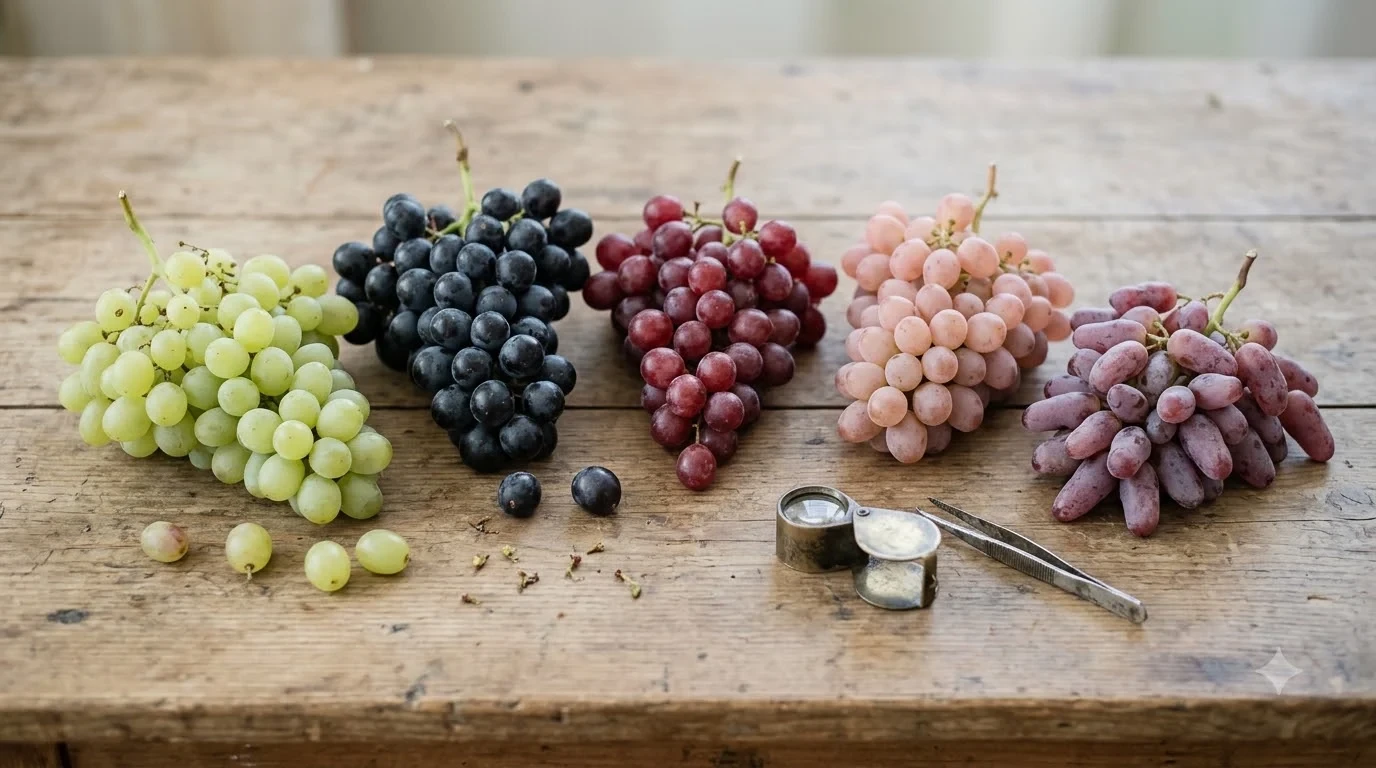
Several varieties give Livermore Valley its character, and some have been part of the valley’s story for generations. Sémillon is one of the oldest. According to Wikipedia, the original plantings came from cuttings of Château d’Yquem, the famous Sauternes estate, and the article notes that those grapes still produce fine wine in the Livermore area.
Petite Sirah is the variety most closely tied to the valley’s red wine reputation. The same source calls it the relatively obscure grape that produced Livermore’s best historically known red wine. Wine Folly describes Petite Sirah, also known as Durif, as dry and full-bodied, with high tannins, medium acidity and alcohol over 15% ABV. Its typical flavors include sugarplum, blueberry, dark chocolate, black pepper and black tea.
Cabernet Sauvignon is also grown and described as excellent in the area, and Chardonnay has a place among the valley’s white wines. Some wineries have moved to specialize in Chardonnay, which shows how producers have tried different varieties over time rather than relying on a single grape.
How Many Wineries Are in Livermore Valley
The valley’s winery count is a useful indicator of how active the region is. Wikipedia reports that the valley had over 50 wineries as of 2024, and the infobox on the same page gives the figure as 50 or more. Because the count changes as wineries open and close, treat it as a snapshot rather than a fixed number.
A cluster of this size means that many tasting rooms and small producers sit close together. That makes the valley easier to explore on a single day than some larger California regions, although it still helps to plan visits in advance.
Because the valley is compact, the region’s wines are also easy to compare side by side. A flight that pairs a crisp Sémillon with a structured Petite Sirah shows how the same climate can support very different styles, and it is a practical way to learn what the valley does well before you commit to a full bottle.
Choosing a Livermore Valley Bottle
When you are shopping, start with the grape rather than the brand. A Sémillon from the valley will taste very different from a Petite Sirah, even though both come from the same AVA. Read the back label for the variety, the vintage and the alcohol level, since these tell you what to expect in the glass.
Look for producers who explain their vineyards clearly. A winery that names its grapes, describes the growing conditions and explains its harvest decisions is usually easier to trust than one that offers only a general regional name.
If you are comparing this valley with other places, you can see how a different climate changes the same grape. The anderson valley wine guide covers a cooler coastal region, and the barossa valley wineries guide shows how a warmer valley approaches its own styles.
Frequently Asked Questions
What makes Livermore Valley different from other California wine regions?
Its cool marine winds and morning fog moderate a valley that is still warm in summer. The AVA is also distinctive for its historic plantings of Sémillon and its long association with Petite Sirah.
When did Livermore Valley become an AVA?
According to Wikipedia, the Bureau of Alcohol, Tobacco and Firearms approved the designation on September 1, 1982, and the boundaries were expanded in 2006.
Is Petite Sirah the main grape of Livermore Valley?
Petite Sirah is the variety most often linked to the valley’s red wine history, but the region also grows Cabernet Sauvignon, Chardonnay and Sémillon. A visitor will find a mix of styles, not a single signature grape.
What temperature should Petite Sirah be served at?
Wine Folly gives 60–68°F (15–20°C) for Petite Sirah and recommends decanting for about an hour. Those steps help the high tannins soften and the fruit show more clearly.
Livermore Valley wine rewards a close look at its climate and history. Start with a Sémillon or Petite Sirah, note how the cool evenings show in the glass, and compare it with wines from warmer or cooler regions to see how the valley fits in.
More in Wine Regions
 Willcox Wine Trail: Discover Arizona’s High-Elevation Wine CountryUpdated Nov 20, 2026
 Yakima Valley Wine Region: Find the Best Styles to TryUpdated Nov 20, 2026
 Vosne Romanee Wine Tasting: Identify Aromas and Choose Better PairingsUpdated Nov 20, 2026
 Yakima Valley Wine Festival: Find the Best Seasonal Wine EventsUpdated Nov 20, 2026
 Wales Vineyards: Discover Cool-Climate Wines and Where to VisitUpdated Nov 20, 2026
 Yountville Wine Festival: Discover Napa Wines and Local FoodUpdated Nov 20, 2026