

We may earn a commission when you buy through links on this page, at no extra cost to you. Learn more.
Syrah grape is a dark-skinned red variety that started in France’s northern Rhône Valley, where it produces firm, savory wines with notes of black fruit, smoke, and black pepper. The same vine is called Shiraz in Australia and many other warm regions, and it adapts well to very different climates. Understanding the syrah grape starts with its French roots, the traits the vine carries into the glass, and the way climate changes what you taste.
Syrah is one of the most respected red grapes in the world, yet many drinkers know it only by name on a bottle. The grape makes wines that range from lean and peppery to plush and fruity, depending on where the vines grow and how the winemaker handles the fruit. This guide focuses on the grape itself: its origins, the characteristics of the vine, the flavors it produces, and how to serve and pair a syrah with confidence.
Where the Syrah Grape Began
Syrah is generally traced to the Rhône Valley in southeastern France. The northern part of that valley is its historic heartland, and the grape became the defining red there. Famous appellations such as Hermitage and Côte-Rôtie are built around it, and the northern Rhône is often described as the grape’s home in the way Burgundy is the home of pinot noir. Syrah also appears in the southern Rhône, where it adds structure and color to blends alongside other varieties.
Syrah’s name and story travelled far beyond France. According to Wine Folly’s grape guide to Syrah, the grape is now the most planted variety in Australia, where it is known as Shiraz. Its spread into California, South Africa, and other warm regions means the syrah grape is now a truly global variety, with many local interpretations.
What Kind of Vine Syrah Is
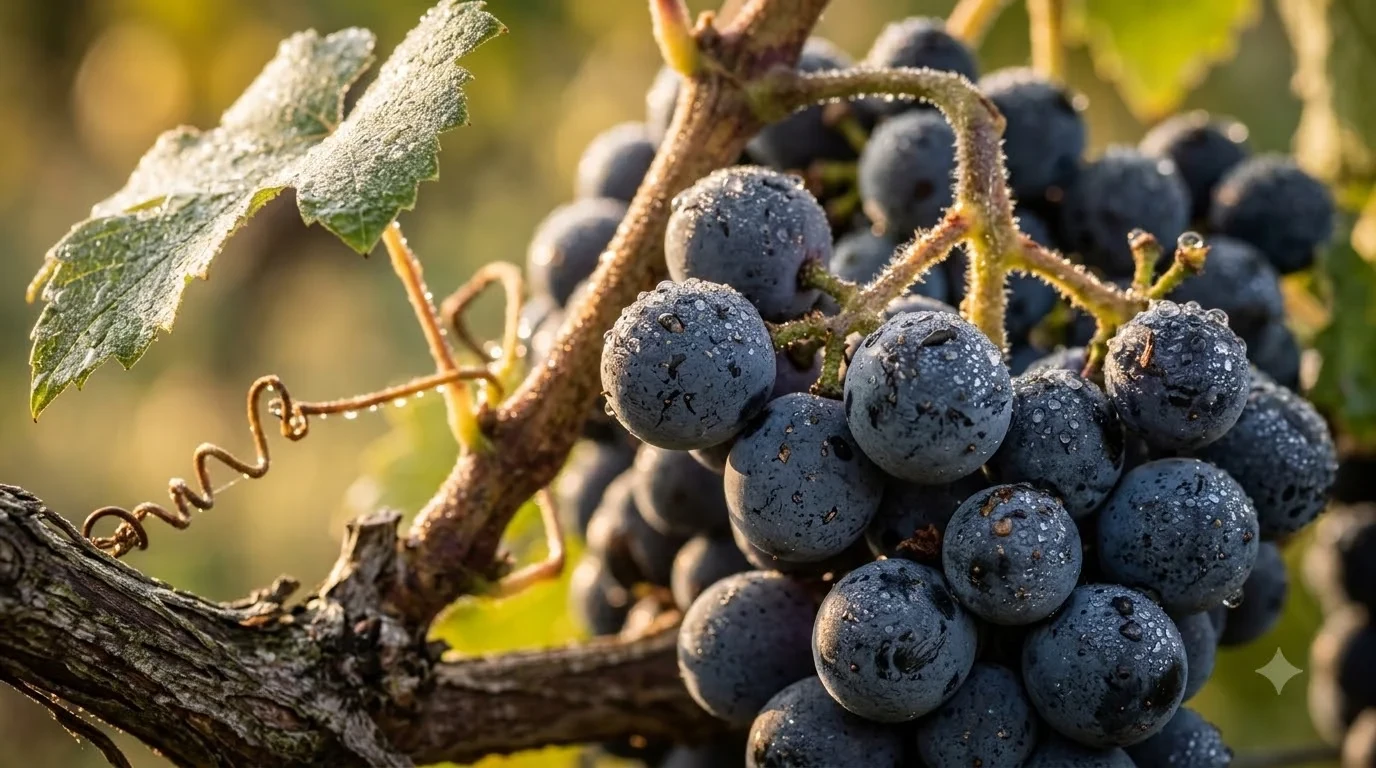
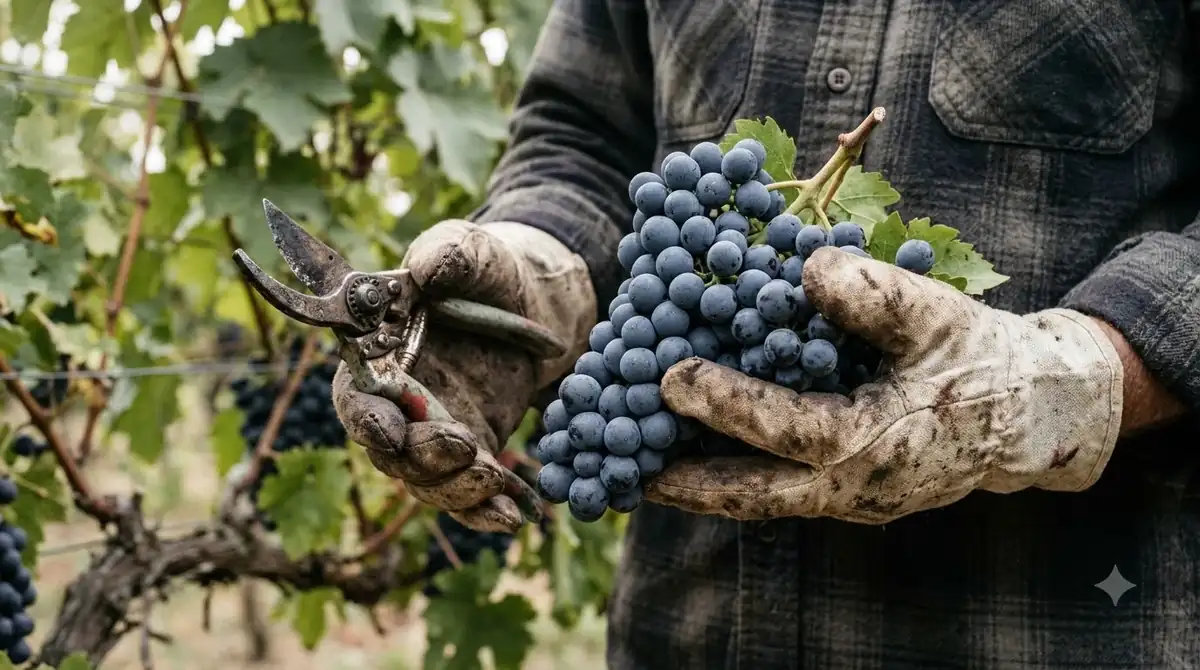
The syrah vine is known for dark, thick-skinned berries. Those skins contribute deep color and firm tannin, which is the grip you feel on your gums and tongue. A grape with strong tannin can age well, but it also needs a suitable site and careful management to ripen fully. Vineyard managers pay close attention to sun exposure, soil, and yields, because the balance between sugar and acidity at harvest shapes the final wine.
The vine also responds strongly to where it grows. Cooler sites ripen the fruit more slowly, keeping acidity higher and aromas more savory. Warmer sites ripen the fruit more fully, producing wines with more sugar, more alcohol, and softer, riper flavors. Winemakers can shape the result through picking time, whole-cluster fermentation, and oak, but the site remains the most important factor. That is why the same grape can taste so different from one bottle to the next.
The Flavor Profile of Syrah
Syrah is recognized for its layered aromas. Cool-climate wines often show violets, black olive, blueberry, smoke, and cracked black pepper. Those savory notes give the wine its personality, and they often develop into forest floor, leather, or earth as the bottle ages. Warm-climate examples tend toward black plum, blackberry jam, dark chocolate, and licorice, with vanilla and coffee notes when oak plays a bigger role.
Most syrah is medium to full bodied, and the structure is one of its signature traits. The wine’s tannin and acidity hold the fruit together, so a well-made syrah feels balanced rather than heavy. Young examples can taste tight and dense, which is why they often benefit from decanting or a few years of cellaring before they open up.
| Style | Climate cue | Typical aromas | Structure |
|---|---|---|---|
| Northern Rhône Syrah | Cool, steep sites | Violet, olive, smoke, cracked pepper | Firm, with high tannin |
| Barossa-style Shiraz | Warm, sunny sites | Black plum, blackberry jam, chocolate | Full bodied, softer tannin |
| Coastal or cool-region Syrah | Moderate, maritime influence | Blueberry, black fruit, herbs | Medium to full, balanced acidity |
The table simplifies a broad range, but it shows the main pattern. Syrah from a cooler place usually feels more structured and savory, while syrah from a warmer place usually feels riper and more generous. Many good bottles sit between these poles, and that middle ground is where much of the grape’s best work happens.
How to Serve Syrah
Serving temperature changes how a syrah tastes. Warm wine can taste hot and heavy, especially when alcohol runs high, which is why many guides suggest cooling it a little before pouring. VinoFYI’s guide to Syrah and Shiraz recommends serving it at about 63 to 66 degrees Fahrenheit, which keeps the fruit lively and the alcohol in the background.
Decanting is worth the effort for young, firm wines. The same guide suggests 45 to 60 minutes of decanting for young, tannic bottles. Pour the wine into a wide glass, let it breathe, and you will notice the aromas open. Older bottles often need less time, and they can throw sediment, so decant them more gently and pour carefully.
Glassware is a simple choice. A wide-bowled glass gives the aromas room to develop, and it works well for both cool and warm styles. You do not need a special glass for syrah, but a generous bowl helps the wine show its layers.
Foods That Match Syrah
Syrah pairs naturally with food that has char, fat, and spice. Grilled lamb is a classic choice, and so are beef short ribs and slow-braised meats. Game such as venison and wild boar matches the wine’s savory side, and olive-based dishes bring out its dark fruit. Moroccan-spiced stews and tandoori-style meats also work well, because the spice and the wine’s pepper notes reinforce each other.
Cheese is an easy partner. Aged cheddar, Manchego, and Pecorino hold up against a firm red, and the salty, nutty flavors complement the wine. For a lighter meal, a delicate fish or a fresh vegetable dish can overwhelm a bold syrah, so consider a lighter red such as pinot noir grape wines when the menu leans that way.
Syrah and Chardonnay: Two Very Different Grapes
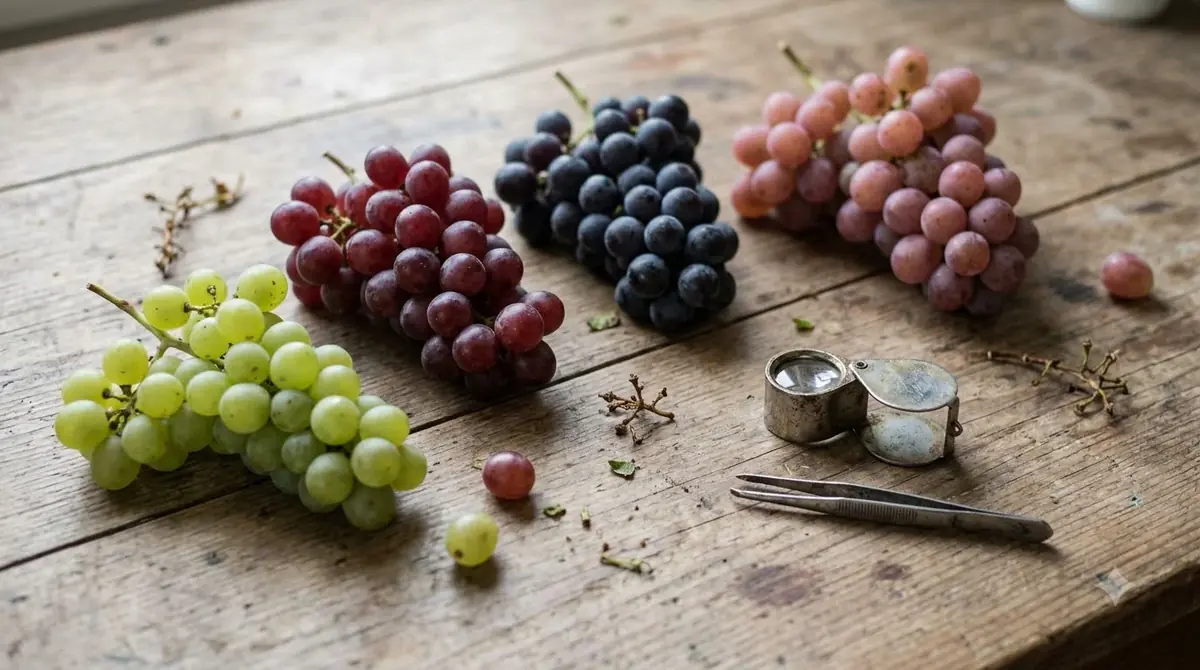
Comparing syrah with a white variety helps show what makes it unusual. Syrah is a red grape with deep color, firm tannin, and savory aromas. Chardonnay, by contrast, is a white grape whose wines range from crisp and mineral to rich and toasty, depending on how they are made. Both grapes are versatile, but they ask for very different food and serving choices.
If you enjoy a rich chardonnay, you may find a warm-climate syrah appealing because it offers similar generosity in red form. If you prefer a fresher, more restrained style, a cool-climate syrah may feel more familiar. Reading the producer’s region is the easiest way to predict which direction a bottle will take. For a broader map of white and red choices, the chardonnay grape guide is a useful companion.
Choosing a Bottle of Syrah
Start by looking at the region. Cool-climate syrah from the northern Rhône or similar sites shows more structure and herbal, savory notes. Warm-climate syrah or shiraz from sunny regions tends to be fruit-forward and fuller. Both styles are good, but they suit different meals and moods, so choose according to what you plan to serve.
Alcohol is another useful clue. Higher-alcohol bottles usually come from riper fruit and feel more powerful, while lower-alcohol bottles often feel brighter and more food-friendly. If you are new to the grape, a mid-priced bottle from a well-known region gives a fair sample. As your palate develops, the broader guide to Wine by Type can help you explore other red varieties.
Frequently Asked Questions
Is syrah the same as shiraz?
Yes, they are the same grape. Syrah is the name used in France and many other regions, while Shiraz is widely used in Australia. Style depends more on climate and winemaking than on the name.
Is syrah a full-bodied wine?
It usually is medium to full bodied, though the exact weight depends on the region. Cool-climate syrah tends to feel firmer and more structured, while warm-climate syrah feels rounder and fuller.
How should I serve syrah?
Serve it slightly cool, around 63 to 66 degrees Fahrenheit, to keep the alcohol from feeling hot. Decant young bottles for 45 to 60 minutes if you have the time.
What foods go best with syrah?
Grilled lamb, beef short ribs, game, olive-based dishes, and aged hard cheeses are reliable choices. Spiced stews also pair well because the wine’s pepper notes support the seasoning.
The syrah grape rewards patience and curiosity. Try a cool-climate bottle to learn its savory, structured side, then compare a warm-climate version to see how ripeness changes the picture. Serve it slightly cool, pair it with rich food, and the grape will show you why it has held a place of honor among red varieties for centuries.
More in Wine Types & Grapes
 Zinfandel Sugar Content: Dry Red vs. White Zinfandel GramsUpdated Nov 21, 2026
 Best Zinfandel Substitute Options for Sipping and CookingUpdated Nov 21, 2026
 Zweigelt Food Pairing: Best Dishes, Cheeses, and Serving TipsUpdated Nov 21, 2026
 Zinfandel Tannins Explained: How Structure Shapes Every BottleUpdated Nov 21, 2026
 Zinfandel Sweetness Level: Dry Red vs. Sweet White Zin ExplainedUpdated Nov 21, 2026
 Xinomavro Food Pairing: Best Dishes, Styles, and Serving TipsUpdated Nov 21, 2026