

We may earn a commission when you buy through links on this page, at no extra cost to you. Learn more.
Montepulciano wine is a dry Italian red from Abruzzo, made mainly from the montepulciano grape, with black cherry and plum flavors, soft tannins, and a style that ranges from easy everyday drinking to long-aging Riserva. It is often labeled Montepulciano d’Abruzzo, and it is not related to the Tuscan town of Montepulciano or its Sangiovese-based Vino Nobile. The wine is widely sold, versatile at the table, and a good choice when you want a red that suits food.
This guide explains what montepulciano wine tastes like, how the main styles differ, how to serve it, and what to eat with it. It also helps you read the label so you can choose a bottle for the moment, whether that is a young weeknight red or a bottle to age for years. For the grape itself, see cabernet sauvignon wine as a comparison, and browse Wine by Type for other styles.
Montepulciano Wine Styles Explained
Montepulciano d’Abruzzo comes in several tiers, and the label tells you which one you are buying. The main categories are the everyday DOC, the Riserva DOC, and the Colline Teramane DOCG. A separate rosé, Cerasuolo d’Abruzzo, is made from the same grape.
According to the Wine Insiders guide to Montepulciano d’Abruzzo, the wine received its first DOC classification in 1968. Colline Teramane was promoted to DOCG in 2003, and the guide calls it the region’s only DOCG. Cerasuolo has its own DOC since 2010, and its name means “cherry red.”
| Style | Minimum aging | Drinking window |
|---|---|---|
| Everyday DOC | Usually released young and soft | Within about 2 to 4 years of the vintage |
| Riserva DOC | At least 2 years, one of them in barrel | Can age about 5 to 8 years |
| Colline Teramane DOCG | At least 1 year | Top bottlings can age 10 to 15 years or more |
| Cerasuolo d’Abruzzo (rosé) | Made to be drunk fresh | Best while the fruit is bright |
The table shows why label reading matters. An everyday bottle is built for fresh fruit and early drinking, while a Riserva or DOCG bottle carries more structure and is meant to rest. Buying a younger bottle for a dinner party is a safe move, and a Riserva is better saved for a meal where you want more depth.
Flavor, Tannin, and Body
Montepulciano wine is usually medium to full in body, with black cherry, plum, and blackberry as the main flavors. Secondary notes often include dried herbs, black pepper, leather, and cocoa, which build as the wine ages.
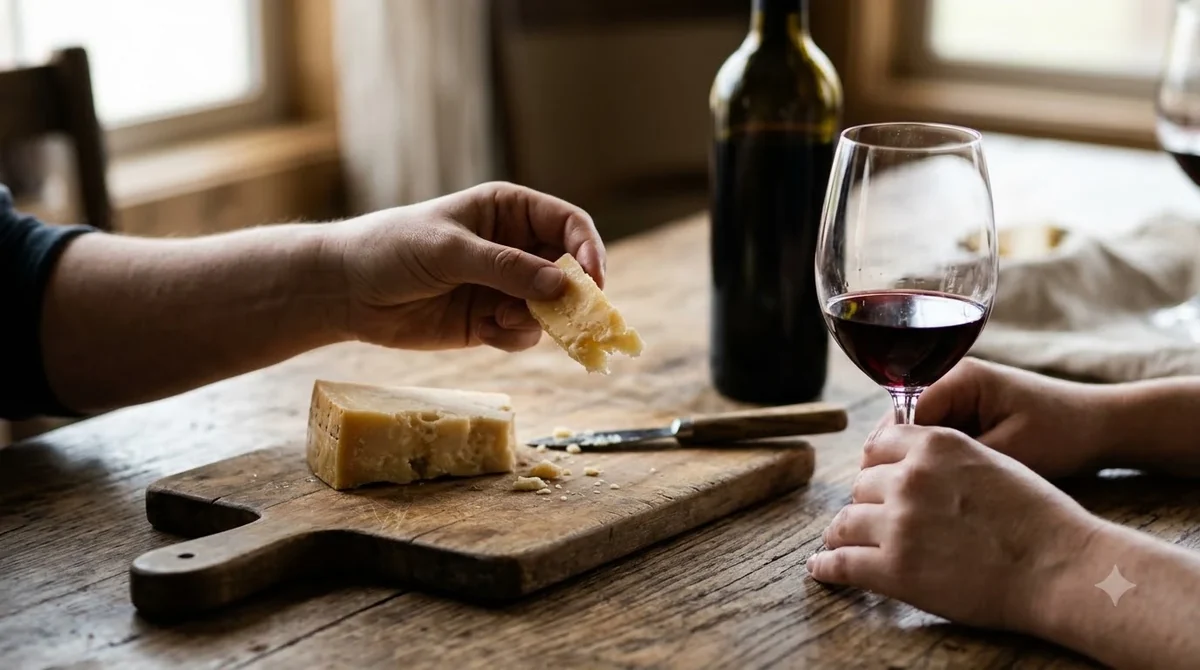
Tannins are medium, soft, and plush, which makes the wine easy to drink with food even when it is young. Acidity is medium to medium-high, and that lift keeps the fruit fresh and helps the wine handle tomato, cheese, and rich meat. The alcohol is typically between 12.5% and 14%, so the wine feels warm without tasting hot.
The Riserva and DOCG styles add structure. Their tannins are firmer, and the flavors move toward dried fruit, earth, and spice. These bottles are less about bright fruit and more about depth, so they go well with heartier dishes and older cheeses.
Keep in mind that the grape can be blended with other local varieties. Up to 15 percent Sangiovese or other local grapes may be included in the blend, which can change the color and aroma a little from bottle to bottle.
How to Serve Montepulciano Wine
Serving temperature is a simple way to get more out of a montepulciano bottle. The wine tastes best slightly below room temperature, which keeps the fruit focused and the tannins smooth.
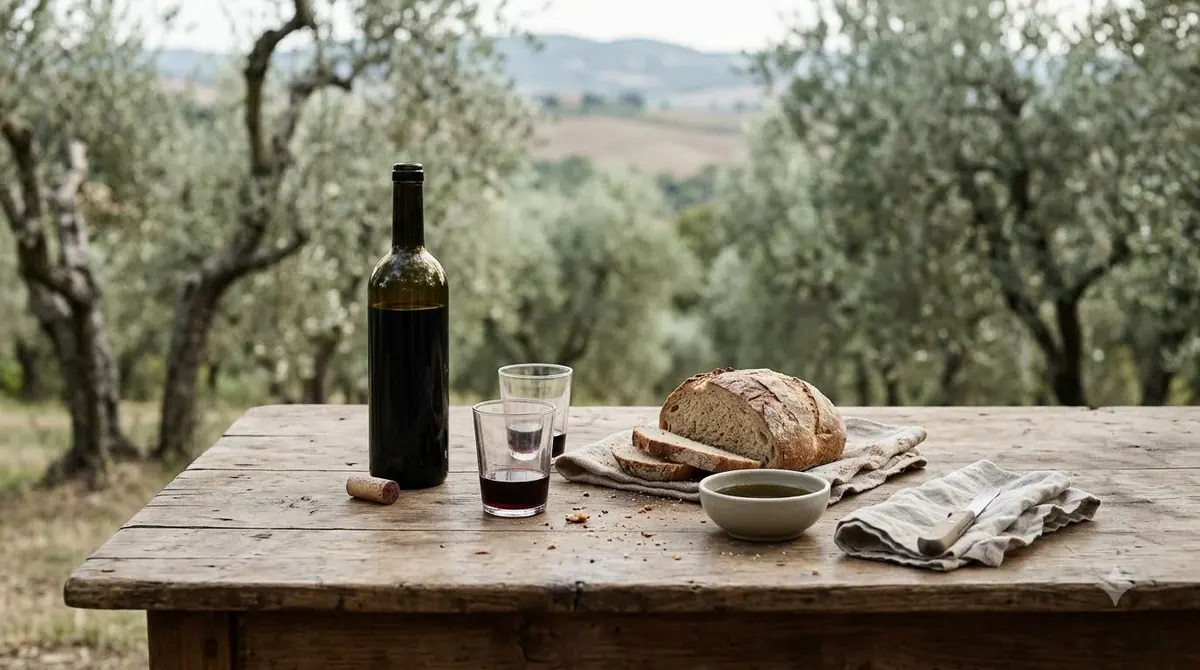
The Wine Insiders guide suggests 60 to 64°F (about 16 to 18°C) for younger DOC bottles, and 62 to 65°F (about 17 to 18°C) for Riserva and DOCG wines. If the room is above 70°F, put the bottle in the refrigerator for about 20 minutes before opening, then let it warm up slightly in the glass.
| Bottle type | Serving temperature | Glass and notes |
|---|---|---|
| Everyday DOC | 60 to 64°F | A medium-sized glass, served slightly cool |
| Riserva DOC or DOCG | 62 to 65°F | A wider glass to show the aroma |
| Cerasuolo d’Abruzzo | Chilled | Serve cool, as for other dry rosés |
Decanting is optional for young bottles. Older Riserva and DOCG wines may throw a little sediment, so stand the bottle upright for a while before pouring, and decant gently if you want to separate the wine from any deposit.
Tip: If you are not sure what to buy, pick an everyday DOC for the first bottle. It shows the fruit style clearly and costs less to learn from.
Food Pairings for Montepulciano Wine
Montepulciano is a food wine. Its acidity and soft tannin make it easy to pair with tomato sauces, grilled meats, and aged cheese, and it rarely overwhelms a simple dish.
Tomato-based pasta, pizza, and risotto with mushrooms or sausage are natural matches for the younger styles. The wine’s fruit and acidity match the sweetness and acidity of tomato, and the soft tannin keeps the pairing from feeling sharp.
Grilled lamb and roast pork with rosemary suit the medium-bodied bottles well, while braised meats and hearty stews go with the more structured Riserva. Aged hard cheeses such as Pecorino Romano and Parmigiano-Reggiano also pair well with the richer styles, and vegetarian dishes like eggplant parmigiana and lentil ragù work too.
Cerasuolo is the lighter partner. Its bright, dry style suits salads, seafood, and charcuterie, and it is a good match for warm-weather meals where a full red would feel heavy.
Buying Montepulciano Wine
When you shop, start with the label. The words Montepulciano d’Abruzzo tell you the grape and region, while Riserva or Colline Teramane point to the more serious tiers. Check the vintage too, because a young bottle is usually best when it is recent.
Do not confuse the wine with Vino Nobile di Montepulciano from Tuscany. That wine is made mainly from Sangiovese, and it has a different style. The name alone can mislead, so read the region on the bottle before you buy.
A good starter bottle is an everyday DOC from a reputable producer. Once you know the style, try a Riserva for dinner, or pick a Cerasuolo for lunch. Each tier shows a different side of the grape, and the range is large enough to explore over several months.
Frequently Asked Questions
Is montepulciano wine the same as Vino Nobile di Montepulciano?
No. Montepulciano d’Abruzzo is made in Abruzzo, mainly from the montepulciano grape. Vino Nobile di Montepulciano is a Tuscan wine made mainly from Sangiovese. The names are similar, but the grapes and regions are different.
Is montepulciano wine dry or sweet?
Montepulciano d’Abruzzo is a dry red. Its ripe fruit can taste generous, but the wine is not sweet. Cerasuolo, the rosé from the same grape, is also dry and bright.
How long can you keep montepulciano wine?
Everyday DOC bottles are best within two to four years of the vintage. Riserva wines can age about five to eight years, and top Colline Teramane bottlings can go longer, up to 10 to 15 years or more.
What should I eat with montepulciano wine?
Tomato pasta, pizza, grilled lamb, and roast pork with rosemary are all good matches. Aged cheeses such as Pecorino Romano suit the richer Riserva styles, while lighter dishes work best with Cerasuolo.
Pick an everyday Montepulciano d’Abruzzo for your next pasta dinner and serve it slightly cool. Once you know its fruit style, compare a Riserva with the same meal to see how the extra aging changes the wine. For more on the broader range of reds, see Wine by Type.
More in Wine Types & Grapes
 Zinfandel Sugar Content: Dry Red vs. White Zinfandel GramsUpdated Nov 21, 2026
 Best Zinfandel Substitute Options for Sipping and CookingUpdated Nov 21, 2026
 Zweigelt Food Pairing: Best Dishes, Cheeses, and Serving TipsUpdated Nov 21, 2026
 Zinfandel Tannins Explained: How Structure Shapes Every BottleUpdated Nov 21, 2026
 Zinfandel Sweetness Level: Dry Red vs. Sweet White Zin ExplainedUpdated Nov 21, 2026
 Xinomavro Food Pairing: Best Dishes, Styles, and Serving TipsUpdated Nov 21, 2026