

We may earn a commission when you buy through links on this page, at no extra cost to you. Learn more.
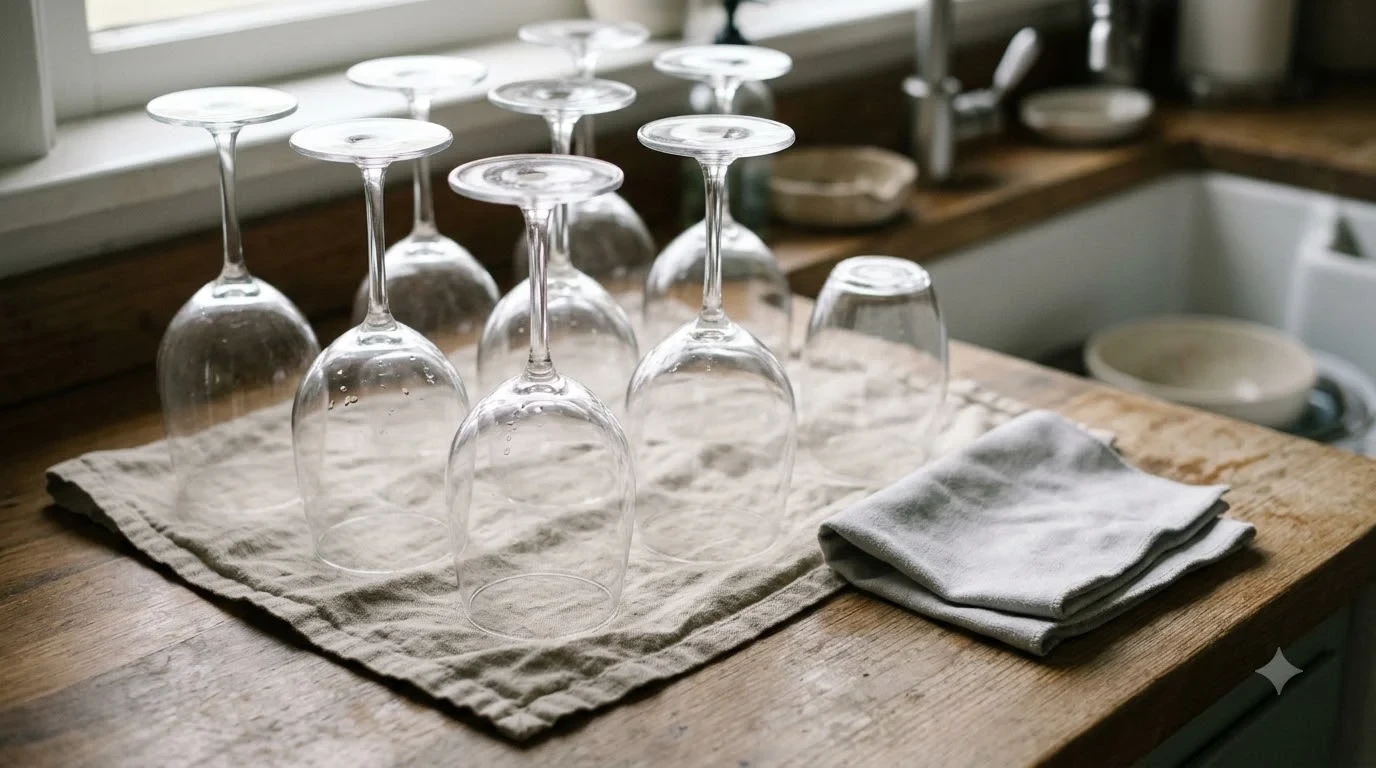
The best wine glass polishing cloth is usually a fine, low-lint microfiber cloth, because it lifts fingerprints and water spots from glass without leaving fibers behind. Cotton flour-sack towels and linen cloths also work well for hand-drying, but they shed more lint and can leave a faint film if the glass is still warm or damp. The right pick depends on how often you wash stemware, how delicate the glass is, and whether you dry by hand or let glasses air-dry first.
A clean wine glass does more than look good. Residue from soap, dust, or old wine can dull the aroma and change how the wine tastes on the palate, so most people who care about their glassware keep a dedicated polishing cloth near the sink. This guide covers the main cloth types, what each one does well, and how to choose a cloth that will give you a streak-free finish without damaging thin rims or fragile stems.
Quick Comparison
Each cloth type has a clear strength. Microfiber is the most versatile, linen is the most traditional, and cotton is the easiest to find and wash. The table below compares them on the points that matter most when you are polishing glass by hand.
| Cloth type | Best use | Lint risk | Care needs |
|---|---|---|---|
| Microfiber | Final polish and removing fingerprints | Low | Wash without fabric softener |
| Cotton flour-sack towel | Hand-drying after rinsing | Medium | Machine wash and line dry |
| Linen | Drying and light buffing | Low to medium | Hand wash or gentle cycle |
| Waffle-weave cotton | Absorbing water quickly | Medium | Wash separately from towels |
Best for Everyday Stemware Polishing
A small microfiber cloth with a tight weave is the easiest answer for people who polish a few glasses after each dinner. It picks up oils and water with little pressure, which matters because heavy rubbing can stress the stem where it joins the bowl.
Why it stands out: The fine fibers grab moisture quickly, so a single pass often leaves the bowl clear. Microfiber also works on both the inside and the outside of the glass.
Keep in mind: Some microfiber cloths carry a coating or softener. Wash them separately, skip fabric softener, and let them air-dry so the fibers stay active.
Best for: Daily use with everyday red and white glasses.
Best for Hand-Drying After Hand Washing
If you rinse glasses in a sink and dry them one at a time, a larger, absorbent towel can save time. Cotton flour-sack towels are a common choice because the loose weave holds a lot of water and is easy to wring out.
Why it stands out: The large surface lets you dry a glass quickly without touching the rim with a wet hand, and the towels are inexpensive to replace.
Keep in mind: Cotton sheds more lint than microfiber. Give the glass a final pass with a dry microfiber cloth if you want a truly clear finish, and avoid using a towel that has been washed with dryer sheets.
Best for: Households that hand wash stemware after every use and want a simple, low-cost drying routine.
Best for Delicate Crystal and Thin Rims
Fine crystal has thin rims and a higher risk of chipping, so the cloth needs to be soft and the pressure needs to stay light. A tightly woven microfiber or a clean, well-laundered linen cloth tends to suit this kind of glass best.
Why it stands out: A soft surface reduces the chance of snagging a rim or catching a thin stem. Linen also releases lint slowly, which helps when you are buffing a bowl that has been sitting out.
Keep in mind: Linen needs gentle washing and can feel rougher when new. Test the cloth on the base of a glass first, and avoid any cloth with loose threads or frayed edges.
Best for: Heirloom glasses, crystal decanters, and any stemware with a thin, flared rim.
Many hosts also set out a small stack of cloths on the counter during a party, one for the bar and one for guests who want to wipe a glass before pouring. Keep the cloths in a basket near the sink, and swap in a fresh one when the first has taken on lipstick, oil, or wine residue. A tidy routine like this keeps the glasses clear all evening and means you are not drying every piece by hand at the end of the night.
Best for Large Batches and Entertaining
When you are cleaning twenty or more glasses after a party, you need a cloth that absorbs water fast and can be rinsed and reused without drying out. Waffle-weave cotton is designed for this kind of repeated use because the raised texture holds a surprising amount of moisture.
Why it stands out: The textured surface soaks up water quickly, which speeds up the drying step when the glasses are coming off a rack or out of a sink one after another.
Keep in mind: Waffle-weave cotton can leave a faint texture if used on the final polish, so pair it with a finer cloth for the last pass.
Best for: Hosts, small bars, and anyone who cleans glassware in batches.
Best for Travel and Compact Storage
A cloth that folds small and stays dry in a bag is useful for picnics, rental homes, and wine tastings where the glassware is not always clean. A thin microfiber cloth in a sealed pouch works well here.
Why it stands out: Microfiber dries quickly and takes up little space, so you can wipe a glass in seconds without carrying a full towel.
Keep in mind: A cloth that stays damp in a closed bag can develop an odor. Dry it fully before packing, and store it in a breathable pouch.
Best for: Travelers, tasting-room visitors, and anyone who keeps a small kit for glasses on the go.
How to Choose
The best cloth for your kitchen depends on three things: how delicate the glass is, how you dry it, and how much you clean at once. Use the checklist below to narrow the choice before you buy.
- Fiber: Microfiber gives the cleanest finish. Cotton is more absorbent but sheds more lint. Linen is gentle on thin rims but needs careful washing.
- Weave: A tighter weave leaves fewer fibers behind. A looser, textured weave dries faster but is better for the first pass than the final polish.
- Size: A small cloth is easier to control on thin stems. A larger towel is faster for bulk drying.
- Washing: Choose a cloth you can wash on its own, without fabric softener or dryer sheets, so the fibers stay effective.
Glass shape also affects how you polish. A wide, rounded bowl is easy to wipe from the inside with a folded cloth, while a narrow flute or tall tulip needs a cloth that can reach the base. Holding the glass by the stem while you polish is a good habit, because it keeps the bowl free of fingerprints and avoids warming the wine. The Wikipedia entry on wine glasses notes that some bowls narrow at the opening to concentrate aroma, which is one reason a clear, smudge-free bowl matters so much for tasting.
Finally, think about storage. A cloth that is folded into a drawer while still slightly damp can carry a musty smell into the next glass, so let each cloth dry completely before you put it away. Keep one cloth for polishing and another for general wiping, so that a cloth used on a kitchen counter does not end up on the bowl of a good glass.
Frequently Asked Questions
What is the best cloth for polishing wine glasses without streaks?
A fine, tightly woven microfiber cloth is the most reliable choice. It lifts moisture and fingerprints without leaving many fibers, and it works on both the bowl and the stem. Use a dry cloth for the final pass, after the glass has cooled.
Can I use a paper towel to polish wine glasses?
Paper towels are not a good choice. They shed fibers into the glass and can leave a dusty film on the rim. A clean cloth made for drying glassware gives a clearer result and lasts through many washes.
How do I stop lint from sticking to my glasses?
Rinse the glass well, let it drain, and then polish with a clean microfiber cloth that has not been washed with fabric softener. Avoid drying glasses with a towel that has been in a dryer with lint-heavy fabrics, and keep the cloth separate from your regular laundry.
Should I polish a glass while it is still wet or after it dries?
Start with a wet glass only if you are rinsing and drying it in one step. For a final shine, let the glass air-dry or dry it with a cloth, then polish with a fresh, dry microfiber cloth. Polishing a damp glass with a dirty cloth is the most common cause of streaks.
A good polishing cloth is a small investment that protects your glassware and makes every pour look its best. Pick a microfiber cloth for everyday use, keep a second cloth for drying, and store both away from dust. For more ideas on keeping your stemware and bar tools organized, browse the Accessories Library, and if you are shopping for a complete setup, the guide on wine glass holders can help you store glasses once they are clean.
More in Wine Accessories
 Coravin Vs Vacu Vin: Choose the Right Wine Saver for Your BottlesUpdated Nov 21, 2026
 Zwilling Wine Stopper Review: Preserve Open Bottles LongerUpdated Nov 21, 2026
 Wine Enthusiast Wine Preserver Review: Features, Benefits and LimitationsUpdated Nov 21, 2026
 Wine Enthusiast Wine Stopper: An Easier Way to Reseal Open BottlesUpdated Nov 21, 2026
 Vintorio Wine Opener: Two-Step Cork RemovalUpdated Nov 21, 2026
 Zwilling Wine Aerator Review: Aerate, Pour, and Seal With One ToolUpdated Nov 21, 2026