

We may earn a commission when you buy through links on this page, at no extra cost to you. Learn more.
The best camping wine glasses are unbreakable, lightweight, and stable enough for a picnic table or a folding chair. Acrylic and polycarbonate stemware suit most campsites, while shatterproof tumblers work better for hiking and boat trips where space is tight. Before you buy, check the material, the weight, the stem design, and whether the glass is rated for the drinks and temperatures you plan to use.
Taking wine outdoors is simple until the glass breaks on a rocky trail or slides off a cooler lid. Camping wine glasses solve that problem by swapping fragile crystal for tougher plastic-based materials that survive a bumpy drive and a rough campsite. They still need to look and feel like a proper glass, so the choice is usually a balance between durability, weight, and the way the glass sits in the hand. This guide covers the main styles, the materials behind them, and the points to check before you pack.
Quick Comparison of Camping Wine Glass Types
Camping wine glasses come in a few main forms, and each one suits a different kind of trip. The table below compares the common types on the points buyers ask about most often. Capacity and weight vary by design, so the table describes them in general terms.
| Glass type | Material | Weight | Stability | Best trip |
|---|---|---|---|---|
| Acrylic stemware | Acrylic | Light | Moderate | Car camping |
| Polycarbonate stemware | Polycarbonate | Light | Good | Campsite and group trips |
| Shatterproof tumbler | Tough plastic | Very light | High | Hiking and boating |
| Stemless travel glass | Plastic or acrylic | Very light | High | Festivals and picnics |
Best for Car Camping and Campsite Tables
A stemmed acrylic glass suits a car-camping trip, where the cooler, the table, and the chairs are all close by. The stem keeps the bowl off the table and gives the wine the same feel as a glass at home. Acrylic is clear and lightweight, so the glass is easy to carry from the cooler to the table.
Why it stands out: acrylic is much lighter than glass and does not shatter in the way crystal does. The Wikipedia entry on acrylic glass notes that PMMA has good impact strength, higher than glass, and that in most applications it breaks into large pieces instead of shattering. It also transmits light well, so the wine’s color is easy to see.
Keep in mind: acrylic is softer than glass and scratches more easily, so store the glasses separately from the tools and keep them in a padded case. Heat can soften the material, so avoid leaving the glasses near the fire or in a hot car. The same Wikipedia entry notes that acrylic has a limited heat resistance compared with polycarbonate.
Best for: car campers who want a real stem and a clear view of the wine.
Best for Hiking and Backpacking
When every ounce counts, a small shatterproof tumbler is the better choice. It packs flat or nests inside a cup, and it can be clipped to a bag without adding much weight. The glass is less formal than stemware, but it does the job on a trail.
Why it stands out: a tumbler takes up very little room in a pack and handles bumps and drops well. Polycarbonate is described on Wikipedia as having high impact resistance, tougher than acrylic, which makes it a practical material for a glass that will be packed and unpacked many times.
Keep in mind: a tumbler does not have a stem, so a warm hand will reach the wine faster than it would with stemware. It also holds less wine than a standard glass, so plan the pour. Polycarbonate can scratch more easily than it breaks, so keep it in a pouch rather than loose in the bag.
Best for: hikers and backpackers who need a glass that is light and easy to pack.
Best for Picnics and Beach Days
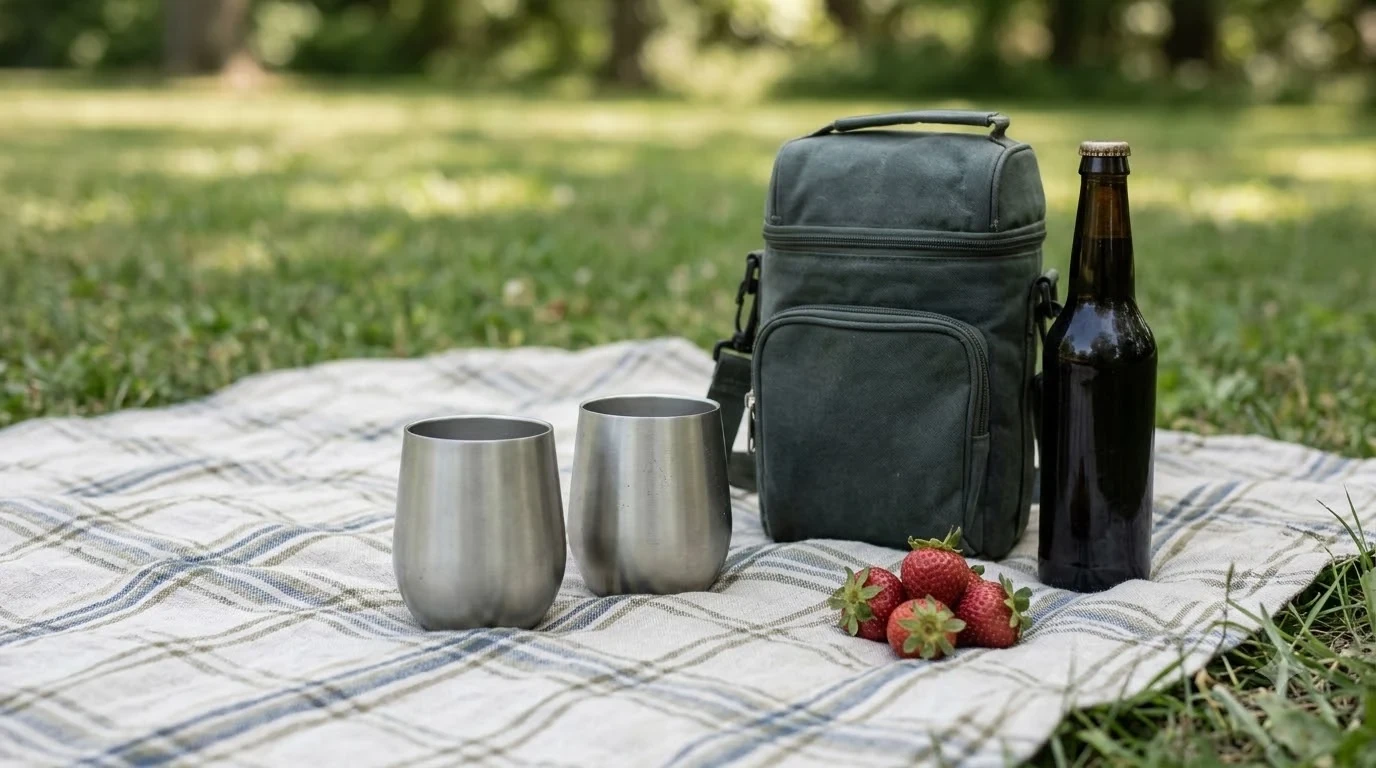
Picnics and beach days need glasses that can be set on a blanket or sand without tipping over. A stable, low-profile glass works better here than a tall stem, and a tough material keeps the glass intact when the cooler lid is opened.
Why it stands out: a wide base resists tipping on uneven ground, and a shatterproof body survives being set down on hard surfaces. Clear material also makes it easy to see when the glass is empty, so the next pour is quick.
Keep in mind: sand and grit can scratch soft plastics, so rinse the glass before storing it. Keep the glass out of direct sun when it holds a cold drink, since the material warms faster than metal or glass when left in the sun. Check the label for the maximum temperature rating before adding ice.
Best for: people who take wine to the beach or to a park for a relaxed afternoon.
Best for Festivals and Group Outings
At festivals and large group outings, the glass is shared, dropped, and passed around, so durability matters more than appearance. A stemless travel glass with a rounded body handles that kind of use well and is easy to stack or clip to a bag.
Why it stands out: a rounded, stemless body resists breaking when it is knocked over, and the glass can be counted and cleaned quickly between rounds. Many people also prefer a simple shape when the setting is loud and crowded.
Keep in mind: stemless glasses are harder to hold without warming the drink, and their shape can make it difficult to swirl the wine. Pick a glass with a clear marking for pour lines if you plan to measure servings.
Best for: groups who want an easy, durable glass for a shared outing.
Best for a Stemmed Feel Around the Fire
For a quiet evening by the fire, a sturdy polycarbonate stem gives the wine the feel of a proper glass without the risk of breakage. The stem lets you hold the glass away from the heat of the hand and keeps the bowl clear of ash and smoke.
Why it stands out: the Wikipedia entry on wine glasses notes that some authors recommend holding the glass by the stem so the warmth of the hand does not reach the wine, and a sturdy stem makes that practical outdoors. Polycarbonate is tougher than acrylic, so the glass holds up better to the knocks of a campsite.
Keep in mind: keep polycarbonate away from strong heat and from harsh cleaners, since the Wikipedia entry on polycarbonate notes that heat and certain cleaning agents can affect the material. Use mild soap and warm water, and check that the glass is labeled as suitable for food and drink.
Best for: campers who want stemware that stays sturdy over several seasons.
How to Choose Camping Wine Glasses
Start with the trip. A car campsite, a backpacking route, and a beach picnic each call for a different balance of weight, stability, and feel. Then check the material, the stem or base design, and the cleaning needs before you choose.
| Factor | What to check |
|---|---|
| Material | Acrylic is clear and light, polycarbonate is tougher, and tumblers are the lightest option. |
| Weight | Weigh the glass when packed, not only the empty glass, since the case adds to the load. |
| Stability | Choose a wide base or a low profile for picnic tables and uneven ground. |
| Cleaning | Use mild soap and warm water, and avoid harsh cleaners that can cloud or weaken plastic. |
The Wikipedia entries on acrylic glass and polycarbonate explain the main differences between the two plastics, including impact resistance, scratch resistance, and heat tolerance. Those facts help explain why polycarbonate suits rough trips and acrylic suits a clearer, more formal look. For a broader look at glass styles, the guide to the best wine glasses covers the main shapes, and the guide on how to hold a wine glass explains the grip that suits each style.
Tip: pack the glasses in a rigid case with a cloth between each one, and keep the case upright in the car so the stems do not bend.
Frequently Asked Questions
Are camping wine glasses really unbreakable?
Plastic and polycarbonate glasses are much harder to break than crystal, but they can still crack or scratch with rough handling. Look for a material described as shatterproof, and keep the glasses padded when packed.
Can camping wine glasses go in the dishwasher?
Check the label first. Many plastic glasses are better hand-washed with mild soap and warm water, since high heat and harsh detergents can cloud the surface over time.
Is acrylic or polycarbonate better for camping?
Polycarbonate is tougher and handles rough use better, according to the Wikipedia entry on polycarbonate. Acrylic is clearer and lighter, so it suits a relaxed car-camping setup where durability is less of a concern.
Should hot drinks go in camping glasses?
It is better to avoid hot drinks in plastic glasses. Both acrylic and polycarbonate soften with heat, so stick to cold or room-temperature wine and keep the glasses away from the fire and stove.
Camping wine glasses work best when the material, the weight, and the stability match the trip. Acrylic stemware suits car camping, a tumbler suits hiking, and a stemless or stable glass suits picnics and group outings. To see more glass styles that suit different occasions, browse the wine glasses section before you pack.
More in Wine Glasses
 Spiegelau Crystal Wine Glasses That Bring Clarity to Every PourUpdated Nov 21, 2026
 Zalto Crystal Wine Glasses: Are They Worth the Investment?Updated Nov 21, 2026
 Villeroy And Boch White Wine Glasses for a More Cohesive TableUpdated Nov 21, 2026
 Zalto Wine Glasses On Sale: Find the Right Denk’Art GlassUpdated Nov 21, 2026
 Zwiesel Glas Champagne Glasses: Features, Quality and Buying AdviceUpdated Nov 21, 2026
 Zwiesel Glas Decanter Review: A Durable, Elegant Choice for Wine ServiceUpdated Nov 21, 2026