

We may earn a commission when you buy through links on this page, at no extra cost to you. Learn more.
The best wine for hanukkah is a kosher dry sparkling wine for crispy latkes, a refreshing Sauvignon Blanc for lighter dairy and fish dishes, and a fruit-forward red such as Pinot Noir or Merlot for a hearty dinner. The right choice depends on the food, the wine’s sweetness, and whether your gathering requires mevushal wine. A thoughtful selection can accommodate traditional holiday dishes, different preferences, and guests who prefer grape juice instead of alcohol.
Hanukkah meals bring together several distinctive flavors. Crispy potato pancakes, cheese-filled dishes, roasted meats, and jelly doughnuts each call for a slightly different wine style. Rather than purchasing eight bottles of the same wine, consider choosing a few complementary options that work across different meals. Kosher certification should come first for households that observe kashrut, followed by flavor, sweetness, acidity, and serving temperature. This guide explains how to make those decisions without overcomplicating holiday shopping.
Who Should Choose These Hanukkah Wines
A Hanukkah wine selection is especially useful for hosts serving several traditional dishes, families organizing multiple dinners, and shoppers looking for a thoughtful holiday gift. The most practical approach is to choose wines according to the menu rather than assuming that one traditional sweet red will suit every occasion.

Hosts preparing potato latkes, fried apple fritters, or sufganiyot should consider sparkling and sweet wine styles. The acidity and carbonation of a dry sparkling wine provide contrast to oily fried foods, while a sweeter wine complements desserts without tasting excessively tart. For example, a Brut sparkling wine can accompany a plate of latkes, while a Moscato or sweet sparkling wine can be reserved for jelly-filled doughnuts.
Families serving cheese blintzes, cheese latkes, or fish may prefer a crisp white wine or dry rosé. Sauvignon Blanc offers lively acidity, while Chardonnay provides a rounder texture that can work with richer dairy dishes. A lighter red such as Pinot Noir is another option when the menu includes roasted chicken, mushrooms, or vegetable dishes.
Hosts preparing a substantial dinner with brisket, roast beef, or lamb should look toward medium-to-full-bodied reds. Merlot is a softer option for guests who prefer less aggressive tannins, while Cabernet Sauvignon offers a firmer structure for richly flavored meat. A bottle of Syrah can also suit braised meat and roasted vegetables.
Kosher-observant households need another consideration: the wine must have reliable kosher certification. If guests or catering staff who are not Jewish will handle an opened bottle, mevushal wine can make serving simpler. The distinction matters more than whether the bottle comes from California, France, or Israel.
Key Factors to Compare When Buying Holiday Wine
The most important buying factors are kosher certification, mevushal status, sweetness, acidity, body, and the number of guests. Comparing these characteristics before purchasing helps prevent a bottle from being unsuitable for either the meal or the household’s requirements.
| Wine characteristic | What to look for | Best Hanukkah use |
|---|---|---|
| Kosher certification | Reliable kosher supervision symbol | Observant households and kosher gatherings |
| Mevushal status | Clearly identified mevushal designation | Events involving mixed serving staff |
| Sweetness | Dry, off-dry, or sweet | Latkes, main courses, and desserts |
| Acidity | Fresh, crisp, or high-acid profile | Fried foods, fish, and cheese dishes |
| Tannin | Low, medium, or high | Chicken, vegetables, or rich meat |
| Serving temperature | 40–65 degrees Fahrenheit, depending on style | Maintaining freshness and balance |
| Bottle capacity | 750 ml, approximately five 5-ounce pours | Planning quantities for dinner guests |
Kosher supervision is the first consideration. A wine being made in Israel or having Hebrew lettering on its label does not automatically establish that it is kosher. Look for a reliable certification accepted by the household or community. Chabad.org explains that wine and grape juice have special handling requirements under Jewish law, and that these considerations extend beyond ceremonial wine to ordinary drinking wine.
Mevushal status is a separate consideration from kosher certification. Mevushal means cooked or heated through a qualifying process. According to Chabad.org’s explanation of mevushal kosher wine, this treatment allows the wine to be handled by non-Jews without losing its kosher status. A mevushal designation does not replace the need for reliable kosher supervision.
Sweetness and acidity determine how the wine behaves alongside food. A dry sparkling wine can refresh the palate after an oily latke, but the same wine may seem sharply acidic beside a very sweet jelly doughnut. A sweet wine is more suitable for dessert because wine should be at least as sweet as the food it accompanies. Acidity also matters with sour cream, tomato-based sauces, and other tangy ingredients.
Finally, consider the number of people attending. A standard 750 ml bottle supplies approximately five 5-ounce glasses. For eight adults having one glass each, two bottles provide roughly ten servings, leaving a modest amount for additional pours. Purchase additional bottles if wine will accompany several courses or if guests are likely to want a second glass.
Step-by-Step: How to Select the Right Hanukkah Wine
A successful wine purchase starts with the household’s kosher requirements and ends with a practical serving plan. Follow these six steps to choose wines that suit the celebration rather than buying bottles based only on attractive labels.
- Establish the kosher requirements. Ask whether the household requires a particular kosher certification and whether mevushal wine is necessary. For a gathering involving non-Jewish servers or guests handling bottles, mevushal wine is often the practical option. If the household prefers non-mevushal wine, discuss the handling arrangements with the appropriate rabbinic authority.
- Write down the main dishes. Separate the menu into fried appetizers, dairy or fish courses, meat dishes, and desserts. Potato latkes, cheese blintzes, brisket, and sufganiyot create very different pairing requirements. A short menu list makes it easier to avoid purchasing wine that only works with one dish.
- Choose the main wine style. Start with a dry sparkling wine for fried foods or a crisp Sauvignon Blanc for lighter dishes. If brisket or roast beef is the centerpiece, select Merlot, Syrah, or Cabernet Sauvignon. This gives the gathering a dependable starting point.
- Account for sweetness. Decide whether desserts will include jelly doughnuts, honey pastries, or sweet cheese treats. Choose Moscato, late-harvest Riesling, or another appropriately sweet kosher wine for those dishes. Avoid serving a very dry wine as the only dessert option.
- Calculate the quantity. Use approximately five 5-ounce servings per 750 ml bottle. For a dinner with ten adults each receiving one glass, two bottles provide approximately ten servings. Adjust the total according to the number of courses and whether guests will have additional pours.
- Plan the service. Chill sparkling wine and whites before guests arrive, and give reds time to reach their recommended serving temperature. Keep unopened bottles away from heat and direct sunlight. Arrange the bottles in serving order so that the sparkling wine comes out with the fried appetizers and sweeter options remain available for dessert.
This method also helps shoppers stay within their intended budget without sacrificing variety. Two complementary bottles often serve a mixed menu better than several bottles of nearly identical red wine. For additional purchasing fundamentals, the wine-buying guide explains how to compare styles, labels, and bottle characteristics.
Tip: If the Hanukkah gathering includes both fried appetizers and sweet pastries, reserve one dry sparkling wine for the beginning of the meal and one sweeter wine for dessert. This simple two-bottle strategy covers two very different flavor profiles.
Types and Styles of Wine Explained for Hanukkah
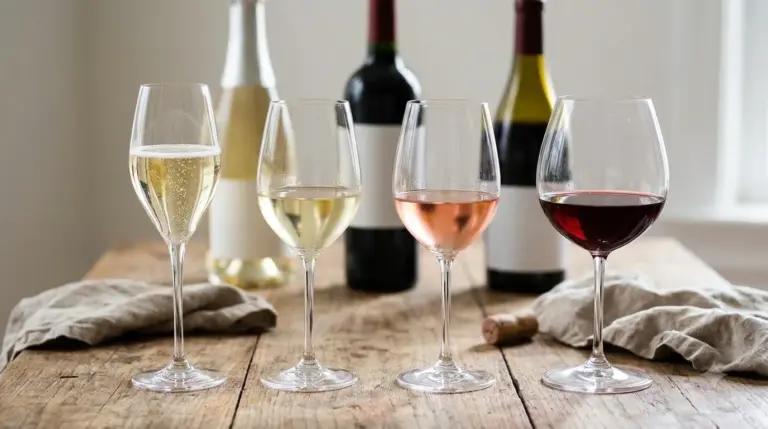
Hanukkah menus generally benefit from a combination of sparkling, white, red, and sweet wines. Each style has a distinct purpose, so selecting bottles according to the food makes the holiday table more versatile.
Dry sparkling wine for potato latkes
Dry sparkling wine is one of the strongest all-purpose choices for traditional fried foods. Its acidity and bubbles help refresh the palate after crispy potato pancakes, fried vegetables, and other oil-rich appetizers. Brut sparkling wine is a particularly useful starting point because it has a dry profile that does not compete with savory toppings.
Consider kosher-certified Champagne, Cava, or sparkling wine made in another region. Champagne and Cava undergo their second fermentation in the bottle, producing their characteristic bubbles and often a more complex texture. A crisp sparkling wine also works well with smoked salmon, fried fish, and salty appetizers.
Serve sparkling wine between 40 and 50 degrees Fahrenheit. This temperature range keeps the wine refreshing and helps maintain its lively character. A bottle chilled too little may seem heavy beside fried food, while a properly chilled glass creates a cleaner contrast.
Sauvignon Blanc for dairy dishes and fish
Sauvignon Blanc is a strong option for cheese latkes, fish, salads, and vegetable dishes. Its naturally high acidity makes it useful alongside tangy ingredients, lemon-based sauces, and fresh herbs. The wine’s lighter body also prevents it from overpowering delicate fish.
For a creamy dairy menu, Chardonnay offers another direction. A lightly oaked or unoaked Chardonnay can complement cheese blintzes, vegetable gratins, and richer fish preparations. Its medium acidity and fuller texture make it a different experience from the sharper profile of Sauvignon Blanc.
Dry rosé is also worth considering when the meal includes several appetizers. It can bridge the gap between light whites and lighter reds, especially with roasted vegetables, salmon, and poultry. Serve light whites and rosé between 45 and 50 degrees Fahrenheit.
Pinot Noir and Merlot for poultry and meat
Pinot Noir is an excellent choice for hosts who want a red wine without excessively strong tannins. Its relatively high acidity and low-to-medium tannin make it versatile with roasted chicken, mushrooms, herb-seasoned turkey, and vegetable dishes. It can also work with lighter meat preparations that might be overwhelmed by Cabernet Sauvignon.
Merlot is a practical alternative for guests who prefer a softer red. Its medium tannin and rounded fruit character make it suitable for roast chicken, beef dishes, and savory casseroles. It can also accompany a meat-based Hanukkah dinner without demanding as much attention as a highly structured Cabernet Sauvignon.
Cabernet Sauvignon is more suitable for a rich brisket or roast beef centerpiece. Its high tannin can feel firm beside delicate foods, but the combination of rich meat, fat, and savory cooking juices provides a more suitable setting. Syrah is another option for slow-cooked meat, roasted vegetables, and deeply flavored sauces.
Serve light reds such as Pinot Noir between 55 and 60 degrees Fahrenheit. Fuller reds, including Cabernet Sauvignon and more substantial Syrah, generally benefit from serving temperatures between 60 and 65 degrees Fahrenheit.
Moscato and sweet wines for sufganiyot
Hanukkah desserts deserve a wine that can stand up to their sweetness. Sufganiyot filled with strawberry or raspberry jam, powdered-sugar doughnuts, and honey pastries can make dry wines taste unexpectedly sour. Moscato is a useful choice because its sweetness and aromatic fruit character complement many desserts.
Sweet Riesling is another possibility, particularly when the dessert includes fruit fillings or citrus flavors. A sweet sparkling wine can provide a festive finish, especially when guests prefer something lighter and refreshing. For a richer dessert, consider a sweet red wine with enough sweetness to match the pastry.
Those who enjoy exploring sweeter reds can compare the different styles in the guide to sweet red wine. For a more restrained dessert selection, an off-dry sparkling wine may provide enough sweetness without making the final course feel excessively heavy.
Common Mistakes When Buying Hanukkah Wine
The most frequent mistakes are choosing wine without checking kosher requirements, overlooking food sweetness, and purchasing a single heavy red for an entire mixed menu. Avoiding these errors makes the wine selection more useful for both traditional meals and casual holiday gatherings.
One common mistake is assuming that every kosher wine must be mevushal. Kosher certification and mevushal status are different considerations. Some certified wines are non-mevushal, and some households specifically prefer them for particular uses. Others choose mevushal wine because it is easier to serve when a wider group of people may handle the bottle.
Another mistake is assuming that every Israeli wine is automatically kosher. Wine origin does not replace certification. Even if a bottle comes from a well-known Israeli wine region, the shopper should confirm that its certification meets the household’s requirements. The same principle applies to imported wines from France, Italy, Spain, and California.
Choosing an excessively tannic red for fish or light dairy dishes can also create an unpleasant combination. Cabernet Sauvignon is generally too forceful for delicate white fish, particularly when the dish is lightly seasoned. A crisp white or rosé is normally a more balanced option. For a broader comparison of lighter and fuller styles, explore the guide to dry red wine.
Serving wine at the wrong temperature is another avoidable problem. Full-bodied reds served too warm can seem heavy and alcoholic, while whites served excessively cold may lose some of their aromatic character. A bottle does not need to remain at the same temperature throughout an entire meal. Small adjustments between courses can improve the experience.
Finally, avoid selecting a very dry wine to accompany very sweet doughnuts. The dessert can make the wine seem thin, sharp, and unpleasantly tart. A sweet Moscato or sweet Riesling is generally a more reliable pairing. The reverse is also true: a very sweet wine may overwhelm savory latkes and roast meat, so reserve it for the appropriate course.
Care and Storage Tips for Holiday Wine
Proper storage and serving practices preserve the character of the wine and help keep every bottle ready for the appropriate meal. The most useful considerations are temperature, light exposure, bottle position, and how long an opened bottle remains enjoyable.
Store unopened bottles in a cool, dark location with a relatively stable temperature near 55 degrees Fahrenheit. Wine does not benefit from repeated exposure to strong temperature changes, so avoid leaving bottles in a warm kitchen, beside an oven, or in direct sunlight. For traditional cork-sealed bottles intended for longer storage, keeping them on their sides helps maintain cork contact with the wine.
Refrigeration is useful before serving, but the ideal temperature depends on the wine style. Sparkling wines generally benefit from 40 to 50 degrees Fahrenheit, light whites and rosé from 45 to 50 degrees, and fuller whites from 50 to 55 degrees. Light reds should generally be served between 55 and 60 degrees, while fuller reds are more comfortable between 60 and 65 degrees.
Do not assume that a room-temperature red is automatically at the correct serving temperature. A warm dining room can make a red wine seem heavier and more alcoholic than intended. Placing a bottle of Pinot Noir or Merlot in the refrigerator briefly before dinner can help bring it closer to its preferred range.
Opened bottles also require attention. Refrigerate still wines after opening and generally plan to enjoy them within three to five days. Sparkling wine typically retains its best character for approximately one to three days when properly sealed and refrigerated. A suitable sparkling-wine stopper can help preserve the bubbles for subsequent servings.
If a full-bodied young red is particularly concentrated, decanting it for approximately 30 to 60 minutes can help expose it to air and soften its initial impression. This is more useful for a structured Cabernet Sauvignon or Syrah than for a delicate Pinot Noir. There is no need to decant every red wine automatically.
Plan the opening sequence around the meal. Start with sparkling wine, move to whites or rosé for fish and dairy dishes, and serve reds with the main course. Sweet wines should remain available for sufganiyot and other desserts. Keeping the bottles in this order reduces unnecessary handling and makes hosting easier.
Frequently Asked Questions
Is there a specific wine traditionally required for Hanukkah?
No particular wine style is universally required for Hanukkah. Wine is often enjoyed as part of festive meals, but the holiday’s central observances include lighting the menorah over eight nights. Individual families and communities may have their own customs concerning wine and holiday meals.
Can children participate in a Hanukkah wine toast?
Children can join the family gathering with kosher grape juice rather than alcoholic wine. Kosher grape juice has a special status in Jewish tradition and can be used in relevant ceremonial settings. Families should select a properly certified product that meets their community’s requirements.
Does the wine have to come from Israel?
No. Kosher wines are produced in several countries, including the United States, France, Italy, Spain, and Israel. A wine’s country of origin does not establish its kosher status, so certification remains the important purchasing consideration for observant households.
Can a kosher wine be used for both dinner and a holiday toast?
Yes, provided the wine meets the household’s kosher requirements and is appropriate for the occasion. A dry sparkling wine can accompany appetizers and a celebratory toast, while a versatile dry white or red can be served with dinner. Questions about blessings and specific ritual uses should be directed to the household’s rabbi.
What makes a wine suitable as a Hanukkah host gift?
A host gift should reflect the recipient’s preferences and kosher requirements rather than simply having an expensive-looking label. A certified Israeli wine, a well-presented kosher sparkling wine, or a suitable sweet wine can make a thoughtful gift. If the recipient observes particular handling requirements, confirm whether mevushal status matters before purchasing.
The best wine for Hanukkah is the one that respects the household’s kosher requirements while complementing the food being served. Start with dry sparkling wine for latkes, crisp whites for lighter dishes, a balanced red for the main course, and a sweeter option for sufganiyot. With a few carefully chosen bottles and sensible serving temperatures, the wine selection can support every part of the holiday celebration.
More in Wine Buying Guides
 Best Wine For Beach Days: Refreshing Bottles That Travel WellUpdated Nov 21, 2026
 Best Wine for Bridal Shower: Festive Bottles for Every GuestUpdated Nov 21, 2026
 Best Wine for Camping: Choose Portable Wines for Every Outdoor TripUpdated Nov 21, 2026
 Best Vouvray Wineries for Exceptional Chenin Blanc and Distinctive Wine StylesUpdated Nov 21, 2026
 Best Umpqua Valley Wineries for an Unforgettable Wine Country VisitUpdated Nov 21, 2026
 Best Tokaj Wineries for Memorable Tastings and Wine DiscoveriesUpdated Nov 21, 2026