


We may earn a commission when you buy through links on this page, at no extra cost to you. Learn more.
Wedgwood red wine glasses are an elegant choice for serving Cabernet Sauvignon, Merlot, Pinot Noir, and other reds, particularly if you appreciate decorative crystal glassware and refined table presentation. The brand’s selection includes distinctive Vera Wang designs such as Swirl, alongside the neoclassical-inspired Helia collection. These glasses are attractive choices for formal dining and special occasions, although their delicate construction and hand-washing requirements deserve consideration before purchasing.
Wedgwood has a recognizable approach to tableware: traditional influences, carefully considered decoration, and an emphasis on presentation. Its wine glasses follow that approach, offering alternatives to plain, utilitarian stemware. However, appearance is only part of a good wine glass. Capacity, bowl shape, rim design, handling, and cleaning requirements also affect how well a particular glass suits your dining habits. This review examines the available Wedgwood options, their documented specifications, and the practical considerations that matter before choosing a set.
Specs and Key Features
Wedgwood’s red wine glass selection combines decorative crystal construction with designs intended for different entertaining styles. The Vera Wang Swirl is a particularly distinctive option, while Helia offers a more architectural appearance through its detailed crystal cutting.

Two products provide useful examples of what to expect from the brand. The Swirl set emphasizes handmade crystal and decorative optical detail, whereas Helia uses a neoclassical-inspired stripe motif. Their documented dimensions and capacities also reveal an important difference: these are not interchangeable choices for buyers who prioritize serving volume.
| Specification | Vera Wang Swirl | Wedgwood Helia |
|---|---|---|
| Set size | 2 glasses | 2 glasses |
| Material | Crystal | Lead-free crystal |
| Height | 8.46 inches | 24 cm (9.45 inches) |
| Width | 4.72 inches | 8.5 cm (3.35 inches) |
| Capacity | 23 US fl oz | 350 ml (approximately 11.8 US fl oz) |
| Decoration | Swirl optical effect | Detailed cut stripe motif |
| Design association | Vera Wang for Wedgwood | Wedgwood Helia collection |
| Care | Follow Wedgwood crystal care guidance | Hand wash only |
The Swirl specifications come from Wedgwood’s official product listing and Dillard’s retail description. The Helia specifications are published by John Lewis. These are documented product details rather than measurements assumed to apply to every Wedgwood wine glass. The brand’s different collections can have noticeably different proportions, so buyers should compare the actual product rather than relying on the Wedgwood name alone.
Crystal construction and visual presentation
Crystal is a major part of the appeal. Compared with ordinary, thicker everyday glassware, crystal can provide greater clarity and allow more refined decorative detailing. The result is particularly attractive on a dining table where lighting, glass transparency, and the appearance of the wine all contribute to presentation.
The Swirl design takes a more expressive approach. Its optical pattern creates visual movement across the glass, making it recognizable even without elaborate table decorations. The effect is inspired by the layered appearance of fabric, reflecting Vera Wang’s design association with the collection. Wedgwood’s Vera Wang Swirl red wine glass listing provides the product’s design details and dimensions.
Helia is more restrained. Its detailed cuts create a striped appearance that gives the glass texture without relying on an oversized decorative pattern. Buyers who prefer traditional crystal styling may find this more versatile for formal dinners and coordinated table settings.
What the dimensions mean in practice
The difference between the 23-ounce Swirl and the 350 ml Helia is significant. The Swirl has a substantially larger listed capacity, giving it more room for wine and air above a normal serving. Helia has a more compact capacity that may suit buyers who prefer smaller glasses and a less imposing appearance.
Neither capacity should determine the amount poured automatically. A standard wine serving is approximately 5 ounces, so even a smaller 350 ml glass provides sufficient room for a moderate pour. A large bowl is not a reason to fill a glass to its rim.
For a broader explanation of bowl proportions, rim shape, and different wine styles, see our guide to red wine glasses. It helps put decorative designs such as Swirl and Helia into the context of practical wine service.
What Owners Like
The strongest documented attractions of Wedgwood wine glasses are their decorative craftsmanship, recognizable design details, and gift presentation. The available product descriptions establish these characteristics, although they should not be confused with independently verified long-term owner satisfaction.
For buyers who want glassware that contributes to the appearance of a dining room, Wedgwood offers more visual character than many plain wine glasses. The distinction is especially clear between the Swirl’s flowing optical pattern and Helia’s structured crystal cuts.
Distinctive decorative details
The Vera Wang Swirl is an appealing option for someone who prefers contemporary decoration. Its optical effect gives the bowl a distinctive appearance, while the transparent crystal allows the color of a red wine to remain visible. That combination is useful for entertaining because the glass looks decorative without introducing a competing color into the wine itself.
The Helia collection takes a different direction. Its neoclassical inspiration and stripe motif make it appropriate for traditional dining rooms, formal place settings, and occasions where restrained decoration is preferable to a prominent pattern.
Both designs offer a recognizable identity without requiring matching decorative accessories. A simple tablecloth, neutral dinnerware, and polished cutlery can provide enough contrast to let the glasses stand out.
Gift-ready presentation
The Swirl set is packaged in a Vera Wang gift box, an appealing detail for buyers looking for wedding, anniversary, engagement, or housewarming presents. A two-piece set is also a practical format for couples who want matching glasses without purchasing a large collection.
Crystal stemware generally occupies a different position from ordinary everyday tumblers. Its presentation can make a gift feel more considered, particularly when the recipient enjoys hosting dinner parties or collecting coordinated tableware.
Helia also has a formal appearance that makes it appropriate for gifting. Its detailed crystal decoration creates a stronger visual impression than plain transparent stemware, while the relatively traditional design is less dependent on short-lived decorative trends.
Room for different red wine styles
Wedgwood’s red wine options can accommodate different serving preferences, but buyers should understand the distinction between glass capacity and wine-specific bowl geometry. A large glass may provide additional room for swirling, while a smaller glass may be more comfortable for controlled pours.
Cabernet Sauvignon, for example, has relatively high tannin and often benefits from a glass with enough room to encourage gentle swirling. Merlot generally has softer, medium tannin, while Pinot Noir typically has lower-to-medium tannin and higher acidity. A versatile red wine glass can serve all three, but bowl proportions may change how the wine is presented.
Wedgwood’s decorative detailing is therefore best viewed as a presentation advantage rather than proof that a particular design will improve every wine. The right choice depends on whether appearance, capacity, or a specific wine-serving shape matters most.
Common Complaints
The main practical concerns with Wedgwood crystal stemware are delicate handling, cleaning requirements, and the need to verify individual product specifications. These are important considerations for anyone expecting to use expensive-looking glasses as carefree everyday drinkware.
There is limited published owner-review information in the product sources examined here, so it would be misleading to claim that buyers consistently report particular defects or complaints. The following points are potential disadvantages based on the documented materials, dimensions, and manufacturer care instructions.
Hand washing requires extra time
Wedgwood’s care guide explicitly states that non-leaded crystal and glass should not be placed in the dishwasher. It recommends careful hand washing, protection from sudden temperature changes, and drying with a lint-free cloth. The manufacturer’s crystal and glass care instructions explain the recommended cleaning and handling practices.
This requirement may disappoint buyers who prefer to load all their dinnerware into a dishwasher after a gathering. A collection of six or eight crystal glasses can take noticeably longer to clean individually than standard dishwasher-safe drinkware.
The Helia product listing also explicitly identifies hand washing as its required cleaning method. Buyers should therefore treat crystal stemware as glassware that needs dedicated attention rather than assume that an attractive finish automatically includes dishwasher resistance.
Decorative glassware needs careful storage
Crystal rims and stems need protection from accidental knocks. A crowded cabinet can cause glasses to touch each other, while an unstable shelf can increase the risk of breakage when someone reaches for another item.
The Swirl’s listed width of 4.72 inches is particularly relevant here. Its larger footprint means that buyers should check shelf spacing before purchasing a full matching set. A cabinet designed for narrower glasses may not accommodate several Swirl pieces comfortably.
Helia has a narrower listed width of 8.5 cm, although its height of 24 cm still requires sufficient vertical clearance. Measuring the cabinet before ordering is a simple way to avoid storage problems.
Capacity may not suit every preference
The 23-ounce Swirl has a much larger capacity than the 350 ml Helia. This difference is useful for buyers who want generous room for swirling, but it may make the Swirl feel oversized for someone who prefers compact stemware.
Conversely, a 350 ml glass may feel restrictive to a buyer who wants a particularly large bowl for swirling fuller-bodied red wines. Neither measurement is automatically better. The appropriate capacity depends on personal preference, available storage, and how much room the buyer wants above a typical pour.
Collection availability can change
Wedgwood’s official FAQ explains that some collections continue while others are seasonal or discontinued. This matters for anyone purchasing glasses to match an existing dinner service or planning to add replacement pieces later.
It is sensible to identify the collection name and product article number before purchasing. For example, the Vera Wang Swirl red wine glass has article number 1069732. Keeping that information with the original packaging makes it easier to identify the same design when looking for additional pieces.
Buyers who collect older Wedgwood patterns should also recognize that replacement availability is not guaranteed. The brand recommends specialist replacement services for older discontinued products.
Who Should Buy and Who Should Skip
Wedgwood crystal wine glasses make the most sense for buyers who value presentation, coordinated tableware, and decorative detail. They are less suitable for households that prioritize dishwasher convenience, frequent outdoor use, or inexpensive replacement glassware.
The difference between the Swirl and Helia designs provides a useful starting point. One is more expressive and generously sized, while the other offers a more traditional visual treatment with a smaller listed capacity.
Who should consider the Swirl design?
Choose the Vera Wang Swirl if you want a recognizable decorative glass that makes an impression at a dinner party. The handmade crystal construction, optical swirl effect, and Vera Wang gift packaging make it particularly attractive for entertaining and gifting.
Its 23-ounce capacity also appeals to people who prefer a large bowl with additional room above the wine. This can be useful when serving young Cabernet Sauvignon or Syrah, where swirling and observing the wine are part of the experience.
However, its relatively large dimensions make it important to consider storage before purchasing. It is better suited to a cabinet with adequate clearance than to a crowded shelf intended for compact stemware.
Who should consider Helia?
Helia is a strong candidate for buyers who prefer classical styling and detailed crystal decoration. Its stripe motif is more restrained than the Swirl pattern, making it easier to incorporate into traditional dining settings.
The 350 ml capacity is also worth considering if you prefer a smaller glass for measured wine servings. Its lead-free crystal construction provides a documented material specification, while the 24 cm height gives it a noticeable presence on the table.
It is especially suitable for buyers who want a pair of red wine glasses with a distinctive but relatively understated appearance. The main compromise is the same one associated with other delicate crystal stemware: hand washing and careful storage are necessary.
Who should look elsewhere?
Skip these collections if dishwasher compatibility is a firm requirement. The care instructions for Wedgwood non-leaded crystal and glass make hand washing the appropriate approach, which may not suit a busy household that regularly serves large groups.
They may also be unnecessary for buyers who want inexpensive glasses for patios, picnics, or casual outdoor meals. For those occasions, simpler and more durable drinkware can be a more practical choice.
Buyers who need a large number of matching glasses should consider replacement availability, storage space, and the cost of replacing a broken piece before committing to a particular collection. A decorative two-piece set is attractive, but expanding it later may require more planning than buying standard everyday stemware.
How It Compares to Alternatives
Wedgwood’s glassware is best compared with alternatives according to design, capacity, material, and care requirements rather than brand reputation alone. The Helia and Vera Wang Swirl collections illustrate how two products from the same manufacturer can serve noticeably different preferences.
Swirl versus Helia
The Swirl offers a contemporary decorative effect, a larger 23-ounce capacity, and a relatively broad bowl. Its optical detailing is intended to attract attention, making it a natural choice for a dining table where glassware is part of the overall decoration.
Helia has a more traditional aesthetic. Its 350 ml capacity is substantially smaller, and its neoclassical-inspired stripe motif offers a different type of visual interest. It is a better match for someone who prefers precise decorative cuts over a prominent swirling pattern.
Their dimensions also affect storage. The Swirl measures 8.46 inches in height and 4.72 inches in width, while Helia measures 24 cm in height and 8.5 cm in width. Buyers should consider these measurements alongside cabinet clearance and the space available between neighboring glasses.
Decorative crystal versus everyday glass
Ordinary soda-lime glassware is generally the more practical option for frequent casual use. It is widely available in different styles and is often a more straightforward choice for households that prioritize convenience over decorative craftsmanship.
Crystal glassware has a different appeal. Its clarity and ability to accommodate finer decorative details can make a dining setting look more refined. Wedgwood’s Swirl and Helia collections are aimed at buyers who appreciate those characteristics.
Crystal allows a finer cut rim and is associated with greater clarity than standard soda glass. However, material alone does not guarantee better wine enjoyment; bowl shape and suitability for the wine being served remain important.
Stemmed crystal versus stemless glasses
Wedgwood’s featured red wine designs are stemmed glasses. That traditional structure allows drinkers to hold the glass by the stem rather than directly around the bowl, reducing the amount of heat transferred from the hand to the wine.
Stemless designs have a different practical advantage. They are generally easier to store in certain cabinets and may feel less formal at casual gatherings. They can also be more convenient for buyers who prefer a compact drinking glass rather than a traditional stemmed silhouette.
The trade-off is that holding a stemless glass naturally places the hand around the bowl. This can warm the wine more quickly, particularly during longer meals. Buyers deciding between the two formats can explore our guide to stemless wine glasses before settling on a preferred style.
Choosing the right glass for the wine
Different red wines have different structural characteristics, so a suitable glass should provide enough room for the wine to be swirled without making the serving unnecessarily difficult.
Cabernet Sauvignon and Syrah generally have more substantial tannin structures. Merlot is usually softer, while Pinot Noir is known for its relatively high acidity and lower-to-medium tannin. A generously proportioned bowl can be useful across these styles, but the actual experience depends on the shape of the bowl rather than its capacity alone.
Serving temperature matters too. Light-bodied reds are generally served around 55 to 60 degrees Fahrenheit, while fuller-bodied reds are typically served around 60 to 65 degrees Fahrenheit. Neither a large crystal bowl nor an elaborate decorative pattern removes the need to serve wine at an appropriate temperature.
For a wider look at manufacturers and different glassware styles, our Glassware Brands resource provides another useful starting point. Buyers who want to compare multiple shapes rather than focus on one luxury brand can also consult our overview of wine glasses.
Care and Long-Term Ownership
Proper cleaning and storage are especially important for Wedgwood crystal because the manufacturer recommends hand washing and careful handling. A few consistent habits can help preserve the clarity, decorative finish, and structural condition of the glasses.
The most important principle is to avoid unnecessary pressure on the stem and sudden temperature changes. Crystal should be cleaned individually and dried carefully rather than handled as a group in a crowded sink.
Hand-washing procedure
- Prepare a suitable washing area. Use a clean sink or basin with warm, soapy water. Avoid placing several crystal glasses together where they might knock against each other.
- Wash each glass separately. Support the bowl and clean the interior and exterior gently. Avoid applying excessive pressure to decorative cuts or delicate rims.
- Protect the stem. Never twist the bowl in one direction while holding the stem in the opposite direction. Wedgwood specifically advises against twisting delicate stems or components.
- Rinse carefully. Remove soap residue without exposing the glass to sudden temperature changes. Avoid transferring a very cold glass directly into extremely hot water.
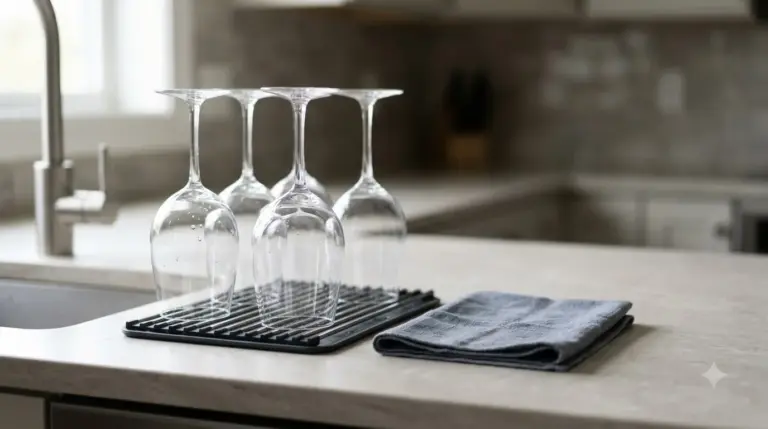
- Dry with a lint-free cloth. Use a clean, soft cloth to remove water spots and preserve the glass’s clear appearance.
- Return the glass to safe storage. Store it upright in a stable cabinet where rims and stems cannot collide with other pieces.
Storage and cabinet organization
Wedgwood advises against storing non-leaded crystal and glass upside down. This is important because the rim is a delicate contact point, and resting a glass on it can introduce unnecessary pressure.
A stable shelf with enough vertical clearance is preferable. Leave sufficient room between individual glasses to reduce the chance of accidental contact when removing or replacing them.
For the larger Swirl design, consider its 8.46-inch height and 4.72-inch width before deciding where to store it. Helia requires approximately 24 cm of vertical clearance, so it also needs a reasonably spacious cabinet.
Protecting the finish
Avoid abrasive cleaning materials, harsh scrubbing, and sudden temperature changes. These practices can damage delicate surfaces or increase the chance of accidental breakage.
Do not use a dishwasher simply because a crystal glass looks sturdy. Wedgwood’s general care instructions specifically exclude non-leaded crystal and glass from dishwasher use. The Helia product listing independently confirms that hand washing is required.
Tip: After washing a Wedgwood crystal glass, hold it by the bowl rather than twisting the stem while drying. Use a lint-free cloth, let the glass reach room temperature naturally, and store it upright with enough space to prevent contact with neighboring pieces.
These habits are particularly useful for decorative collections intended for special occasions. A little extra care helps maintain the presentation that makes crystal stemware attractive in the first place.
Frequently Asked Questions
Are Wedgwood red wine glasses made in England?
Wedgwood is an English-founded tableware brand, but individual glassware manufacturing locations can differ. The Helia wine glasses listed by John Lewis have Slovenia identified as their country of origin. The manufacturing location should therefore be considered a product-specific detail rather than assumed from the brand’s heritage.
Are Wedgwood crystal wine glasses lead-free?
The Helia glasses are specifically identified as lead-free crystal by John Lewis. However, buyers should distinguish between individual collections rather than assume every historical or current Wedgwood crystal product has identical material specifications. This distinction is particularly important for collectors purchasing older pieces.
Can Wedgwood wine glasses be used for white wine?
Stemmed wine glasses are not restricted to one wine color, and a versatile glass can serve several wine styles. However, smaller white wine servings are often easier to manage in glasses designed with more compact bowls. The Helia listing specifically identifies its pair as suitable for red wine, so buyers seeking dedicated white wine stemware should compare the corresponding product category.
How many milliliters are in a standard wine pour?
A standard 5-ounce wine serving is approximately 148 ml. A 750 ml bottle therefore provides roughly five standard glasses, allowing for minor differences in pouring. This serving measurement is useful when comparing the 350 ml Helia with the much larger 23-ounce Swirl.
Can older Wedgwood wine glasses be replaced individually?
Replacement availability depends on the collection and the age of the glass. Wedgwood directs customers seeking older discontinued pieces toward specialist replacement services, including Replacements.com. Having the original collection name, product identification details, and photographs can help when searching for a matching piece.
Wedgwood red wine glasses are worth considering if crystal craftsmanship and distinctive table presentation matter more to you than dishwasher convenience. The Vera Wang Swirl is the more expressive, generously sized option, while Helia offers a restrained neoclassical look with a smaller capacity. Compare their dimensions, storage requirements, and cleaning instructions before choosing a pair that will suit your wine collection and entertaining style.
More in Wine Glasses
 Spiegelau Crystal Wine Glasses That Bring Clarity to Every PourUpdated Nov 21, 2026
 Zalto Crystal Wine Glasses: Are They Worth the Investment?Updated Nov 21, 2026
 Villeroy And Boch White Wine Glasses for a More Cohesive TableUpdated Nov 21, 2026
 Zalto Wine Glasses On Sale: Find the Right Denk’Art GlassUpdated Nov 21, 2026
 Zwiesel Glas Champagne Glasses: Features, Quality and Buying AdviceUpdated Nov 21, 2026
 Zwiesel Glas Decanter Review: A Durable, Elegant Choice for Wine ServiceUpdated Nov 21, 2026