

We may earn a commission when you buy through links on this page, at no extra cost to you. Learn more.
The waring wine aerator is a compact, non-electric pouring accessory that introduces air into wine as it flows into your glass, making the Waring Pro WA100 a convenient option for drinkers who want immediate aeration without waiting for a traditional decanter. Its design combines a removable filter, a glass-mounted stand, and a brushed stainless steel center. It works with red and white wines, requires no batteries, and includes a base for storage. Its main limitation is that every component requires hand washing, so it is less convenient for anyone who prefers dishwasher-safe bar accessories.
The Waring Pro Professional Wine Aerator is designed around a straightforward idea: introduce air during pouring rather than transferring an entire bottle into a separate vessel. That approach makes it particularly interesting for people who serve one or two glasses at a time. However, understanding its glass-mounted arrangement, cleaning requirements, and differences from other aeration tools is important before choosing it.
Specs and Key Features of the Waring WA100
The Waring WA100 is a reusable, manual wine aerator with a four-part arrangement that supports pouring, filtering, and storage. Its main appeal is that it combines aeration and serving in one compact accessory without requiring electrical power or batteries.
Waring identifies the appliance as the WA100 Wine Aerator in its instruction manual. Retailer product information also uses the designation WPWA100. The brushed stainless steel center gives the accessory a metallic appearance, while the supplied stand and base provide a place for positioning and storage. Walmart describes the product as portable and non-battery-powered.
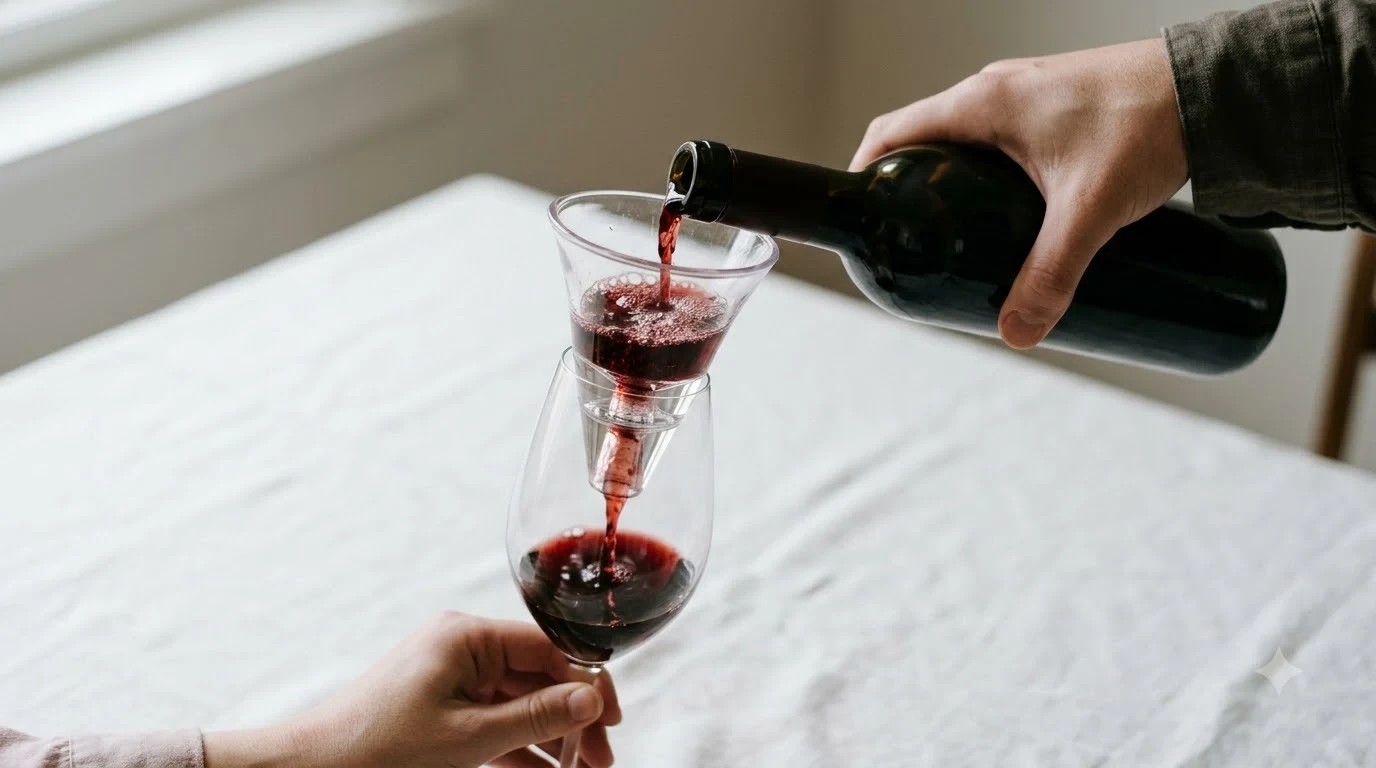
The aerator is intended to sit over a wine glass rather than attach permanently to a bottle. Wine passes through its upper container and filter as air is introduced into the flow. This arrangement means the user can aerate individual servings without preparing a separate decanter or committing an entire bottle to the process.
The following specifications distinguish documented features from details that should not be assumed. Waring’s manual is the primary reference for assembly, operation, and maintenance, while Walmart provides additional product identification information.
| Specification | Waring WA100 details |
|---|---|
| Product type | Manual wine aerator |
| Model designation | WA100 / WPWA100 |
| Brand | Waring Pro |
| Power source | None required |
| Battery requirement | No |
| Primary material detail | Brushed stainless steel center |
| Included components | Aerator, filter, stand, and base |
| Wine compatibility | Red and white wine |
| Operating method | Pour wine slowly through the aerator |
| Cleaning method | Hand wash with clean water |
| Dishwasher compatibility | Not dishwasher safe |
| Storage method | Stand and supplied base |
One important distinction is that the WA100 is not an electric wine pump. There is no charging station, motor, or battery compartment involved in normal operation. Instead, the design uses the movement of wine through the aerator to introduce air during the pour.
Waring also describes the product as suitable for young tannic reds and white wines. That broad compatibility is useful, although the effect of aeration will depend on the wine itself. A structured Cabernet Sauvignon may respond differently from a delicate Pinot Noir or an aromatic Sauvignon Blanc.
For the manufacturer’s instructions, consult the Waring Pro WA100 operating and cleaning manual. It provides the most useful documented information about how the components fit together and how to maintain them.
What Owners and Product Listings Like About the Design
The Waring Wine Aerator’s strongest practical advantages are immediate serving, straightforward operation, and a compact footprint. Its glass-mounted configuration also eliminates the need to transfer wine into a large vessel before serving individual glasses.
The first advantage is convenience. Traditional decanting involves opening a bottle, transferring wine into a decanter, and allowing it to rest when additional aeration time is desirable. The WA100 offers a different arrangement: wine receives air as it passes through the accessory. Someone preparing a single glass after work can use it without setting up a separate decanting station.
The second advantage is its manual construction. Because the WA100 does not require electricity or batteries, owners do not need to manage charging, battery replacement, or a power connection. That makes it suitable for a dining table, a small apartment bar, or a serving area where keeping electrical accessories nearby would be inconvenient.
The third advantage is the removable construction. The upper container twists away from the brushed stainless steel center, and the lower filter housing can also be removed. This gives owners access to components that need regular rinsing rather than forcing them to clean around a permanently assembled mechanism.
The supplied stand and base are useful details, too. A wine aerator can become awkward to store if it needs to be placed directly on a countertop after every use. The Waring arrangement gives the accessory a designated resting place and keeps the individual parts together between occasions.
Useful for individual servings
The WA100 is particularly practical for households where different people prefer different wines. One person might choose a glass of Merlot while another pours a Chardonnay. Because the accessory is used during individual pours, each serving can be handled separately rather than preparing a complete bottle in advance.
This arrangement is also useful for small gatherings. Guests can receive separate glasses, and the host can repeat the pouring process for additional servings. There is no requirement to transfer a whole bottle into a communal decanter before the first glass is served.
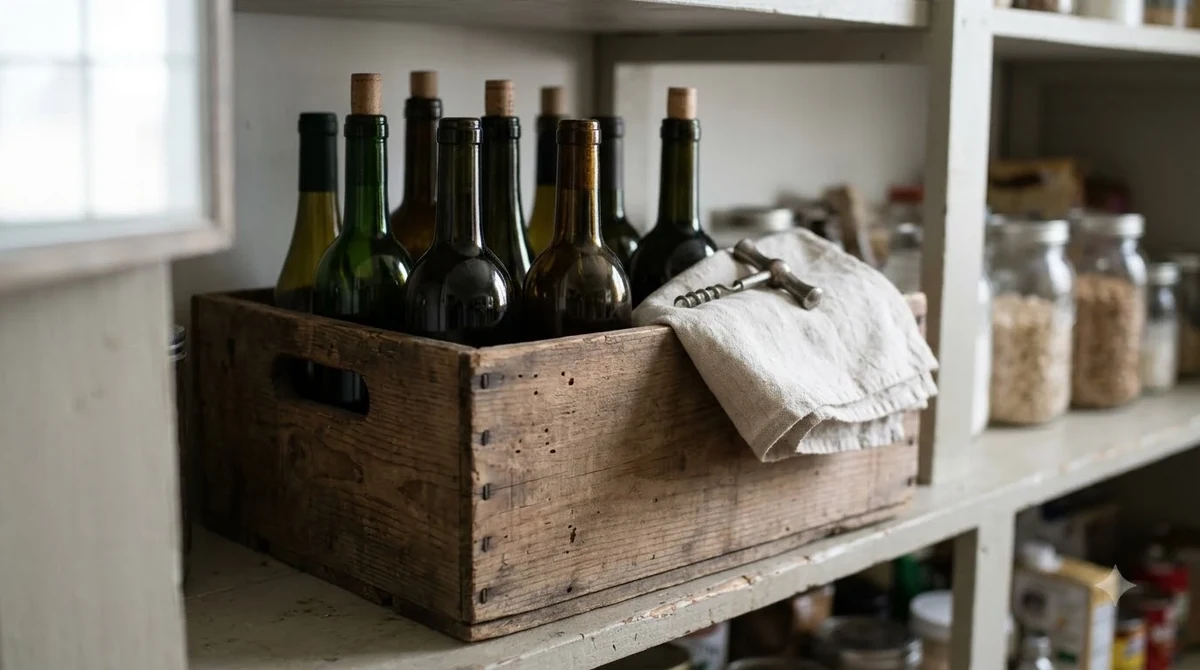
For people assembling a compact serving station, the Waring’s stand and base can fit into a broader setup alongside glassware, a corkscrew, and bottle stoppers. A well-arranged bar cart can provide a dedicated place for these accessories without requiring a full wine cabinet.
What the design does not establish
Convenience should not be confused with a guarantee of better wine. Aeration can change the way certain aromas and flavors present themselves, but it does not automatically improve every bottle. A young, concentrated red may benefit more noticeably than a delicate wine that already displays its intended character.
Likewise, Waring’s description of the product as introducing the proper amount of air should be understood as the manufacturer’s design claim, not as a universal measurement of ideal aeration. The manual does not provide a quantified oxygen-transfer rate or a controlled comparison against traditional decanting.
There is also a difference between product documentation and owner experience. Retailer listings describe the intended functionality, but they do not establish that every owner will experience the same pouring results. Buyers should evaluate the documented design and their own serving habits rather than treating general marketing language as proof of a particular flavor improvement.
Common Complaints and Practical Limitations
The Waring WA100 has several limitations worth considering before purchase, especially its cleaning requirements, glass compatibility, and lack of documented performance measurements. Its simple construction is convenient during serving but does not make it maintenance-free.
The clearest drawback is the cleaning procedure. Waring requires the aerator, stand, and base to be rinsed after every use. The components must be hand washed with clean water, and abrasive cleaning products are discouraged because they may damage the unit. None of the components should be placed in a dishwasher.
That restriction matters because wine can leave residue in small openings and around the filter. If the accessory is used with a dark, tannic red and then put away without proper cleaning, leftover wine may affect a later serving. The manufacturer specifically recommends cleaning the unit before switching between different types of wine.
Another limitation concerns stability. The stand is positioned on top of a wine glass, and the aerator sits inside that stand. Waring recommends holding the accessory with one hand while pouring with the other if additional security is needed. This is a sensible precaution, especially when using unfamiliar glassware or pouring into a narrow opening.
Glass shape is therefore an important practical consideration. The supplied documentation does not establish universal compatibility with every glass diameter or rim profile. Buyers who regularly use unusually wide, narrow, or irregularly shaped stemware should avoid assuming that the stand will fit every glass in their collection.
Limited performance information
The instruction manual explains how the WA100 introduces air, but it does not provide numerical aeration measurements. There is no documented oxygen-transfer rate, recommended wine-flow volume, or quantified comparison with a decanter.
That leaves an important question unanswered: exactly how much aeration does one pass through the WA100 provide compared with several minutes in a traditional decanter? The manual does not establish a universal answer, and individual wines can respond differently to air exposure.
The WA100 also should not be treated as a replacement for a dedicated sediment-management process. Its filter is part of the pouring arrangement, but the documentation does not establish a specific sediment-retention rating or guarantee that it will remove all deposits from older bottles.
Availability and product documentation
Another purchasing consideration is product identification. The WA100 and WPWA100 designations appear in product documentation and retailer information, so buyers should confirm that a listing refers to the intended Waring aerator rather than a different Waring wine accessory.
Retailer availability can also be inconsistent. A product listing does not necessarily mean that new inventory is regularly available, and older accessories may appear through independent sellers or remaining retail stock. Buyers should pay attention to the condition of the unit, the completeness of the stand and base, and whether the seller provides an applicable return policy.
Finally, the manual does not promise that the aerator will make every wine taste smoother or more aromatic. Those outcomes depend on the wine’s structure, age, serving temperature, and personal preference. The most reasonable expectation is convenient aeration during pouring, not a guaranteed transformation of an ordinary bottle into a superior one.
Who Should Buy the Waring Wine Aerator and Who Should Skip It
The Waring WA100 makes the most sense for drinkers who want to aerate individual servings without using an electric device or preparing a traditional decanter. It is less suitable for people who prioritize dishwasher-safe maintenance, extensive performance documentation, or large-bottle decanting.
Who should consider it: Casual wine drinkers who regularly open bottles and pour one glass at a time may appreciate its straightforward arrangement. The absence of batteries and electricity makes it especially appealing for people who prefer uncomplicated kitchen and bar accessories.
It may also suit households that drink a mixture of red and white wine. Waring explicitly identifies both categories as suitable, so the accessory is not restricted to Cabernet Sauvignon or other tannic reds. Someone serving Merlot, Syrah, Chardonnay, and Sauvignon Blanc can use the same basic setup for different styles.
Hosts who serve wine at smaller dinners may find the glass-mounted arrangement useful. Rather than preparing a decanter before guests arrive, they can aerate individual servings during pouring. This also makes it easier to serve different bottles to different guests without mixing their contents in one vessel.
Who should skip it: Buyers who expect an accessory to be completely dishwasher-safe should choose another design. The hand-washing requirement applies to every component, including the stand and base, which makes cleaning a recurring part of ownership.
Collectors who regularly open mature Bordeaux, Barolo, or other wines with substantial bottle sediment may prefer a traditional decanter designed for careful separation of wine from deposits. Although the WA100 includes a filter, its instructions do not establish that it is a dedicated sediment-management solution.
Drinkers who prefer a controlled, extended aeration period should also consider a decanter. A glass-mounted aerator introduces air during pouring, but it does not provide the same opportunity to observe how a wine develops over 30 to 60 minutes.
Match the accessory to your wine habits
Consider how frequently you open bottles and how many glasses you normally serve. If you usually pour one or two glasses from a bottle, an individual-pour aerator can be a practical arrangement. If you regularly serve a full bottle to six guests, a decanter with enough capacity for the bottle may be easier to manage.
Wine style matters as well. Young Cabernet Sauvignon and Syrah can have substantial tannin and may benefit from air exposure. Pinot Noir generally has lower to medium tannin and can be more delicate, so aggressive or unnecessary aeration is not always desirable.
White wine deserves similar consideration. Some full-bodied Chardonnays can benefit from additional air exposure, while crisp Sauvignon Blanc is often appreciated for its fresh acidity and aromatic character. The Waring’s red-and-white compatibility is useful, but it should not be interpreted as a recommendation to aerate every white wine.
Tip: Start with a small pour when using the WA100 for an unfamiliar wine. Compare the aroma and flavor immediately after pouring with what you notice after a few minutes in the glass. This helps determine whether additional aeration suits that particular bottle.
How the Waring WA100 Compares to Other Aeration Alternatives
The Waring WA100 occupies a middle ground between a simple bottle-top aerator and a traditional decanter. It introduces air during pouring, but its glass-mounted design makes it different from accessories that attach directly to a bottle or vessels intended for longer wine exposure.
Understanding these differences helps buyers decide whether the Waring’s particular arrangement offers a meaningful advantage. The right choice depends on whether convenience, control, serving volume, or sediment handling matters most.
Waring WA100 versus a traditional decanter
A decanter is a serving vessel that allows wine to rest in a broader container after being transferred from the bottle. This creates an opportunity for air exposure over time and can be useful when serving young, concentrated red wines.
The WA100 is designed for a faster process. Instead of transferring the entire bottle, the user pours each serving through the accessory. That makes it more convenient for people who want to aerate one glass without committing the remaining wine to a decanter.
However, the two accessories do not perform identical jobs. A traditional decanter offers greater flexibility for extended resting and can help separate wine from sediment when used carefully. The Waring is more about serving convenience and immediate aeration.
For drinkers interested in combining both approaches, a decanter with aerator offers another configuration to investigate. Such a design can bring aeration into the decanting process, although the precise arrangement and performance depend on the particular product.
Waring WA100 versus a basic bottle-top aerator
A bottle-top aerator attaches to the neck of the bottle and introduces air as wine flows through its internal passage. It is usually designed to remain attached during pouring, while the Waring WA100 rests on a separate stand positioned over the glass.
The Waring arrangement has the advantage of keeping the aerator separate from the bottle. This may be useful when pouring from different bottles during the same gathering. However, the additional stand and base mean there are more components to rinse, dry, and store.
A basic bottle-top model may be preferable for people who want a compact accessory that can travel with a bottle. The WA100 is more appealing to someone who prefers a dedicated glass-mounted arrangement and does not mind maintaining several parts.
Waring WA100 versus electric aerators
Electric aerators use powered mechanisms to move wine or introduce air. Depending on the model, they may attach to a bottle, use a pump, or dispense wine through a motorized system. These products can offer a different level of convenience, but they also introduce batteries, charging, or additional mechanical components.
The WA100 avoids those requirements. There is no electrical system to charge or maintain, and its manual instructions focus on positioning, pouring, and cleaning. For a buyer who values simple operation over automated dispensing, that distinction can be decisive.
On the other hand, people who want push-button operation or hands-free dispensing may find an electric alternative more suitable. The WA100 requires the user to position the stand, secure the aerator, and pour slowly.
Comparison at a glance
| Accessory type | How it works | Main advantage | Main limitation |
|---|---|---|---|
| Waring WA100 | Introduces air during glass-by-glass pouring | Manual operation without batteries | Hand washing required |
| Traditional decanter | Holds wine in a separate vessel | Extended aeration and serving flexibility | Requires additional preparation and storage |
| Bottle-top aerator | Aerates wine as it leaves the bottle | Compact pouring arrangement | Must fit the bottle neck correctly |
| Electric aerator | Uses a powered mechanism to dispense or aerate wine | Automated serving options | Requires powered components |
These categories are not interchangeable in every situation. A traditional decanter is still useful for a bottle that benefits from resting, while an aerator is more convenient for a quick serving. The Waring’s strongest distinction is its combination of a manual aeration process and a separate glass-mounted stand.
How to Use and Maintain the Waring Wine Aerator
Correct positioning and careful cleaning are essential to getting consistent use from the Waring WA100. The manufacturer recommends rinsing the components before use, pouring slowly, and hand washing everything afterward.
The process is uncomplicated, but the glass-mounted arrangement deserves attention. A stable stand and properly positioned aerator help reduce spills, particularly when serving wine into narrower glasses.
Step-by-step operating instructions
- Rinse the components. Before serving, rinse the aerator, stand, and base as directed in the instruction manual.
- Position the stand. Place the stand on top of a wine glass with its raised side facing down into the glass.
- Insert the aerator. Position the aerator inside the stand and ensure that it is seated securely.
- Stabilize the setup. If additional security is needed, hold the aerator with one hand while pouring with the other.
- Pour slowly. Direct the wine into the upper container rather than pouring too quickly or carelessly.
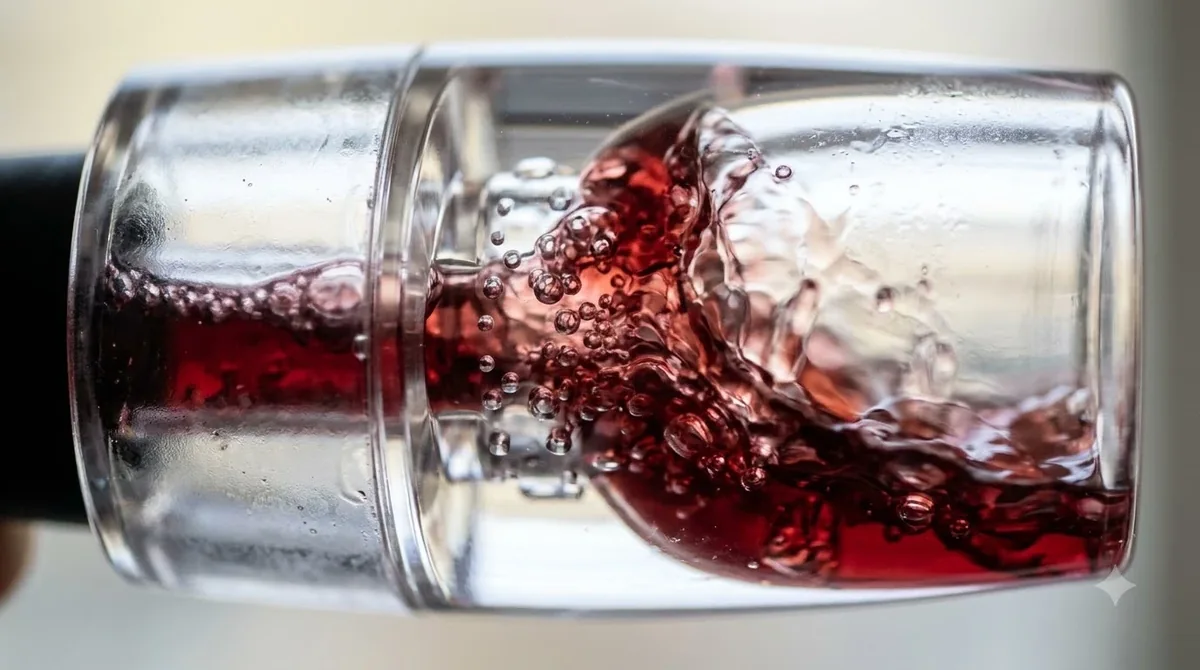
- Allow the aerator to work. As wine passes through the filter, the mechanism draws in and mixes air before the wine reaches the glass.
- Repeat for additional servings. Use the same procedure for subsequent glasses, cleaning the accessory before switching to a different type of wine.
- Clean and store. Disassemble the appropriate components, rinse them, hand wash with clean water, dry thoroughly, and return the accessory to its stand and base.
Cleaning the removable components
The upper container twists away from the brushed stainless steel center. The lower filter housing is also removable, giving owners access to parts that can collect wine residue during regular use.
Rinse the aerator, stand, and base after every serving session. Use clean water and avoid abrasive cleansers. The instruction manual explicitly prohibits dishwasher cleaning, so placing even the smaller components in a dishwasher is not an appropriate shortcut.
Once rinsed, dry the components thoroughly before storing them. This is especially important around the filter housing and the connections between removable parts. Proper drying also makes the accessory easier to reassemble for its next use.
Preventing cross-contamination between wines
Cleaning becomes especially important when moving between different wine styles. A heavily pigmented red can leave traces that affect the appearance of a subsequent white wine. The same issue can arise when moving between strongly aromatic wines and more delicate varieties.
For example, clean the WA100 before switching from a bold Syrah to a lightly aromatic Sauvignon Blanc. This simple practice helps prevent residual wine from interfering with the next serving.
Store the cleaned accessory on its supplied base rather than leaving the separate pieces scattered around a countertop. Keeping the stand and aerator together also makes it easier to check that all the components are available before serving.
For broader wine-accessory organization, the site’s wine accessory brands section provides another starting point for comparing serving equipment and related tools.
Frequently Asked Questions
Does the Waring WA100 work with sparkling wine?
Waring’s instruction manual specifically identifies red and white wine as suitable uses, rather than listing sparkling wine as an approved application. Sparkling wine contains dissolved carbon dioxide, and unnecessary agitation can cause excessive foam and loss of bubbles. A dedicated sparkling-wine stopper or carefully controlled pouring method is a better choice for preserving carbonation.
Can the Waring Wine Aerator be used with screw-cap bottles?
Yes. The WA100 is positioned over a glass rather than attached to a bottle neck, so the bottle’s closure style does not determine whether the accessory can be used. A screw-cap bottle can be opened normally, after which the wine is poured through the aerator using the same glass-mounted procedure.
Does the Waring WA100 change the alcohol content of wine?
The WA100 is a pouring and aeration accessory, not an alcohol-removal device. Its intended function is to introduce air while wine passes through the unit. It does not provide a process for measuring or reducing the alcohol percentage of a bottle.
Can the Waring aerator be used with half-filled bottles?
Yes. Because the accessory is used during individual pours, it does not depend on the bottle being full. The remaining wine can stay in its original bottle between servings, provided the bottle is properly closed and stored according to the wine’s requirements.
Does the Waring WA100 need replacement filters?
The instruction manual describes a removable filter housing but does not specify a replacement schedule or a standard replacement-filter program. Owners should inspect the filter for damage or persistent blockage and seek compatible manufacturer-authorized replacement information if a component needs attention. A damaged or incorrectly assembled filter housing should not be used for serving wine.
The Waring Wine Aerator WA100 is a straightforward option for people who want air introduced during individual pours without using electricity or preparing a traditional decanter. Its removable construction, red-and-white wine compatibility, and supplied storage base make it practical, although the glass-mounted arrangement and hand-washing requirement deserve consideration. Buyers who prioritize convenient serving over extended decanting may appreciate its simple design, while collectors who need greater control over aeration time or sediment separation should consider a traditional decanter instead.
More in Wine Accessories
 Coravin Vs Vacu Vin: Choose the Right Wine Saver for Your BottlesUpdated Nov 21, 2026
 Zwilling Wine Stopper Review: Preserve Open Bottles LongerUpdated Nov 21, 2026
 Wine Enthusiast Wine Preserver Review: Features, Benefits and LimitationsUpdated Nov 21, 2026
 Wine Enthusiast Wine Stopper: An Easier Way to Reseal Open BottlesUpdated Nov 21, 2026
 Vintorio Wine Opener: Two-Step Cork RemovalUpdated Nov 21, 2026
 Zwilling Wine Aerator Review: Aerate, Pour, and Seal With One ToolUpdated Nov 21, 2026