

We may earn a commission when you buy through links on this page, at no extra cost to you. Learn more.
Screwpull wine accessories are a worthwhile choice for wine drinkers who value thoughtfully engineered corkscrews, practical opening mechanisms, and coordinated serving tools. Originally developed by Herbert Allen, Screwpull became part of Le Creuset’s wine accessory collection after the company acquired Hallen International in 1991. Its range includes self-pulling corkscrews, lever openers, foil cutters, stoppers, and other wine-serving accessories. The main consideration is choosing the right mechanism: a compact traditional opener suits straightforward everyday use, while a lever model offers additional mechanical assistance.
Screwpull has a recognizable place in wine accessory history because its original corkscrew approached a familiar household task as an engineering problem. Rather than relying on brute pulling force, its mechanism was designed to guide a screw through the cork and extract it through controlled movement. Le Creuset continues that design tradition with several wine tools, although older Screwpull products and newer Le Creuset-branded accessories can differ considerably. Understanding the product families, compatibility, maintenance requirements, and intended uses makes it easier to decide whether these accessories deserve a place in a home wine setup.
Specs and Key Features
Screwpull wine accessories are best understood as a collection of related opening and serving tools rather than one particular corkscrew. Their shared appeal is functional design, with different mechanisms intended to suit different levels of convenience and opening preferences.
The LM-200 Classic Lever Model is a useful reference point because Le Creuset identifies it as the original lever corkscrew invented by Screwpull in 1979. Its listed dimensions are 19.7 cm wide, 5 cm deep, and 13.7 cm high, with a weight of 330 grams. The package includes a foil cutter and a gift box. These measurements make it a substantial countertop or cabinet accessory rather than a particularly small pocket tool.
The collection also includes the traditional self-pulling design, compact models, and more elaborate lever mechanisms. The GS-110 Table Model, for example, measures 4.2 cm by 2.5 cm by 14.5 cm and weighs 50 grams. It comes with a foil cutter, making it a lighter alternative for people who prefer a straightforward corkscrew without the larger lever assembly.
| Model or accessory | Published specifications or features | Best suited to |
|---|---|---|
| LM-200 Classic Lever | 19.7 x 5 x 13.7 cm; 330 g; foil cutter included | Regular home wine opening |
| GS-110 Table Model | 4.2 x 2.5 x 14.5 cm; 50 g; foil cutter included | Compact self-pulling operation |
| GS-111 Pocket Model | Compact design; foil cutter and bottle opener | Travel and occasional use |
| LM-400 Lever Model | Four-step lever action | Buyers who prefer a shorter operating sequence |
| LM-2000 Lever Model | Four-wheel foil cutter and display stand | Countertop presentation and entertaining |
| LM-350 Trigger Model | Trigger-style grip; accommodates wider bottle necks | Alternative lever handling preference |
| LM-150 Gaia | Freestanding lever design; up-and-over motion | Buyers seeking a contemporary opener |
These specifications describe individual models rather than universal features of every Screwpull accessory. A compact GS-series opener should not be expected to provide the same leverage as an LM-series opener. Likewise, the display stand and four-wheel foil cutter associated with the LM-2000 should not be assumed to come with the LM-200.
Another important feature is serviceability. Le Creuset describes replacement screws for certain lever models, allowing a worn opening component to be exchanged rather than automatically replacing the complete corkscrew. Its replacement screw specification includes stainless steel construction and three coats of non-stick coating. This is a practical advantage for buyers considering a lever opener as a longer-term household purchase. The manufacturer’s original lever replacement screw specifications provide additional information about this component.
What Owners Like About the Design
The strongest selling point of the Screwpull approach is its emphasis on controlled cork removal. The original self-pulling design and later lever mechanisms address the same problem in different ways: extracting a cork without requiring an awkward combination of twisting, pulling, and stabilizing the bottle.
The original self-pulling mechanism is particularly distinctive. The user positions the opener over the bottle neck and turns its handle so the screw enters the cork. Continued rotation brings the cork upward. This is different from a conventional waiter’s corkscrew, where the user must use the bottle edge as a fulcrum and lift the cork through a separate pulling movement.
The lever family takes a more mechanical approach. The LM-200 provides an ergonomic lever design, while the LM-400 offers a four-step operating sequence. The LM-350 adds a trigger-style grip that accommodates wider bottle necks. These differences matter because the physical handling of an opener can be just as important as its appearance.
Useful combinations for serving wine
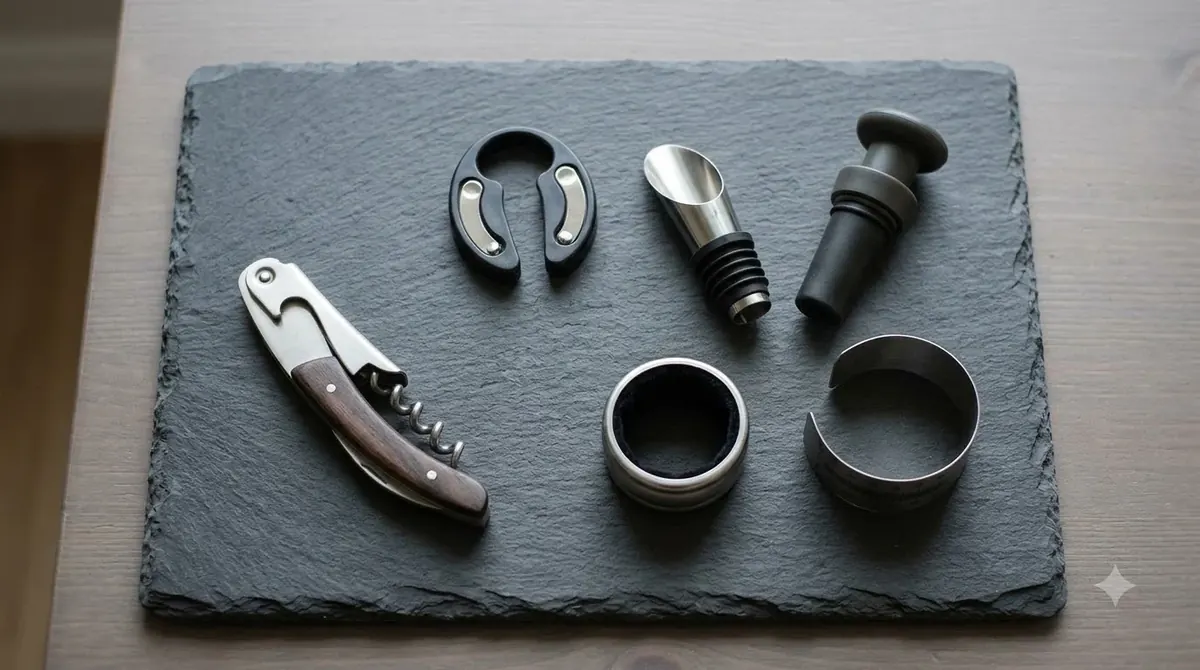
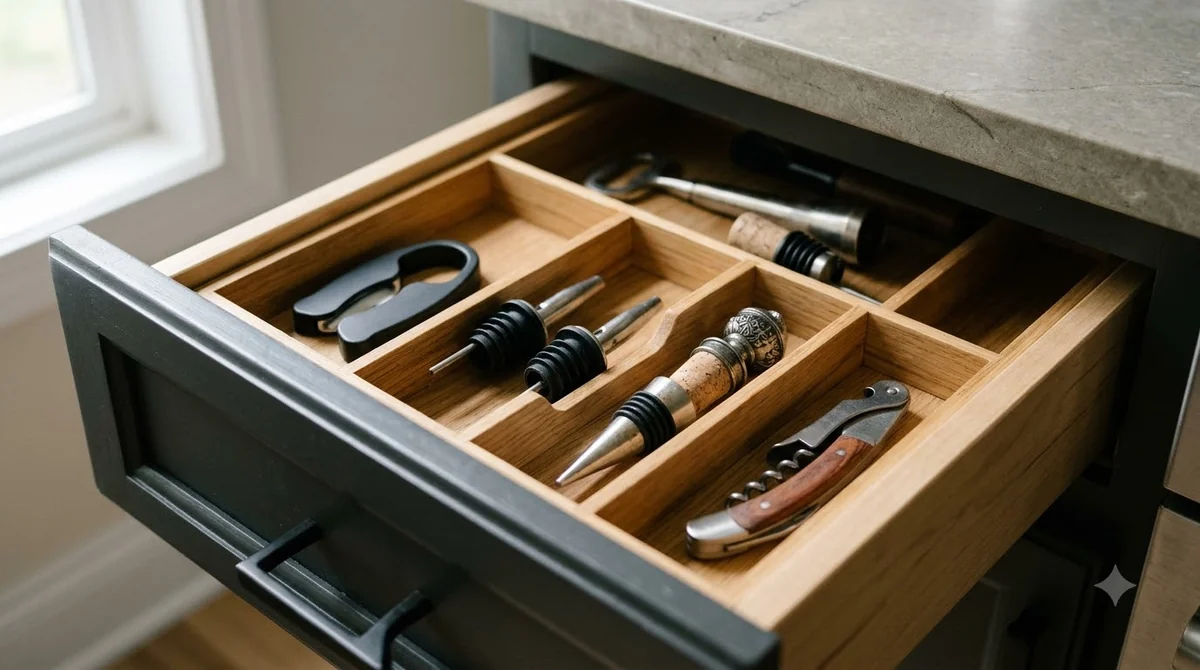
Not every wine accessory needs to open a bottle. Foil cutters remove the capsule covering the cork, stoppers help close bottles between servings, and pouring accessories support more controlled service. Having complementary tools together can make entertaining easier, particularly when several bottles are served during a dinner.
For example, a homeowner who regularly serves Cabernet Sauvignon, Chardonnay, and Pinot Noir might appreciate a reliable lever opener, a separate foil cutter, and a stopper for unfinished still wine. A smaller household that generally opens one bottle at a time may prefer a compact self-pulling corkscrew and a basic stopper instead.
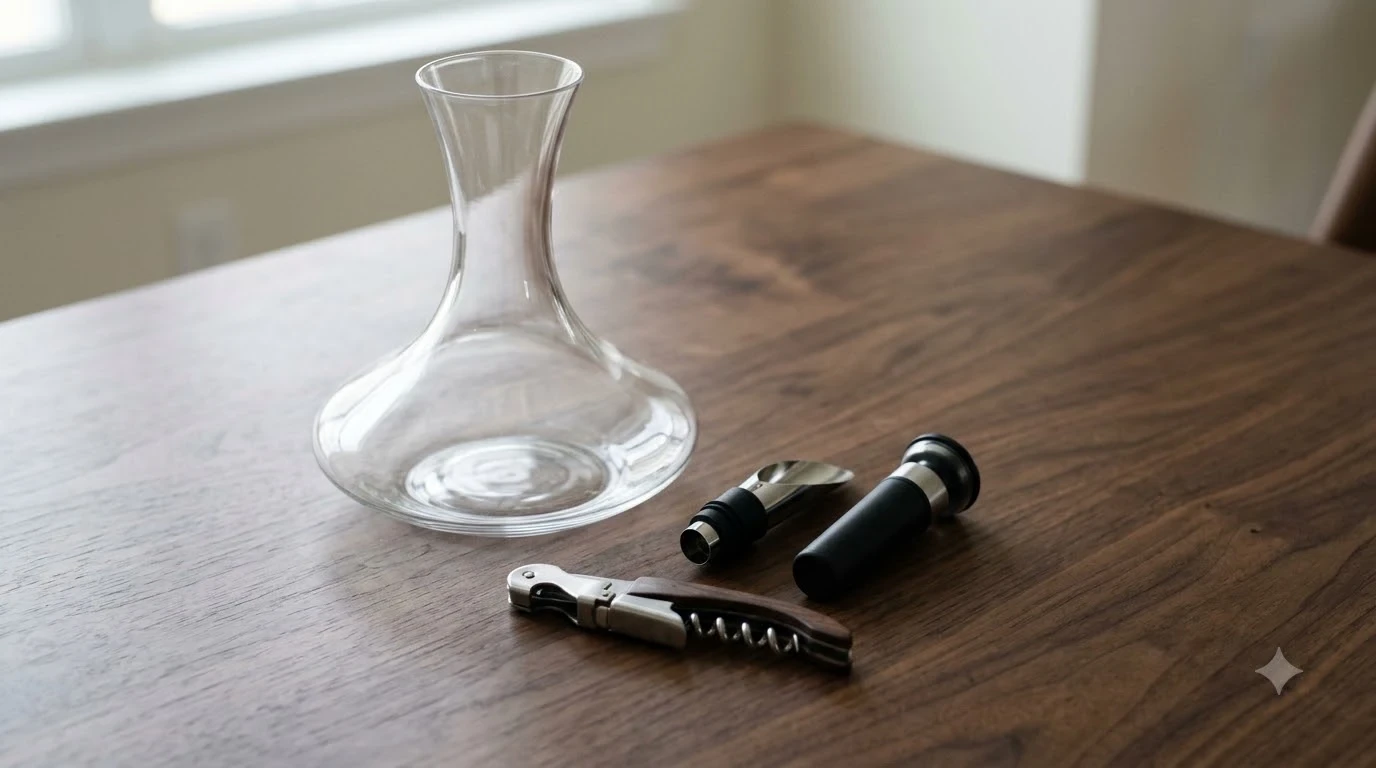
The design also has a visual advantage. Le Creuset’s wine accessories are intended to complement its broader kitchen and table collections. An opener displayed beside wine glasses, a decanter, or a bar cart can function as both a practical tool and part of a coordinated entertaining setup.
Replacement components add practical value
A corkscrew’s working screw is exposed to repeated contact with cork, so wear is a reasonable consideration. Le Creuset explains that a coated lever-model screw can be replaced when it becomes worn or difficult to operate. The manufacturer also describes a replacement procedure involving removal of the protective chrome cap before exchanging the screw.
This does not mean every older Screwpull opener automatically accepts every replacement component. Model compatibility matters, and buyers should identify the precise opener before ordering a replacement. Nevertheless, the availability of a documented replacement approach is a positive feature for owners who want to maintain an existing accessory rather than discard it at the first sign of wear.
Common Complaints and Limitations
Screwpull accessories have recognizable strengths, but they are not universal wine tools. The most important limitations involve synthetic cork compatibility in older mechanisms, fragile corks, sparkling wine closures, and the physical size of certain lever models.
One potential problem involves older lever corkscrews and synthetic corks. Le Creuset explains that most of its lever models are designed for modern synthetic closures, but older versions can experience sticking or jamming when synthetic material grips the screw. This distinction is particularly important when buying a secondhand Screwpull opener without knowing its production period or previous maintenance history.
A synthetic cork may behave differently from a traditional natural cork because its material and surface characteristics vary. If it sticks to the screw, Le Creuset describes carefully twisting it off with the fingers. However, the screw tip remains sharp, so handling should be cautious. Repeated sticking should not be treated as a reason to force the mechanism through another cycle.
Fragile corks require another approach
Older bottles present a different challenge. A cork that has dried, weakened, crumbled, or broken during storage may not respond well to an ordinary lever opener. Le Creuset specifically recommends a two-prong Butler’s Friend for old, fragile, brittle, or broken corks.
This is a meaningful limitation for collectors who frequently open mature Bordeaux, aged Burgundy, or older bottles from traditional wine regions. A lever corkscrew is convenient for routine opening, but its design does not make it the right tool for every deteriorating closure.
Buyers who regularly open collectible bottles may therefore want two different tools: a modern lever opener for everyday bottles and a two-prong opener for fragile corks. The additional tool occupies storage space, but it provides a more appropriate method for dealing with delicate closures.
Size and sparkling wine compatibility
Large lever openers can also take up more room than a compact waiter-style corkscrew. An LM-200 measuring 19.7 cm across requires a dedicated storage space, and a model supplied with a display stand requires even more consideration. That may be inconvenient in a small kitchen or a compact apartment.
Another limitation is sparkling wine. Le Creuset explicitly says its lever corkscrews are unsuitable for Champagne and Prosecco. These bottles use pressure-bearing closures that require a different opening method. A conventional wine lever opener should never be substituted for the appropriate sparkling wine opening technique.
There is also a maintenance requirement that some buyers may find inconvenient. The manufacturer’s care instructions exclude lever models from dishwasher cleaning and recommend hand cleaning followed by thorough drying. Buyers who prefer completely dishwasher-safe kitchen tools may find this less convenient than simpler stainless steel accessories.
Who Should Buy and Who Should Skip
Screwpull wine accessories make the most sense for regular wine drinkers who appreciate mechanical assistance, coordinated accessories, and a recognizable design history. The range is less compelling for buyers who want one inexpensive, universally compatible opener for every bottle type.
The LM-200 Classic Lever Model is a sensible option for households that regularly open still wine and want a dedicated lever opener. Its 330-gram weight and included foil cutter make it a relatively complete opening tool, while its 19.7 cm width provides a substantial grip and lever structure. Buyers should, however, have enough cabinet or counter space to accommodate it.
The GS-110 is a better consideration for people who want the original self-pulling concept in a lighter format. At 50 grams, it weighs considerably less than the LM-200. Its smaller dimensions also make it more convenient to store in a kitchen drawer or carry as part of a compact wine accessory kit.
Good reasons to choose Screwpull
- You regularly open still wines with natural or compatible synthetic corks.
- You prefer a guided self-pulling or lever-assisted mechanism over a traditional waiter-style corkscrew.
- You appreciate ergonomic design and coordinated wine-serving accessories.
- You want a recognizable wine tool with a documented design history dating to 1979.
- You are interested in maintaining an existing lever opener through compatible replacement components.
- You want an opener that can become a permanent part of a home entertaining setup.
Reasons to consider another opener
- You mainly open Champagne, Prosecco, or other sparkling wines.
- You frequently handle old bottles with fragile or deteriorating corks.
- You want a compact tool that takes up almost no storage space.
- You prefer dishwasher-safe accessories and minimal maintenance.
- You need an opener that works with a broad variety of unusual closures without checking model compatibility.
- You rarely drink wine and do not need a dedicated lever mechanism.
Gift buyers should also consider how the recipient actually drinks wine. A well-presented opener can be a useful housewarming or holiday gift, but a compact model may be more practical for someone who has limited kitchen space. A coordinated stopper or serving accessory can add usefulness without requiring a large collection of equipment. For a wine-themed seasonal present, a wine advent calendar may also complement a suitable opener.
For people building a complete wine setup, Screwpull is one option within a wider range of specialist equipment. Comparing different manufacturers and accessory categories through the Accessory Brands collection can help identify alternatives with different opening mechanisms and storage requirements.
How It Compares to Alternatives
Screwpull’s principal distinction is its combination of self-pulling and lever-assisted cork removal. Traditional waiter’s corkscrews, two-prong openers, and electric corkscrews address the same basic task but offer different handling characteristics.
A waiter’s corkscrew is generally the more compact choice. It combines a screw, a small lever, and often a folding foil knife. Its main advantage is portability, which makes it popular in restaurants and useful for people who want a single tool in a kitchen drawer. The trade-off is that opening requires more deliberate hand positioning and a separate lifting action.
A Screwpull self-pulling model instead uses continuous rotation to draw the cork out. The design can feel more intuitive for people who prefer not to balance a small lever against the bottle lip. The larger lever models provide another option for those who want a more substantial mechanical opening action.
Lever openers versus traditional corkscrews
Lever models are particularly attractive when convenience and repeatability matter. An LM-200 or LM-400 provides a defined mechanism rather than requiring the user to manually create leverage with a compact waiter-style tool. However, the larger construction is not necessarily an advantage for everyone.
Traditional corkscrews are easier to store, generally less complicated, and more convenient to carry. They also allow an experienced user to control the extraction process directly. Someone who opens wine only occasionally may find a good waiter-style opener entirely adequate.
Lever openers versus two-prong openers
A two-prong opener serves a more specialized purpose. Instead of drilling through the cork, its two metal prongs slide between the cork and the inside of the bottle neck. The user works the prongs downward and gradually rotates the cork out.
This approach is especially relevant to old bottles with fragile corks. Le Creuset recommends the Butler’s Friend for this situation rather than relying on its lever models. It is not necessarily the best everyday option for new bottles, but it can be a useful specialist addition to a serious wine collection.
Choosing the right alternative
Electric corkscrews offer another route for people who prefer a motorized opening process. They can reduce the amount of manual twisting involved, although they introduce a battery or charging requirement. Buyers should consider storage, power availability, and the reliability of the particular model rather than assuming an electric mechanism is automatically superior.
The practical choice depends on bottle frequency and closure type. A compact waiter-style corkscrew is sufficient for occasional use, a Screwpull lever opener is attractive for regular still-wine service, and a two-prong opener is appropriate for fragile corks. Sparkling wines require their own suitable opening method, regardless of which still-wine corkscrew is preferred.
Frequently Asked Questions
Is Screwpull the same as Le Creuset?
Screwpull became part of Le Creuset following the acquisition of Hallen International in 1991. The original name remains important in the history of the company’s wine accessories, but current products are generally marketed within the Le Creuset wine collection. The acquisition did not mean that every older Screwpull product was physically identical to later Le Creuset models.
Who invented the original Screwpull corkscrew?
Herbert Allen invented the Screwpull corkscrew, with its development beginning in 1975 and its introduction following in 1979. Allen was an engineer and inventor who approached cork removal as a mechanical design challenge. His original concept became influential enough to inspire later corkscrew designs and dedicated collector interest.
Can a Screwpull opener remove a cork without damaging the wine label?
A corkscrew normally operates at the bottle neck and does not need to contact the main body or label. Nevertheless, handling a bottle with a delicate paper label requires care, particularly when removing the foil capsule. Avoid resting sharp tools against the label or scraping the glass near its edges.
Can Screwpull accessories be collected as vintage wine tools?
Yes. Screwpull has an established product history and a documented design legacy that attracts corkscrew collectors. Donald Minzenmayer’s illustrated book, Screwpull: Creation & History of a High-tech Corkscrew, documents prototypes, patent drawings, and production models. Collectors should distinguish original production pieces from later Le Creuset products when evaluating an item.
Why does a cork sometimes remain attached to the corkscrew?
This can happen when the cork material grips the screw, particularly with some synthetic closures and older lever mechanisms. Le Creuset recommends carefully twisting a stuck cork off by hand, taking care around the sharp screw tip. Persistent sticking or difficult operation can also indicate that the mechanism or coated screw needs attention.
Screwpull wine accessories remain appealing because they combine a distinctive engineering history with practical solutions for opening and serving still wine. The LM-200 is a strong choice for buyers who want a substantial lever opener, while the GS-110 offers a lighter alternative for more compact storage. Choose according to your bottle types, available space, and preferred opening mechanism, and treat fragile corks and sparkling wine as separate use cases requiring appropriate tools.
More in Wine Accessories
 Coravin Vs Vacu Vin: Choose the Right Wine Saver for Your BottlesUpdated Nov 21, 2026
 Zwilling Wine Stopper Review: Preserve Open Bottles LongerUpdated Nov 21, 2026
 Wine Enthusiast Wine Preserver Review: Features, Benefits and LimitationsUpdated Nov 21, 2026
 Wine Enthusiast Wine Stopper: An Easier Way to Reseal Open BottlesUpdated Nov 21, 2026
 Vintorio Wine Opener: Two-Step Cork RemovalUpdated Nov 21, 2026
 Zwilling Wine Aerator Review: Aerate, Pour, and Seal With One ToolUpdated Nov 21, 2026