


We may earn a commission when you buy through links on this page, at no extra cost to you. Learn more.
Metrokane wine accessories are worth considering for wine drinkers who want convenient bottle-opening tools, especially the brand’s recognizable Rabbit lever corkscrew and automatic electric opener. The Rabbit design combines a bottle-neck grip, lever mechanism, and automatic cork release to simplify opening both natural and synthetic corks. Its main advantages are straightforward operation, useful included accessories, and a substantial warranty on specified manual models. Buyers should also consider its moving parts, maintenance requirements, and the differences between manual and electric versions before choosing one.
Opening a bottle of wine should be a simple part of preparing dinner, hosting friends, or enjoying a glass after work. A dependable corkscrew makes that process easier, while useful supporting accessories help with pouring, preserving, and organizing bottles. Metrokane is particularly recognizable for Rabbit-branded wine openers, which use a lever-based design rather than the compact twisting motion of a traditional waiter’s corkscrew. Its accessory lineup also includes electric opening options and complementary bar tools. This review examines the Rabbit family as the central product offering, explains its practical strengths and limitations, and considers which accessories deserve a place in a home wine setup.
Specs and Key Features of Metrokane Rabbit Openers
The defining feature of the Metrokane Rabbit is its lever-operated cork extraction mechanism, which reduces the amount of twisting and pulling required from the user. Manual versions combine gripping handles with a mechanical lever, while the electric version automates much of the process.

The Classic Black Rabbit and W6004 are useful examples of the manual design. According to QVC, the Classic Black Rabbit uses hardened metal components, a precision gear mechanism, soft rubber grip pads, and a separate foil cutter. Wasserstrom’s listing for the W6004 also identifies a spare spiral and clear presentation case. These details make the opener more substantial than a basic pocket corkscrew, although the larger construction requires more storage space.
The manufacturer’s product descriptions also distinguish the electric Rabbit from the traditional lever model. Dillard’s lists automatic cork extraction, automatic cork ejection, rechargeable operation, and a built-in foil cutter. A full charge is described as sufficient for more than 30 bottles. That convenience may appeal to frequent hosts, although it introduces charging and battery considerations that do not apply to a manual opener.
| Feature | Manual Rabbit | Electric Rabbit |
|---|---|---|
| Operating method | Hand-operated lever | Automatic electric mechanism |
| Opening time | Approximately 3 seconds | Automatic operation |
| Cork release | Lever-operated release | Automatic ejection |
| Cork compatibility | Natural and synthetic corks | Natural and synthetic corks |
| Foil cutter | Separate accessory on specified models | Built-in |
| Rechargeable | No | Yes |
| Battery capacity | Not applicable | More than 30 bottles per charge |
| Warranty | 10 years on specified manual models | Check the individual model’s warranty |
The approximately three-second extraction claim applies to the manual Rabbit models described by QVC and Wasserstrom. It should be understood as a product specification rather than a guarantee that every bottle will open in exactly three seconds. Cork condition, bottle positioning, and the user’s familiarity with the mechanism can affect the process. The electric model has a different operating method, so its rechargeable specifications should not be confused with those of the manual version.
One important distinction concerns the materials listed by different retailers. QVC describes hardened-metal gears and an ergonomic construction, while Wasserstrom lists plastic as the W6004’s material. These descriptions do not necessarily conflict: a product can combine an outer plastic body with metal internal components. Buyers should evaluate the complete construction rather than assume that every Rabbit model is made entirely from metal.
For a more detailed understanding of the lever mechanism, the Rabbit and Houdini instruction manual explains the gripping, extraction, and cork-release sequence. This is especially useful for anyone buying a used opener without its original packaging.
What Owners and Product Listings Like
The Rabbit’s strongest selling point is its straightforward mechanical operation. Instead of repeatedly twisting a corkscrew into a cork and pulling upward, the user positions the opener over the bottle and operates a lever to complete the extraction.
The automatic release mechanism is another practical advantage. After the cork has been extracted, the lever movement releases it from the spiral. This eliminates the need to pull a cork off the metal screw manually, which is a useful convenience when opening several bottles during a gathering. The mechanism also gives the opener a distinctive operating style that separates it from conventional wine keys.
Wasserstrom reports that the W6004 was tested for 20,000 cork pulls by an independent laboratory. That figure is a particularly useful specification for buyers comparing mechanical openers. It suggests that durability was considered in the product’s evaluation, although laboratory testing should not be interpreted as a promise that every individual unit will achieve the same number of successful openings.
The included accessories also improve the overall package. A foil cutter allows the user to prepare the bottle before positioning the corkscrew, while an extra spiral provides a replacement component if the original becomes worn. The presentation case helps keep the opener and its accessories together instead of allowing small pieces to disappear into a kitchen drawer.
Ergonomics are another positive feature of the manual Rabbit. QVC identifies soft rubber grip pads on its Classic Black model. A comfortable gripping surface can help users maintain control during the lever movement, particularly when opening bottles with firm corks. The handles also provide a larger gripping area than a small pocket corkscrew.
For households that entertain regularly, these advantages can add up. Opening four or five bottles for a dinner party involves repeated movements, and a lever mechanism can make the task more comfortable than using a basic corkscrew. The automatic release also reduces the small but repetitive inconvenience of removing each extracted cork from a traditional spiral.
The electric Rabbit offers a different type of convenience. Dillard’s describes a model that automatically extracts and ejects corks upon contact with the bottle, without requiring users to press buttons. Its stated capacity of more than 30 bottles per charge makes it potentially useful for parties and larger households. A built-in foil cutter also reduces the number of separate accessories needed.
There is an important distinction between product specifications and customer experience. A retailer’s description establishes what a product is designed to do, but it does not demonstrate that every owner will have the same experience. Buyers should consider the opener’s mechanical complexity, maintenance requirements, and replacement-part availability alongside its advertised convenience.
Common Complaints and Practical Limitations
The Rabbit’s lever mechanism is convenient, but it requires correct positioning and a firm grip. Users who expect the opener to work like a simple electric button-operated device may need a little practice before the extraction and release movements become familiar.
The instruction manual specifically emphasizes squeezing the gripping handles firmly around the bottle neck. If the grip is loose, the corkscrew may enter the cork without extracting it properly. The manual also describes a situation in which the corkscrew moves in and out of the cork without pulling it free. Its recommended correction is to repeat the procedure while maintaining a secure grip through the extraction stage.
Another consideration is the condition of the spiral. The non-stick coating can wear after repeated use, potentially making both cork extraction and automatic release more difficult. This is not unique to Rabbit products; any corkscrew with a working spiral has a component that experiences repeated contact and mechanical stress.
Foil preparation is especially important. The Rabbit manual warns against inserting the spiral through the foil covering because doing so can damage the non-stick coating. Wax seals also need to be removed before opening. These requirements are minor, but they mean the opener is not completely maintenance-free.
Size is another possible disadvantage. A Rabbit lever corkscrew occupies more drawer or counter space than a traditional waiter’s corkscrew. Its additional handles and mechanism make it less convenient to carry in a pocket or keep in a small travel wine kit. Buyers with limited kitchen storage may prefer a compact alternative for everyday use.
The electric version introduces additional limitations. It relies on a rechargeable battery, so the user must remember to charge it before a gathering. Its automatic mechanism also creates more potential points of failure than a basic manual corkscrew. A depleted battery can be inconvenient if there is no alternative opener nearby.
Availability deserves attention as well. Retail listings for older Rabbit products can remain online after a particular model becomes unavailable. For example, QVC and Wasserstrom identify their respective manual Rabbit listings as unavailable. This does not establish that the entire Rabbit range has been discontinued, but it does mean that buyers should verify the exact model, seller, included parts, and warranty eligibility before completing a purchase.
There is also a distinction between a manufacturer’s warranty and a retailer’s return policy. A 10-year warranty is listed for the specified manual Rabbit products discussed here, but buyers should not automatically apply that term to every electric opener or every accessory carrying the Metrokane name. Warranty coverage should be confirmed for the exact item and purchase channel.
Who Should Buy and Who Should Skip Metrokane
Metrokane Rabbit accessories make the most sense for people who regularly open cork-sealed wine and value a larger, more guided mechanism. They are particularly suitable for home entertainers, wine enthusiasts, and households that prefer keeping dedicated bar tools instead of relying on multipurpose kitchen gadgets.
Who Should Buy
Frequent wine drinkers: Someone opening several bottles each week may appreciate the lever action and automatic cork release. The mechanism is designed to reduce repetitive twisting and pulling, making it a practical alternative to a conventional corkscrew.
Home entertainers: A Rabbit opener is useful when preparing multiple bottles for a dinner party. The included foil cutter on specified manual models and the automatic release feature can make repeated opening more convenient. An electric version may be especially attractive to someone who prefers automated operation and is comfortable keeping the battery charged.
Gift buyers: A Rabbit opener has a recognizable shape and a dedicated wine-related purpose. Its presentation case and included accessories make specified manual models suitable for housewarming gifts, wedding presents, or additions to a home bar. A gift recipient who already owns a traditional wine key may still appreciate the different operating experience.
People who value replacement components: The W6004 listing includes an additional spiral, which is a useful consideration for someone planning to keep the opener for an extended period. Replacement parts are particularly important for mechanical products because wear does not necessarily mean that the entire unit needs to be discarded.
Who Should Skip
Minimalist kitchen owners: If drawer space is limited, a Rabbit lever opener may be unnecessarily large. A traditional waiter’s corkscrew offers a much smaller storage footprint and can also include a small foil-cutting blade.
Occasional wine drinkers: Someone opening only one bottle every few weeks may not need a dedicated lever mechanism. A simple corkscrew can perform the same basic task without taking up additional counter or cabinet space.
Travelers: A full-size Rabbit opener is less practical for a picnic basket or compact travel kit. A small wine key is generally easier to pack and carry, particularly when space is limited.
People who dislike mechanical maintenance: The Rabbit requires correct foil preparation, occasional cleaning, and attention to spiral wear. Anyone looking for an accessory that needs almost no care may prefer a simpler manual design.
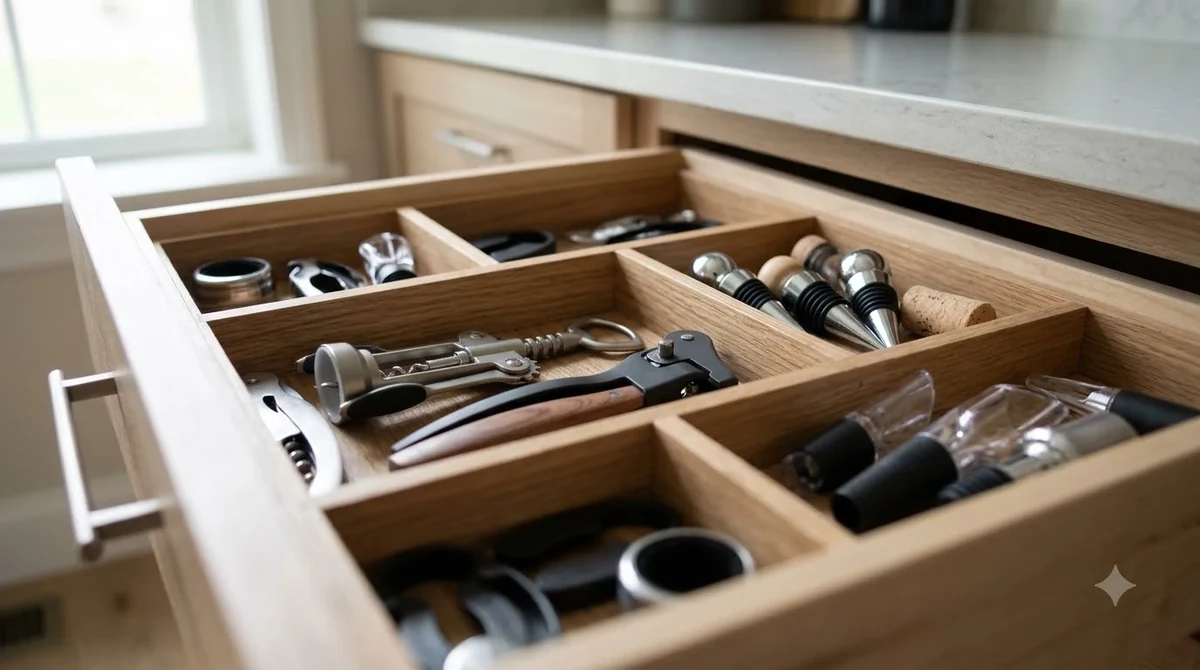
For a complete entertaining setup, the opener can be paired with a well-organized bar cart. A dedicated location for glassware, corkscrews, pourers, and bottle stoppers makes hosting easier and reduces the likelihood of misplacing small accessories.
How Metrokane Compares to Alternative Wine Accessories
The Rabbit is best understood as a convenience-oriented lever opener rather than a universal replacement for every type of wine accessory. Different opening tools serve different needs, and the right comparison depends on how frequently a household opens wine and how much storage space is available.
A traditional waiter’s corkscrew remains the most compact alternative. It generally combines a spiral, folding lever, and small foil-cutting blade in one portable tool. The user must perform more of the work manually, but the design is simple and convenient for restaurants, travel, and smaller kitchens.
A winged corkscrew offers another manual alternative. Its two raised arms provide leverage as the spiral enters the cork. Once the arms rise, the user pushes them down to extract the cork. This design is easy to recognize and commonly used in home kitchens, although it requires a different sequence of movements from the Rabbit.
Electric corkscrews compete more directly with the automatic Rabbit model. Their main advantage is reduced manual effort, but they rely on a battery or charging system. The Rabbit electric model’s stated capacity of more than 30 bottles per charge is a useful comparison point for buyers who entertain frequently. Battery capacity, charging arrangements, and the availability of replacement components should all be considered.
Vacuum wine pumps address a different stage of wine service. Rather than removing corks, they are designed to help close an opened bottle for later consumption. They can be useful alongside a Rabbit opener, particularly for households that rarely finish an entire bottle in one sitting.
Pourers and drip-stop rings also complement the opener without replacing its function. A pourer helps direct wine into the glass, while a drip-stop accessory is intended to reduce wine running down the outside of the bottle. These small tools can improve serving convenience, especially when pouring at a dinner table.
The Rabbit therefore makes the most sense as the central opening tool in a broader collection. It does not replace a wine preserver, serving pourer, or compact backup corkscrew. A practical home collection can include one primary opener, one preservation accessory, and a few useful serving tools without becoming unnecessarily complicated.
Shoppers comparing the wider range of wine-related equipment can also browse the site’s Accessory Brands category. This provides a useful starting point for comparing dedicated wine tools with other products designed for home entertaining.
Frequently Asked Questions
Does Metrokane still make Rabbit wine openers?
Metrokane’s Rabbit brand remains represented in retailer product information, including Dillard’s description of its electric opener. However, an individual listing may be unavailable or discontinued without the entire product family being discontinued. Buyers should confirm current stock and model availability with the seller before purchasing.
Can a Rabbit corkscrew open sparkling wine bottles?
A standard corkscrew is designed for bottles with conventional inserted corks, not the mushroom-shaped closures used on sparkling wines. Champagne and other sparkling bottles should be opened by carefully controlling the cork and bottle rather than inserting a spiral into the closure. A dedicated sparkling-wine stopper is a more appropriate accessory for resealing an unfinished bottle.
Can Rabbit replacement spirals be installed at home?
The Rabbit instruction manual describes removing the spiral by unscrewing the round nut beneath the top handle. It also discusses replacement spirals as a solution when the original coating becomes worn. The correct replacement component should match the particular opener, since different models may use different fittings.
Does a Rabbit opener work with bottles that have unusually long necks?
The W6004 product listing states that the opener accommodates all bottle sizes and cork types. However, unusual bottle shapes, decorative neck coverings, or oversized closures can affect how comfortably the opener sits in position. Keeping the gripping mechanism centered over the cork is important for normal operation.
Can a Rabbit corkscrew be packed in checked luggage?
A manual Rabbit opener is a mechanical wine tool rather than a battery-powered device, but airline rules and destination regulations can differ. Electric versions introduce additional considerations because they contain rechargeable batteries. Travelers should check the airline’s current baggage requirements, especially when packing an electric model in carry-on luggage.
Metrokane’s Rabbit accessories are most appealing to wine drinkers who prioritize convenient cork extraction, a comfortable grip, and a dedicated bar-tool design. The manual Rabbit is the more straightforward choice for people who want mechanical operation without charging, while the electric version suits those who prefer automation. Confirm the exact model, included components, availability, and warranty before buying, and maintain the spiral properly to keep the opener working as intended.
More in Wine Accessories
 Coravin Vs Vacu Vin: Choose the Right Wine Saver for Your BottlesUpdated Nov 21, 2026
 Zwilling Wine Stopper Review: Preserve Open Bottles LongerUpdated Nov 21, 2026
 Wine Enthusiast Wine Preserver Review: Features, Benefits and LimitationsUpdated Nov 21, 2026
 Wine Enthusiast Wine Stopper: An Easier Way to Reseal Open BottlesUpdated Nov 21, 2026
 Vintorio Wine Opener: Two-Step Cork RemovalUpdated Nov 21, 2026
 Zwilling Wine Aerator Review: Aerate, Pour, and Seal With One ToolUpdated Nov 21, 2026