

We may earn a commission when you buy through links on this page, at no extra cost to you. Learn more.
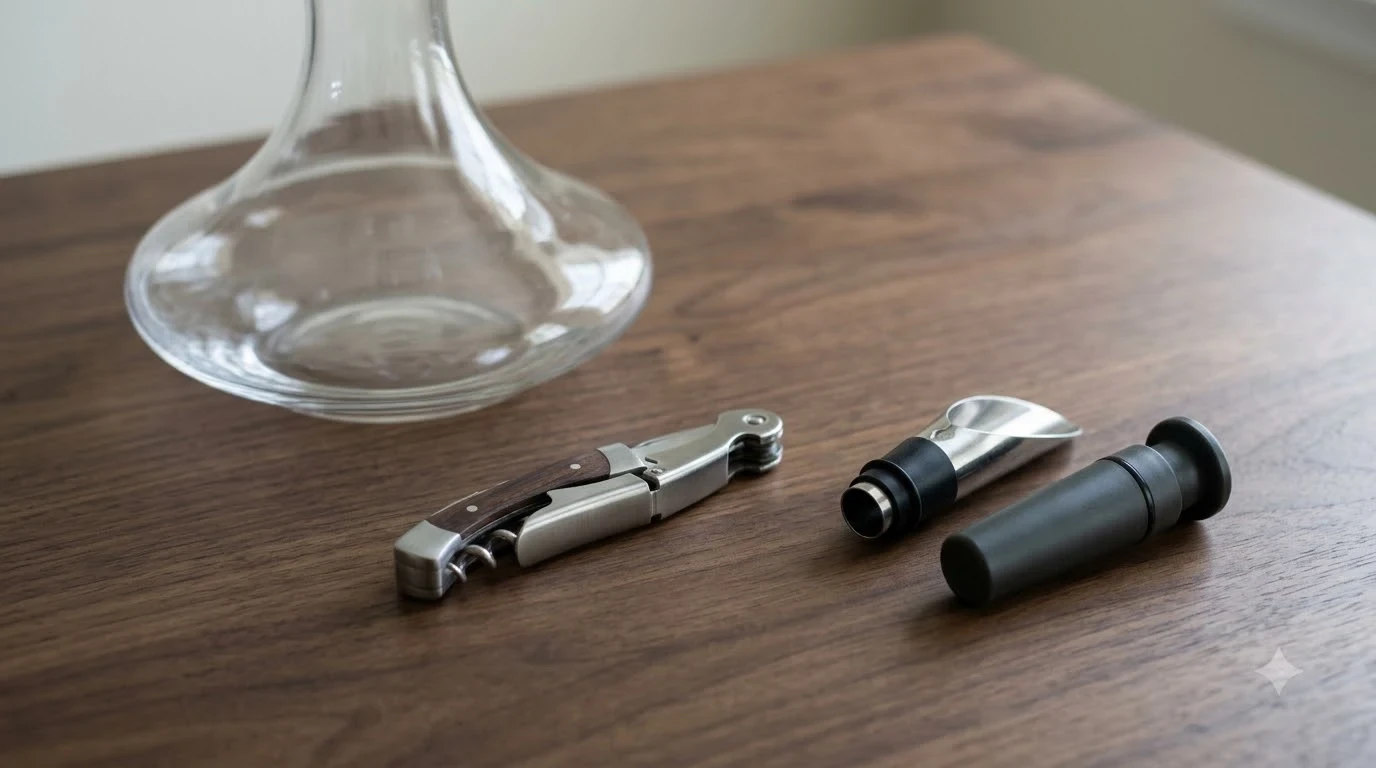
Le Creuset wine accessories are worth considering for wine drinkers who want well-designed corkscrews, practical bottle stoppers, and coordinated serving tools with thoughtful construction. The collection covers everyday essentials such as waiter’s corkscrews, lever openers, foil cutters, wine pumps, and cooler sleeves. Its strongest appeal is the combination of functional opening mechanisms, attractive finishes, and accessories that can make a wine-serving setup more organized. However, choosing the right piece matters more than buying the entire collection, particularly if you primarily drink sparkling wine or rarely open bottles sealed with natural cork.
Le Creuset is widely associated with colorful cookware, but its wine accessories deserve attention from people who appreciate useful kitchen equipment and carefully selected entertaining pieces. The collection includes straightforward tools for occasional wine drinkers as well as more specialized equipment for people who open and preserve bottles regularly. This review examines the practical strengths, limitations, and intended uses of the range so you can decide which accessories deserve space in your kitchen or bar cart.
Specs and Key Features
Le Creuset wine accessories cover the main stages of serving wine: opening the bottle, preparing the neck, pouring, and preserving what remains. The assortment includes both individual tools and coordinated sets, allowing buyers to choose a single replacement opener or assemble a more complete collection.
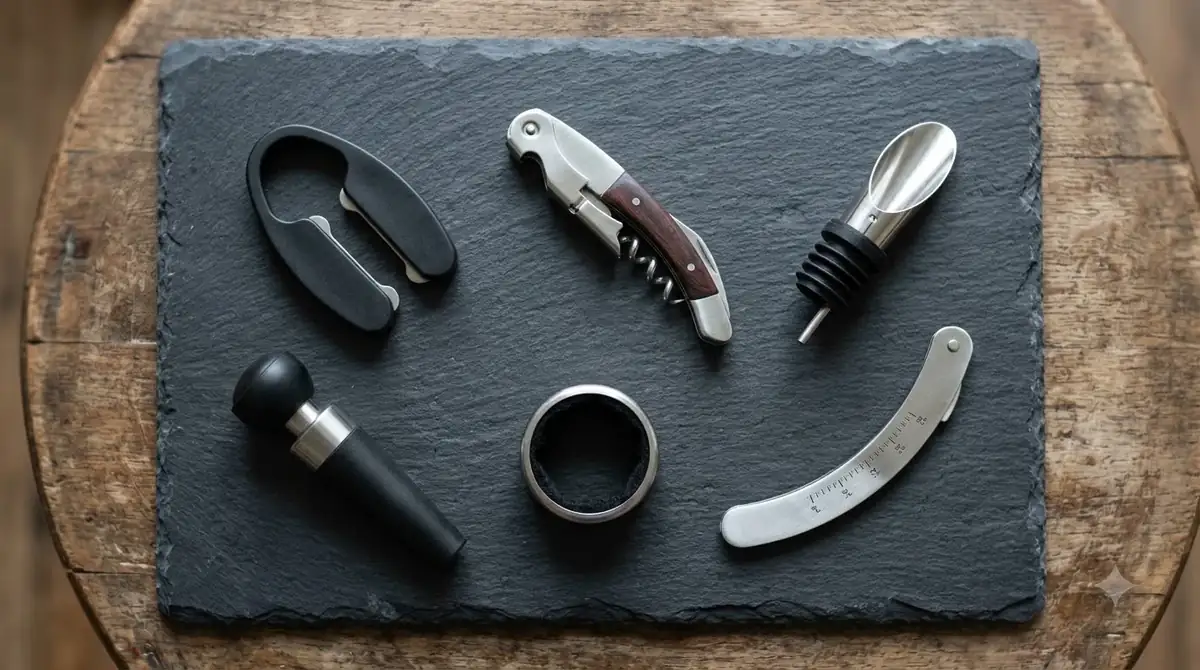
The range is not one standardized product with identical construction across every accessory. A stainless steel waiter’s corkscrew, a lever-operated opener, and a vacuum wine pump solve different problems, and their materials, cleaning requirements, and operating methods should be considered separately.
The following table summarizes representative products and documented characteristics. It focuses on features that can be established from Le Creuset product descriptions and care information rather than assuming that every accessory shares the same specifications.
| Product or category | Main purpose | Documented features | Best application |
|---|---|---|---|
| One-Step Waiter’s Friend | Remove bottle corks | Stainless steel construction, ergonomic grip, foldable foil cutter, bottle opener | Regular bottle opening |
| Waiter’s Corkscrew | Remove corks manually | Compact folding corkscrew format | Everyday use and portable storage |
| Table Model Corkscrew | Open cork-sealed bottles | Dedicated table-style opening design | Home wine stations |
| Compact Lever Corkscrew | Remove corks with leverage | Lever-operated mechanism and foil cutter in selected sets | People who prefer assisted opening |
| Wine Pump | Preserve opened wine | Vacuum pump and compatible stoppers | Partially consumed still wine |
| Wine Cooler Sleeve | Keep bottles chilled | Flexible cooling accessory | Serving chilled wine at the table |
| Metal Foil Cutter | Remove bottle capsules | Dedicated foil-cutting tool | Preparing bottles before opening |
| Stainless Steel Waiter’s Friend and Stopper Set | Open and close wine bottles | Two pieces, including a corkscrew and silicone-ring stopper | Everyday use and gifting |
One particularly practical option is the Stainless Steel One-Step Waiter’s Friend and Stopper Set. Le Creuset specifies a two-piece package containing a corkscrew and matching stopper. The opener combines a grooved screw, an ergonomic handle, a folding foil cutter, and a built-in bottle opener. Its stopper uses silicone rings to create a firm seal.
That combination is more useful than a decorative accessory that performs only one occasional task. A buyer who opens a bottle on Friday and saves the remainder for another meal can use both pieces without purchasing separate basic tools. The set is also packaged for gifting, making it suitable for someone establishing a first home wine collection.
For additional information about the manufacturer’s operating recommendations, consult the official Le Creuset wine tools care and use instructions. Those instructions are important because the cleaning and operating requirements are not identical for every product.
One distinction deserves emphasis: specifications for the stainless steel One-Step set should not automatically be applied to older lever corkscrews or separate wine pumps. Buyers should evaluate the particular model rather than assume that all accessories are dishwasher-safe, include identical stoppers, or use the same mechanism.
What Owners Like About the Collection
The strongest appeal of Le Creuset wine accessories is their combination of practical operation and coordinated appearance. The wine pump, corkscrews, and serving tools address ordinary tasks, while recognizable finishes and gift-oriented packaging make them attractive additions to a home entertaining setup.
Owner feedback provides another useful perspective, although available reviews cover individual products rather than the entire collection. Wayfair’s aggregated feedback for the Le Creuset Wine Pump highlights ease of use, functionality, compact dimensions, and appearance as recurring positive themes. These observations suggest that buyers value the pump for its straightforward purpose as much as its design.
Convenient opening mechanisms
A corkscrew should remove a cork predictably without requiring unnecessary force. Le Creuset’s One-Step Waiter’s Friend is designed around leverage and a simplified operating motion. Its grooved screw is intended for natural and synthetic corks, while the ergonomic handle gives the user a more controlled grip.
The foldable foil cutter is another practical detail. Rather than searching for a separate cutting tool, the user can prepare the bottle and proceed with opening using the same accessory. The integrated bottle opener adds another everyday function, making the design useful beyond wine service.
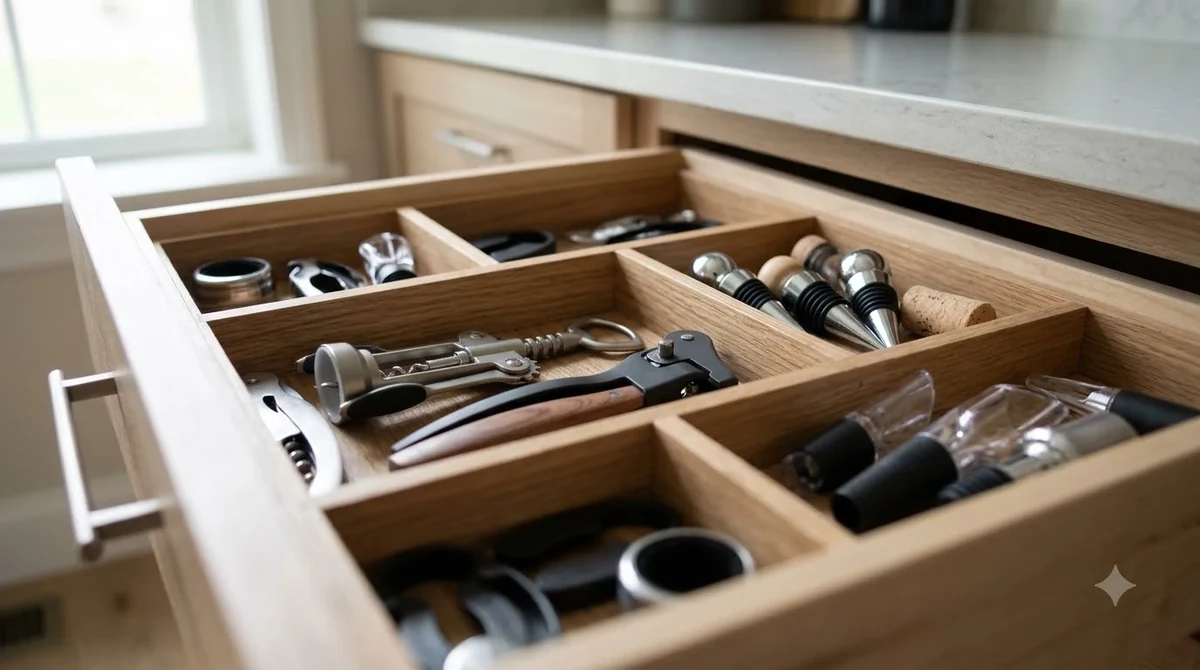
People who regularly entertain may particularly appreciate having these functions together. A compact tool that handles multiple tasks is easier to keep in a kitchen drawer or serving station than several unrelated implements.
Coordinated presentation
Appearance is a legitimate consideration for barware because wine accessories often remain visible on a countertop, drinks cabinet, or serving trolley. Le Creuset offers different finishes and styles across its wine tools, including stainless steel and darker metallic appearances.
The coordinated look can be especially appealing when accessories are purchased as gifts. A matching opener and stopper set looks more intentional than two unrelated objects, while a cooler sleeve or dedicated foil cutter can complete a small entertaining collection.
However, appearance should remain secondary to usability. A beautiful corkscrew that feels awkward in the hand or does not suit the bottles regularly opened in a household is not a good purchase. Choose the opening mechanism first, then select the finish that complements the surrounding equipment.
Useful preservation equipment
Le Creuset also offers accessories for people who do not finish every bottle in one sitting. Its wine pump is designed to extract air from an opened bottle before a compatible stopper seals the opening. The Wayfair product description identifies three universal-sized vacuum stoppers in its listed package.
This makes the pump particularly relevant to households that drink wine by the glass. Instead of relying on a temporary replacement cork, users can employ a dedicated sealing accessory to reduce the amount of air remaining inside the bottle.
Vacuum preservation should not be confused with permanently stopping wine oxidation. A pump can help slow deterioration, but it cannot make opened wine identical to an unopened bottle. Refrigeration, appropriate storage, and the wine’s individual characteristics still matter.
For a wine enthusiast who also studies aromas and tasting characteristics, equipment can be complemented by a structured aroma collection such as Le Nez du Vin. These products serve different purposes, but together they can make a home wine setup more useful for both serving and learning.
Common Complaints and Practical Limitations
Le Creuset wine accessories are not universally suitable for every bottle or drinking habit. The most important limitations concern the differences between corkscrew mechanisms, the compatibility of preservation equipment, and the maintenance required by individual products.
One issue is that a lever corkscrew is not a universal bottle opener. Le Creuset explicitly advises against using its lever models for sparkling wines such as Champagne and Prosecco. Those bottles have pressurized closures that require a different opening procedure.
Another consideration is cork condition. Old or fragile corks can break apart during ordinary extraction, particularly if they have dried out or deteriorated. Le Creuset recommends a two-prong Butler’s Friend for old, fragile, brittle, or broken corks rather than relying on a conventional lever opener.
Older mechanisms and synthetic corks
Most Le Creuset lever models are designed to work with modern synthetic corks. Nevertheless, the manufacturer warns that synthetic corks can stick to the screw of older lever models and potentially jam the mechanism.
This distinction matters for buyers considering a secondhand opener or an older model that has been stored for years. A mechanism that worked reliably with natural corks may not behave identically with every synthetic closure.
If a synthetic cork becomes stuck, Le Creuset advises carefully twisting it off the screw with your fingers. The screw remains sharp, so handling should be cautious. Avoid forcing a jammed mechanism or applying an improvised lubricant that the manufacturer does not recommend.
Maintenance is model-dependent
Cleaning requirements can be an overlooked drawback. The stainless steel One-Step Waiter’s Friend and Stopper Set is identified as dishwasher-safe in its official specifications. That does not mean every Le Creuset wine accessory can go into the dishwasher.
For lever corkscrews, the manufacturer’s care instructions specifically state that they are not dishwasher-safe. Le Creuset recommends occasional cleaning with a damp cloth or warm, soapy water, followed by thorough drying and storage in a dry place.
Some accessories also contain moving parts, cutting components, or specialized seals. These features make it sensible to follow the individual product instructions instead of treating the whole collection like ordinary stainless steel cutlery.
Preservation has limits
A vacuum wine pump is useful, but it is not a substitute for proper wine storage. Removing air from an opened bottle can help slow oxidation, yet the wine continues to change after opening.
As a general reference, opened still wines commonly remain suitable for approximately three to five days when refrigerated and properly sealed. Sparkling wines generally have a shorter window of around one to three days, and a standard vacuum wine pump should not be mistaken for a dedicated sparkling-wine stopper.
Buyers should also consider whether they will actually use a pump. Someone who finishes a bottle with dinner may gain little from a preservation device, while someone who regularly pours one or two glasses at a time may find it considerably more useful.
Who Should Buy Le Creuset Wine Accessories and Who Should Skip Them
Le Creuset wine accessories make the most sense for people who appreciate coordinated barware, regularly open cork-sealed bottles, and want dedicated equipment for serving and preserving wine. They are less compelling for buyers who need only an inexpensive emergency opener or primarily consume wines with screw caps.
Who should consider buying
Regular still-wine drinkers: A reliable corkscrew and matching stopper can simplify the routine of opening and saving bottles. The One-Step Waiter’s Friend set is particularly practical because it combines two frequently used accessories.
People who entertain: A coordinated opener, foil cutter, and wine pump can create a more organized serving station. These tools are useful during dinners where several bottles may be opened and served throughout the evening.
Gift buyers: A packaged corkscrew and stopper combination is a straightforward gift for someone who enjoys wine but may not have a complete collection of accessories. A useful gift is generally better than an ornamental item that remains unused.
Home wine enthusiasts: People who regularly serve different bottles may appreciate having separate tools for opening, chilling, pouring, and preservation. A cooler sleeve can be especially convenient when a chilled white wine or rosé needs to remain cool during a meal.
Who should skip the collection
Predominantly screw-cap wine drinkers: A specialized lever corkscrew is unnecessary if most bottles in the household open without a corkscrew. A basic stopper or cooler sleeve may be more useful than an elaborate opener.
People who rarely save opened wine: A wine pump is difficult to justify if bottles are generally finished immediately. In that situation, a practical corkscrew is likely to provide more regular value.
Buyers who prioritize minimum complexity: A traditional waiter’s corkscrew can be more than sufficient for someone who wants one small tool. There is little reason to purchase multiple accessories if the additional functions will not be used.
People opening many sparkling bottles: A standard lever corkscrew is not the appropriate tool for Champagne or Prosecco. A dedicated sparkling-wine opener or stopper is a more relevant purchase.
Tip: Start with the accessory that solves your most frequent problem. If opening cork-sealed bottles is the main challenge, prioritize a corkscrew. If preserving unfinished still wine is more important, consider the wine pump. Add specialized serving accessories only when they address a genuine need.
There is also a useful distinction between building a collection and buying a complete set. A household that already owns a dependable opener may benefit more from a dedicated cooler sleeve or wine pump than from purchasing another corkscrew. Conversely, someone furnishing a first apartment may appreciate the convenience of a coordinated set.
For a broader look at the available manufacturers and equipment categories, the site’s Accessory Brands coverage can help place Le Creuset alongside other wine accessory options. The best purchase is the one that fits the bottles, serving habits, and storage arrangements in regular use.
How Le Creuset Compares to Alternative Wine Accessories
Le Creuset’s collection is best understood as a range of different opening and serving solutions rather than one direct competitor to every wine tool. Its traditional waiter’s corkscrew, One-Step model, table corkscrew, and lever-style openers address different preferences, so the right comparison depends on the task.
Waiter’s corkscrew versus lever corkscrew
A waiter’s corkscrew is a compact manual tool. Its folding design makes it convenient to store, and it is suitable for someone comfortable controlling the screw and using the lever against the bottle neck.
A lever corkscrew uses a more assisted operating mechanism. Rather than relying on the same compact manual motion, it uses leverage to extract the cork. This can be appealing to people who open bottles regularly and prefer a more guided movement.
The trade-off is size and complexity. A compact waiter’s corkscrew generally takes less storage space, while a lever mechanism may require more room and more attention to its moving components.
One-Step Waiter’s Friend versus traditional manual openers
The One-Step Waiter’s Friend combines several functions in a single stainless steel accessory. Its integrated foil cutter and bottle opener reduce the need to locate separate tools, while the grooved screw is designed for natural and synthetic corks.
A traditional manual opener may be preferable for someone who wants a familiar, straightforward design. The more elaborate One-Step format is attractive to people who appreciate integrated functions, but those functions are not essential for every household.
When comparing the two, consider grip comfort, the number of bottles opened each week, and how much storage space is available. The most useful tool is the one that feels manageable and suits the user’s opening technique.
Wine pump versus a basic bottle stopper
A basic stopper closes the bottle opening, but a vacuum pump adds the function of extracting some air before sealing. That distinction makes a pump more relevant to someone who frequently saves unfinished still wine.
A conventional stopper is simpler to use and requires no pumping action. It can be entirely adequate for short-term storage, especially when the remaining wine will be consumed soon.
Le Creuset’s pump is therefore a more specialized purchase. Its usefulness depends on drinking habits rather than appearance alone. People who frequently leave half a bottle unfinished have a clearer reason to consider one than households that rarely save wine.
Matching accessories to a serving setup
A complete wine station does not need to contain every available accessory. A corkscrew, stopper, and clean pouring area cover many ordinary requirements. A cooler sleeve becomes more useful when chilled wine is regularly served, while a foil cutter is convenient for people who prefer a dedicated capsule-cutting tool.
Temperature also matters more to the final serving experience than owning multiple accessories. As a general guide, sparkling wine is commonly served at 40 to 50 degrees Fahrenheit, light whites and rosé at 45 to 50 degrees, and full-bodied whites at 50 to 55 degrees.
Light reds generally benefit from serving temperatures around 55 to 60 degrees Fahrenheit, while full-bodied reds are commonly served around 60 to 65 degrees. A cooler sleeve is most useful when it helps maintain an appropriate serving temperature rather than simply making every bottle colder.
Buyers comparing aroma-related equipment can also consult Le Nez du Vin reviews for a separate perspective on wine education accessories. Aroma kits and corkscrews are not substitutes for one another, but both can have a place in a thoughtfully assembled wine collection.
Frequently Asked Questions
Where did the Screwpull wine opener concept originate?
According to Le Creuset’s wine accessory care history, Herbert Allen began working on the Screwpull concept in 1975. The invention was inspired by a frustrating experience opening a wine bottle, and the resulting corkscrew was introduced in 1979.
Can a two-prong cork remover help with a broken cork?
Yes. A two-prong cork remover, often called a Butler’s Friend or Ah-So opener, is designed to work around the cork instead of boring a screw through its center. Its two prongs slide between the cork and bottle neck, making it a useful specialized option for delicate or damaged corks.
How many glasses of wine are in a standard bottle?
A standard 750 ml bottle contains approximately five servings when poured in traditional 5-ounce portions. Actual servings vary with glass size and pouring habits, and a bottle intended for tasting flights may be divided into smaller samples.
Can a wine pump preserve fortified wine?
A compatible stopper can close a bottle of fortified wine, but the preservation needs differ from those of ordinary still wine. Fortified styles such as Port and Sherry can often remain enjoyable for several weeks after opening, depending on the style, storage conditions, and alcohol and sugar levels.
Why should wine bottles be stored horizontally before opening?
Traditional cork-sealed bottles are commonly stored on their sides so the wine remains in contact with the cork. This helps prevent the cork from drying out during longer storage. A typical storage target for many wines is approximately 55 degrees Fahrenheit in a stable, dark environment.
Le Creuset wine accessories are most appealing when their individual functions match the way wine is opened, served, and stored at home. The One-Step Waiter’s Friend and stopper set is a practical starting point, while the wine pump, cooler sleeve, and specialized openers make more sense as needs develop. Focus on the tools you will use regularly, and the collection can provide a useful combination of everyday function and coordinated presentation.
More in Wine Accessories
 Hamilton Beach Corkscrew Review for Easier Bottle OpeningUpdated Nov 21, 2026
 Moocoo Wine Opener Review: Features, Performance and Buying AdviceUpdated Nov 21, 2026
 Le Creuset Wine Aerator Review: Three Functions in OneUpdated Nov 21, 2026
 Ivation Wine Preserver Review: Features, Performance, and Buying AdviceUpdated Nov 21, 2026
 Laguiole Wine Opener Review: Is This French Corkscrew Worth It?Updated Nov 21, 2026
 Metrokane Wine Accessories for Easier Bottle OpeningUpdated Nov 21, 2026