

We may earn a commission when you buy through links on this page, at no extra cost to you. Learn more.
The best wine cellar racks are the ones sized for the bottles you own, with a layout that lets you reach a bottle without moving the rest. Most racks are built around the standard 750 ml bottle, so start there, then decide between wood bins, stackable cubes, wall-mounted units, and heavier racks for oversized bottles. Material and shape matter, but fit and access matter more day to day.
A cellar rack is the working part of a wine storage space. It holds bottles in an order you can follow, keeps them off the floor, and lets you see what you have. Racks also shape how a collection ages, since the way bottles sit affects how the cork stays in contact with the wine. This roundup groups the main rack types by their use, so you can settle on a layout before comparing specific products.
Quick Comparison
Racks differ in how they store bottles, what they hold, and how much room they take up. The table below compares the common types. Start with the row that fits your collection size and room, then read the sections that explain each type.
| Rack type | Bottle layout | Holds | Space needed | Best use |
|---|---|---|---|---|
| Wood bin or modular rack | Bottles lie on their sides | Standard 750 ml bottles | Floor or wall space, grows with the collection | Long-term storage and a classic look |
| Stackable cube rack | Bottles stacked on top of each other | Any bottle shape | Small footprint | Small cellars and mixed collections |
| Wall-mounted rack | Shelves or cradles on a wall | A few bottles or one at a time | Minimal floor space | Display and everyday bottles |
| Glass rack | Stemware hung or stored upright | Wine glasses | Varies by design | Keeping stemware near the bottles |
| Heavy-duty rack | Built to carry large bottles | Magnums and larger formats | Floor space and strong support | Oversized or special bottles |
Best for a classic wood bin cellar
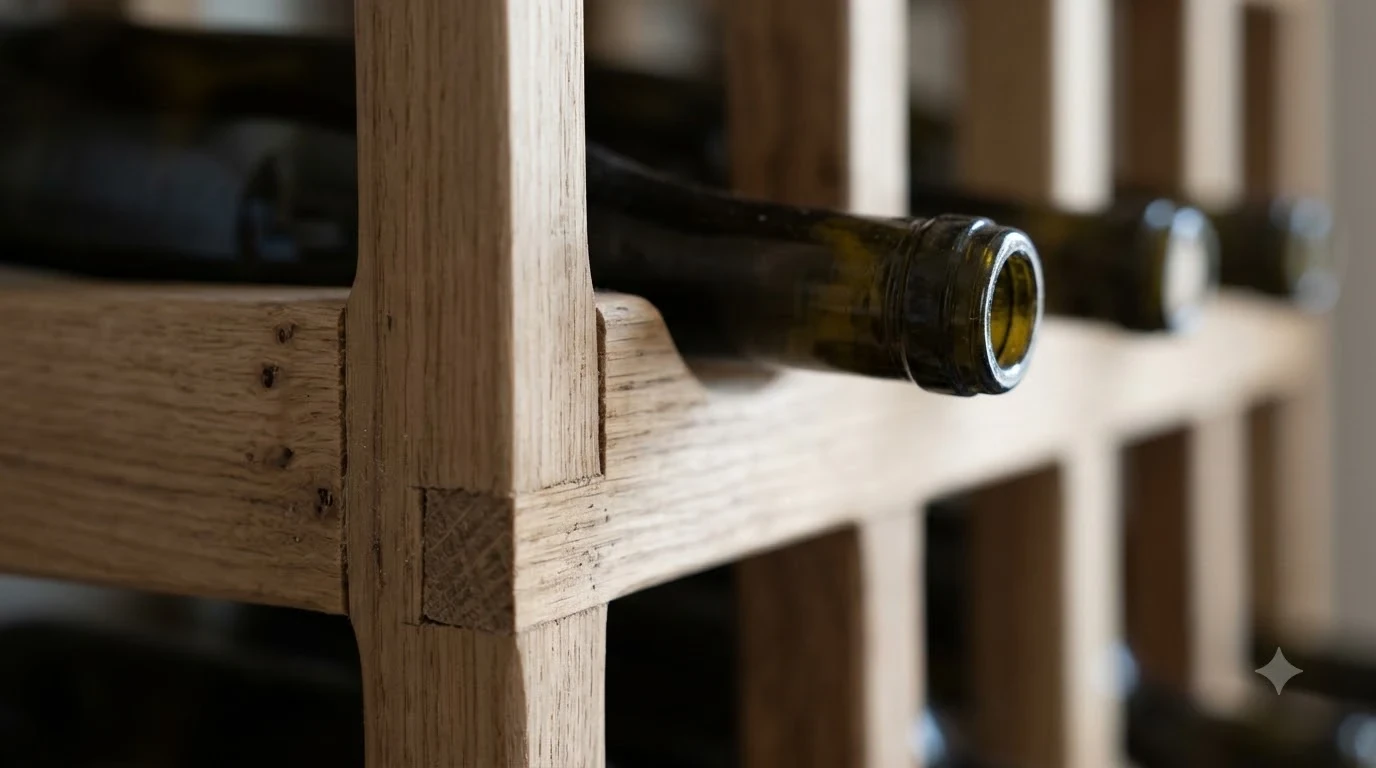
A wood bin rack is the traditional choice for a home cellar. Bottles sit on their sides in open cells, which keeps the cork in contact with the wine and makes it easy to see the labels. Wood is also the most common material for racks, since it is easy to obtain and work with, and a wood frame suits a basement or a room with stone or brick walls.
Why it stands out: bin racks are modular, so you can add sections as the collection grows. The open cells let you reach any bottle without disturbing the ones stacked beside it.
Keep in mind: cedar is a popular rack wood, but its aroma can affect the wine through the cork, so choose a wood that you know is neutral. Wood can also warp in a damp room, so check the frame for stability before filling it.
Best for: home cellars and long-term storage of a growing collection.
Best for small cellars: stackable cube racks
A cube rack holds bottles stacked on top of one another, which means it works with almost any bottle shape. That flexibility makes it useful for a mixed collection, where Bordeaux-style, Burgundy-style, and sparkling bottles all need a home. Cube racks are compact, so they fit a closet or a corner where a larger bin system would not.
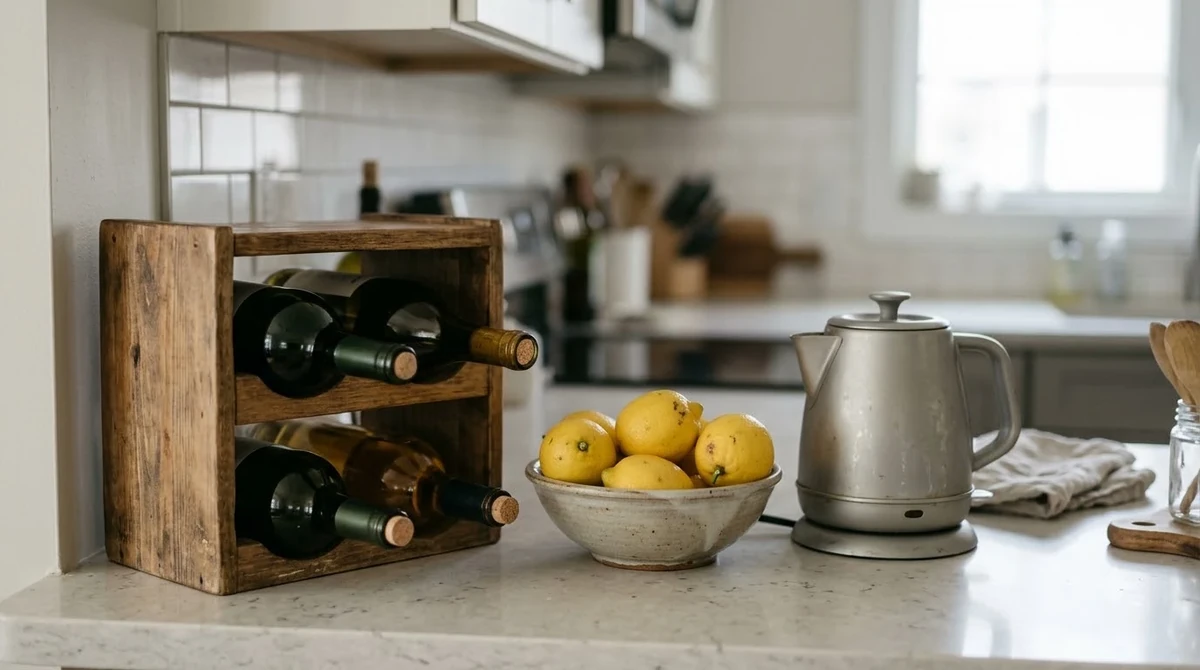
Why it stands out: a stackable design is easy to start with and easy to rearrange. Plastic and other designer materials have also made cube systems more varied, so you can match the look of the room.
Keep in mind: stacked bottles are harder to reach than bottles in a bin, so a cube rack suits wines you do not open in a hurry. Make sure the rack’s base holds the weight of a full stack, and avoid stacking bottles higher than the rack is designed to support.
Best for: small collections, mixed bottle shapes, and tight spaces.
Best for display and everyday bottles: wall-mounted racks
A wall-mounted rack keeps a few bottles at hand and frees up floor space. These racks can be decorative, and many people use them in a kitchen, dining room, or hallway where the bottles are part of the room. They suit everyday wines you plan to open within a short time.
Why it stands out: a wall unit takes almost no floor space and can be placed near the kitchen or dining table. Metal designs can be finished to match the rest of the room, which makes them easy to blend in.
Keep in mind: wall-mounted racks usually hold only a few bottles, so they are not a long-term storage solution. Anchor them into a stud or use hardware rated for the full weight of the bottles, since a full rack is heavier than it looks.
Best for: everyday bottles, display, and rooms where floor space is limited.
Best for stemware: glass racks
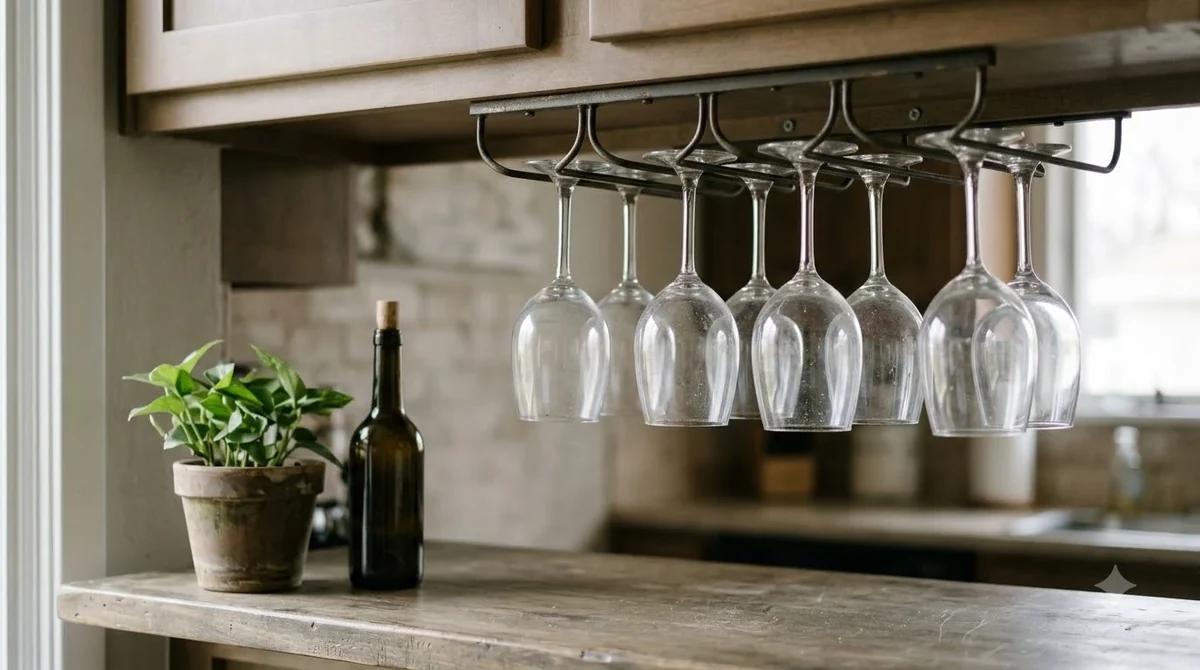
A glass rack stores wine glasses upright, often close to the bottles they will serve. Some designs hang from a rail, while others sit on a cabinet shelf or mount on a wall. Keeping glasses near the wine makes it easier to set up a tasting, and it keeps stemware off a crowded counter.
Why it stands out: upright storage protects the bowl and stem, and a rack that hangs glasses keeps them clean and dry. Pairing glass storage with bottle storage also helps a home bar stay organized.
Keep in mind: the rack should match the height and width of your glasses, so measure the tallest stemware before buying. Stemless glasses fit more easily into compact designs than tall stemmed glasses.
Best for: home tasting setups and anyone who keeps a set of stemware near the wine.
Best for large bottles: heavy-duty racks
A heavy-duty rack is built to carry oversized bottles. The standard 750 ml bottle is the design baseline for most racks, while magnums and larger formats need more support. Wine bottle references list sizes such as the magnum, which holds 1.5 litres, and larger formats that can weigh far more than a standard bottle.
Why it stands out: a strong rack keeps a large bottle stable, which matters when a heavy format is set on a shelf. Heavy-duty designs often have wider cradles and thicker frames than standard bins.
Keep in mind: check the weight rating before loading the rack, since a full large bottle can be heavy. Standard racks may not fit a magnum on a shelf, so measure the cradle against the bottle’s diameter before you buy.
Best for: collectors with magnums or special formats and anyone who wants room for oversized bottles.
How to Choose
Start with the bottle count and the bottle types. A standard 750 ml bottle is the size most racks are built around, and most wine bottles in a home collection fall into that size. If you own magnums or other large formats, plan a heavy-duty section from the start. An empty standard bottle weighs roughly 500 grams, according to the wine bottle overview, so a full shelf adds up quickly.
Then choose material and access. Wood is the most common rack material, while stainless steel resists corrosion and staining, and metal can be painted to match the room. The wine rack overview notes that wood is popular for its ease of working, but also warns that cedar can affect the wine through the cork. Decide whether you want to reach bottles often, which favors open bins, or keep them undisturbed, which suits a stacked layout.
- Count the bottles you own, and note any magnums or larger formats.
- Choose a layout: bins for access, cubes for compact storage, wall units for everyday bottles.
- Pick a material that suits your room’s humidity and look.
- Check the weight rating and the cradle size against your largest bottle.
- Plan space for stemware if you want a glass rack beside the bottles.
Frequently Asked Questions
What size should a wine rack be built for?
Most racks are built for the standard 750 ml bottle. If you keep magnums or larger bottles, look for a rack with wider cradles or a separate heavy-duty section.
Should wine be stored on its side in a rack?
Storing bottles on their side keeps the cork moist, which is the usual reason bin racks lay bottles flat. Some sparkling wines are often recommended upright, so check the label or producer guidance for those bottles.
Is wood the best material for a wine rack?
Wood is the most common choice and is easy to work with. Choose a wood you know is neutral, since some woods such as cedar can add an aroma that carries through the cork.
Can I stack bottles in a cube rack?
Yes, cube racks are designed for stacking bottles, and they suit any bottle shape. Keep stacks within the rack’s rated height, and reach for the bottles you plan to open soon from the top layers.
The best wine cellar rack is the one that fits your bottles, your room, and how often you reach for them. Compare the rack types above, count the bottles you plan to store, and check the weight and cradle size before you buy. For the storage door that protects the room, see the wine cellar door guide, and for accessories that round out a home bar, browse the Accessories Library.
More in Wine Accessories
 Coravin Vs Vacu Vin: Choose the Right Wine Saver for Your BottlesUpdated Nov 21, 2026
 Zwilling Wine Stopper Review: Preserve Open Bottles LongerUpdated Nov 21, 2026
 Wine Enthusiast Wine Preserver Review: Features, Benefits and LimitationsUpdated Nov 21, 2026
 Wine Enthusiast Wine Stopper: An Easier Way to Reseal Open BottlesUpdated Nov 21, 2026
 Vintorio Wine Opener: Two-Step Cork RemovalUpdated Nov 21, 2026
 Zwilling Wine Aerator Review: Aerate, Pour, and Seal With One ToolUpdated Nov 21, 2026