

We may earn a commission when you buy through links on this page, at no extra cost to you. Learn more.
The best cheap wine barrel for most home bars is a barrel-style Bag-in-Box dispenser, which gives boxed wine a traditional serving presentation without the maintenance of a direct-fill oak cask. For actual oak aging, a compact 3- to 15-liter barrel is a better fit, although small casks can add oak flavor quickly. The right choice depends on whether wine will stay inside a sealed bag or make direct contact with the wood. Decide that first, then compare capacity, tap design, stand, and cleaning requirements.
A small wine barrel can be a useful home-bar accessory, a conversation piece for entertaining, or a practical piece of equipment for a home winemaking setup. The challenge is that sellers use similar barrel-shaped designs for very different purposes. Some are decorative housings for boxed wine, while others are real oak vessels intended to hold liquid directly. This roundup separates those formats, explains where each makes sense, and identifies the details that matter more than appearance alone.
Quick Comparison: Five Wine Barrel Types
The most economical format to consider first is a barrel-shaped holder for a sealed wine bag, while a genuine oak barrel is the more specialized choice for aging. These five types cover everyday dispensing, traditional presentation, small-batch winemaking, and compact gifts.
| Barrel type | Typical capacity or size | Best use | Main consideration |
|---|---|---|---|
| Barrel-shaped Bag-in-Box holder | Matched to a 3- to 20-liter wine bag | Everyday home-bar serving | Wine stays in its sealed inner bag |
| Real-oak Bag-in-Box barrel | 5 or 10 liters in available formats | Traditional oak-barrel appearance | Measure the bag before buying |
| Compact oak barrel with tap | 1 to 15 liters | Small-batch storage and serving | Requires preparation and careful cleaning |
| Small winemaking barrel | 5 to 10 gallons, or 19 to 38 liters | Experimental home aging | Oak influence develops quickly |
| Miniature oak tasting barrel | 1 or 3 liters | Gift giving and small tastings | Limited volume and strong wood influence |
The capacities in the table reflect formats described by barrel makers and winemaking publications, not a promise that every size is available from every supplier. BONPOS lists classic oak barrels from 1 to 200 liters, while Tonnellerie Allary describes a 10-liter oak housing for a Bag-in-Box package. The two products may look similar on a counter, but their intended jobs are different. A bag holder is primarily a serving accessory; a direct-fill oak barrel is a working vessel that needs more attention.
For most casual buyers, the first question is whether the wine should touch wood. A sealed bag inside a barrel-shaped holder keeps the wine separate from the oak and lets the bag’s own tap do the dispensing. A direct-fill barrel exposes the wine to wood and oxygen, so it is more appropriate for someone interested in aging or traditional barrel presentation. A buyer choosing between these options should also consider whether the barrel will live on a small cheap bar cart, where its footprint and weight will matter.
Best for Everyday Serving: A Barrel-Shaped Bag-in-Box Holder
A barrel-shaped Bag-in-Box holder is the practical choice for someone who wants an easy-serving accessory rather than another piece of winemaking equipment. It conceals a wine bag, provides a tap at the front, and gives a counter or bar area the look of a small traditional cask.
The design is straightforward: the wine stays inside its original sealed bag, and the bag’s dispensing tap is brought through an opening in the barrel housing. Barrel & Garden describes a 20-liter oak wine-bag barrel with a hinged rear section for inserting the bag and a front opening for its tap. Its example is 43 centimeters long, with a center diameter of 35 centimeters and a 4-centimeter tap opening. Those dimensions show why a buyer should measure the intended counter before selecting a large display barrel.
This format is a sensible starting point for anyone who mainly serves wine at casual gatherings. Because the wine remains in the bag, the barrel does not need to function as an aging vessel. The owner also avoids the particular challenges of filling, swelling, and sanitizing a direct-contact oak cask. The important checks are whether the bag fits, whether the tap can be reached comfortably, and whether the rear opening is large enough to replace the package without dismantling the holder.
Bag holders also make sense for a home bar that serves one or two everyday wines rather than a collection of bottles. A single holder can reduce the clutter of a large box on the counter, while a pair can separate red and white wine when there is room for both. It is still important to track how much wine remains in the bag: an opaque wooden housing hides the fill level, so guests can keep pouring without seeing that the package is almost empty. A simple note or routine check prevents an awkward empty-tap moment.
For a compact home bar, this is usually the format to shortlist before considering a real oak barrel. It focuses on dispensing and appearance, not aging, and it avoids paying for cooperage features that a casual drinker may never use. Look for a design with a stable base, a secure tap opening, and an access panel that opens easily. A barrel that is attractive but difficult to reload becomes a decorative object rather than a useful serving accessory.
Best for Traditional Wood Display: A Real-Oak Bag-in-Box Barrel
A real-oak Bag-in-Box barrel suits buyers who want natural wood, metal hoops, and a traditional cask profile without pouring wine directly into the barrel. It offers a more authentic material and finish than a generic barrel-shaped cover, while the inner bag keeps the wine separate from the wood.
Tonnellerie Allary’s 10-liter Bag-in-Box barrel illustrates the features to compare. Its description lists galvanized hoops, a varnished exterior, a wedge to hold the tap in position, a cork bung, and a fixed stand. The stated outside dimensions are 46 centimeters long, 38 centimeters wide, and 47 centimeters high, with a head diameter of 32 centimeters. The intended wine bag must fit within 33 by 19 by 19 centimeters. These measurements are useful because a nominal 10-liter capacity does not guarantee that every 10-liter package will have the right shape.
The bag dimensions deserve as much attention as the barrel’s overall volume. Bag-in-Box packages can vary in height, width, length, and tap position, so checking capacity alone is not enough. Before ordering, measure the actual package when full or use the manufacturer’s listed dimensions. Then confirm that the tap will sit in the opening without being twisted, pinched, or forced against the barrel wall. A good fit makes the daily serving routine simpler and reduces strain on the bag’s dispensing valve.
Natural oak also means that the holder needs sensible placement and basic surface care. A varnished exterior is easier to wipe than unfinished wood, but it is still a wooden accessory that should be kept away from persistent moisture. The barrel should sit on a level surface, and the stand should support the full weight of the filled bag and wooden housing. A compact 10-liter format can be more suitable for an ordinary counter than the 20-liter style, but the actual dimensions should decide the matter.
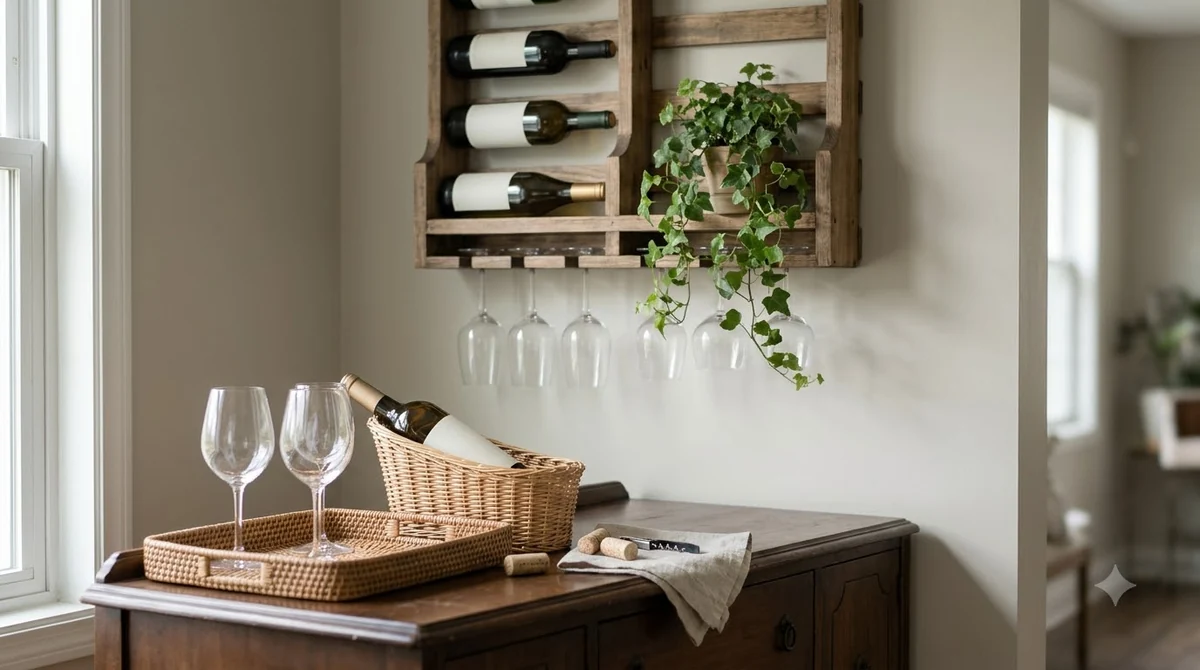
This type is especially attractive beside natural wood shelving or other cheap wine bar furniture. It can create a coordinated serving station without requiring a large traditional barrel. However, the real-oak exterior does not mean the wine is undergoing oak aging: the sealed package separates the liquid from the wood. Choose this design for materials, construction, and presentation, not for changing the wine’s flavor.
Best for Small-Batch Oak Aging: A Compact Direct-Fill Barrel
A compact direct-fill oak barrel is the right choice for a home winemaker who wants wine to interact with wood. Sizes from 3 to 15 liters are listed by BONPOS as suitable for home aging and smaller batches, but the small volume makes close monitoring especially important.
The main advantage of a small cask is that it can accommodate a modest batch without requiring a full-size winery barrel. BONPOS lists 3-, 5-, 10-, and 15-liter capacities among its classic oak formats and describes options with different toast levels. Toast level affects the character the wood can contribute, so buyers should compare untoasted, medium-toast, and heavy-toast options rather than treating every oak barrel as interchangeable. The intended wine and desired oak profile should guide that choice.
There is a trade-off: a smaller barrel has more wood surface relative to the amount of wine inside it. That makes oak flavor and tannin extraction faster, and oxygen exchange per liter is also greater. WineMaker Magazine’s explanation of small-barrel aging highlights why a five- or ten-gallon barrel cannot simply be treated as a smaller version of a 59-gallon, or 225-liter, commercial barrel. It recommends tasting regularly, around once a week, rather than leaving the wine unattended for long stretches.
That faster development can be useful for a young, full-bodied red that can handle an assertive oak influence, but it is less forgiving with delicate or mature wine. A light-bodied red can become dominated by wood before the owner expects it. The safest approach is to monitor the aroma and flavor frequently and keep suitable topping wine available to limit excess air space. A small barrel should not be treated as a vessel that can simply be filled and forgotten for several months.
For a first purchase, a 3- or 5-liter barrel is easier to accommodate than a larger cask, but its small volume also limits the batch size. A 10- or 15-liter barrel offers more capacity while still falling within the home-use range described by BONPOS. Either way, the owner should understand the preparation and cleaning routine before buying. The cost of a barrel is only one part of the commitment; careful handling is what makes direct-fill oak aging practical.
Choose this category only if the goal is genuine contact between wine and oak. A decorative barrel with a bag inside will not perform the same job, and a direct-fill cask is not a shortcut to a particular flavor. The wood’s toast, age, size, and prior use all influence the result. For anyone who enjoys following a small batch through its development, however, a compact barrel can be a useful piece of winemaking equipment.
Best for Serious Home Winemaking: A Five- to Ten-Gallon Barrel
A five- to ten-gallon barrel is a better match for a home winemaker working with a substantial batch than a tiny one- or three-liter cask. It still offers a manageable alternative to a full-size 59-gallon barrel, but it demands regular tasting, topping, and sanitation.
WineMaker Magazine discusses small aging barrels in the 5- to 10-gallon range, equivalent to approximately 19 to 38 liters, and compares them with a standard 59-gallon or 225-liter barrel. Those larger small-home formats can suit a winemaker who makes several gallons of red wine and wants a vessel that holds more than a tasting sample. They also require more floor or shelf space and a stable support arrangement, so the available storage area should be measured before a barrel is ordered.
The greater volume does not eliminate the faster oak extraction associated with small barrels. The wine still has more wood surface relative to its volume than it would in a standard commercial barrel. A young Cabernet Sauvignon or Syrah may have enough structure to work with a noticeable oak contribution, but a lighter red may need closer attention. The barrel should be sampled on a regular schedule, and the winemaker should be prepared to transfer the wine when the oak character reaches the intended level.
A useful option is to keep part of the batch in a glass or stainless-steel vessel while a smaller portion ages in oak. WineMaker Magazine describes this hybrid approach as a way to blend the oak-aged portion with wine that has not had the same wood exposure. It gives the winemaker more control over the finished profile instead of requiring the entire batch to follow the barrel’s extraction pace. It also provides additional wine that can be used for topping up the barrel.
Look carefully at the barrel’s construction before choosing this size. The hoops should be secure, the staves should not show obvious cracks or damage, and the bung opening needs to be large enough for the intended cleaning and inspection process. A tap may be convenient for serving, but a winemaker who plans to age wine for an extended period may prefer a simpler setup with a sound bung and a reliable stand. Convenience features should not take priority over the quality of the vessel.
This is not necessarily the cheapest way to experiment with oak, especially once preparation supplies and cleaning equipment are considered. It can, however, be a more practical scale for someone who already produces wine at home and wants to work with a larger batch. A small oak barrel is best viewed as active winemaking equipment: it needs observation, attention, and a plan for transferring the wine when the oak profile is ready.
Best for Gifting and Tastings: A One- to Three-Liter Miniature Barrel
A miniature oak barrel is most useful as a display piece, a tasting accessory, or a gift for someone who already enjoys wine and home entertaining. The 1- and 3-liter formats listed by BONPOS are compact enough for very small batches, but their limited volume makes them less practical for aging a normal household supply.
A one-liter cask can work as a conversation piece on a tasting counter, while a three-liter version has more room for a small experiment or a special presentation. Their size makes them easier to position than a 10-liter barrel, but the small amount of liquid inside still has substantial contact with oak relative to its volume. That means a miniature barrel should not be assumed to age wine slowly just because it looks like a scaled-down traditional cask.
For a gift, pay attention to what is included. BONPOS notes that classic barrels may be sold with a stand, tap, or stopper depending on the model, so an attractive photograph does not establish that every accessory comes in the package. A stand is important for a horizontal serving barrel, and a tap needs to be compatible with the opening. A stopper-only format may be more appropriate for storage than repeated pouring. Confirming the included pieces avoids giving someone a barrel that cannot be used as intended.
A miniature cask can also be a useful way to introduce a new home winemaker to the idea of oak influence, provided the recipient understands that the small volume makes monitoring necessary. It is not a substitute for a fermentation vessel or a general-purpose wine container. The owner still needs to prepare the barrel properly and keep the interior clean. A decorative display-only barrel, by contrast, should be treated as a display accessory and not filled unless its maker identifies it as suitable for holding wine.
To make a wine-themed gift feel more complete, pair a compact barrel with appropriate serving glasses or a tasting journal. A seasonal gift bundle could also include a cheap wine advent calendar, provided the recipient enjoys trying different wines. The barrel is the lasting accessory, while the calendar supplies a separate tasting experience. That combination makes more sense than purchasing a tiny barrel and expecting it to serve as a practical replacement for a full wine cellar.
For most recipients, the three-liter format offers a little more flexibility than the one-liter option, while a one-liter cask is better for a very small display or tasting purpose. Neither should be purchased solely because the miniature proportions look charming. Check whether it is a real direct-fill barrel or a decorative housing, and confirm whether a tap, stand, and bung are part of the package.
How to Choose the Right Wine Barrel
The right barrel is determined by its job, not just by its shape or wood finish. Start with the wine format, then check capacity, materials, tap arrangement, and the care instructions before comparing individual options.
1. Decide whether the wine touches the wood. A Bag-in-Box holder houses a sealed wine package, and the package’s tap does the dispensing. A direct-fill oak cask holds wine against the wood and is used for storage, serving, or aging according to its design. This is the most important distinction because the maintenance requirements are not the same. Do not fill a decorative holder directly unless the manufacturer specifically identifies it as a liquid-holding vessel.
2. Match the capacity to the amount of wine. The 1- and 3-liter sizes are appropriate for small tastings and miniature displays, while 3- to 15-liter barrels are listed by BONPOS for home aging and smaller batches. The 5- to 10-gallon range, or 19 to 38 liters, is more suitable for a home winemaker working with a larger batch. For Bag-in-Box holders, compare the physical bag dimensions rather than relying only on its advertised liter capacity.
3. Check the wood and toast. If wine will contact the barrel, the oak and its toast level affect the result. Untoasted, medium-toast, and heavy-toast barrels are not equivalent options. A stronger toast or a small barrel can create a more assertive wood contribution, so choose according to the wine and the intended aging style. A sealed-bag holder does not need an interior toast level because the wine is isolated from the oak.
4. Compare the tap, bung, and stand. A tap is useful for a serving barrel, while a bung is important for closing an opening on a direct-fill vessel. The stand should support the shape of the barrel securely, and the tap should be positioned so a glass can sit underneath it without awkward tilting. BONPOS notes that these accessories vary by model, so confirm what is included before buying. For a Bag-in-Box unit, ensure the package valve can be accessed and operated without bending or pinching it.
5. Measure the space and the access opening. A 10-liter Bag-in-Box barrel from Allary measures 46 centimeters long and 47 centimeters high. Its intended bag is 33 by 19 by 19 centimeters. Those figures show why both the outside dimensions and the interior clearance matter. Leave enough room to open the rear or top panel, remove the empty package, and insert a new bag without moving every item on the counter.
6. Read the preparation and care instructions. A real oak barrel is not as simple to maintain as a glass container. Wood is porous, can leak when dry, and can retain microorganisms if it is not cleaned properly. The Australian Wine Research Institute explains that barrel cleaning and sanitation require care because microorganisms can enter the wood. Its barrel-care guidance also warns about the use of chlorine-based solutions. Follow the specific instructions for the barrel’s size and intended use rather than applying a commercial winery cleaning procedure to a miniature cask.
Tip: Before paying for a barrel, write down its intended job, required capacity, and available counter or storage dimensions. A sealed-bag dispenser and a direct-fill aging cask may share a barrel shape, but they are not interchangeable. Matching the format to the job is the simplest way to avoid an attractive accessory that cannot do what the buyer expected.
For a simple home-bar setup, prioritize a stable stand, an accessible tap, and a wine bag that fits without forcing. For aging, prioritize sound staves, secure hoops, appropriate toast, and clear preparation instructions. A barrel with fewer decorative extras can be the better purchase if its construction and care requirements are more suitable for the intended use.
Frequently Asked Questions
These final details help distinguish a display accessory from a working oak vessel. They also cover practical questions about pouring, placement, customization, and what to do if a new barrel does not seal properly.
How many glasses can a five-liter wine bag serve?
A five-liter bag contains 5,000 milliliters of wine, which works out to about 34 standard five-ounce pours. Actual servings will vary with the glass size and how generously each glass is filled.
Can a wooden wine barrel keep white wine chilled?
A wooden barrel holder is not a wine refrigerator and should not be relied on to maintain a serving temperature. Chill the wine package separately before placing it in the holder, and return it to suitable cold storage when the serving session is over.
Can a wine barrel stay in direct sunlight?
Direct sunlight and nearby heat sources are poor locations for a wooden barrel. BONPOS advises positioning its classic barrels away from direct sunlight, and a cool, stable location is preferable for storage and display.
What should I do if a new oak barrel still leaks after preparation?
The Australian Wine Research Institute advises contacting the supplier if a new barrel continues leaking after 48 hours of preparation. Do not assume that a persistent leak will resolve itself once wine has been added.
Can a wine barrel be personalized as a gift?
Some cooperages offer personalization options. Tonnellerie Allary, for example, lists laser marking and personalized text options for its barrel products, although available customization varies by item and order.
For most people looking for an affordable home-bar accessory, a Bag-in-Box barrel holder is the simplest and most practical starting point. Choose a direct-fill oak barrel only when aging or direct wood contact is part of the plan, and give capacity, construction, and maintenance as much attention as appearance. The best purchase is the one that fits the wine, the space, and the way the barrel will actually be used.
More in Wine Accessories
 Coravin Vs Vacu Vin: Choose the Right Wine Saver for Your BottlesUpdated Nov 21, 2026
 Zwilling Wine Stopper Review: Preserve Open Bottles LongerUpdated Nov 21, 2026
 Wine Enthusiast Wine Preserver Review: Features, Benefits and LimitationsUpdated Nov 21, 2026
 Wine Enthusiast Wine Stopper: An Easier Way to Reseal Open BottlesUpdated Nov 21, 2026
 Vintorio Wine Opener: Two-Step Cork RemovalUpdated Nov 21, 2026
 Zwilling Wine Aerator Review: Aerate, Pour, and Seal With One ToolUpdated Nov 21, 2026