

We may earn a commission when you buy through links on this page, at no extra cost to you. Learn more.
Sandeman wine price generally ranges from about $14 to $25 for entry-level Ruby and Tawny Port, while older aged Tawny and Vintage Port can cost considerably more. Aged expressions such as 10-year, 20-year, 30-year, and 40-year Tawny occupy progressively higher price brackets, reflecting the age and selection of the wines. Sandeman also makes Sherry and Madeira, so the right comparison depends on which fortified wine style you want. This guide explains typical US retail price ranges, the differences between the bottles, and how to choose a suitable expression.
Sandeman is a historic Portuguese fortified wine producer with a broad selection ranging from approachable Ruby Port to older Tawny wines intended for more considered after-dinner drinking. Its recognizable branding can make the range look straightforward, but the differences between expressions matter considerably when comparing bottles. A basic understanding of Port categories, aging statements, bottle sizes, and serving occasions makes it easier to judge whether a particular price represents the kind of wine you actually want.
Who Should Compare Sandeman Wine Prices?
Comparing Sandeman prices is particularly useful for shoppers deciding between an everyday fortified wine and a more mature bottle for entertaining or gifting. The brand’s selection covers several different drinking styles, including fruit-forward Ruby, barrel-aged Tawny, Late Bottled Vintage, and older age-designated expressions.
First-time Port buyers often find the entry-level bottles a practical starting point. Fine Ruby and standard Tawny are relatively accessible ways to understand the differences between fresh fruit flavors and the dried-fruit, caramel, and nut characteristics associated with wood-aged Port. A shopper who already enjoys fortified wine may prefer to compare 10-year and 20-year Tawny, while someone buying for a milestone celebration might consider 30-year or 40-year expressions.
Sandeman is also relevant to shoppers who want something other than Port. Its wider portfolio includes Sherry and Madeira, which offer different flavor profiles and serving possibilities. ReserveBar, for example, lists Sandeman Don Fino Sherry, Armada Cream Oloroso Sherry, and Fine Rich Madeira alongside its Port selection. These are different categories rather than interchangeable versions of the same wine.
Anyone researching the producer’s background should also understand its long history. George Sandeman established the business in London in 1790, initially concentrating on Port and Sherry. The company later developed a significant presence in Portugal, including its historic cellars in Vila Nova de Gaia. Today, the brand is part of Sogrape, as documented in Sandeman’s official company history.
For readers comparing the broader portfolio, the Sandeman wine overview provides additional context about the producer and its different expressions. Understanding the range before comparing retail listings helps prevent confusion between a standard Tawny, a Reserve Ruby, and an aged Tawny carrying a specific number of years on its label.
Key Factors That Affect Sandeman Wine Price
The most important factors are the wine category, aging designation, bottle size, and individual retailer. A 750 ml bottle of standard Ruby Port and a 750 ml bottle of 40-year Tawny may share the same producer name, but they represent very different production and aging commitments.
| Sandeman category | Typical US retail range | Common bottle size | Main buying consideration |
|---|---|---|---|
| Fine Ruby or standard Ruby Port | About $14–$25 | 750 ml | Fresh fruit and approachable drinking |
| Standard Tawny Port | About $14–$25 | 750 ml | Caramel and dried-fruit character |
| Founder’s Reserve Ruby | About $19–$25 | 375–750 ml | Reserve-style Ruby selection |
| Late Bottled Vintage | About $15–$35 | 750 ml | Richer vintage-style Port |
| 10-Year Tawny | About $17–$45 | 750 ml | More developed wood-aged character |
| 20-Year Tawny | About $48–$70 | 750 ml | Greater maturity and complexity |
| 30-Year Tawny | About $100–$120 | 750 ml | Long-aged Tawny for special occasions |
| 40-Year Tawny | About $160–$195 | 750 ml | Premium mature expression |
| 50-Year Tawny | About $275–$300 | 750 ml | High-end aged Tawny selection |
These are indicative US retail ranges synthesized from the Sandeman listings at Total Wine and ReserveBar, rather than fixed recommended retail prices. For example, Total Wine lists Fine Tawny and Rich Ruby around the lower end of the range, while its 50-year Tawny appears in a substantially higher bracket. ReserveBar also lists a range of aged expressions, with different displayed prices for the same age categories. Prices vary by state and retailer, and local availability can change the amount a shopper encounters.
Age is a particularly important comparison factor. A 10-year Tawny is a blend intended to represent the character associated with that average age, rather than a wine made entirely from grapes harvested exactly ten years earlier. The same general principle applies to 20-year, 30-year, and 40-year age-designated Tawny. These statements describe the average age of the wines in the blend.
Retailers may also display the same expression in different bottle sizes. Total Wine lists Sandeman products in both 375 ml and 750 ml formats. A half bottle contains approximately half the volume of a standard bottle, so comparing the displayed total price without considering bottle size can produce a misleading impression of value.
Tip: Compare the exact Sandeman expression and bottle size before judging two listings. A 375 ml Founder’s Reserve Ruby and a 750 ml standard Ruby are not equivalent purchases, even if their displayed prices look similar.
For a broader comparison of the brand’s alcohol characteristics, see the guide to Sandeman wine alcohol content. Fortified wines generally have higher alcohol levels than ordinary table wines, which can influence both serving size and the type of occasion for which a bottle is purchased.
Step-by-Step: How to Choose the Right Sandeman Bottle
A sensible buying decision starts with the style of wine rather than the age statement or the most expensive bottle on the shelf. Following a few simple steps helps narrow the selection and makes retailer comparisons more meaningful.
-
Decide whether you want Port, Sherry, or Madeira.
Start by identifying the category. Sandeman is particularly associated with Portuguese Port, but its portfolio also includes Spanish-style Sherry and Madeira. For a sweet after-dinner wine, Ruby or Tawny Port is a useful starting point. For a drier fortified option, consider Fino Sherry instead.
-
Choose between Ruby and Tawny Port.
Ruby is generally the better direction for someone who enjoys ripe red and dark fruit flavors. Tawny is more appropriate for someone who prefers dried fruit, caramel, nuts, and wood-aged character. These differences are more useful than simply selecting whichever bottle has the lower displayed price.
-
Decide how much aging character you want.
Standard Ruby and Tawny are accessible introductions. A 10-year Tawny provides more mature characteristics, while 20-year, 30-year, and 40-year bottles offer progressively older blends. The higher age designations generally come with higher retail prices.
-
Consider Late Bottled Vintage Port.
Late Bottled Vintage, usually abbreviated LBV, offers a different route for shoppers who want a more structured, vintage-associated Port. Sandeman’s LBV expressions are worth comparing with its Ruby Reserve offerings if you prefer fuller-bodied wine rather than the lighter, more approachable character of standard Ruby.
-
Check the bottle format.
A 750 ml bottle is the standard full-size format, while a 375 ml bottle is a half bottle. A standard 750 ml bottle provides approximately five conventional 5 oz pours, although Port is commonly served in smaller portions. Choose the size according to the number of people and the intended occasion.
-
Compare at least two US retailers.
Check the same expression at different retailers and compare the complete listing, including size, vintage where applicable, shipping restrictions, and availability. Total Wine and ReserveBar both carry Sandeman selections, although their displayed ranges and inventories differ.
-
Match the bottle to the occasion.
A standard Ruby can work for casual dessert service, while an aged Tawny may be more appropriate for a dinner party or special gift. A 30-year or 40-year bottle makes sense when the recipient particularly appreciates mature Port and its more developed flavor profile.
Following this process avoids the common mistake of treating every Sandeman bottle as a direct substitute. A lower-priced Ruby and a considerably older Tawny are designed to offer different drinking experiences, not simply different levels of the same product.
Sandeman Wine Types and Styles Explained
Sandeman’s selection includes several Port styles, with additional Sherry and Madeira options. Understanding the distinctions helps explain why some bottles remain relatively accessible while others command much higher prices.
Fine Ruby and Standard Ruby Port
Ruby Port is generally characterized by youthful fruit and a deep red color. Its aging approach emphasizes retaining fresh fruit character rather than developing the extensive oxidative notes associated with Tawny. Sandeman’s Ruby offerings are useful starting points for people who want a sweet fortified wine with dark berry and red-fruit characteristics.
Founder’s Reserve Ruby is another expression to consider. It sits above the simplest Ruby offerings in the brand’s selection and is worth comparing if you want a more substantial option without immediately moving into the higher-priced aged Tawny categories.
Ruby Port pairs particularly well with dark chocolate and strong blue cheese such as Stilton. The sweetness and concentrated fruit help balance the intensity of these foods.
Tawny Port and Age-Designated Tawny
Tawny Port develops a different character through wood aging. Compared with Ruby, it tends to show more dried fruit, caramel, nuts, and spice. Sandeman offers standard Tawny alongside 10-year, 20-year, 30-year, and 40-year expressions, with additional older selections appearing in some retail collections.
The 10-year category is a useful introduction to aged Tawny. It offers more mature characteristics than a basic Tawny without moving into the highest price brackets. A 20-year bottle is a reasonable consideration for someone who already enjoys the style and wants a more developed expression.
Older Tawny is particularly suitable for people who enjoy complex dessert wines. Dried apricot, honey, vanilla, nuts, and caramel are useful flavor associations when comparing the style. These characteristics also explain why aged Tawny can work especially well with pecan desserts, almond pastries, and mature cheeses.
Late Bottled Vintage Port
Late Bottled Vintage Port, or LBV, is made from grapes harvested in a single vintage and aged longer in wood before release than traditional Vintage Port. It offers a useful middle ground for shoppers who want a more structured Port without necessarily purchasing a bottle intended for extensive cellar aging.
Sandeman’s LBV selection is worth considering alongside Founder’s Reserve Ruby. The two styles have different production approaches, so the decision should depend on whether you prefer the fruit-driven character of Reserve Ruby or the vintage-specific character of LBV.
Vintage Port
Vintage Port is a more specialized category, generally associated with exceptional harvests and wines intended to develop further in bottle. Its price can vary considerably depending on the declared vintage, bottle condition, provenance, and availability.
Sandeman has a long history with Vintage Port. Its company history records the announcement that the 1935 Vintage Port would be bottled entirely by the firm in 1937. Current and older vintage releases should be evaluated individually rather than assigned one general price expectation.
Sherry and Madeira
Sandeman’s broader portfolio extends beyond Portuguese Port. Its Sherry range includes Don Fino and Armada Cream Oloroso, while Madeira appears in retailer collections as another fortified wine option.
Fino Sherry is generally a drier style, while Cream Sherry is sweeter and richer. Madeira is known for its distinctive acidity and oxidative character. These categories have different production traditions and food-pairing uses, so their prices should not be compared directly with those of Ruby or Tawny Port.
For shoppers primarily interested in the brand’s main specialty, Port remains the most useful category to explore first. However, Sherry and Madeira can be worthwhile alternatives when the desired flavor profile or food pairing calls for something different.
Common Mistakes When Comparing Sandeman Bottles
One frequent mistake is assuming that a higher age designation automatically makes a bottle the right purchase. Age is important, but drinking preference, occasion, and flavor profile should determine the final decision.
For example, a shopper who prefers bright fruit may find standard Ruby more enjoyable than a 30-year Tawny, even though the older Tawny belongs to a substantially higher price category. Likewise, someone who enjoys caramel and dried fruit may prefer Tawny over Ruby regardless of the difference in retail cost.
Another mistake is comparing bottles without checking their formats. A 375 ml half bottle is not directly comparable with a 750 ml bottle. A retailer may also carry the same wine under slightly different product descriptions, particularly when vintage information or abbreviated product names are used.
Shoppers should also avoid treating LBV and Vintage Port as identical categories. Both are associated with individual harvests, but their maturation and release approaches differ. LBV is generally intended to be more approachable upon release, while traditional Vintage Port is often purchased with further bottle development in mind.
It is also easy to confuse average age statements with exact harvest dates. A 20-year Tawny is not necessarily made from a single 20-year-old wine. It represents a blend whose average age corresponds to the designation, with the final character influenced by the selection and blending of older wines.
Finally, avoid assuming that every retailer carries every Sandeman expression. Total Wine’s range and ReserveBar’s collection differ, and an expression appearing in one online catalog may not be available in every state or local market. Availability, delivery eligibility, and bottle sizes should be considered alongside the displayed price.
For comparison with a more widely available everyday wine brand, readers can also explore Barefoot wine. It is important, however, to recognize that ordinary table wine and fortified Port serve different purposes. Comparing their bottle prices alone does not establish which offers the more suitable drinking experience.
Sandeman Serving, Care, and Storage Tips
Proper serving and storage help preserve the characteristics that make each Sandeman expression appealing. Port is fortified, but that does not mean every opened bottle can be left indefinitely at room temperature without a change in flavor.
Serving Temperature
Ruby and other fuller-bodied Ports generally work well around 60–65°F, while Tawny can be served slightly cooler, around 55–60°F. The cooler temperature can help bring balance to the richness and sweetness of older Tawny expressions.
For a dinner gathering, place a Tawny bottle in a cool area before serving rather than pouring it warm. Ruby can be served at a moderate cellar temperature. Avoid serving either style excessively cold, because very low temperatures can make it harder to appreciate the wine’s aromas and texture.
Glassware and Pouring Size
A small Port glass is appropriate for these concentrated fortified wines. A standard wine glass can also work, provided the pour is modest enough to leave room for aromas to develop. A conventional 5 oz wine pour is useful for calculating ordinary bottle servings, but Port is typically poured in smaller amounts.
A 750 ml bottle contains five theoretical 5 oz servings. With smaller 2–3 oz Port pours, the same bottle can provide considerably more tasting portions. This makes a full bottle suitable for sharing across several dessert courses or after-dinner conversations.
Storage Before Opening
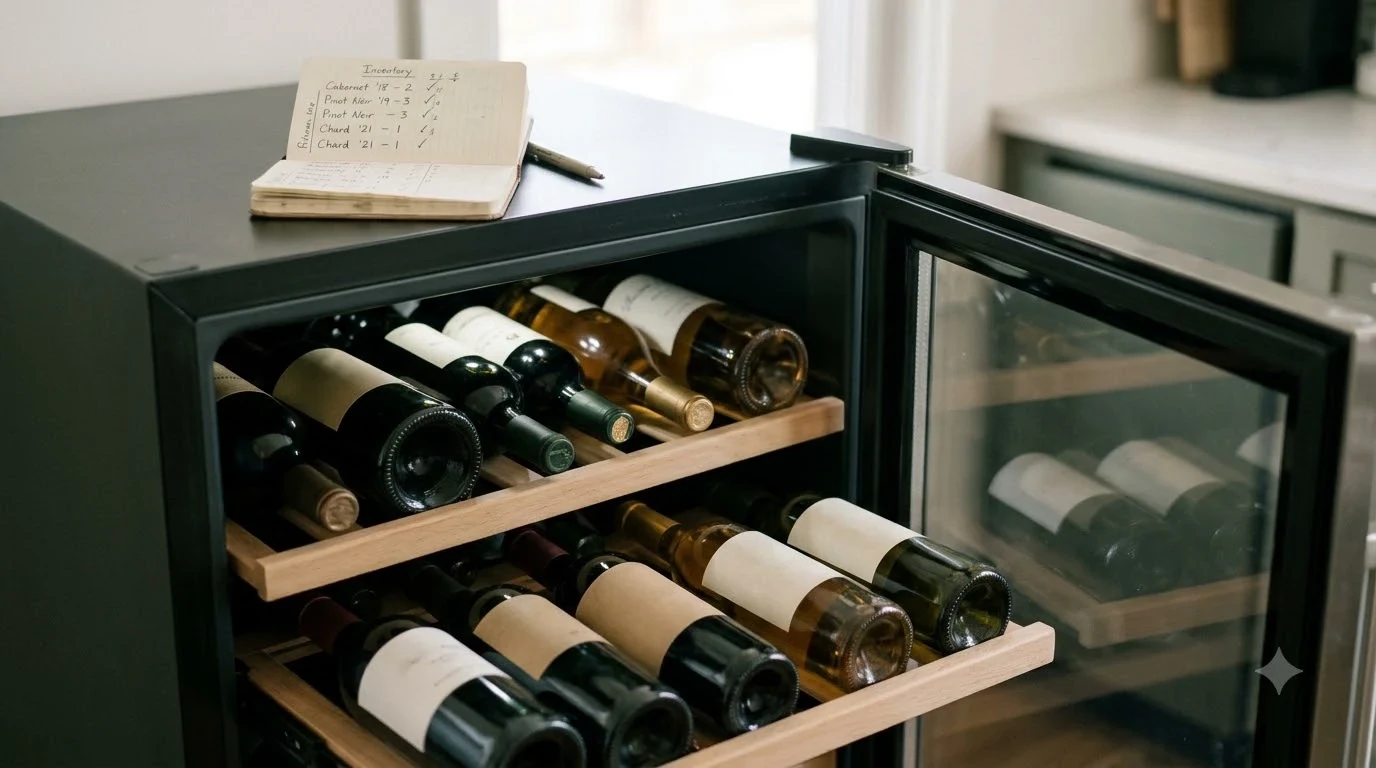
Store unopened bottles in a cool, dark environment with reasonably consistent temperatures. Around 55°F is a useful storage target for wine. Bottles with natural cork closures are generally best stored on their sides so the cork remains in contact with the wine.
Keep bottles away from direct sunlight, radiators, kitchen appliances, and areas with significant temperature fluctuations. Excessive warmth can accelerate unwanted aging, while frequent temperature changes can negatively affect wine quality.
Storage After Opening
Once opened, Port should be resealed and stored according to its style. Ruby and other younger Ports generally benefit from refrigeration after opening, and many can remain enjoyable for approximately 3–5 days. Tawny may retain its character longer in some circumstances, but refrigeration and a tightly closed bottle remain sensible precautions.
Vintage Port is generally more sensitive to oxygen after opening than mature Tawny. If you open an older bottle for a special dinner, plan to enjoy it promptly rather than assuming it will remain unchanged for a week.
For shoppers who buy fortified wine occasionally, proper storage is especially important. A bottle purchased for a single dinner may remain open for several days, and careful refrigeration can help maintain its freshness between pours.
Frequently Asked Questions
Is Sandeman considered a Portuguese wine brand?
Sandeman was founded in London, but its Port production is closely associated with Portugal’s Douro region. Its historical cellars are in Vila Nova de Gaia, across the Douro River from Porto. The distinction between the company’s London origins and its Portuguese wine identity is an important part of its history.
What does the Sandeman Don figure represent?
The Don is a recognizable advertising character wearing a Spanish hat and Portuguese student cape while holding a glass of Ruby Port. Artist George Massiot-Brown created the original image in 1928. It became part of Sandeman’s national advertising in 1930 and appeared on wine labels from 1934.
Does Sandeman produce white Port?
Yes. Sandeman introduced Porto Branco in 1964. White Port is a distinct category made from white wine grapes and can be enjoyed chilled, depending on its sweetness and style. It is also commonly used in Portuguese-inspired aperitif drinks with tonic water.
What is the difference between Port and regular red wine?
Port is a fortified wine, meaning grape spirit is added during production to increase its alcohol content and preserve residual sweetness. Regular red table wine is generally fermented without this fortification step. This production difference gives Port its characteristic concentration, sweetness, and higher alcohol level.
Who owns Sandeman today?
Sandeman is owned by Sogrape, a Portuguese wine company. The acquisition took place in 2002 according to Sandeman’s official corporate history. Sogrape’s involvement connects the historic Port producer with a larger Portuguese wine business.
Sandeman offers a wide range of fortified wines, from accessible Ruby and Tawny Port to mature age-designated expressions, Vintage Port, Sherry, and Madeira. The most suitable purchase depends on the style, bottle size, age designation, and occasion rather than the highest or lowest displayed price. Compare equivalent expressions across US retailers, and choose the bottle that best matches the flavors and drinking experience you want.
More in Wine Brands
 Louis Latour Wine Price: Compare Bottles by Style and TierUpdated Nov 20, 2026
 Yellow Tail Moscato Price: What to Expect Before You BuyUpdated Nov 20, 2026
 Sutter Home Sweet Red Review: Find the Right Food PairingsUpdated Nov 20, 2026
 Franzia Chillable Red Review: Find the Right Serving StyleUpdated Nov 20, 2026
 Veuve Clicquot Rose Review: Flavor, Food Pairings and Buying AdviceUpdated Nov 20, 2026
 Rombauer Wine Price: Compare Bottles Before You BuyUpdated Nov 20, 2026