

We may earn a commission when you buy through links on this page, at no extra cost to you. Learn more.
The Decoy Cabernet price typically falls between $20 and $25 for a 750 ml bottle of standard California Cabernet Sauvignon. Decoy’s official website lists a suggested retail price of $25, while Wine Enthusiast lists the 2023 vintage at $20. Retailer, location, vintage, and product tier can affect the amount you pay, so comparing the specific bottle is important before purchasing.
Decoy Cabernet Sauvignon occupies an approachable position in the California Cabernet market, offering recognizable dark-fruit flavors, oak-influenced aromas, and structured but relatively smooth tannins. It is a practical choice for people who enjoy Cabernet Sauvignon with dinner but do not necessarily want the intensity or expense associated with more prestigious Napa Valley bottlings. Understanding the difference between the standard California wine and the higher-tier Decoy Limited selections makes it easier to judge whether a particular bottle fits your budget and preferences.
Who Should Consider Decoy Cabernet Sauvignon
Decoy Cabernet Sauvignon is a good option for drinkers who want a recognizable California red with dark fruit, moderate oak influence, and enough structure to accompany substantial meals. Its standard California bottling is particularly relevant to shoppers comparing everyday Cabernet Sauvignon options in the approximately $20 to $25 retail category.
The wine’s flavor profile makes it accessible to people who enjoy blackberry, cherry, plum, vanilla, and baking spice. Decoy’s official description of the 2023 vintage identifies dark cherry, raspberry, cola, baking spice, and toasted oak, while its palate combines juicy blackberry with silky tannins and bright acidity. These characteristics create a fruit-forward Cabernet experience without requiring the drinker to seek out an unusually austere or aggressively tannic wine.
It can also suit someone who regularly serves beef, lamb, burgers, or grilled vegetables. Cabernet Sauvignon generally has more tannin than Merlot or Pinot Noir, so it can provide enough structure to complement rich, savory food. The standard Decoy bottling is a reasonable consideration for casual dinners, small gatherings, and occasions where a familiar California Cabernet is more important than a prestigious appellation.
However, shoppers primarily interested in powerful Napa Valley Cabernet, extended bottle aging, or highly concentrated tannins should compare the standard wine with more specialized alternatives. Decoy also offers higher-tier Cabernet selections, making it useful to understand the differences between its product categories rather than assuming every bottle carrying the name has the same profile.
Buyers who are exploring the producer for the first time can also read our Decoy Cabernet overview to understand the broader wine range and how its bottlings differ.
Key Factors That Affect the Decoy Cabernet Price
The most important factors are the product tier, vintage, bottle size, and retailer. Standard California Cabernet generally occupies a lower price category than Decoy Limited selections, and a 750 ml bottle is the most useful format for comparing typical retail listings.
According to Decoy’s official product page, the 2023 California Cabernet Sauvignon has a suggested retail price of $25 per 750 ml bottle. Wine Enthusiast lists the same vintage at $20, creating a practical reference range of about $20 to $25 for the standard wine. These figures are published listings rather than guaranteed prices at every store. Prices vary by state and retailer, and local taxes, distribution, availability, and inventory can affect the final purchase amount.
Vintage is another consideration. Different harvest conditions and blending decisions can produce variations in aroma, fruit concentration, tannin, and alcohol. For example, Wine Enthusiast lists the 2023 reviewed bottling at 14.1% ABV, while H-E-B lists a Decoy Cabernet product at 13.9% ABV. These figures should not automatically be treated as specifications for every vintage or Decoy Cabernet tier.
Product tier also matters. Decoy’s official Cabernet collection includes its standard California Cabernet, Decoy Limited Cabernet selections, and Featherweight California Cabernet. The Limited range includes bottles identified by specific growing regions, including Paso Robles and Napa Valley. Those wines occupy a different product category from the standard California bottling, so comparing them solely by brand name can lead to an inaccurate value judgment.
| Buying consideration | Published information | Why it matters |
|---|---|---|
| Standard California Cabernet | About $20–$25 per 750 ml | Useful reference range for the main bottling |
| Official suggested retail price | $25 per 750 ml | Manufacturer pricing reference |
| Wine Enthusiast listing | $20 per 750 ml | Independent publication pricing reference |
| 2023 reviewed alcohol level | 14.1% ABV | Helps identify the reviewed vintage |
| H-E-B product listing alcohol level | 13.9% ABV | Illustrates variation between published product information |
| Standard bottle volume | 750 ml | Provides a consistent comparison format |
For the most accurate comparison, start with the same bottle size and product tier. The official Decoy California Cabernet product page provides the producer’s description and suggested retail price, while independent wine publications offer another reference point. Neither figure should be interpreted as a guaranteed checkout price at every retailer.
Step-by-Step: How to Compare Decoy Cabernet Bottles
A sensible buying process starts with identifying the exact wine, then comparing its published price, vintage, and specifications. Following a few straightforward steps can prevent confusion between standard California Cabernet and the more specialized Decoy offerings.
-
Identify the exact product name.
Start by distinguishing standard Decoy California Cabernet Sauvignon from Decoy Limited and Featherweight. The standard bottling is the appropriate starting point if the main objective is to compare the typical $20 to $25 price category. A Napa Valley or Paso Robles designation indicates a different regional bottling and should be evaluated separately.
-
Confirm the bottle size.
Use a 750 ml bottle as your comparison standard. This is the format listed on the official 2023 California Cabernet product page and in Wine Enthusiast’s review. Larger formats and smaller individual bottles should not be compared directly with a standard bottle without accounting for their different volumes.
-
Compare published retail references.
Use the producer’s suggested retail price as one reference and an independent publication or established retailer as another. The standard 2023 wine has a $25 official listing and a $20 Wine Enthusiast listing. These provide a useful comparison framework rather than a promise that every store will charge the same amount.
-
Check the vintage and alcohol percentage.
Vintage-specific details matter because the wine’s blend and sensory characteristics can change. Wine Enthusiast reports 14.1% ABV for its reviewed 2023 bottling, while H-E-B reports 13.9% ABV for its listed product. Comparing the same vintage helps avoid confusing differences in product information.
-
Consider the flavor profile.
Choose based on whether you prefer blackberry, black cherry, plum, baking spice, and toasted oak. Decoy’s official 2023 description emphasizes dark cherry, raspberry, cola, and silky tannins. Wine Enthusiast describes additional characteristics such as black currant, boysenberry, bittersweet chocolate, and grippy tannins.
-
Consider what you plan to serve.
For grilled steak, burgers, lamb chops, or aged cheese, the standard Cabernet can be a practical match. For lighter meals, a wine with less tannin may be preferable. Consider the dish’s richness and seasoning rather than choosing a bottle based on its label alone.
-
Evaluate the final purchase.
Compare the actual bottle, its product tier, the stated vintage, and the retailer’s checkout total. If the standard California Cabernet is priced similarly to a Limited bottling, examine the regional designation and wine description before deciding which one better matches your preferences.
Tip: Compare identical Decoy bottlings before comparing prices. A standard California Cabernet and a Decoy Limited Napa Valley Cabernet are separate buying choices, even though they share the Decoy name. Product tier and bottle size are more useful starting points than the brand name alone.
Decoy Cabernet Types and Styles Explained
Decoy offers several Cabernet Sauvignon choices rather than a single uniform wine. The standard California bottling provides the most direct starting point, while Limited and Featherweight selections address different regional and stylistic preferences.
Standard California Cabernet Sauvignon: This is the central option for shoppers researching the typical Decoy Cabernet price. The official 2023 product description highlights dark cherry, raspberry, baking spice, cola, toasted oak, and blackberry. Silky tannins and bright acidity help maintain balance, making the wine suitable for everyday meals and casual occasions.
Decoy Limited Cabernet Sauvignon: This tier includes regionally identified wines, including Paso Robles and Napa Valley selections. These bottles should not automatically be treated as identical to the standard California Cabernet. The regional designation provides an additional point of distinction, and shoppers should compare the specific wine’s description, vintage, and published specifications.
Decoy Featherweight California Cabernet Sauvignon: Featherweight is another Cabernet option listed in the official collection. Its inclusion gives shoppers another product category to investigate when considering the Decoy range. The name identifies a separate line, so it is better to consult the specific product description than to assume it has identical alcohol content or winemaking specifications to the standard bottling.
The difference between standard and Limited wines is also illustrated by the producer’s technical information. A Duckhorn Portfolio technical sheet for the 2022 standard California Cabernet specifies a blend of 94% Cabernet Sauvignon and 6% Merlot, with 18 months of aging and 40% new French oak. The sheet identifies Alexander Valley, Mendocino County, and the Central Coast among its appellations.
Those details are specific to the 2022 technical sheet and should not be transferred automatically to the 2023 wine or other Decoy Cabernet products. Similarly, H-E-B lists a 90% Cabernet Sauvignon and 10% Merlot blend for its product listing. These differences reinforce the importance of checking the vintage-specific information when comparing bottles.
Common Mistakes When Comparing Decoy Cabernet Prices
The biggest buying mistakes involve confusing product tiers, treating suggested retail prices as universal prices, and assuming every vintage has identical specifications. A little attention to the label and retailer listing can make comparisons much more reliable.
Comparing standard and Limited wines as if they were identical: A standard California Cabernet is not interchangeable with a Limited Napa Valley or Paso Robles bottling. The regional designation, product tier, and wine specifications provide important context. A higher price for a Limited selection should be evaluated against those differences rather than judged solely against the standard bottle’s published price.
Assuming every store charges the suggested retail price: Decoy’s official $25 listing is a reference point, not a universal checkout amount. Wine Enthusiast lists the 2023 bottle at $20, demonstrating that published prices can differ between sources. Retail availability and local pricing conditions also vary, and H-E-B explicitly notes that its prices may differ between in-store, curbside, and delivery purchases.
Ignoring vintage differences: A 2022 bottle and a 2023 bottle may have different blend information and tasting descriptions. The 2022 technical sheet specifies 94% Cabernet Sauvignon and 6% Merlot, whereas H-E-B’s listing gives a 90% Cabernet Sauvignon and 10% Merlot composition for its product. Those figures are not interchangeable specifications.
Choosing exclusively by alcohol percentage: ABV can help describe a wine’s general weight and warmth, but it does not tell the entire story. Wine Enthusiast reports 14.1% ABV for its reviewed 2023 bottle, and H-E-B lists 13.9% for its product. Neither figure alone establishes which wine will taste smoother, fruitier, or more balanced.
Expecting Cabernet Sauvignon to taste sweet: Decoy’s ripe fruit and creamy texture can give an impression of richness, but ripe blackberries and plum aromas do not necessarily mean residual sugar is high. Cabernet Sauvignon is generally a dry red grape variety. Shoppers who prefer noticeably sweet wine should consider a different style rather than relying on fruit-forward tasting notes.
Overlooking the food pairing: A structured Cabernet Sauvignon is generally better suited to rich, savory dishes than delicate seafood. Its tannins work particularly well with protein-rich beef and lamb preparations, while oily fish can clash with tannic red wine. Matching the wine with the meal helps determine whether the purchase is a good fit.
For shoppers comparing other familiar California labels, our guides to Caymus Cabernet and Austin Hope Cabernet provide useful additional brand comparisons. The wines should be assessed by their own styles and published product details rather than assuming that all California Cabernet Sauvignon offers the same experience.
Serving and Storage Tips for Decoy Cabernet
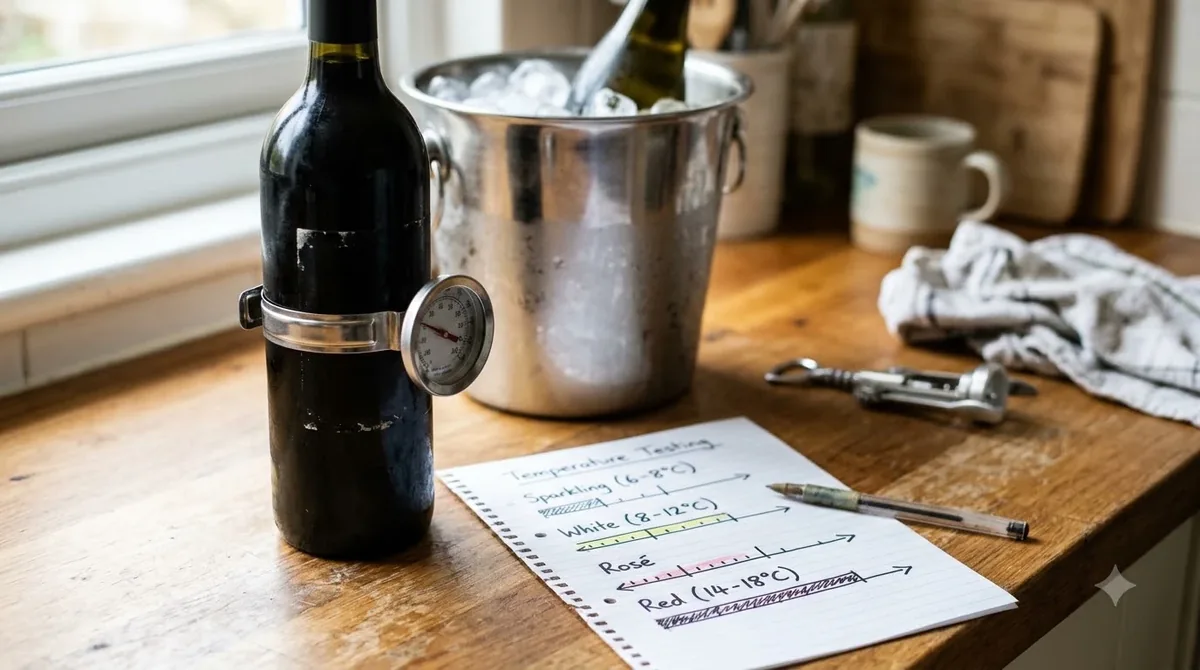
Decoy Cabernet Sauvignon generally benefits from moderate serving temperatures, appropriate glassware, and careful storage. Serving a full-bodied red too warm can emphasize alcohol, while serving it too cold can mute its fruit and aromatic detail.
Serve at 60 to 65 degrees Fahrenheit. This is the recommended general range for full-bodied red wines. If the bottle has been stored in a warm room, a short period of refrigeration can bring it closer to the desired temperature. Avoid serving it directly from a warm kitchen counter, especially during hot weather.
Use a standard red wine glass. A glass with a reasonably wide bowl gives the wine room to release its dark-fruit and oak aromas. Pour approximately 5 ounces at a time. A standard 750 ml bottle contains about five such servings, making it suitable for a small dinner gathering.
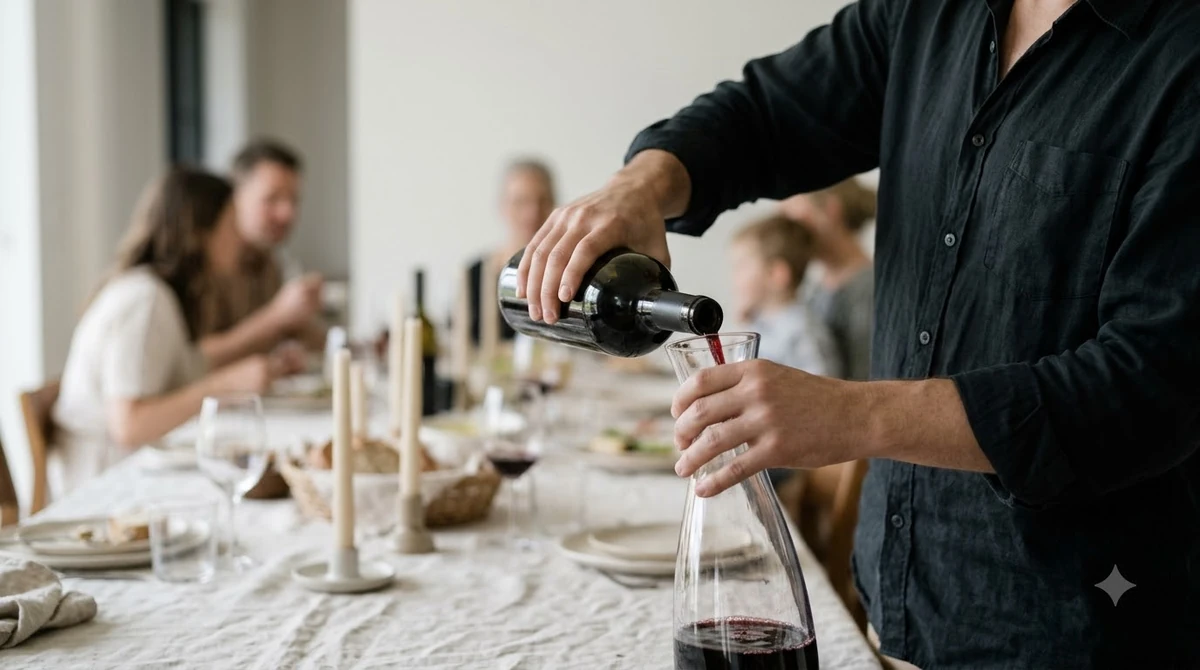
Consider decanting younger, fuller-bodied bottles. A young, full-bodied Cabernet Sauvignon can benefit from approximately 30 to 60 minutes of decanting. This allows the wine to interact with oxygen and can help its fruit and oak characteristics become more expressive. Decanting is optional rather than a requirement, and the effect depends on the wine’s age and condition.
Store unopened bottles carefully. A cool, dark storage location near 55 degrees Fahrenheit is a useful target for wine storage. Keep bottles away from direct sunlight, temperature fluctuations, and kitchen heat. Bottles sealed with traditional corks are generally stored horizontally to keep the cork from drying out.
Refrigerate opened wine. After opening, reseal the bottle and store it in the refrigerator. Most opened still wines remain in reasonable drinking condition for approximately three to five days, although the precise window depends on exposure to oxygen, storage temperature, and the wine itself. Allow a refrigerated bottle to warm toward its serving temperature before pouring another glass.
These practices are useful whether the bottle is the standard California Cabernet or a Decoy Limited selection. Good serving and storage habits can help preserve the wine’s fruit, acidity, and overall balance, making the bottle more enjoyable over the time it is open.
Frequently Asked Questions
Is Decoy Cabernet Sauvignon made by Duckhorn?
Yes. Decoy is associated with The Duckhorn Portfolio, and the official brand description credits Dan and Margaret Duckhorn with establishing the brand. The portfolio is based in St. Helena, California, according to its published technical materials. Decoy offers several wine categories beyond Cabernet Sauvignon, including Chardonnay, Pinot Noir, and Sauvignon Blanc.
Is Decoy Cabernet Sauvignon considered a Napa Valley wine?
The standard California Cabernet Sauvignon is identified as a California wine rather than a Napa Valley-designated bottling. Decoy also lists a separate Limited Napa Valley Cabernet Sauvignon in its collection. The distinction matters because California is a broader geographic designation than Napa Valley, which is a specific wine-growing region.
Does Decoy Cabernet Sauvignon contain Merlot?
Published blend information indicates that some Decoy California Cabernet bottlings include Merlot. For example, the 2022 technical sheet specifies 6% Merlot alongside 94% Cabernet Sauvignon, while H-E-B lists a 90% Cabernet Sauvignon and 10% Merlot composition for its product. Merlot can contribute a softer texture and additional fruit characteristics to a Cabernet-based blend.
Can Decoy Cabernet Sauvignon be used in cooking?
Yes. A dry red such as Decoy Cabernet can be used in recipes for beef braises, red wine pan sauces, and slow-cooked stews. Its dark-fruit and oak characteristics can complement savory ingredients such as mushrooms, onions, and rosemary. Use a wine in sound drinking condition rather than relying on a bottle that has developed unpleasant oxidation or spoilage aromas.
How many calories are in a glass of Decoy Cabernet Sauvignon?
The reviewed product information cited here does not provide a verified calorie figure for every Decoy Cabernet vintage. Wine calories depend partly on alcohol content and residual sugar, so an exact figure should not be assumed from the brand name alone. A 5-ounce serving is the conventional reference pour for comparing wine nutrition information.
Decoy Cabernet Sauvignon is a practical choice for shoppers seeking a fruit-forward California red with dark berry flavors, oak influence, and approachable structure. A standard 750 ml bottle generally falls in the $20 to $25 retail reference range, although prices vary by retailer and location. Compare the vintage and product tier before buying, and consider Decoy Limited if a regionally identified Cabernet is closer to the style you want. For additional producer comparisons and buying advice, explore our broader Wine Brands resource.
More in Wine Brands
 Louis Latour Wine Price: Compare Bottles by Style and TierUpdated Nov 20, 2026
 Yellow Tail Moscato Price: What to Expect Before You BuyUpdated Nov 20, 2026
 Sutter Home Sweet Red Review: Find the Right Food PairingsUpdated Nov 20, 2026
 Franzia Chillable Red Review: Find the Right Serving StyleUpdated Nov 20, 2026
 Veuve Clicquot Rose Review: Flavor, Food Pairings and Buying AdviceUpdated Nov 20, 2026
 Rombauer Wine Price: Compare Bottles Before You BuyUpdated Nov 20, 2026