

We may earn a commission when you buy through links on this page, at no extra cost to you. Learn more.
Aubert wine price typically falls in the premium range, with WinesRate’s U.S. producer listings showing many 750 ml bottles around $125 to $285; prices vary by state and retailer. The exact cost depends on whether you choose Chardonnay or Pinot Noir, a vineyard-designated bottling, the vintage, and the seller. The most useful way to compare bottles is to match the wine’s site and style to the occasion rather than assume the highest-priced label is automatically the best fit.
Aubert is a California producer known for site-specific Chardonnay and Pinot Noir from places including Sonoma Coast, Russian River Valley, and Carneros. Compare appellation, vineyard name, vintage, bottle condition, and seller before deciding what represents fair value.
Who This Is For
This guide is for buyers comparing premium California Chardonnay or Pinot Noir, especially a Sonoma Coast single-vineyard wine with a Russian River Valley bottling or a recent release with an older vintage. Retail listings span a wide band, so the producer name alone does not tell the whole story.
Aubert may suit collectors who enjoy expressive Chardonnay, site-specific Pinot Noir, or wines for the cellar. It is less practical for an inexpensive weeknight white or crowd-pleasing sparkling wine. A 750 ml bottle gives about five 5 oz pours, so consider guest count before buying.
Match the wine to the meal as well as the budget. Chardonnay suits roast chicken, lobster, scallops, or rich vegetarian dishes; Pinot Noir can work with duck, salmon, mushrooms, and roast poultry. Start with the broader Aubert wine overview, then use vineyard and vintage details to narrow your choice. Our Wine Brands directory compares producers across the category.
Key Factors to Compare
Start with grape variety, vineyard designation, vintage, and bottle condition. Comparisons are most useful when bottles share the same size and similar age or provenance, rather than when an older cellar bottle is compared with a current release.
For a U.S. retail reference, World Class Wine’s Aubert collection lists standard 750 ml bottles from roughly $125 to $259, while WinesRate’s broader producer listings span about $125 to $285; these are snapshots, not guaranteed prices, and prices vary by state and retailer. The table summarizes those observed bands.
| What to compare | Observed U.S. listing range | What it tells you |
|---|---|---|
| Russian River Valley Chardonnay | About $125–$150 for 750 ml bottles (World Class Wine and WinesRate listings) | A useful entry point within the current Aubert listings; compare the exact vintage and bottling. |
| Single-vineyard Chardonnay | About $140–$285 for 750 ml bottles (WinesRate producer listings) | Site, vintage, scarcity, and merchant inventory can move prices considerably. |
| Pinot Noir | About $100–$225 for 750 ml bottles (WinesRate producer listings) | Check vineyard designation and whether the bottle is a current or older release. |
| Higher-priced vineyard selections | About $170–$285 for 750 ml bottles (WinesRate producer listings) | Premium labels and harder-to-find selections occupy the upper part of the observed range. |
These are not formal tiers set by the winery; they reflect listings from retailers and price-comparison sources, where inventory, vintage, and shipping differ. WinesRate places several vineyard-designated Chardonnays higher than Russian River Chardonnay, while World Class Wine also shows differences among its Chardonnay and Pinot Noir examples. Compare bottle against bottle rather than relying on a producer-wide average.
Separate release pricing from older-vintage asking prices. An older bottle can cost more because it is scarce, but that does not prove better condition or a better fit for your taste. Ask about storage history, fill level, cork and capsule condition, and return policy; a sound recent release may be safer than an older bottle with unclear provenance.
Step-by-Step: How to Evaluate an Aubert Listing
A reliable comparison follows the same sequence each time: identify the bottle, confirm its condition and size, compare it with similar listings, and decide whether the style fits your plans. This simple process helps avoid paying a premium for a label or vintage that does not meet your needs.
- Read the full wine name. Note Chardonnay or Pinot Noir, the vineyard designation, and the appellation such as Sonoma Coast, Russian River Valley, or Carneros. Do not treat two wines as identical just because both carry the Aubert name.
- Confirm the vintage and format. Compare the same vintage where possible and verify that both listings are for 750 ml bottles. A 1.5 L magnum is not directly comparable with a standard bottle, and a bottle with substantial age deserves a provenance check.
- Compare at least two retailers. Check whether the seller’s price sits within the observed range for the same wine, vintage, and size. World Class Wine and WinesRate provide different views of the available listing market, but their displayed inventory may not be identical.
- Ask about storage and shipping. For a mature bottle, request details on professional storage and transport. In warm weather, choose temperature-conscious shipping and avoid leaving wine in a delivery area or vehicle.
- Match the wine to the occasion. Decide whether you want a rich Chardonnay for a full-flavored meal or a Pinot Noir for poultry, duck, or mushrooms. Consider whether you plan to open it soon or hold it for later.
- Check the seller’s terms. Review the return policy, shipping fees, and any restrictions before placing the order. A lower listing can be less attractive once shipping or uncertain bottle condition is included.
Use the sequence as a filter, not a reason to chase the lowest number. An unusually low listing may involve a different vintage, bottle size, or limited inventory; a high asking price may reflect scarcity rather than a better match for your meal. Narrow the choice to two or three credible options with comparable format and age.
Tip: Save the exact wine name, vintage, bottle size, seller, and quoted price together. A listing for “Aubert Chardonnay” is too vague to compare accurately with a specific vineyard bottling.
Types or Styles Explained
Aubert’s lineup is centered on Chardonnay and Pinot Noir, with multiple vineyard names that point to different growing sites and expressions. The producer’s own wine list separates the two grapes and identifies individual Chardonnay bottlings such as CIX, Eastside, Hudson, Larry Hyde & Sons, Lauren, Park Avenue, Powder House, Sugar Shack, and UV-SL, alongside Pinot Noir bottlings including CIX, Park Avenue, UV, and UV-SL.
Chardonnay: compare site and weight
Chardonnay is the broadest part of the lineup, so start by deciding whether you prefer a more mineral, citrus-led profile or a richer, broader style. Aubert describes Eastside as its only Russian River AVA Chardonnay, grown on a rocky hillside site, while its vineyard information places Larry Hyde & Sons in the cooler Carneros area with maritime influence from San Pablo Bay. The producer describes Lauren, in Forestville’s Goldridge soils, as its first estate Chardonnay and a particularly concentrated expression. These are real distinctions in site description, but they do not make one label universally superior to another.
A Russian River Valley Chardonnay may sit nearer the accessible end of observed listings, while vineyard-designated bottles can move higher by site and vintage. There is no single flat price for “Aubert Chardonnay.” Compare the tasting description with your preferences: citrus, orchard fruit, texture, minerality, or oak-related character. A rich style suits roast chicken or shellfish; a brighter, higher-acid example works with grilled fish or lemon-seasoned dishes.
Pinot Noir: compare structure and vineyard
Pinot Noir is the red-wine side of the range, and the vineyard name can matter as much as the grape. Aubert describes its UV vineyard as a site with sand and dense clay known as Sebastopol Clays, while its UV-SL vineyard sits in the far western Sonoma Coast area, about six miles from the Pacific Ocean. CIX also produces a small amount of Pinot Noir alongside mostly Chardonnay, and Park Avenue is another estate Pinot Noir name in the portfolio. These site distinctions provide useful context when two bottles sit at different points in a retail comparison.
Consider structure as well as fruit. Pinot Noir generally has low-to-medium tannin and higher acidity than many full-bodied reds, making it a flexible partner for roast chicken, duck, salmon, and mushrooms. Serve it slightly cool; a more structured bottle may benefit from some air. Oily fish can clash with strongly tannic reds, while lighter Pinot Noir is often more accommodating than Cabernet Sauvignon or Syrah.
Vineyard names are not a ranking
A named vineyard communicates origin, not a guaranteed quality ladder. A site may produce a wine with more concentration, more lift, or a different balance of fruit and acidity, but personal preference should determine which profile you choose. The official Aubert vineyard descriptions explain how the producer characterizes locations such as Eastside, UV-SL, and Sugar Shack. Use those descriptions as context, then compare a critic’s tasting note or a trusted retailer’s description rather than assuming the vineyard name alone predicts what is in the glass.
Common Mistakes
The most common buying errors are comparing unlike bottles, treating scarcity as proof of value, and overlooking provenance. Aubert’s lineup includes multiple vineyards, two principal grape varieties, and wines associated with different appellations, so an accurate comparison requires more than matching the producer name.
One mistake is comparing a 750 ml current Chardonnay with a large-format Pinot Noir or an older vintage and treating the difference as a simple price premium. Another is assuming that the most expensive Chardonnay must be the one you will enjoy most. A buyer who prefers a leaner, citrus-driven white may not enjoy a richer and more concentrated bottling as much, even if it appears higher in a retailer’s range. Similarly, someone shopping for a lighter red for salmon or roast chicken may find a balanced Pinot Noir more suitable than moving to a more expensive, more powerful wine.
Do not use critic scores as a substitute for knowing your own taste. Reviews can identify structure, aromas, and drinking windows, but cannot tell you whether you prefer creamy texture, firm acidity, bright red fruit, or savory notes. Read the tasting details: Aubert’s review archive, for example, describes the 2024 CIX Chardonnay as rich yet fresh and the 2024 CIX Pinot Noir as more structured than some sibling wines.
Do not ignore bottle condition or overbuy. For a wine with several years of age, ask how it was stored and transported, and check the seller’s replacement policy. Seepage, a pushed cork, a damaged capsule, or unclear history are reasons to ask more questions. Unless you know a bottling suits you, begin with one bottle rather than a case; you can return to the same site or vintage later.
Care or Storage Tips
Good storage protects the value of a premium bottle after purchase, while sensible serving temperatures make the wine easier to appreciate. Keep unopened bottles away from light, heat, and vibration, and aim for a steady cellar temperature near 55°F rather than a warm kitchen shelf or a garage with large temperature swings.
For bottles sealed with natural cork, store them on their sides so the cork remains in contact with the wine. Avoid frequent movement, especially for older bottles that may have sediment. If you are building a small collection, record the producer, vineyard, grape, vintage, purchase date, seller, and storage location. This basic record makes it easier to track what you own and helps you remember which site or style you preferred when you consider another purchase.
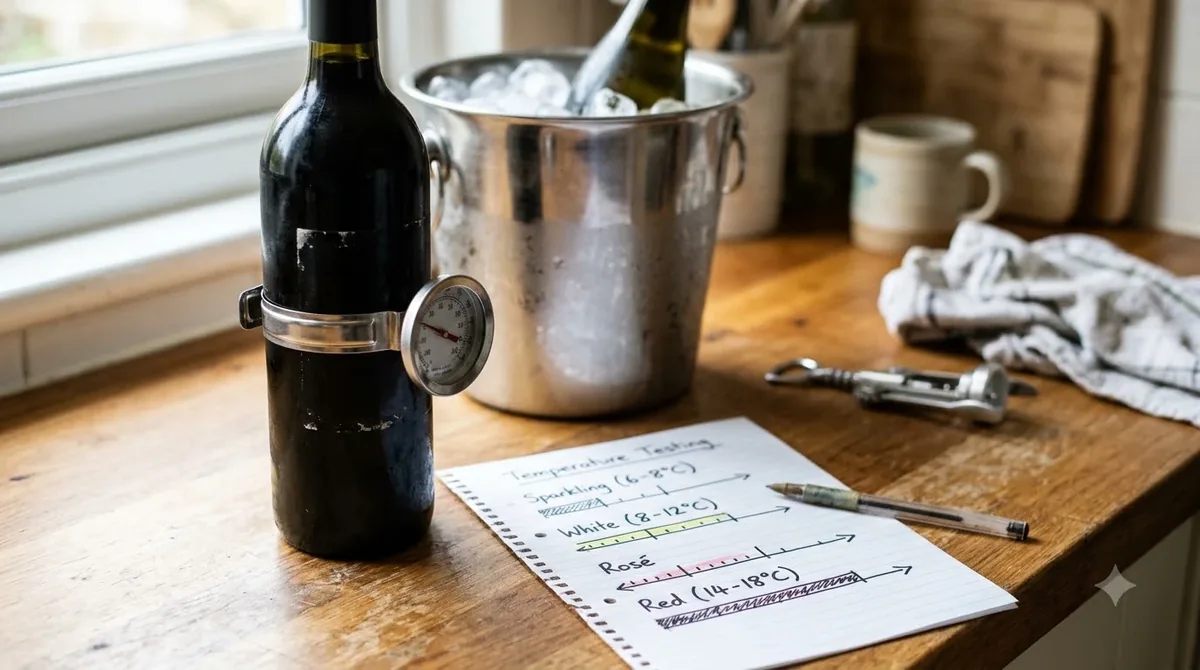
Serve Aubert Chardonnay according to its weight: lighter whites are generally enjoyable around 45–50°F, while fuller-bodied Chardonnay shows more aroma and texture around 50–55°F. Pinot Noir is best slightly cool, around 55–60°F. A young, fuller red can benefit from 30–60 minutes of decanting, but start with a small pour before deciding it needs more air. Chardonnay pairs with roast chicken, lobster, scallops, or creamy vegetables; Pinot Noir suits duck, poultry, mushrooms, or salmon. Avoid especially tannic reds with oily fish, and remember that alcohol and tannin can amplify chili heat.
Once opened, keep the bottle in the refrigerator with a sound closure. Most still wines are best consumed within about 3–5 days, although freshness varies with the wine and storage. Bring chilled Chardonnay toward its serving range before pouring, and allow cool Pinot Noir to warm slightly in the glass. A 5 oz pour gives aromas room to develop.
Frequently Asked Questions
What does CIX mean on an Aubert wine label?
Aubert says the CIX name comes from vineyard map parcel number 109. The CIX estate is next to the Lauren estate, but the producer describes its soil as visibly different, with pale, salt-like soil in the vineyard’s Chardonnay-dominant planting.
What does UV-SL stand for?
The producer says UV refers to its late vineyard manager, Ulises Valdez Sr., and SL refers to Stoetz Lane, where the vineyard is located. Aubert describes the site as being in the far western Sonoma Coast area, approximately six miles from the Pacific Ocean.
Is Aubert’s Powder House Chardonnay high in alcohol?
A tasting report on Aubert’s review archive describes the 2024 Powder House Chardonnay at 15% alcohol by volume. The same note says the wine retained balance and freshness despite that level, illustrating why alcohol percentage is only one part of how a wine feels.
How old are some of Aubert’s estate vines?
The producer’s review archive says the Lauren Estate Chardonnay comes from the estate’s oldest vines, planted in 1999. It also identifies CIX Estate Chardonnay vines planted in 2008, giving buyers two specific examples of how vineyard age can differ within the range.
Does Aubert make more than one Pinot Noir?
Yes. The producer lists Pinot Noir bottlings from CIX, Park Avenue, UV, and UV-SL, rather than offering only one generic red wine. Its review archive also notes that the 2024 UV Vineyard Pinot Noir marked the estate’s twentieth vintage for that bottling.
For most buyers, the sensible approach is to choose the Aubert grape and vineyard style they are most likely to enjoy, then compare the same bottle size and vintage across reputable U.S. sellers. A clear match between the wine, the meal, and the drinking window is a better measure of value than choosing by the highest listing or the largest critic score alone.
More in Wine Brands
 Louis Latour Wine Price: Compare Bottles by Style and TierUpdated Nov 20, 2026
 Yellow Tail Moscato Price: What to Expect Before You BuyUpdated Nov 20, 2026
 Sutter Home Sweet Red Review: Find the Right Food PairingsUpdated Nov 20, 2026
 Franzia Chillable Red Review: Find the Right Serving StyleUpdated Nov 20, 2026
 Veuve Clicquot Rose Review: Flavor, Food Pairings and Buying AdviceUpdated Nov 20, 2026
 Rombauer Wine Price: Compare Bottles Before You BuyUpdated Nov 20, 2026