

We may earn a commission when you buy through links on this page, at no extra cost to you. Learn more.
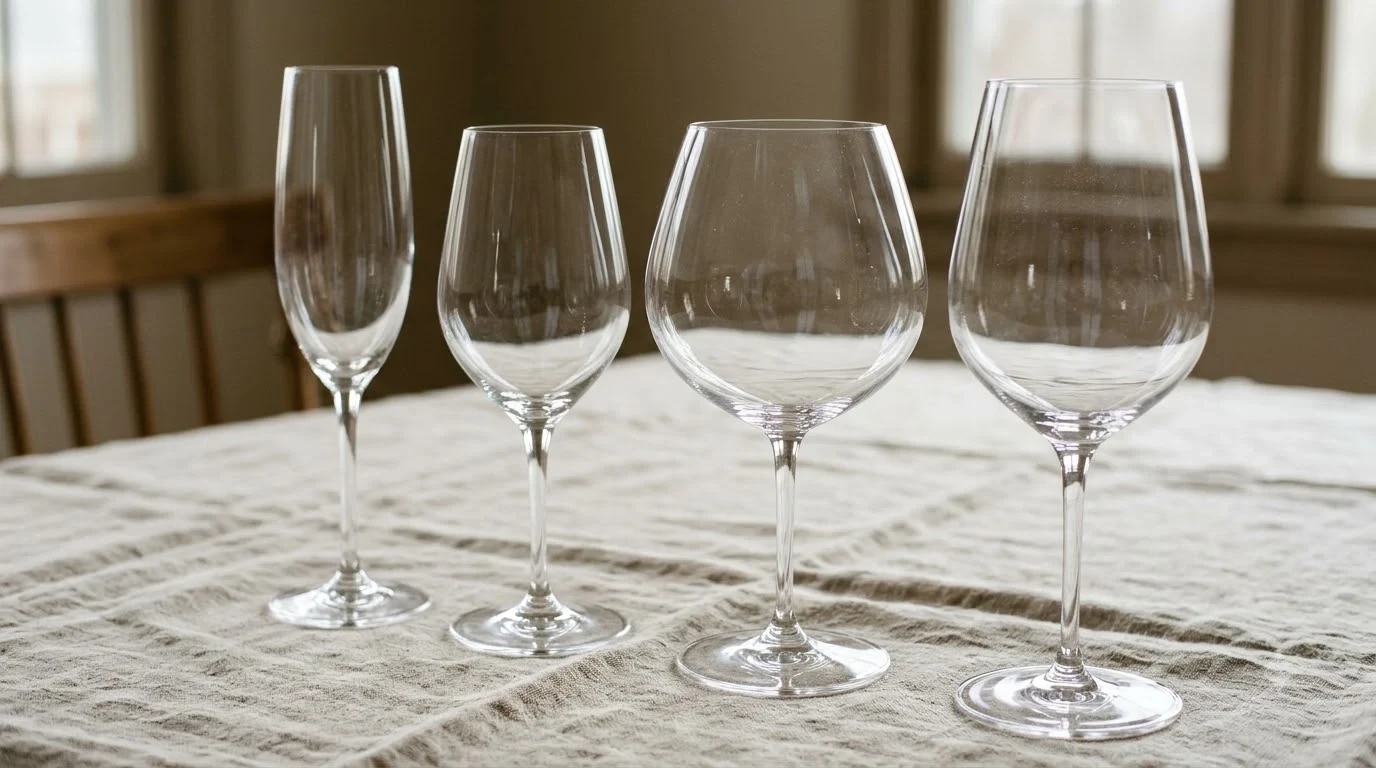
Pottery Barn white wine glasses are a good choice for shoppers seeking attractive, table-ready stemware with practical options for everyday drinking and entertaining. The selection includes traditional soda-lime glass designs and more refined ZWIESEL GLAS crystal collections, with differences in capacity, construction, and set size. The Modo and Congresso collections are particularly interesting choices for shoppers who want dishwasher-safe Tritan crystal rather than basic everyday glassware.
Pottery Barn’s glassware selection covers several decorating styles, from straightforward clear glasses to more refined European-style stemware. However, appearance alone does not determine whether a white wine glass is worth buying. Bowl proportions, rim thickness, capacity, stem length, and cleaning requirements all influence how comfortably a glass works at the dinner table. This review compares the available designs and explains what to prioritize before choosing a set.
Specs and Key Features
Pottery Barn white wine glasses cover different needs rather than following one standardized design. The most useful comparison is between the straightforward Bodega collection and the more specialized ZWIESEL GLAS Modo and Congresso glasses, which offer different capacities and dimensions.
| Collection | Material | Set size | Capacity | Dimensions | Care |
|---|---|---|---|---|---|
| Bodega White Wine | Blown soda-lime glass | 6 | 5 oz | 3 x 6 in | Dishwasher safe |
| ZWIESEL GLAS Modo | Tritan crystal | 4 | 13.5 oz | 3.25 x 8.25 in | Dishwasher safe |
| ZWIESEL GLAS Congresso | Tritan crystal | 6 | 12.75 oz | 3 x 7.75 in | Dishwasher safe |
These specifications come from Pottery Barn’s individual product descriptions. The collections should not be treated as interchangeable simply because they share a clear-glass appearance. A 5-ounce Bodega glass is substantially smaller than a 13.5-ounce Modo glass, which changes how much room is available for swirling and how comfortably different wine styles can be served.
The Modo collection is particularly interesting for shoppers who appreciate a relatively generous white wine bowl without moving into oversized red wine territory. Its 13.5-ounce capacity provides room for a standard serving while leaving additional space above the wine. The 3.25-inch diameter also gives it a more substantial silhouette than a narrow, traditional white wine glass.
Congresso takes a slightly more compact approach. Its 12.75-ounce capacity and 7.75-inch height make it an appealing alternative for shoppers who prefer a somewhat shorter glass. The six-piece set is also convenient for households that regularly entertain several guests.
Bodega occupies a different position in the selection. Its 5-ounce capacity is much smaller, and its soda-lime construction makes it a simpler everyday glassware option. Shoppers should understand that a stated 5-ounce capacity is not the same as a recommended serving size in a larger glass: capacity describes the glass’s total volume, not necessarily the amount of wine that should be poured.
For shoppers comparing broader collections, the white wine glasses buying guide offers additional perspective on bowl proportions and everyday usability.
Tip: Compare total capacity and bowl shape rather than choosing by height alone. A 13-ounce glass with a moderately narrow bowl can be more useful for chilled Sauvignon Blanc than a shorter glass with an unusually wide opening.
One other important distinction is the manufacturer-described construction. Pottery Barn identifies the Modo and Congresso glasses as Tritan crystal made by Schott Zwiesel. Zwiesel Glas describes its Tritan material as combining clarity, break resistance, and dishwasher resistance. Its explanation of the material is available on the official Zwiesel Glas Tritan crystal page.
What Owners Like
The strongest selling points of Pottery Barn white wine glasses are their coordinated appearance, range of sizes, and practical material choices. The collections offer options for shoppers who want a matching dining-room presentation without limiting themselves to one type of glass construction.

One attractive feature is the availability of dedicated white wine shapes. Rather than using an oversized red wine glass for every bottle, shoppers can select a narrower bowl that helps maintain the character of cooler, lighter wines. This distinction matters particularly for Sauvignon Blanc, Pinot Grigio, Riesling, and other aromatic whites.
Wine Enthusiast explains that white wine glasses generally have smaller bowls and narrower openings than red wine glasses. These proportions help preserve delicate aromas while reducing unnecessary exposure to air. A longer stem also makes it easier to hold the glass without warming the wine with body heat.
The Modo and Congresso collections are appealing because they combine this general white-wine format with Tritan crystal construction. Zwiesel’s material information emphasizes brilliance, resistance to breakage, and dishwasher performance. These are useful characteristics for households that want attractive stemware but do not want every dinner party to create an extensive hand-washing routine.
Practical everyday construction
Dishwasher compatibility is another important advantage. Both the Modo and Congresso descriptions identify the glasses as dishwasher safe, and Pottery Barn also lists Bodega as dishwasher safe. That gives shoppers several choices if convenience is a priority.
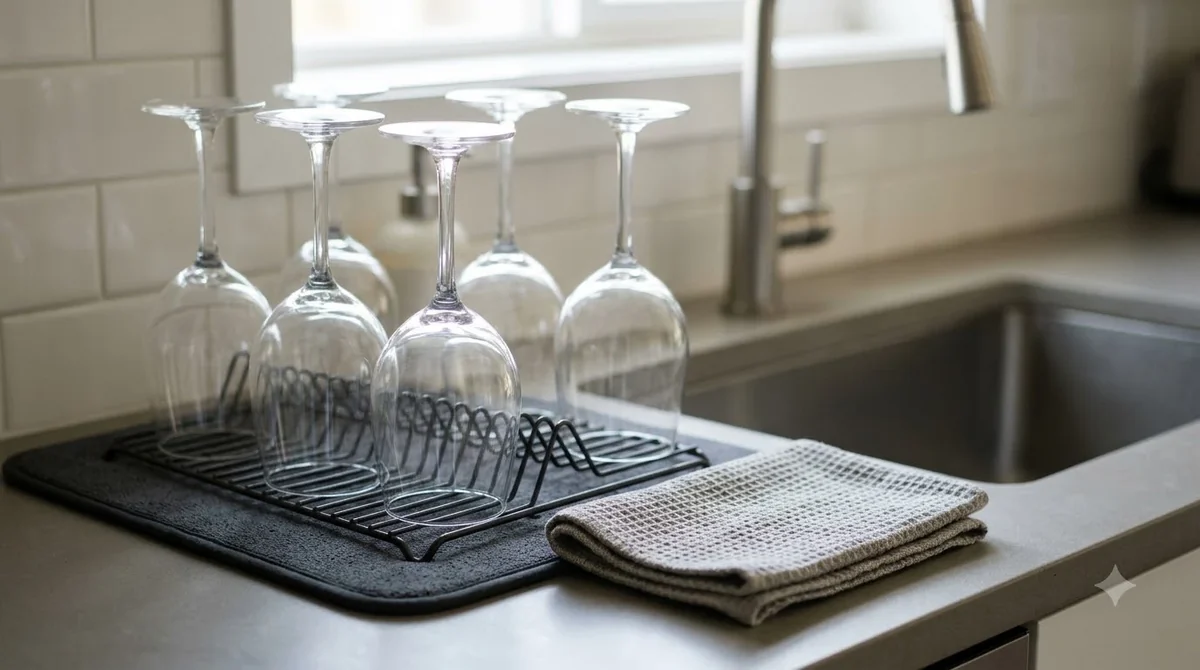
Still, dishwasher-safe does not mean indestructible. A glass can be damaged if it strikes a plate, utensil, or another glass during a wash cycle. Stemware also needs enough vertical clearance to avoid contacting the upper rack or the dishwasher interior.
The Bodega collection is appealing for a different reason. Its simple soda-lime construction and straightforward shape suit casual dining tables, breakfast-room settings, and households that prefer less elaborate stemware. Its stated capacity of 5 ounces is also a reminder that not every glass sold for white wine needs to be a large, contemporary bowl.
Coordinated entertaining
Pottery Barn’s broader assortment also helps shoppers coordinate their dining accessories. Its white wine category includes dedicated sets, individual replacement glasses, and mixed glassware options. That flexibility is useful for people building a bar gradually rather than buying every piece at once.
A coordinated collection can make a noticeable difference at a dinner party. Matching bowls, stems, and bases create a consistent table presentation, especially when paired with matching water glasses, dinner plates, and serving pieces.
Shoppers who entertain regularly may also appreciate being able to choose a four-piece set or six-piece set according to the number of people they usually serve. A four-piece Modo set suits smaller households, while a six-piece Congresso set provides more coverage for a typical dinner gathering.
Common Complaints
The main potential drawbacks are the differences between collection specifications, the fragility inherent in stemware, and the possibility of choosing a glass that is too large or too small for the wines served most often. These are practical considerations rather than evidence that the collections share a specific manufacturing defect.
First, the product names can make comparison confusing. Modo and Congresso are both ZWIESEL GLAS white wine collections, both use Tritan crystal, and both are dishwasher safe. However, their dimensions, capacities, and set quantities are different. A shopper who focuses only on the shared manufacturer and material could overlook these distinctions.
The Modo glass measures 8.25 inches tall, compared with 7.75 inches for Congresso. That half-inch difference can matter when checking cabinet storage or dishwasher clearance. The Modo set contains four glasses, whereas Congresso is sold as a six-piece set.
Stemware requires careful handling
Even relatively durable crystal glassware can break. The stem and bowl remain vulnerable to knocks against hard surfaces, and thin glass rims can chip if glasses are stacked or stored too closely together.
Zwiesel describes Tritan crystal as particularly resistant to breakage and dishwasher use, but shoppers should not interpret that description as a guarantee against every type of household accident. Careful loading, unloading, and storage remain important.
Another consideration is the difference between dishwasher compatibility and long-term care. A glass may be suitable for machine washing but still benefit from gentle handling. Strong contact with other items, an overcrowded rack, or sudden physical impact can shorten its useful life.
Not every capacity suits every wine
Capacity is another potential source of disappointment. The 13.5-ounce Modo glass and 12.75-ounce Congresso glass provide plenty of space for most white wines, but their size may feel excessive to someone accustomed to smaller traditional stemware.
Conversely, Bodega’s 5-ounce capacity is restrictive for drinkers who prefer a generous bowl and enough headspace to swirl their wine. It may work for straightforward table service, but it is less versatile for detailed aroma evaluation.
The shape of the bowl also matters. A large glass does not automatically make a better wine glass. Delicate Riesling and Sauvignon Blanc generally benefit from a narrower design that concentrates their aromas. A fuller Chardonnay can work well in a somewhat broader bowl.
For an additional explanation of how these proportions affect wine service, Wine Enthusiast’s comparison of red and white wine glasses explains the differences between high-acid white wine glasses and larger Chardonnay-style glasses.
Collection availability can change
Another practical concern is product availability. Pottery Barn’s assortment includes multiple glassware collections, and individual product pages may change as inventory and collections are updated. A style that appears in a category search may not necessarily be available in every size or configuration.
This matters particularly when replacing a broken glass from an older set. Matching the same collection, height, bowl diameter, and base profile is generally preferable to buying a visually similar replacement from another line.
Overall, the complaints to consider are mostly about suitability and handling. Shoppers looking for completely carefree, impact-proof glassware should consider whether traditional stemware is the right format for their household.
Who Should Buy and Who Should Skip
Pottery Barn white wine glasses are best suited to shoppers who value coordinated table settings, attractive clear glassware, and the option to choose between everyday and more refined crystal construction. The best collection depends on how frequently the glasses will be used and which white wine styles are most common at home.
Who should buy the Modo collection
Modo is a strong candidate for shoppers who want a contemporary white wine glass with a generous 13.5-ounce capacity. Its 8.25-inch height gives it a more prominent stemware appearance, while its Tritan crystal construction offers a practical combination of clarity and dishwasher compatibility.
It is particularly appropriate for people who frequently serve Chardonnay, Viognier, Pinot Grigio, and other still white wines. The four-piece set also makes sense for couples or smaller households that do not need six matching glasses immediately.
People who prefer a glass that feels substantial on the table may appreciate the Modo proportions. However, those with limited cabinet space should account for its height before ordering.
Who should buy the Congresso collection
Congresso is worth considering for households that prefer a slightly shorter glass and need six matching pieces. Its 12.75-ounce capacity is generous enough for everyday white wine service, and its 7.75-inch height offers a more compact alternative to Modo.
The six-piece configuration is especially useful for family dinners, small celebrations, and regular entertaining. Its 3-inch diameter also gives it a relatively restrained footprint compared with wider wine glasses.
Shoppers who want Tritan crystal but do not need the tallest available stemware may find Congresso the more convenient option.
Who should buy Bodega
Bodega makes more sense for casual households that prioritize simple serving pieces over specialist wine-tasting proportions. Its soda-lime glass construction and dishwasher-safe design are straightforward, and its 6-inch height is easier to accommodate in some storage arrangements.
It is also worth considering for people who serve smaller portions or prefer traditional, compact tableware. The 5-ounce stated capacity is the main limitation, however, particularly for anyone who enjoys swirling wine or comparing aromas.
Who should skip these glasses
People who frequently drop glassware, have particularly crowded dishwashers, or need genuinely shatter-resistant outdoor drinkware should consider alternatives. Traditional stemmed glasses are not the most forgiving choice for patios, poolside dining, or busy environments where accidental knocks are common.
Similarly, dedicated wine enthusiasts who prefer specialized shapes for individual grape varieties may want to compare more technical collections before committing to one matching set. A general white wine glass is useful, but it will not reproduce every feature of a dedicated Riesling, Sauvignon Blanc, or white Burgundy glass.
Shoppers who prefer a single multipurpose design should also consider universal wine glasses. These can reduce cabinet clutter while covering a broader range of red and white wine styles.
How It Compares to Alternatives
Pottery Barn’s white wine glass collections compete most directly on appearance, material, size, and convenience. The differences between Bodega, Modo, and Congresso show why shoppers should compare the actual glass rather than assuming every white wine option serves the same purpose.
Modo versus Congresso
These two Tritan crystal collections are the closest comparison within the selection. Both are dishwasher safe and made in Germany, but Modo has a slightly larger capacity and taller profile.
Modo holds 13.5 ounces and measures 8.25 inches tall, while Congresso holds 12.75 ounces and measures 7.75 inches tall. The difference is relatively small, so the decision is better based on preferred proportions and the number of glasses needed.
Modo is the more generous option for people who enjoy extra headspace around their wine. Congresso is a practical alternative for households that want six matching glasses with a slightly more compact overall profile.
Tritan crystal versus soda-lime glass
The material distinction is particularly important when comparing these collections with Bodega. Soda-lime glass is a common material for everyday drinkware, while Tritan crystal is designed to combine clarity and durability with dishwasher resistance.
Zwiesel Glas highlights the brilliance and break resistance of its Tritan material, along with its fine rims and thin walls. These characteristics help explain why Tritan crystal appears in collections intended to balance a refined drinking experience with regular use.
That does not mean every soda-lime glass is unsuitable for everyday use. Bodega offers a simpler construction and a smaller format, which can appeal to shoppers who prefer straightforward glassware rather than a more specialized crystal design.
Pottery Barn versus dedicated wine glass specialists
Pottery Barn’s advantage is the combination of glassware with broader dining and entertaining collections. Shoppers can coordinate stemware with other table accessories and select pieces that match a particular interior style.
Dedicated wine glass specialists may offer more extensive varietal-specific options. For example, a technical wine glass collection may include separate designs for Cabernet Sauvignon, Pinot Noir, Sauvignon Blanc, Chardonnay, and sparkling wine.
That specialization can matter to people who regularly compare wines and want different bowl shapes for different grape varieties. Pottery Barn’s general white wine glasses are more straightforward choices for households that want a dependable everyday format.
Shoppers comparing the wider market should also consult our guides to wine glasses and red wine glasses. These comparisons help establish whether a dedicated white wine glass is the best addition or whether a coordinated set covering several wine styles would be more useful.
Choosing according to wine style
The type of wine served most often should influence the final decision. Sauvignon Blanc and dry Riesling generally benefit from smaller, narrower bowls that help retain their fresh aromatic qualities. Chardonnay and Viognier can benefit from a somewhat wider bowl that gives richer aromas more room to develop.
For shoppers who mostly serve lighter whites, a compact design is a sensible starting point. For people who regularly serve fuller Chardonnay, a slightly more generous bowl such as Modo can provide greater flexibility.
The important distinction is that capacity alone does not determine performance. A glass with a larger stated capacity can still have a relatively narrow opening, and the bowl’s shape influences how aromas gather above the wine.
Ultimately, Pottery Barn is appealing for shoppers who want attractive glassware with practical construction options. The Modo and Congresso collections are the more interesting choices for Tritan crystal, while Bodega serves a simpler and more traditional purpose.
Frequently Asked Questions
Can Pottery Barn white wine glasses be used for sparkling wine?
Yes, ordinary white wine glasses can serve many sparkling wines, including Prosecco and Champagne. A tulip-shaped glass is often more useful than a very narrow flute when aromatic detail matters. For sparkling service, a temperature around 40–50°F helps preserve freshness and lively bubbles.
How much wine should you pour into a 13-ounce glass?
A standard wine serving is approximately 5 ounces, even when the glass has a much larger capacity. That leaves enough headspace to swirl the wine and collect its aromas. A 13-ounce glass should not normally be filled to its rim for ordinary table service.
Do clear wine glasses affect how wine looks?
Clear, colorless glass is useful because it allows the drinker to examine a wine’s color, clarity, and visual development without interference from colored material. This is particularly helpful when comparing pale Pinot Grigio, golden Chardonnay, and deeper-colored aged white wines. A clean, transparent bowl also makes sediment and bubbles easier to observe.
Should wine glasses be polished with a microfiber cloth?
A clean, lint-free microfiber cloth can help remove fingerprints and water marks after washing. Hold the bowl and base carefully rather than twisting the stem in opposite directions, which can put unnecessary pressure on the joint. A soft polishing cloth is especially useful for crystal glasses intended for formal table settings.
How many wine glasses should a household keep?
Four matching glasses are a reasonable starting point for a household that usually serves two to four people. Six pieces offer more flexibility for small dinner parties, while households that regularly host larger gatherings may prefer twelve matching glasses. The right quantity depends on entertaining habits, available storage, and whether separate glassware is kept for red and sparkling wines.
Pottery Barn white wine glasses offer several worthwhile choices, but the Modo and Congresso collections stand out for shoppers who want Tritan crystal, generous capacity, and dishwasher-safe convenience. Bodega is a simpler alternative for casual service and compact table settings. Compare the bowl dimensions, total capacity, and set size before choosing, and prioritize the glass that best matches the wines and occasions you enjoy most often.
More in Wine Glasses
 Zwiesel Glas Champagne Flutes for Durable Everyday Sparkling WineUpdated Nov 20, 2026
 Vera Wang Crystal Wine Glasses: Design, Quality and Buying AdviceUpdated Nov 20, 2026
 West Elm White Wine Glasses: Compare Designs for Better Everyday Wine ServiceUpdated Nov 20, 2026
 Zalto Stemless Wine Glasses: Discover Their Distinctive DesignsUpdated Nov 20, 2026
 Viski Champagne Glasses That Match Your Style and Sparkling WineUpdated Nov 20, 2026
 Vista Alegre Decanter Review: Crystal Style and Wine ServiceUpdated Nov 20, 2026