

We may earn a commission when you buy through links on this page, at no extra cost to you. Learn more.
A dollar tree decanter can be an attractive, inexpensive glass accent for small pours, casual entertaining, and home display, but it is not necessarily a full-size wine decanter. Dollar Tree has been featured selling decorative glass bottles with stoppers in hammered, rounded, and squared designs. These pieces offer appealing presentation, although their smaller capacities make them less suitable for decanting an entire standard wine bottle. The right choice depends on whether you want decorative glassware, a small serving vessel, or a functional wine decanter.
Shopping for a decanter at Dollar Tree can be a little confusing because several different products fall under the general description of decorative glass bottles. Some resemble traditional whiskey decanters, while others feature hammered surfaces, colorful glass, or vase-like proportions. They may look appropriate on a bar cart or dinner table, but appearance alone does not establish whether a bottle can perform the practical job of a wine decanter.
This review examines the documented Dollar Tree styles, their practical strengths and limitations, how to evaluate them in person, and which alternatives make more sense for wine enthusiasts. It also explains what to look for in the stopper, opening, base, and interior before using an inexpensive decorative bottle for serving beverages.
Specs and Key Features of the Dollar Tree Decanter
The Dollar Tree decanter category is best understood as a collection of decorative glass bottles rather than one standardized wine-serving product. Reported designs include colorful hammered bottles and clear, cut-glass styles with traditional whiskey-decanter silhouettes.
One particularly interesting feature is the variety of visual designs. An AOL report on Dollar Tree home finds describes a hammered glass bottle in red, purple, green, and clear, alongside two additional designs with more traditional decanter styling. One has a rounded shape, while the other features squared edges. Both use cut clear glass to create a crystal-like appearance.
These design differences matter because a decanter is often part of a room’s presentation as much as its serving equipment. A rounded bottle can look appropriate in a traditional home bar, while a squared silhouette works well with modern glassware and simpler table settings. The colorful hammered option is more decorative and can provide a noticeable accent against neutral furniture.
There is also a separate Dollar Tree catalog listing for Glass Half-Liter Decanter Vases, described as 8 inches tall. That listing is useful evidence that decanter-shaped glass vessels have appeared in the retailer’s broader assortment, but the word vase matters: it should not automatically be treated as confirmation of a beverage-safe wine decanter. The listing identifies UPC 639277624147, which can help distinguish that particular catalog item from other glass bottles.
| Feature | Documented details | Practical significance |
|---|---|---|
| Product category | Decorative glass bottles and decanter-style vessels | Different versions may have different intended uses. |
| Hammered design | Red, purple, green, and clear options reported | Useful for decorative presentation. |
| Traditional designs | One rounded and one squared silhouette | Suitable for different bar and dining styles. |
| Glass appearance | Cut clear glass on traditional-style designs | Creates a crystal-like visual effect. |
| Capacity limitation | Reported traditional styles are smaller than average | Not suitable for holding a complete standard bottle. |
| Separate vase listing | Half-liter description; 8 inches tall | Confirm its intended purpose before beverage use. |
| Stopper | Stoppered designs have been featured | Inspect the fit and seal before serving. |
There is an important distinction between a decorative decanter and a purpose-built wine decanter. A proper wine vessel needs enough capacity for the intended bottle, a stable base, a suitable opening, and an interior that can be cleaned effectively. A decorative bottle might have some of these characteristics without having all of them.
For a complete wine setup, the serving vessel should also complement the glasses. A small decanter-style bottle may work alongside everyday wine glasses, but it should not be mistaken for a replacement for larger wine-serving equipment.
What Owners Like About the Design
The strongest attraction of a Dollar Tree decanter is its decorative appearance combined with its versatility as a small household accent. Its appeal is especially clear for people who want a coordinated bar-cart display without investing in expensive crystal or formal glassware.
The hammered glass design offers a different appearance from conventional smooth bottles. Its textured surface catches light from different angles, and the reported color selection gives shoppers several ways to coordinate the bottle with their surroundings. Clear glass is the easiest option to integrate into an existing collection, while purple, red, and green can introduce more personality.
The traditional cut-glass versions have a different advantage. Their faceted appearance resembles classic barware and can look appropriate beside whiskey glasses, cocktail equipment, and a small serving tray. A rounded silhouette gives a softer impression, while a square-sided design looks more structured. These distinctions are useful when choosing a piece primarily for display.
A decorative accent with multiple uses
Another advantage is that a decorative bottle does not have to remain in a liquor cabinet. Depending on its construction and intended use, a suitable bottle may work as a decorative container or an accent on a console table. The AOL report specifically mentions alternative storage uses, including bath salts and mouthwash, while Woman’s World describes a shopper using a decorative glass bottle for body oil.
These examples illustrate why inexpensive decorative glassware can appeal beyond wine enthusiasts. Someone decorating a guest bathroom may value a small bottle with a stopper more than someone who needs a full-capacity wine vessel. Likewise, a home bar owner might prefer the appearance of two matching bottles rather than one oversized piece of equipment.
Easy coordination with other glassware
The retailer’s broader glassware assortment can also make it easier to create a coordinated presentation. Other reported products include old-fashioned glasses, long-stem wine glasses, and champagne flutes. These pieces serve different purposes, but they can be arranged together on a bar cart or dining table.
For example, clear cut-glass bottles can complement traditional stemware, while colorful hammered glass looks more appropriate with simple tumblers and neutral serving accessories. A decorative decanter does not need to match every glass exactly. Repeating one color or design detail is often enough to create a consistent arrangement.
There is also a practical advantage to choosing a smaller decorative piece for a limited space. A compact bottle can fit on a narrow shelf or crowded countertop more easily than a large wine decanter. However, the same compact proportions that make it convenient for display also restrict how much liquid it can accommodate.
For shoppers who enjoy experimenting with table arrangements, the key attraction is flexibility. A single decorative object can add visual interest to a home bar, dining room, or serving station without requiring a complete matching collection.
Common Complaints and Practical Limitations
The main limitation of the Dollar Tree decanter is capacity: the reported traditional-style bottles are smaller than average and cannot hold an entire standard bottle of spirits. That makes them less useful for conventional wine decanting, particularly when the goal is to transfer a full 750 ml bottle into one vessel.
This is not necessarily a defect. A decorative bottle is not required to function like professional wine equipment. The problem arises when shoppers assume that every object described as a decanter is automatically designed for the same purpose. A small bottle may be perfectly adequate for a limited serving but inconvenient for a dinner with several guests.
Capacity and pouring can be restrictive
A standard wine bottle contains 750 ml, equivalent to approximately five conventional 5-ounce glasses. A vessel that cannot accommodate the entire bottle requires multiple transfers or leaves some wine in the original bottle. That undermines the convenience of using a single decanter for a full dinner service.
The neck is another important consideration. A narrow opening may make filling slower and cleaning more difficult. A wide opening is generally more convenient for transferring wine and reaching the interior, but it can also make controlled pouring harder if the bottle lacks a suitable lip or pouring edge.
Before purchasing, look at the relationship between the neck and body. A bottle with a narrow neck and wide shoulders can be particularly challenging to clean because liquid and residue may collect around the transition between those sections.
Uncertain beverage suitability
Another potential concern is that a decorative bottle and a food-contact serving vessel are not interchangeable categories. The existence of a glass bottle with a stopper does not establish that its materials, stopper, decorative finish, or construction are intended for contact with wine or spirits.
The separate half-liter decanter vase listing is a good example of why product descriptions matter. Although its shape and name may resemble a beverage vessel, it is identified as a vase. A shopper should not assume that a decorative vase is suitable for serving alcohol simply because it looks like a conventional decanter.
Also consider the stopper. A loose-fitting decorative stopper may be attractive but provide little protection against air exposure. A tight stopper can help limit exposure during short-term storage, but a decorative closure should not be assumed to create an airtight seal.
Cleaning can require additional effort
Intricate cut patterns and hammered surfaces are visually attractive, but they can create more places for water spots, fingerprints, and residue to collect. A bottle with a narrow neck may require a dedicated cleaning brush, particularly if it is intended for repeated beverage service.
Glass thickness is another consideration. A heavier-looking bottle is not automatically more resistant to impact, and a decorative stopper can be particularly vulnerable if it is dropped or knocked against a hard countertop. Examine the base, rim, and stopper for chips, cracks, and irregularities before taking a piece home.
For shoppers who primarily want reliable wine service, these limitations may outweigh the decorative advantages. For someone looking for an attractive accent or a small occasional serving vessel, they may be acceptable compromises.
Who Should Buy the Dollar Tree Decanter and Who Should Skip It
The Dollar Tree decanter makes the most sense for shoppers who prioritize appearance, compact dimensions, and occasional small pours. It is less appropriate for anyone who needs a full-size vessel for a complete 750 ml wine bottle or wants equipment specifically designed for wine aeration and sediment separation.
Consider how the bottle will be used before deciding. A decorative object can be an excellent purchase for a home bar even if it never comes into contact with wine. Conversely, a wine enthusiast who regularly opens full bottles may find the limited capacity frustrating.
Good candidates for this purchase
First, consider casual entertainers who want a visually appealing bar-cart arrangement. A clear cut-glass design can create a traditional appearance, while a colorful hammered bottle can introduce a contrasting accent. Neither requires a large collection of expensive serving accessories to look intentional.
Second, consider people furnishing a guest room, bathroom, or small apartment. Decorative glass bottles can provide a coordinated appearance without taking up as much space as larger serving vessels. Their usefulness in these settings depends on the intended contents and the suitability of the specific bottle.
Third, a shopper who already owns a full-size wine decanter may appreciate a smaller decorative bottle as a separate accessory. It can be displayed beside cocktail glasses or used for an appropriate small-serving purpose rather than being asked to perform every function of a larger decanter.
Who should look elsewhere?
Regular wine drinkers who decant complete bottles should prioritize capacity and functionality. A proper wine decanter should comfortably hold the amount of wine being transferred, leave adequate room for handling, and have a shape that makes pouring practical.
People who frequently serve older Cabernet Sauvignon, Bordeaux blends, or other wines with sediment should also consider a purpose-built vessel. A stable base and sufficiently wide opening make careful pouring easier, particularly when the goal is to keep sediment in the original bottle.
Finally, shoppers who expect crystal-like glassware to provide crystal-level construction should moderate their expectations. A decorative cut-glass appearance is not proof of lead crystal, hand-cut detailing, or premium manufacturing. Those are separate characteristics that require product-specific documentation.
Tip: Take a standard 750 ml bottle as your reference when evaluating a wine decanter. If the vessel cannot comfortably accommodate the complete contents, treat it as a small serving accessory or decorative bottle rather than your main wine decanter.
For a more traditional wine-serving arrangement, compare the vessel with the glasses you already own. Larger bowls are useful for many red wines, while narrower champagne glasses serve a different presentation purpose. A useful starting point is to explore red wine glasses before selecting a decanter to accompany them.
How It Compares to Alternatives
The Dollar Tree decanter competes primarily on decorative appeal and accessibility, while full-size wine decanters are designed around capacity, pouring, and wine handling. These are different priorities, so the better choice depends on the job rather than appearance alone.
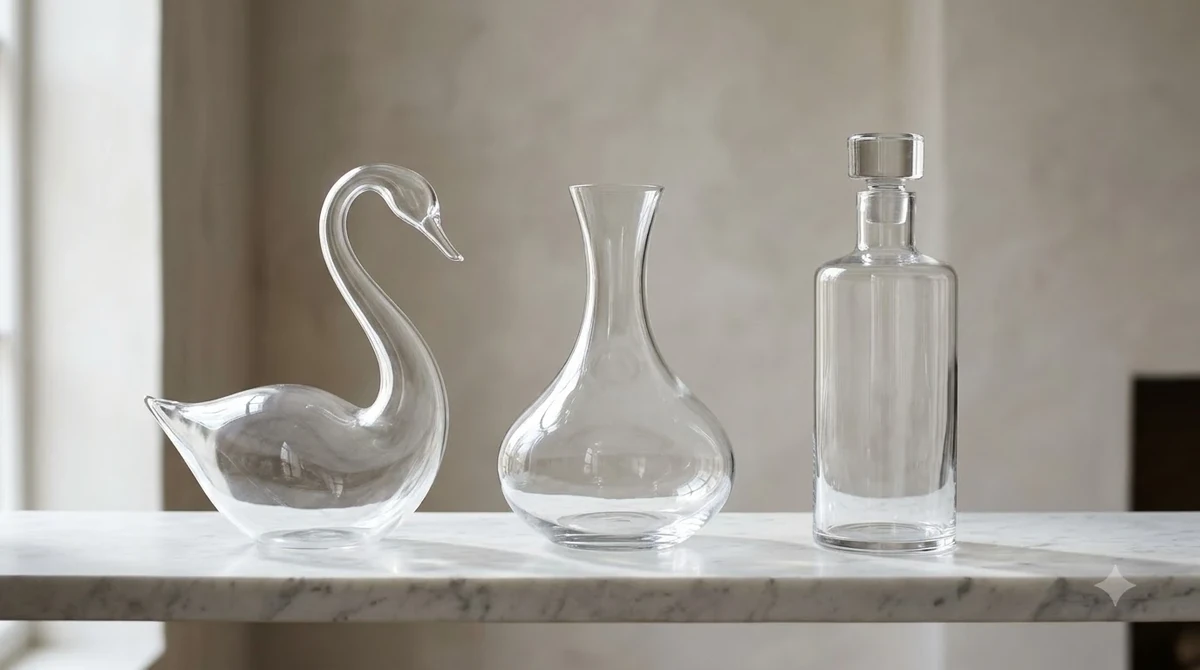
There are three useful comparison categories: small decorative bottles, conventional wine decanters, and purpose-built glassware for serving particular wine styles. Each has a different role in a home bar.
Decorative bottles versus full-size wine decanters
A small decorative bottle is easier to place on a crowded shelf and can be an attractive centerpiece. Its smaller body, however, limits its ability to hold an entire wine bottle. A conventional decanter has a larger body designed to accommodate more liquid and provide room for wine to spread out.
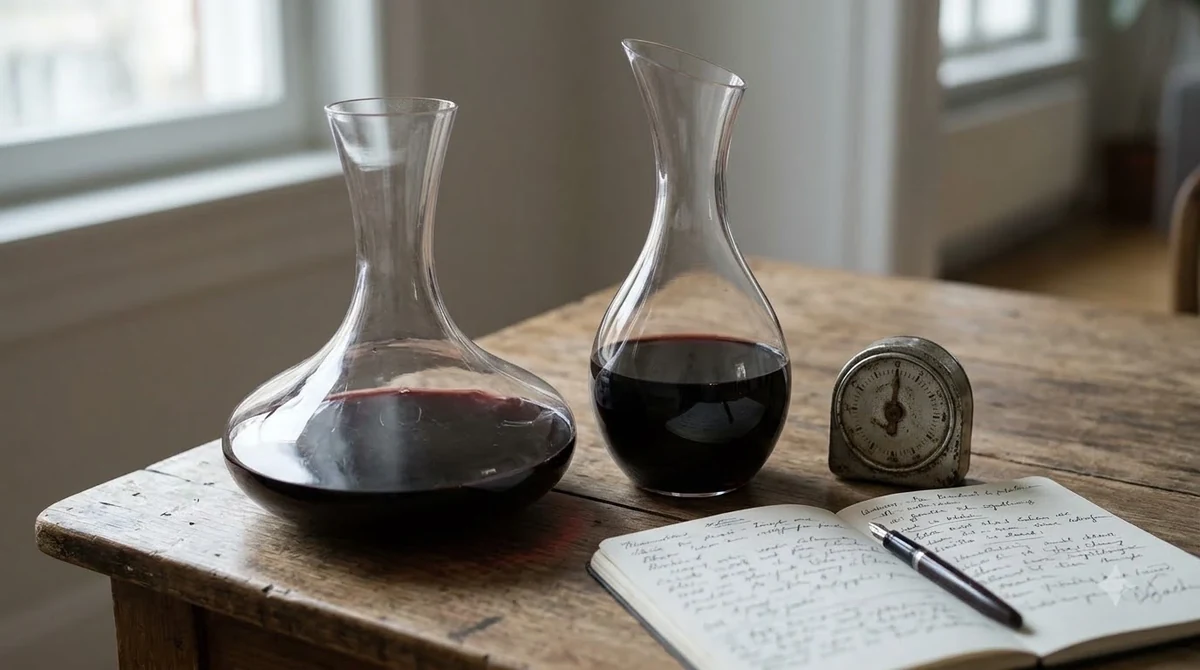
For young, full-bodied reds, a larger decanter can be especially useful. Cabernet Sauvignon and many Syrah wines have relatively high tannin levels, and aeration can help make their aromas more expressive. A small decorative bottle is not necessarily designed to provide the same surface area or capacity.
Older wines present another consideration. Sediment can accumulate in certain mature red wines, so careful transfer into a suitable decanter may improve serving presentation. The vessel should allow controlled pouring without forcing the drinker to tip it excessively.
Decorative bottles versus serving carafes
A serving carafe is another alternative for people who primarily want to present beverages at the table. Many carafes have a broad opening and straightforward body shape, making them convenient for pouring water, juice, or other suitable beverages.
A traditional decanter often has a more distinctive silhouette, sometimes with a stopper and a broad lower body. A carafe generally places greater emphasis on practical pouring. Neither category automatically guarantees suitability for every beverage; the intended use and manufacturer information remain important.
Matching the right glassware
A decanter should also work with the glasses used at the table. Red wines often benefit from larger bowls, while white wines are commonly served in somewhat smaller bowls to help maintain their cooler temperature. Sparkling wine is traditionally served in appropriately designed sparkling glasses.
For celebratory service, champagne flutes can provide a more coordinated presentation than ordinary tumblers. A decorative bottle can be part of the table arrangement, but it should not be expected to replace the specific glassware used for the wine.
RetailShout’s roundup of Dollar Tree wine glasses and tumblers also identifies several different styles, including 14-ounce long-stem white wine glasses and 6.25-ounce champagne flutes. These examples illustrate the variety of the retailer’s glassware assortment, although their capacities and shapes serve different purposes.
For shoppers comparing the broader selection, the Glassware Brands resource offers another starting point for thinking about construction, shape, and intended serving style. The central distinction remains simple: a decorative decanter is an accessory, while a purpose-built wine decanter is serving equipment.
Care, Storage, and Buying Considerations
Proper inspection and careful handling are important for inexpensive decorative glassware, particularly when the bottle has a stopper, textured exterior, or narrow neck. Before using any piece for a beverage, establish that it is intended for that purpose and inspect the complete vessel.
Begin with the rim and stopper. The opening should be smooth, without chips or cracks, and the stopper should sit securely without requiring excessive force. Examine the base for uneven edges and visible damage. A bottle that rocks on a flat surface is less convenient for serving and more likely to be knocked over.
Cleaning before first use
If the manufacturer identifies the item as suitable for beverage use, wash it before its first use. Warm water and a mild dishwashing detergent are appropriate starting points for ordinary glassware, provided the product instructions permit them.
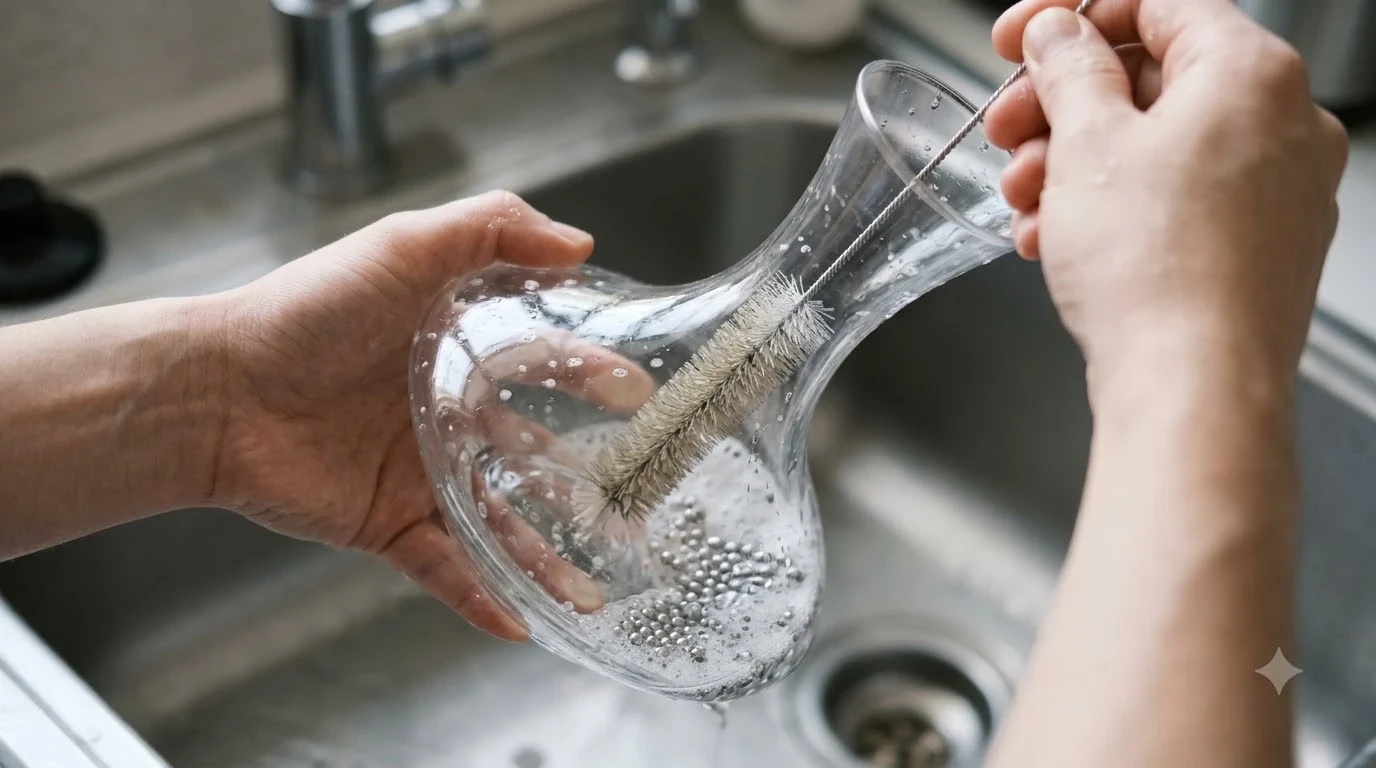
Use a soft bottle brush if the interior is difficult to reach. Avoid abrasive pads that can scratch decorative surfaces, and do not force a cleaning tool through a narrow opening. Rinse thoroughly so that detergent residue does not remain inside the bottle.
Allow the vessel to drain and dry completely. Turning a narrow-necked bottle upside down without adequate airflow can leave trapped moisture inside. A clean drying rack or a suitable bottle-drying stand can make the process easier.
Storing a decorative glass bottle
Choose a stable shelf away from the edge of the countertop. Keep the stopper and bottle together, and avoid placing heavy objects directly beside delicate glassware. If the bottle has a distinctive textured surface, leaving enough room around it can reduce accidental contact during everyday use.
Do not assume that a decorative stopper makes a suitable long-term wine-storage closure. Opened still wines generally keep for approximately three to five days in the refrigerator when properly resealed, although freshness varies by wine and storage conditions. A small decorative bottle with an imperfect stopper is not a substitute for an appropriate wine-preservation closure.
Wine itself should generally be stored in a cool, dark environment. Standard bottles intended for longer storage are commonly kept on their sides near 55 degrees Fahrenheit when they have natural cork closures. A decorative countertop bottle is better considered a short-term serving accessory than a dedicated wine-storage solution.
What to check in the store
Retail availability can differ considerably between Dollar Tree locations. Decorative products may appear in seasonal or changing assortments, and a design featured in a shopping article may not be available at every store. Online catalog listings and third-party inventory trackers can also describe products that are no longer readily available.
For example, Penny Tree identifies a half-liter decanter vase with an 8-inch height, but its catalog notes that clearance and discontinued-item status does not guarantee a particular in-store price. That is an important distinction when using third-party inventory information to plan a shopping trip.
Look for the following details before making a decision:
- Intended use: Establish whether the product is a beverage-serving vessel or a decorative vase.
- Capacity: Determine whether it holds the amount you actually intend to serve.
- Opening: Check that filling, pouring, and cleaning will be manageable.
- Stopper: Examine its fit and condition without assuming it is airtight.
- Glass condition: Inspect the rim, base, body, and any decorative details.
- Stability: Place the bottle on a flat surface and make sure it stands securely.
- Care instructions: Confirm whether handwashing or other special care is required.
These checks are more useful than choosing a bottle based entirely on its resemblance to an expensive crystal decanter. A good purchase is one that performs its intended function without creating unnecessary cleaning, storage, or serving problems.
Frequently Asked Questions
Does Dollar Tree sell actual crystal decanters?
The reported decorative bottles use glass with cut or hammered appearances that can resemble crystal. That appearance does not establish that they are made from crystal. Shoppers interested in genuine crystal should look for explicit material information from the manufacturer rather than relying on the pattern or weight of the bottle.
Can a Dollar Tree decanter be used to serve homemade sangria?
Only use a particular bottle for sangria if its manufacturer identifies it as suitable for food and beverage contact. Sangria often contains fruit pieces, so a narrow neck may also make filling, pouring, and cleaning inconvenient. A wide-mouth serving pitcher is generally a more practical choice for fruit-filled drinks.
Does a glass decanter need to be completely dry before storing it?
Yes, complete drying is preferable before putting a glass bottle away for an extended period. Residual moisture can leave water marks and create an unpleasant storage environment. Pay particular attention to the neck, shoulders, and stopper area, where water can remain trapped.
Can a decanter change the flavor of wine?
Glass itself is generally neutral when it is manufactured for beverage use, but the main effect of decanting comes from the wine’s exposure to oxygen. The shape of the vessel influences the exposed surface area and how easily the wine can be poured. A decorative bottle is not automatically designed to provide controlled aeration.
Is a half-liter decanter large enough for two wine drinkers?
A half-liter holds approximately 16.9 fluid ounces, which is less than a standard 750 ml wine bottle. It can accommodate two modest servings of wine, but it cannot hold the complete contents of a standard bottle. Its suitability also depends on whether the particular item is approved for beverage service rather than decorative use.
The Dollar Tree decanter is most appealing as a decorative glass accessory or a small occasional serving piece, particularly if you like hammered textures and traditional cut-glass designs. Its limited capacity and uncertain suitability across different decorative products mean that shoppers seeking serious wine-serving functionality should compare it with a purpose-built full-size decanter. Choose according to the intended use, inspect the glass carefully, and prioritize capacity and safe beverage use over appearance alone.
More in Wine Glasses
 Zwiesel Glas Champagne Flutes for Durable Everyday Sparkling WineUpdated Nov 20, 2026
 Vera Wang Crystal Wine Glasses: Design, Quality and Buying AdviceUpdated Nov 20, 2026
 West Elm White Wine Glasses: Compare Designs for Better Everyday Wine ServiceUpdated Nov 20, 2026
 Zalto Stemless Wine Glasses: Discover Their Distinctive DesignsUpdated Nov 20, 2026
 Viski Champagne Glasses That Match Your Style and Sparkling WineUpdated Nov 20, 2026
 Vista Alegre Decanter Review: Crystal Style and Wine ServiceUpdated Nov 20, 2026