

We may earn a commission when you buy through links on this page, at no extra cost to you. Learn more.
Iittala wine glasses offer clean Nordic aesthetics, well-balanced stems, and reliable everyday durability, though their smaller bowl capacities favor crisp whites, sparkling wines, and casual pours over bold, aromatic reds. The flagship Essence collection stands out for its uniform 9-inch height and flat-bottomed bowls that resist tipping on crowded dinner tables. Buyers seeking oversized tasting bowls for high-tannin Cabernet Sauvignon or aged Pinot Noir will find dedicated crystal stemware from Austrian and German makers more expressive.
Founded in 1881 in a southern Finnish village, Iittala built its reputation on functional Scandinavian tableware rather than sommelier-driven tasting tools. Today, the brand’s stemware spans three distinct collections—Essence, Raami, and Ultima Thule—each shaped by a renowned industrial designer with a different dining philosophy. Evaluating how these glasses handle a standard 5-ounce pour, hold up in a home dishwasher, and compare against mainstream crystal wine glasses helps clarify where Iittala excels and where its proportions fall short.
Specs and Key Features Across Iittala Collections
Iittala divides its stemmed glassware into three main lines—Essence, Raami, and Ultima Thule—each built with distinct bowl capacities, heights, and glassmaking methods. Understanding these physical measurements is essential before buying, because Iittala bowls hold noticeably less volume than traditional Bordeaux or Burgundy stems.
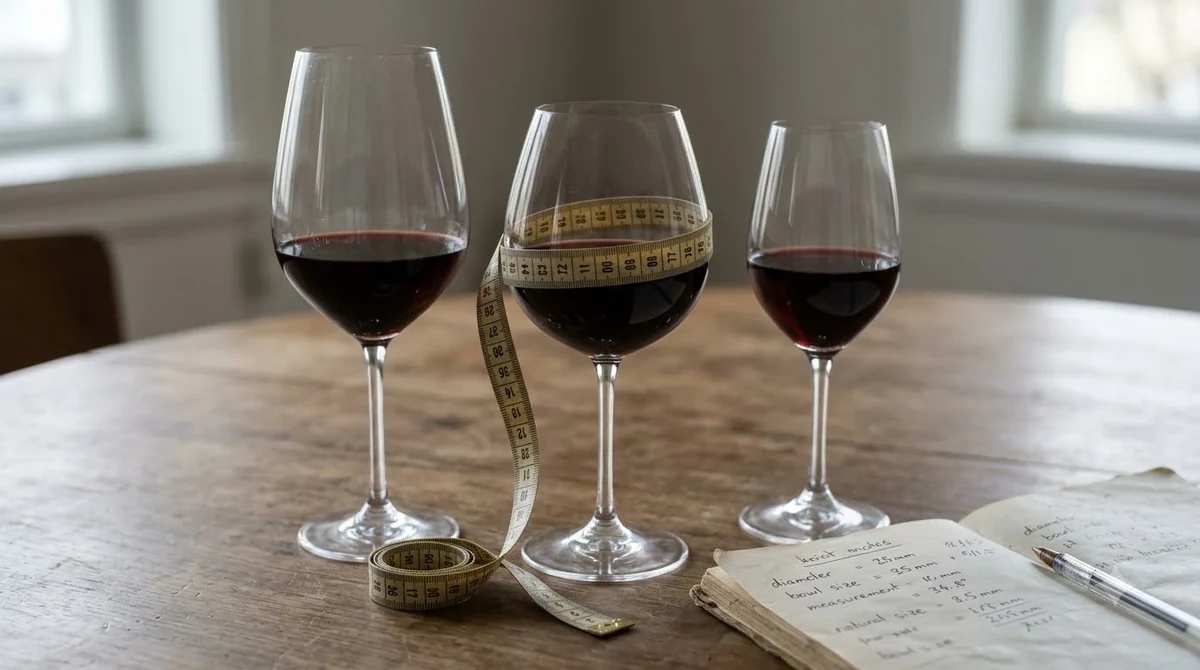
Designed by Swiss-Argentine industrial designer Alfredo Häberli, the Essence series is Iittala’s most recognizable modern stemware line. Häberli engineered every glass in the Essence family with the exact same foot diameter and stem length, allowing red, white, and sparkling glasses to sit at an identical 23-centimeter (9-inch) height on the table. According to product specifications from retailers such as Touch of Finland, the Essence Red Wine glass holds 45 centiliters (about 15 to 15.5 ounces), while the Essence White Wine glass holds 33 centiliters (about 11 ounces). Both models are machine-made in Germany from lead-free glass and feature a subtle angular crease near the base of the bowl that encourages swirling without requiring a wide, bulbous profile.
The Raami collection, created by British designer Jasper Morrison, takes its name from the Finnish word for “frame.” Morrison designed Raami to feel familiar and understated, pairing compact 18- to 18.5-centimeter (7.1- to 7.25-inch) heights with 28-centiliter (9.5-ounce) bowls for both the red and white wine models. Made from machine-blown lead-free glass in Germany, Raami stemware sits much lower to the table than Essence, reducing the risk of accidental knocks during casual family meals. The collection also includes a 24-centiliter (8.1-ounce) sparkling wine glass that trades the narrow flute silhouette for a gently curved tulip shape.
Ultima Thule represents Iittala’s heritage craft tradition, originally designed by Tapio Wirkkala in 1968 after thousands of hours spent perfecting a carved graphic mold that mimics melting Lapland ice. Unlike the smooth, minimalist walls of Essence and Raami, Ultima Thule stemware features a heavy, textured exterior and three tiny ice-like feet supporting the base. Its capacities reflect mid-century European dining norms rather than modern oversized pours: the stemmed red wine glass holds 23 centiliters (7.8 ounces), the sparkling wine glass holds 18 centiliters (6 ounces), and the white wine glass holds 16 centiliters (5.4 ounces).
| Collection and Model | Designer | Capacity | Height | Bowl / Rim Width | Material and Origin |
|---|---|---|---|---|---|
| Essence Red Wine | Alfredo Häberli | 45 cl (15.2 oz) | 23.0 cm (9.1 in) | 6.9 cm (2.7 in) | Lead-free glass, Germany |
| Essence White Wine | Alfredo Häberli | 33 cl (11.2 oz) | 23.0 cm (9.0 in) | 5.5 cm (2.2 in) | Lead-free glass, Germany |
| Essence Sweet Wine | Alfredo Häberli | 15 cl (5.1 oz) | 19.0 cm (7.5 in) | 5.2 cm (2.0 in) | Lead-free glass, Germany |
| Raami Red / White Wine | Jasper Morrison | 28 cl (9.5 oz) | 18.0–18.5 cm (7.1–7.3 in) | 6.0 cm (2.4 in) | Machine-blown glass, Germany |
| Raami Sparkling Wine | Jasper Morrison | 24 cl (8.1 oz) | 17.5 cm (6.9 in) | 5.5 cm (2.2 in) | Machine-blown glass, Germany |
| Ultima Thule Red Wine | Tapio Wirkkala | 23 cl (7.8 oz) | 16.0 cm (6.3 in) | 7.0 cm (2.8 in) | Mold-blown glass, Finland |
| Ultima Thule White Wine | Tapio Wirkkala | 16 cl (5.4 oz) | 14.5 cm (5.7 in) | 6.2 cm (2.4 in) | Mold-blown glass, Finland |
What Owners Like About Iittala Wine Glasses
Long-term owners consistently praise Iittala stemware for its visual harmony on the dining table, stable center of gravity, and versatility across non-wine beverages. Rather than treating wine glasses as fragile single-purpose instruments, buyers appreciate how naturally these pieces integrate into daily routines.
The most frequently cited advantage of the Essence line is its uniform silhouette. Because every glass shares an identical base width and stem height, setting a table for four courses with water, sparkling, white, and red glasses produces a clean horizontal roofline without the jagged stair-step look of traditional stemware sets. Owners also note that the flat-bottomed, slightly angular bowl of the Essence series feels unusually secure when gripped by the stem, making swirling straightforward even for guests who rarely handle fine stemware.
Stability and compact storage are major selling points for the Raami and Ultima Thule collections. At just over 7 inches tall, Raami wine glasses fit easily onto standard upper kitchen shelves and slide into compact dishwashers where 9.5-inch stems often collide with top spray arms. Meanwhile, Ultima Thule enthusiasts value the tactile grip of the frosted, organic glass surface, which hides fingerprints and condensation far better than smooth crystal when serving chilled Sauvignon Blanc at 45°F to 50°F or sparkling Brut at 40°F to 50°F.
Tip: Because Iittala bowls are more compact than oversized tasting stems, keep pours to 4 or 5 ounces—roughly one-third of the Essence Red bowl or half of the Raami bowl—so enough headspace remains to swirl and trap aromas.
Common Complaints and Limitations
Despite strong design credentials, Iittala wine glasses draw recurring criticism regarding modest bowl volumes, thicker rims compared to hand-blown crystal, and perceived weight changes in recent production batches. Buyers expecting sommelier-grade aromatic amplification often find the proportions restrictive.
The primary functional limitation is bowl capacity. A standard 5-ounce pour leaves generous breathing room inside an 18- to 24-ounce tasting glass, whereas the same pour fills an Ultima Thule 23-centiliter red glass nearly two-thirds full and leaves minimal headspace in the 28-centiliter Raami glass. For young, high-tannin Cabernet Sauvignon or Syrah served at 60°F to 65°F, a narrow 6- to 6.9-centimeter bowl restricts oxygen exposure and prevents complex dark-fruit and spice notes from fully opening up without prior decanting for 30 to 60 minutes.
A second point of friction involves glass thickness and production shifts. While Essence and Raami feature clean, smooth rims, they are machine-manufactured from standard lead-free glass rather than ultra-thin barium or titanium crystal, giving the lip a slightly more noticeable presence on the palate than sub-millimeter hand-blown stems. Additionally, collectors and longtime Finnish owners on community forums have observed that newer production runs of Essence and Ultima Thule feel noticeably lighter and thinner in the glass wall than vintage Finnish-made editions from earlier decades, raising concerns among repeat buyers trying to match older sets.
Care instructions also require attention despite dishwasher-safe labeling on retail boxes. According to Iittala product care guidelines, delicate stemware and objects with varying glass thickness are best washed by hand with regular detergent and a soft brush, while dishwasher cycles for Raami and Ultima Thule should stay at or below 50°C (122°F) with glasses spaced apart on the top rack to prevent thermal expansion breakage.
Who Should Buy and Who Should Skip Iittala Stemware
Iittala wine glasses suit design-focused hosts, apartment dwellers with limited cabinet height, and everyday drinkers who prioritize table aesthetics and sturdiness over extreme aromatic precision. Conversely, serious red wine collectors and drinkers who prefer featherweight crystal will be better served elsewhere.
Who Should Buy
- Scandinavian design enthusiasts: Buyers who already own Teema plates, Kartio tumblers, or Alvar Aalto vases gain a cohesive, architecturally balanced table setting with Essence or Raami stemware.
How Iittala Compares to Dedicated Crystal Alternatives
Comparing Iittala against European crystal specialists highlights the trade-off between architectural table design and sommelier-tuned bowl geometry. While Iittala builds sturdy lead-free glass stems around 9.5 to 15.2 ounces, dedicated tasting brands shape wider 16- to 19-ounce bowls with laser-cut rims to maximize aromatic release.
In culinary testing by Food & Wine, top universal crystal glasses such as the Zalto Denk’Art Universal (18 ounces), Gabriel-Glas StandArt (16 ounces), and Spiegelau Definition Universal (19 ounces) stand out for wide tapered bowls and beadless or laser-cut rims that deliver wine cleanly to the palate. Those wider bowls offer substantially greater surface area than an Iittala Raami (9.5 ounces) or Essence White (11.2 ounces) glass, making subtle floral, mineral, and oak aromas easier to detect in Pinot Noir, Chardonnay, and aged Rioja. However, featherweight hand-blown stems like Zalto demand careful handwashing and gentle handling, whereas Iittala’s thicker stems and flat-bottomed Essence bowls withstand everyday dinner parties with far less breakage anxiety.
Machine-made crystal alternatives bridge the gap between durability and tasting performance. Kitchen gear editors at Serious Eats highlight the Riedel VINUM (14 ounces, 8.25 inches tall) and Glasvin Universal (16.9 ounces, 9.25 inches tall) for concentrating aromas while surviving regular dishwasher cycles. Against Riedel VINUM, the Iittala Essence Red (15.2 ounces, 9.1 inches tall) offers comparable capacity and height, though Essence uses a straighter, angular bowl wall rather than Riedel’s curved tulip taper. Shoppers exploring broader Glassware Brands will find that Riedel and Spiegelau prioritize varietal-specific aroma channeling, whereas Iittala prioritizes visual uniformity across water, beer, and wine vessels on the same table.
How to Choose the Right Iittala Line and Care for It
Selecting the best Iittala wine glass comes down to matching bowl volume to the wines poured most often and following temperature-controlled washing habits. Even though retail packaging lists dishwasher compatibility, thermal shock and hard-water etching remain the main threats to lead-free glass longevity.
For a single versatile set that handles both dinner parties and weeknight pours, the Essence Red Wine glass (45 centiliters / 15.2 ounces) is the strongest all-around performer in the Iittala catalog. Its 15.2-ounce capacity comfortably accommodates medium-bodied reds like Merlot or Pinot Noir served at 55°F to 60°F as well as full-bodied oaked Chardonnay served at 50°F to 55°F, leaving enough headspace for gentle swirling. Drinkers who focus almost exclusively on crisp Sauvignon Blanc, Pinot Grigio, or rosé served at 45°F to 50°F can pair the Essence White Wine glass (33 centiliters / 11.2 ounces) alongside the Red model without disrupting table symmetry, since both stand exactly 23 centimeters (9 inches) tall. Those who prefer compact, casual stemware or entertain outdoors may also consider stemless wine glasses or Iittala’s Kartio tumblers alongside the lower-profile 18-centimeter Raami stems.
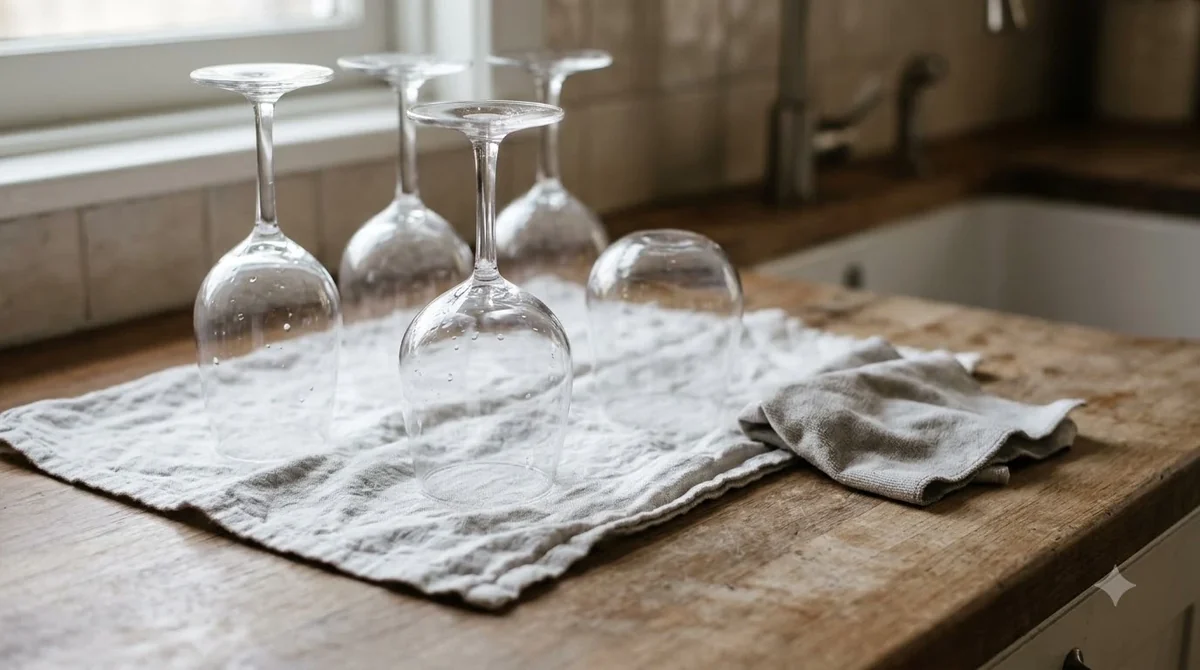
Proper care preserves rim clarity and prevents stress cracks where the stem meets the bowl. According to Iittala’s official care guidelines, pressed glass items like Raami and mold-blown pieces like Ultima Thule are dishwasher safe when wash cycles stay at or below 50°C (122°F) and glasses are spaced apart on the top rack so rims cannot rattle against neighboring dishes. Delicate stemware with thin transitions—especially Essence—lasts longest when washed by hand in warm water with mild liquid detergent and a soft sponge, then dried immediately with a lint-free microfiber cloth while holding the bowl rather than twisting the foot against the stem.
Frequently Asked Questions
Are Iittala wine glasses made of lead crystal?
No, modern Iittala wine glasses are made from lead-free glass rather than traditional lead crystal. While historic European crystal relied on lead oxide for extra brilliance and weight, Iittala uses lead-free glass formulations across its German-made Essence and Raami lines as well as its Finnish-made Ultima Thule collection.
Why do all Iittala Essence glasses have the exact same stem and base?
Designer Alfredo Häberli engineered the Essence collection around a shared base diameter and stem length so every stemmed glass creates an identical horizontal line across the table. This modular approach lets hosts mix red wine, white wine, sparkling wine, and cocktail glasses in a single setting without visual clutter.
Can Iittala Ultima Thule wine glasses go in the dishwasher?
Iittala states that mold-blown Ultima Thule glassware can be cleaned in a dishwasher if the wash cycle stays at or below 50°C (122°F) and pieces do not touch each other. Iittala advises against stacking glasses while they are still warm from the dishwasher, as cooling contraction can cause locked rims to crack.
Where are Iittala wine glasses manufactured?
Production location varies by collection within parent company Fiskars Group. While heritage textured pieces like Ultima Thule continue to be produced at the historic glassworks in Finland, the machine-made Essence and Raami stemware lines are manufactured in Germany to Iittala’s Finnish design specifications.
Which Iittala wine glass works best for sparkling wine and Champagne?
The Raami Sparkling Wine glass (24 centiliters / 8.1 ounces) and the Essence Champagne glass (21 centiliters / 7.1 ounces) both feature slender, elongated bowls that preserve carbonation when serving Champagne, Cava, or Prosecco at 40°F to 50°F. Raami offers a slightly wider tulip curve that lets complex vintage Champagne aromas open up more easily than a narrow straight flute.
Iittala wine glasses reward buyers who value cohesive Nordic table design, compact proportions, and dependable daily durability over oversized tasting bowls. Choosing the 45-centiliter Essence Red model provides the most versatile capacity for everyday whites and medium-bodied reds, while Raami and Ultima Thule bring unmistakable Scandinavian character to casual gatherings.
More in Wine Glasses
 Zwiesel Glas Champagne Flutes for Durable Everyday Sparkling WineUpdated Nov 20, 2026
 Vera Wang Crystal Wine Glasses: Design, Quality and Buying AdviceUpdated Nov 20, 2026
 West Elm White Wine Glasses: Compare Designs for Better Everyday Wine ServiceUpdated Nov 20, 2026
 Zalto Stemless Wine Glasses: Discover Their Distinctive DesignsUpdated Nov 20, 2026
 Viski Champagne Glasses That Match Your Style and Sparkling WineUpdated Nov 20, 2026
 Vista Alegre Decanter Review: Crystal Style and Wine ServiceUpdated Nov 20, 2026