

We may earn a commission when you buy through links on this page, at no extra cost to you. Learn more.
The viski decanter worth considering for an elegant home bar is the Prism Crystal Whiskey Decanter, a lead-free crystal design with a 28.75-ounce capacity and a distinctive faceted appearance. Its capacity is sufficient for a standard 750 ml wine bottle, while its 11-inch height and whiskey-focused styling make it particularly attractive for serving Scotch and other spirits. The main trade-off is that its decorative design and recommended hand washing require more attention than a simple everyday wine carafe.
Viski makes glassware and bar accessories with an emphasis on distinctive shapes, attractive finishes, and practical serving features. Its decanter selection includes several different approaches, from the angular Prism crystal design to the decorative Globe model and the wine-oriented Raye collection. Understanding those differences matters because a whiskey decanter and a wine decanter do not necessarily serve the same purpose. This review examines the Prism as the primary product, considers its strengths and limitations, and explains which alternatives deserve attention depending on how you plan to serve wine.
Specs and Key Features of the Viski Prism Decanter
The Viski Prism Crystal Whiskey Decanter combines lead-free crystal construction with an angular silhouette and a capacity suitable for a standard wine bottle. Its strongest selling points are its visual presentation, useful volume, and ability to serve as a permanent display piece on a home bar.
The Prism uses faceted geometric surfaces rather than a traditional rounded decanter shape. These angled sections catch and reflect light, creating visual interest when the vessel contains amber whiskey, golden spirits, or red wine. The overall design is more contemporary than a conventional cut-crystal decanter, making it appropriate for modern dining rooms, home bars, and glassware collections.
According to Viski’s published specifications, the vessel is made from lead-free crystal, holds 28.75 fluid ounces, and measures 4.33 inches wide by 11 inches high. Those measurements make it a relatively tall serving piece rather than a compact countertop bottle. The manufacturer also lists dishwasher compatibility while recommending hand washing for better care.
| Specification | Viski Prism Decanter |
|---|---|
| Product name | Prism Crystal Whiskey Decanter |
| Manufacturer | Viski |
| Material | Lead-free crystal |
| Capacity | 28.75 fl oz |
| Width | 4.33 inches |
| Height | 11 inches |
| Shape | Angular, faceted silhouette |
| Primary intended use | Whiskey and Scotch serving |
| Dishwasher compatibility | Listed as dishwasher safe |
| Manufacturer care recommendation | Hand washing recommended |
Capacity is particularly important for wine drinkers. A standard 750 ml bottle contains approximately 25.4 fluid ounces, meaning the Prism offers roughly 3.35 ounces of additional space. That is enough to transfer a standard bottle without filling the vessel completely to its rim. However, it is not designed to accommodate multiple bottles or large quantities for a dinner party.
The distinction between advertised capacity and comfortable serving capacity also deserves attention. A decanter should have enough room for pouring without spilling, and the shape of its neck affects how easily wine can enter and leave the vessel. The Prism’s published capacity provides a useful starting point, but shoppers should consider the practical opening and pouring experience alongside the numerical specification.
Another consideration is the crystal construction. Lead-free crystal provides the clarity and visual presentation associated with decorative glassware without intentionally using lead in the crystal formulation. This makes the material appealing to people who want a refined display vessel while prioritizing lead-free construction.
Viski also describes its broader glassware collection as combining attractive design with input from professional bartenders. That approach is relevant to the Prism because a decanter should be more than an ornament: it needs to hold liquid securely and make serving reasonably convenient. The manufacturer’s description, however, should not be confused with independent performance testing.
For additional information about the construction and published dimensions, consult the official Viski Prism Crystal Whiskey Decanter specifications.
What Owners Like About the Viski Decanter
The strongest appeal of the Viski Prism is its combination of decorative crystal and useful serving capacity. Its geometric design, clear material, and ability to accommodate a standard wine bottle make it attractive to shoppers who want glassware that looks appropriate on a dining table as well as a home bar.
Appearance is an important part of the buying decision. Traditional decanters often feature rounded bodies, narrow necks, and elaborate cut-glass patterns. The Prism takes a different direction with its sharply defined angles and contemporary proportions. This makes it easier to coordinate with modern glassware, minimalist table settings, and other geometric bar accessories.
The faceted surfaces also create visual interest without requiring colored glass or decorative metal fittings. A clear vessel lets the color of the drink remain visible, which is particularly appealing when serving mature Scotch, bourbon, or a deep-colored red wine. For a host who regularly serves guests, the decanter can function as both a practical container and a centerpiece.
Published customer feedback for other Viski decanter designs provides some additional insight into the brand’s presentation. Wayfair’s customer-review summary for the Raye Angled Crystal Wine Decanter highlights its attractive angled shape, elegant appearance, and lead-free crystal construction. These comments concern the Raye rather than the Prism, so they should not be treated as direct owner feedback about the Prism itself.
Capacity is another meaningful advantage. At 28.75 ounces, the Prism is larger than the approximate 25.4-ounce volume of a standard 750 ml wine bottle. That makes it more versatile for someone who wants a single decanter for occasional wine service and whiskey presentation rather than purchasing separate vessels immediately.
The dimensions also contribute to its display appeal. At 11 inches tall and 4.33 inches wide, the Prism has a noticeable vertical profile without requiring an unusually large section of countertop. It can fit into many home-bar arrangements, although buyers should measure the available cabinet clearance before purchasing.
There is also value in the straightforward material specification. The manufacturer explicitly identifies the construction as lead-free crystal, rather than leaving shoppers to guess whether the decorative glass contains lead. This is useful information for anyone comparing decorative crystal vessels.
For wine enthusiasts building a coordinated serving collection, the Prism can sit alongside traditional stemware. A useful starting point is a set of appropriately shaped wine glasses that complements the decanter without competing with its angular design.
Overall, the available product information supports the Prism as a visually distinctive serving vessel with a useful one-bottle capacity. The main caution is that published product specifications provide more reliable information about its construction and dimensions than they do about long-term durability or everyday pouring comfort.
Common Complaints and Practical Limitations
The main drawbacks to consider are the Prism’s whiskey-oriented design, its cleaning requirements, and the limited amount of independent owner feedback available for this particular model. These issues do not automatically make it a poor purchase, but they matter for shoppers who want a dedicated wine decanter for frequent use.
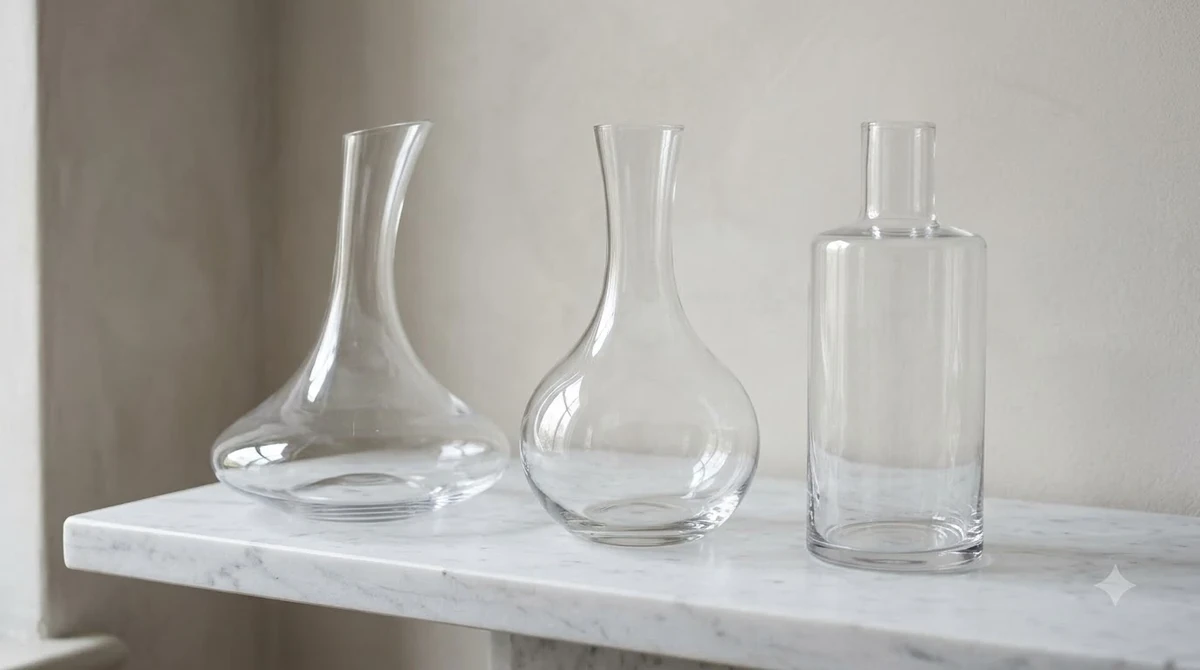
The first limitation is its intended purpose. Viski presents the Prism primarily as a whiskey decanter, particularly for Scotch. Although its 28.75-ounce capacity can accommodate a standard wine bottle, the product is not specifically designed around the aeration needs of red wine. Its visual appeal should therefore not be mistaken for specialized wine-decanting performance.
Wine decanters often have wide, shallow bodies that expose a larger surface area of wine to air. This is useful for young, structured red wines that may benefit from controlled exposure to oxygen before serving. The Prism’s tall, angular profile is visually different from that traditional shape. It can still serve wine, but shoppers who regularly decant Cabernet Sauvignon, Syrah, or young Bordeaux-style blends may prefer a purpose-built wine vessel.
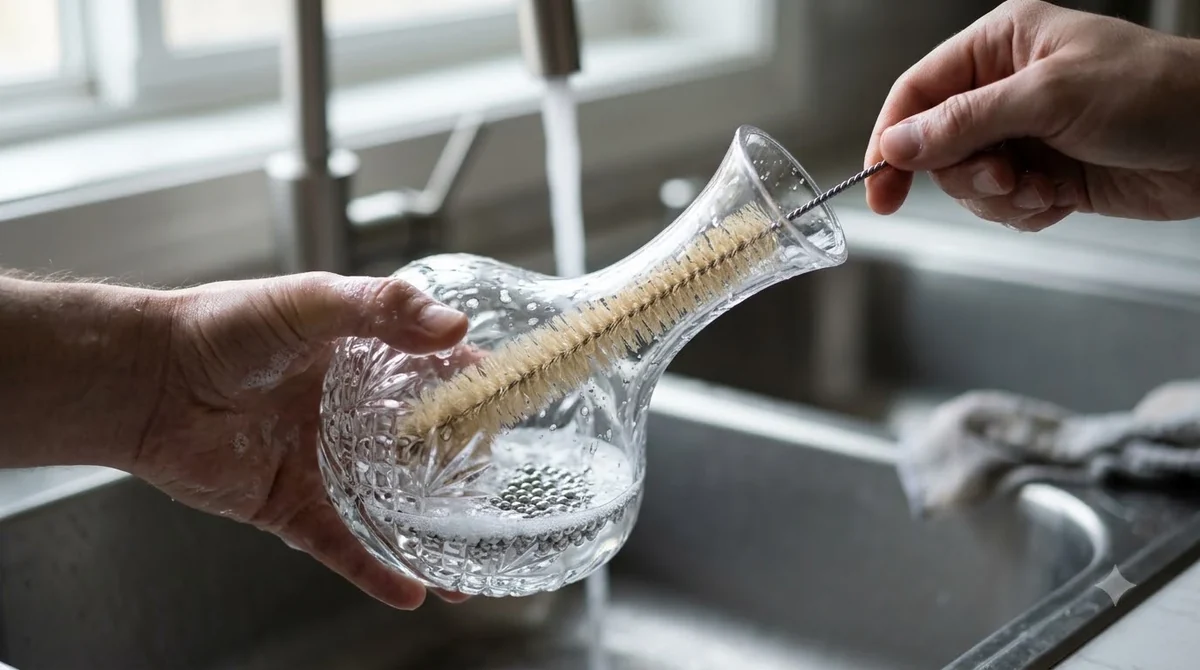
Cleaning is another consideration. Viski lists the Prism as dishwasher safe but recommends hand washing. That recommendation is understandable for decorative crystal because the faceted surfaces can collect water marks and the vessel’s interior may be awkward to reach with a standard cleaning brush.
A narrow opening can also make drying more difficult than cleaning an ordinary drinking glass. Water droplets may remain inside after rinsing, particularly around the bottom and shoulder of a tall decanter. A suitable decanter brush and careful air drying can help, but these steps add maintenance time.
Storage deserves attention as well. An 11-inch vessel may not fit comfortably beneath every kitchen cabinet or inside a shallow glassware shelf. Its height should be measured against the available space, including any additional clearance needed to lift the decanter out without hitting the shelf above it.
Another potential concern is handling. Crystal is attractive because of its clarity and finish, but a decorative vessel still requires careful placement and cleaning. The angular exterior can make the decanter feel different from a simple cylindrical bottle, especially when it is full. Buyers who prefer lightweight, uncomplicated glassware may find a conventional carafe easier to handle.
It is also important not to assume that every Viski decanter includes identical accessories. The Prism’s published specifications focus on material, capacity, dimensions, and care. Shoppers should verify the exact package contents before purchasing rather than automatically assuming that every model includes a matching stopper or serving accessories.
Finally, published specifications do not establish how the Prism performs after years of regular use. There is insufficient model-specific independent evidence here to make strong claims about resistance to chips, scratches, or accidental impacts. Anyone purchasing decorative crystal should treat it as breakable glassware, regardless of the manufacturer’s durability language.
These limitations matter most for people who want a decanter that can be placed in the dishwasher after every gathering, stored in a compact cabinet, and used for intensive daily wine service. For those needs, a simpler wine carafe may offer a more convenient ownership experience.
Who Should Buy the Viski Prism and Who Should Skip It
The Viski Prism makes the most sense for buyers who value presentation, want lead-free crystal, and need enough capacity for a standard wine bottle or a serving quantity of whiskey. It is less suitable for people who prioritize specialized wine aeration, minimal maintenance, or a compact storage footprint.
Who should consider buying it?
Home-bar owners who serve whiskey and wine: The Prism offers a versatile capacity of 28.75 ounces. That is enough for a standard 750 ml bottle, making it a reasonable choice for someone who occasionally transfers wine from its original bottle but also wants a dedicated-looking vessel for whiskey service.
Buyers who appreciate modern crystal design: The faceted silhouette is the central attraction. People who prefer geometric shapes, contemporary furniture, and clear decorative glassware may find the Prism more appealing than traditional rounded decanters.
Gift shoppers: A decorative decanter can make a suitable housewarming, anniversary, or holiday gift for someone who enjoys hosting. The Prism’s clear crystal construction and recognizable angular profile make it a visually appealing serving accessory. Pairing it with complementary whiskey glasses or wine stemware can create a more complete gift.
Collectors of coordinated barware: Viski’s wider range includes whiskey glasses, cocktail glassware, and other serving accessories. Someone building a coordinated collection may appreciate the Prism’s modern styling and the opportunity to match it with similarly styled pieces.
Who should skip it?
Dedicated red-wine enthusiasts: If the main purpose is aerating young red wines, a wide-based wine decanter is generally a more appropriate choice. The Prism can hold wine, but its primary design emphasis is whiskey service rather than maximum wine exposure to air.
People who want a low-maintenance vessel: Although the manufacturer lists dishwasher compatibility, hand washing is recommended. Buyers who dislike cleaning decorative crystal may prefer a straightforward glass carafe with fewer angles and a wider opening.
Small-kitchen owners: Its 11-inch height may create storage difficulties in shallow cabinets. Measuring the available shelf space before buying is especially important when storage is already limited.
People who need multiple-bottle capacity: The Prism holds 28.75 ounces, so it is best treated as a one-bottle vessel rather than a large-format party decanter. Anyone regularly serving several bottles at once should consider a larger serving container.
Tip: Before buying a decanter, compare its capacity with the size of the wine bottle you normally serve. A standard 750 ml bottle contains approximately 25.4 fluid ounces, so the Prism’s 28.75-ounce capacity provides about 3.35 ounces of additional room. Also measure your cabinet clearance against its 11-inch height.
For most buyers, the deciding question is whether the decanter will be used mainly for presentation or for specialized wine service. If the former matters more, the Prism is a compelling design. If aeration is the primary goal, a dedicated wine decanter should receive priority.
How the Viski Prism Compares to Alternatives
Viski offers several decanter styles, and the right choice depends on whether capacity, wine aeration, decorative presentation, or whiskey service is the priority. The Prism is the most straightforward option among the three designs considered here for someone who wants an angular crystal vessel with enough volume for one standard wine bottle.
The Globe Liquor Decanter takes a noticeably different approach. Its etched continents and wooden stand create a decorative centerpiece, while its published capacity is 32 ounces. That gives it 3.25 ounces more capacity than the Prism. However, its construction combines wood and glass, and the manufacturer specifies hand washing.
The Globe is particularly suitable for a home bar where visual presentation is important. Its stand displays the decanter at an angle, creating a distinctive decorative feature. However, the globe design and etched surface make it more closely associated with whiskey and spirits than traditional wine service.
The Raye Angled Crystal Wine Decanter is the more directly relevant alternative for wine drinkers. Wayfair describes it as a lead-free crystal vessel with a broad base intended to support aeration. Its inward-sloping upper section forms a narrower pouring area, giving it a more recognizable wine-decanting profile.
There is an important specification issue with the Raye that shoppers should understand. Wayfair’s listing gives a 60-ounce capacity in one section but identifies 25.3 ounces under container capacity elsewhere. These figures conflict, so buyers should verify the actual usable capacity with the retailer before relying on the listing for a full-bottle purchase.
| Model | Material | Published capacity | Dimensions | Best suited to |
|---|---|---|---|---|
| Viski Prism | Lead-free crystal | 28.75 oz | 4.33″ W x 11″ H | Whiskey and versatile serving |
| Viski Globe | Wood and glass | 32 oz | Not specified in the reviewed manufacturer listing | Decorative spirits presentation |
| Viski Raye | Lead-free crystal | Conflicting listing figures: 60 oz and 25.3 oz | 11″ H x 8.25″ W x 8.25″ L | Traditional wine presentation and aeration |
For shoppers choosing between the Prism and Globe, the difference is largely visual and functional. The Prism offers faceted crystal styling and a smaller footprint, while the Globe has more capacity and a distinctive wooden display stand. Both are primarily associated with spirits service, so neither should automatically replace a purpose-built wine aerator.
The Raye is a more natural comparison for wine enthusiasts because its broad base is specifically intended to support aeration. Its dimensions also make it a more substantial tabletop piece than the Prism. However, the conflicting capacity figures are an important reason to confirm its usable volume before making a decision.
Glassware should also be considered as part of the complete serving arrangement. A decanter does not replace appropriately shaped drinking glasses. Red wine benefits from roomier bowls, while sparkling wine is commonly served in narrower glasses designed to preserve and display bubbles. Shoppers assembling a complete collection can compare red wine glasses and champagne flutes separately.
For more general brand comparisons, the Glassware Brands resource can help readers assess the broader glassware market. The important point is to select each item according to its intended use rather than assuming that a decorative crystal decanter will perform exactly like a dedicated wine-aeration vessel.
Overall, the Prism is the balanced choice for someone who wants one visually distinctive crystal decanter that can handle a standard bottle. The Globe is more decorative and offers greater stated volume, while the Raye is the more wine-oriented alternative.
Frequently Asked Questions
Does the Viski Prism decanter come with a stopper?
The product specifications reviewed for the Prism do not explicitly identify a stopper as a separately listed included component. Do not assume that a stopper is included based solely on photographs or the general appearance of the vessel. Confirm the package contents with the seller before purchasing if a fitted stopper is essential.
Can the Viski Prism decanter hold bourbon or vodka?
Yes, the Prism is presented by Viski as a whiskey-serving vessel, particularly for Scotch. Bourbon and vodka are also spirits that can be transferred into a suitable glass decanter. For any spirit, use a clean vessel with a properly fitting closure if you intend to store the contents between occasions.
Does a Viski decanter improve the flavor of wine?
A decanter does not change the wine’s fundamental composition or guarantee better flavor. Exposure to air can change how some wines express their aromas and structure, while transferring an older bottle can help separate sediment from the clear wine. The results depend on the wine’s age, style, and condition rather than the brand of decanter.
How much wine should be poured into a decanter?
A standard 750 ml wine bottle contains approximately 25.4 fluid ounces. A serving pour is commonly around 5 ounces, producing roughly five glasses per bottle. The appropriate fill level depends on the vessel’s shape, and leaving some space below the opening makes transferring and serving easier.
How long should wine remain in a decanter?
There is no single ideal duration for every wine. A young, full-bodied red may benefit from approximately 30 to 60 minutes of decanting, while delicate older wines may need much less time. Monitor the wine as it opens because prolonged exposure to air can cause some wines to lose their freshness and aromatic definition.
The Viski Prism Crystal Whiskey Decanter is a strong option for buyers who want lead-free crystal, a distinctive faceted design, and enough capacity for a standard wine bottle. Its main compromise is that it is designed primarily for spirits rather than specialized wine aeration, and its recommended hand-washing routine requires some care. Choose the Prism for versatile serving and presentation, consider the Globe for a more decorative spirits display, and favor a dedicated wine decanter if aeration is your main priority.
More in Wine Glasses
 Zwiesel Glas Champagne Flutes for Durable Everyday Sparkling WineUpdated Nov 20, 2026
 Vera Wang Crystal Wine Glasses: Design, Quality and Buying AdviceUpdated Nov 20, 2026
 West Elm White Wine Glasses: Compare Designs for Better Everyday Wine ServiceUpdated Nov 20, 2026
 Zalto Stemless Wine Glasses: Discover Their Distinctive DesignsUpdated Nov 20, 2026
 Viski Champagne Glasses That Match Your Style and Sparkling WineUpdated Nov 20, 2026
 Vista Alegre Decanter Review: Crystal Style and Wine ServiceUpdated Nov 20, 2026