

We may earn a commission when you buy through links on this page, at no extra cost to you. Learn more.
The cb2 decanter worth considering for red wine is the CB2 Muse Glass Wine Decanter, a 65-ounce handblown, lead-free crystal vessel with a wide bowl designed for aeration. Its generous capacity, tapered neck and clear crystalline construction make it a practical centerpiece for serving wine at dinner parties. However, hand-wash-only care and its relatively large footprint mean it is better suited to people who entertain regularly than those who want a compact, low-maintenance everyday carafe.
CB2 offers several decorative decanters, but not every design is intended for the same purpose. The Muse Glass Wine Decanter is the clearest choice in its collection for wine service because its wide bowl is specifically designed to expose red wine to air. This review examines its construction, capacity, everyday practicality, potential drawbacks and differences from other CB2 decanters so shoppers can decide whether its design makes sense for their glassware collection.
Specs and Key Features of the CB2 Muse Glass Wine Decanter
The CB2 Muse is a large, handblown wine decanter designed around a wide bowl and tapered neck. Its 65-ounce capacity gives it considerably more room than a standard 750 ml wine bottle, while its lead-free crystal construction provides the clarity expected from dedicated wine-serving glassware.
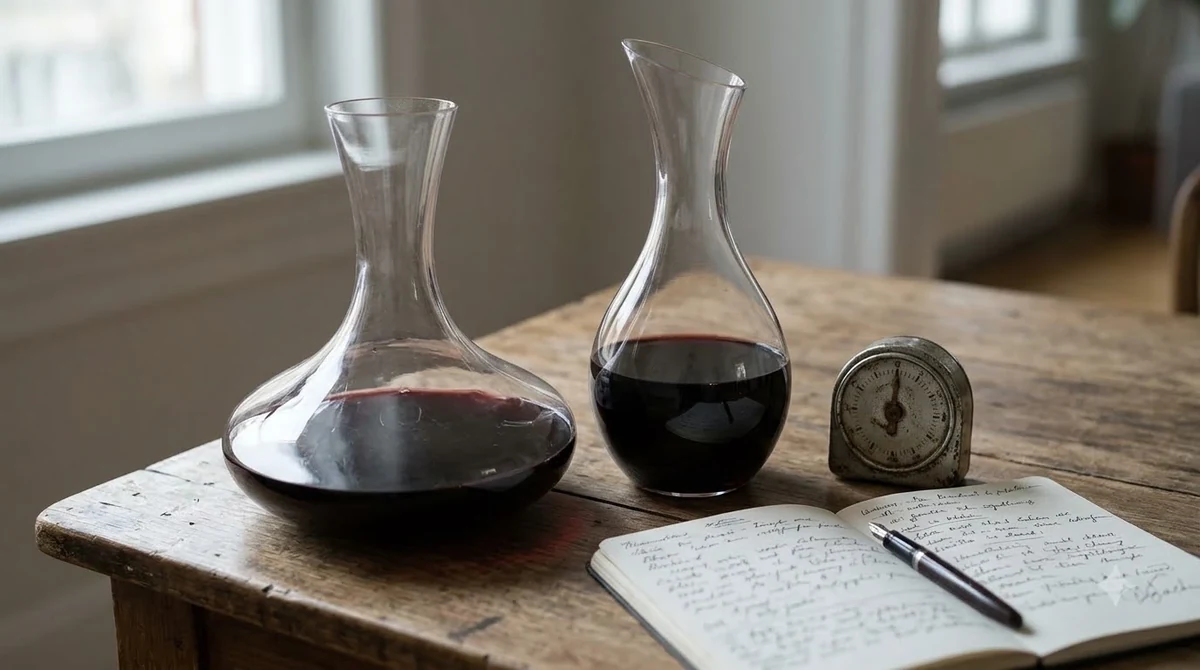
CB2 identifies the Muse as an exclusive product made from 100% lead-free crystal. Its shape is particularly important: the broad lower section gives poured wine more contact with air, while the narrower neck provides a practical area for pouring. The result is a vessel that can serve as both an aeration tool and a presentation piece on a dining table. The official CB2 Muse Glass Wine Decanter product page confirms the material, capacity, construction and care requirements.
| Specification | CB2 Muse Glass Wine Decanter |
|---|---|
| Product category | Wine decanter |
| Capacity | 65 fl oz |
| Material | 100% lead-free crystal |
| Construction | Handblown |
| Shape | Tapered neck, wide bowl |
| Primary purpose | Red wine aeration and serving |
| Care | Hand wash only |
| Availability designation | CB2 exclusive |
| Origin description | Imported |
Capacity is one of the Muse’s most useful characteristics. A standard 750 ml wine bottle contains approximately 25.4 fluid ounces, so the 65-ounce vessel has enough nominal capacity for approximately two and a half standard bottles. That leaves additional room for swirling and movement during pouring rather than requiring the vessel to be filled to its rim.
For ordinary dinner service, however, capacity should not be confused with a recommendation to decant multiple bottles simultaneously. Different wines may need different amounts of aeration, and combining bottles makes it harder to keep track of individual wines. Using the decanter for one bottle at a time is a more practical approach for most households.
The lead-free crystal construction is another important consideration. Crystal provides a clear presentation that allows guests to see the wine’s color, while the handblown construction gives the piece an artisanal character compared with basic mass-market serving glassware. CB2 does not describe the Muse as dishwasher-safe, so its specified hand-washing requirement should influence the purchase decision.
One limitation is that CB2’s published product information does not provide a complete set of technical measurements for every dimension. Buyers who have a specific cabinet height, shelf depth or display space should account for that uncertainty before purchasing rather than assuming the vessel will fit a particular storage area.
What Owners and Wine Enthusiasts May Appreciate
The strongest reasons to consider the Muse are its 65-ounce capacity, lead-free crystal construction and wine-oriented shape. These features make it more suitable for serving and aerating red wine than a purely decorative spirit decanter with a narrow body and limited capacity.

Its wide bowl is especially useful for young, structured reds. According to Wine.com, young Cabernet Sauvignon, Petite Sirah and Nebbiolo can benefit from approximately 30 to 60 minutes of aeration. These wines often have substantial tannin and concentrated aromas, making a broad decanter a useful serving accessory when a bottle initially seems closed or restrained. Wine.com explains the distinction between aeration and sediment removal in its guide to when and how to use a wine decanter.
The Muse’s generous proportions also make it convenient for entertaining. A host can transfer a bottle into the decanter before guests arrive, place it in the center of the table and serve several people without repeatedly handling the original bottle. The clear glass makes the wine visible, which can be useful when serving different varieties during a meal.
A coordinated glassware collection
Another advantage is its connection to CB2’s Muse stemware. The manufacturer specifically describes the decanter as pairing with its modern Muse collection. For someone furnishing a dining area with coordinated glassware, that connection gives the piece a clearer purpose than buying an unrelated decorative object.
For example, a dinner featuring California Cabernet Sauvignon, grilled steak and roasted vegetables could benefit from having the wine decanted before serving. The host can then pour it into appropriately sized red wine glasses, allowing guests to swirl the wine and assess its aromas individually.
The same serving setup works for a dinner with several guests and a single bottle of Bordeaux-style red wine. The decanter provides a central serving vessel, while individual glasses remain responsible for the final tasting experience. A decanter does not replace proper stemware, but it can make the presentation more organized.
Why capacity matters during entertaining
A 65-ounce capacity offers substantial headroom compared with a 750 ml bottle. This is useful when pouring without spilling, particularly if the wine needs to be swirled gently before serving. It also provides flexibility for a larger bottle, although shoppers should avoid assuming that every bottle format will fit comfortably without considering its actual volume.
The overall design is best understood as functional tableware with a decorative element. It is not an elaborate wine-preservation system, and it does not replace temperature-controlled storage or a proper wine stopper. Its strongest purpose is the transition from bottle to serving vessel.
People building a complete serving setup can also compare the decanter with the broader selection of wine glasses available for different grape varieties and occasions. Matching a decanter to the rest of the tableware can create a more consistent presentation without requiring every item to have exactly the same design.
Common Complaints and Practical Limitations
The most important compromises with the Muse are its hand-wash-only maintenance, substantial capacity and lack of published detail about some practical dimensions. Those limitations do not make it a poor product, but they matter for buyers who prioritize convenience over presentation.
Hand washing is the clearest maintenance requirement stated by CB2. A large crystal vessel can be more difficult to handle than an ordinary drinking glass, particularly when cleaning the bottom of a wide bowl. A sink with limited working space can make the process awkward, and a crowded drying rack may not provide a safe position for the decanter.
Dishwasher convenience is another consideration. Buyers who routinely place their kitchen glassware in an automatic dishwasher may find a hand-wash-only decanter less convenient. The additional attention required after each use is part of owning a specialized piece of serving glassware.
The size is not ideal for every home
A 65-ounce vessel is considerably larger than a typical wine bottle. That capacity is helpful for entertaining, but it can become a disadvantage when storage space is limited. Small kitchen cabinets, narrow shelves and crowded bar carts may not be suitable places to keep it.
There is also a difference between capacity and useful serving volume. Filling a decanter completely leaves little room for movement, and a host should not feel compelled to use its full capacity simply because it is available. For a quiet evening with one glass of Pinot Noir, the Muse may be more vessel than necessary.
Handling crystal requires attention
Handblown crystal should be handled carefully during filling, pouring and cleaning. Avoid striking the rim against a faucet, placing the vessel on an unstable surface or stacking other glassware against it. These are sensible precautions for delicate serving glassware, not evidence of a specific manufacturing defect.
Another consideration is the absence of a documented airtight storage system in CB2’s published Muse specifications. The product description focuses on aeration and serving rather than long-term wine preservation. It should therefore be treated as a serving decanter, not a replacement for a sealed wine bottle or dedicated storage container.
For shoppers who want a vessel primarily for spirits, the Muse may not be the most appropriate choice. CB2’s Stud Glass Decanter has a more decorative, multifaceted appearance and a 32-ounce capacity, while the Muse has a more explicitly wine-focused shape. Choosing the right purpose before purchasing avoids paying for capacity that may never be used.
Tip: Do not leave wine sitting in a decorative decanter overnight as a storage strategy. Pour unused wine back into a suitable bottle or another appropriate sealed container, then refrigerate it when necessary. The Muse is designed for aeration and serving, not extended preservation.
Who Should Buy the CB2 Muse and Who Should Skip It
The Muse is a strong candidate for people who regularly serve red wine, entertain guests or want a coordinated crystal serving piece. Its 65-ounce capacity and wide bowl make it more practical for group service than a small decorative vessel designed mainly for spirits.
It is particularly appropriate for households that frequently open structured reds. Cabernet Sauvignon, Syrah and Nebbiolo are examples of varieties that can benefit from aeration when young and tightly wound. A broad bowl gives the wine more contact with air, while the decanter provides a convenient way to serve a bottle at the table.
Buy it if you value presentation
The Muse makes sense for someone who wants a dedicated wine-serving centerpiece rather than another ordinary pitcher. Its handblown lead-free crystal construction and connection to CB2’s Muse stemware give it a coordinated appearance. It can also make a thoughtful gift for someone who enjoys hosting dinners and already has a collection of wine glasses.
It is also a sensible option for people who prefer serving wine from a separate vessel rather than placing the original bottle on the table. This can be particularly useful during a multi-course dinner when presentation and table organization matter.
Buyers who frequently host six or more guests may also appreciate having sufficient capacity to accommodate more than one standard bottle in a single serving vessel. Even so, pouring one wine at a time is generally preferable to mixing different wines together.
Skip it if convenience comes first
The Muse is less attractive for someone who wants dishwasher-safe glassware, compact storage or a vessel that can double as an airtight container. Its hand-wash requirement is a meaningful drawback for busy households, and its generous capacity may be unnecessary for people who usually drink one glass at a time.
It is also not the obvious purchase for someone whose main interest is whisky, bourbon or other spirits. CB2 has separate designs intended for bar-cart presentation, including its Stud and Duval models. A smaller spirit-focused decanter may be easier to store and more appropriate for that purpose.
Finally, people who primarily drink delicate older wines should not assume that a wide aeration bowl is always beneficial. Older Pinot Noir and mature Rioja can lose delicate aromatic characteristics with excessive oxygen exposure. A decanter’s suitability depends on the wine, not simply on its appearance or capacity.
How the Muse Compares to Other CB2 Decanters
CB2 offers several different decanter designs, and their capacities and intended uses vary considerably. The Muse is the most directly wine-focused option among the three models discussed here, while the Stud and Duval provide alternative designs for decorative serving and spirits.
The distinction is not simply visual. Capacity, glass composition and shape influence how a decanter fits into a household’s routine. Comparing these details is more useful than selecting a vessel based only on the appearance of its product photographs.
Muse versus Stud Glass Decanter
The Muse has a 65-ounce capacity and uses 100% lead-free crystal. The Stud holds 32 ounces and is made from soda-lime glass. CB2 describes the Stud as a textured decorative decanter for storing and serving spirits, making it a different type of purchase.
The Stud has a multifaceted, raised pattern that reflects light and gives it a more traditional bar-cart appearance. Its smaller capacity makes it easier to position as a decorative serving piece, although it does not offer the same room for aerating a full wine bottle as the Muse.
For red wine aeration and dinner service, the Muse is the more directly relevant option because of its broad bowl and explicit wine-oriented description. For a smaller decorative vessel that can sit on a bar cart, the Stud may be more suitable.
Muse versus Duval Glass Decanter
CB2’s Duval Glass Decanter has a 30-ounce capacity and is handblown. Its design combines clear and amber-colored glass, producing a distinctive color effect at the bottom of the vessel. CB2 describes it as a piece inspired by the final sip of scotch or whiskey.
The difference in capacity is substantial. At 65 ounces, the Muse holds more than twice the Duval’s stated 30-ounce volume. The Muse is therefore more practical for transferring a full standard wine bottle and allowing room for pouring and aeration.
Duval is more suitable for someone who wants a smaller decorative spirit decanter with a distinctive two-tone appearance. Both models require hand washing, so neither is the ideal option for someone who considers dishwasher compatibility essential.
| Model | Capacity | Material | Best suited to |
|---|---|---|---|
| Muse Glass Wine Decanter | 65 oz | 100% lead-free crystal | Red wine aeration and serving |
| Stud Glass Decanter | 32 oz | Soda-lime glass | Decorative spirit service |
| Duval Glass Decanter | 30 oz | Handblown glass | Decorative spirit presentation |
All three are CB2 products, but their differences make them difficult to treat as interchangeable purchases. The Muse is the logical starting point for wine drinkers, while the Stud and Duval are alternatives for shoppers who prioritize a decorative home bar.
For a coordinated entertaining setup, consider pairing the Muse with appropriate champagne flutes for sparkling wine service. A decanter and sparkling wine glasses have separate purposes, and using each for its intended drink makes the table more functional.
Frequently Asked Questions
Does the CB2 Muse decanter have a stopper?
CB2’s published Muse product specifications do not identify a stopper as a listed feature. Buyers who specifically require a fitted lid or closure should confirm the product’s current included components before purchasing. A decanter without a documented airtight closure should not be treated as a preservation container.
Can the CB2 Muse decanter be used for white wine?
Yes, a clean glass decanter can also be used for certain full-bodied white wines. Chardonnay, Semillon and Viognier are examples that may benefit from brief aeration. Light, crisp white wines generally need less exposure to air, so transfer them shortly before serving if using the vessel.
How should a crystal decanter be dried after washing?
After hand washing, allow excess water to drain before carefully drying accessible surfaces with a clean, lint-free cloth. Avoid twisting the neck while holding the bowl because that can place unnecessary stress on the glass. Store the decanter upright in a stable cabinet where its rim cannot strike another object.
Can a 65-ounce decanter accommodate a magnum bottle?
A standard wine magnum contains 1.5 liters, or approximately 50.7 fluid ounces. That is below the Muse’s stated 65-ounce nominal capacity, although available headroom depends on the amount of wine and the vessel’s internal shape. A larger bottle should be poured carefully rather than assuming that maximum capacity is the ideal filling level.
Does lead-free crystal require special storage conditions?
Lead-free crystal does not require wine-cellar storage conditions simply because it is crystal. Its main storage concerns are physical protection, cleanliness and avoiding contact with other glassware. Keep it away from unstable shelves, crowded cabinets and areas where temperature changes could create unnecessary handling risks.
The CB2 Muse Glass Wine Decanter is a compelling choice for wine drinkers who want a large, clear, lead-free crystal vessel for aeration and table service. Its 65-ounce capacity and wide-bowl design make it more appropriate for red wine than CB2’s smaller spirit-focused alternatives, although hand washing and storage space remain important considerations. For a household that regularly serves Cabernet Sauvignon, Syrah or other structured reds, the Muse offers a practical combination of wine-serving function and understated presentation.
More in Wine Glasses
 Zwiesel Glas Champagne Flutes for Durable Everyday Sparkling WineUpdated Nov 20, 2026
 Vera Wang Crystal Wine Glasses: Design, Quality and Buying AdviceUpdated Nov 20, 2026
 West Elm White Wine Glasses: Compare Designs for Better Everyday Wine ServiceUpdated Nov 20, 2026
 Zalto Stemless Wine Glasses: Discover Their Distinctive DesignsUpdated Nov 20, 2026
 Viski Champagne Glasses That Match Your Style and Sparkling WineUpdated Nov 20, 2026
 Vista Alegre Decanter Review: Crystal Style and Wine ServiceUpdated Nov 20, 2026