

We may earn a commission when you buy through links on this page, at no extra cost to you. Learn more.
Vista Alegre wine glasses are worth considering for buyers who want distinctive Portuguese glassware, carefully designed wine shapes, and attractive table presentation. The brand offers several collections, from textured Bicos pressed-glass designs to more traditional Aroma and Excellentia stemware. The important distinction is that these collections use different materials, capacities, and construction methods, so choosing the right glass matters more than buying by brand name alone.
Vista Alegre occupies an interesting position between functional tableware and decorative glassmaking. Its wine glasses can suit everyday dining, formal entertaining, or a collection built around Portuguese craftsmanship. However, a large wine bowl, an intricate pressed-glass pattern, and a lightweight tasting glass serve different purposes. This review examines the available specifications, owner feedback, practical limitations, and alternatives to help identify which Vista Alegre collection makes the most sense.
Specs and Key Features: Understanding the Vista Alegre Collections
Vista Alegre offers several distinct approaches to wine glass design, rather than one standard glass with different decorative finishes. Aroma and Excellentia provide conventional stemmed wine shapes, while Bicos emphasizes textured pressed glass and the Criterium collection offers dedicated tasting glassware.

The manufacturer’s Hotelware catalog organizes its glassware into collections including Aroma, Bicos, Elatus, Excellentia, Nature, Silica, and Vila. This range makes it possible to select different capacities and silhouettes for red wine, white wine, sparkling wine, and general entertaining. The available specifications also demonstrate why it is important to compare individual models rather than assume every Vista Alegre glass is made from the same material.
The following table compares documented examples. Capacities are the manufacturer’s listed maximum capacities, not recommended serving amounts. A glass with a 580 ml capacity, for instance, does not need to be filled anywhere near the rim during normal wine service.
| Collection or model | Glass type | Capacity | Documented dimensions |
|---|---|---|---|
| Bicos wine glass | Pressed glass, all-purpose | 7.1 oz | 3 inches wide, 6 inches high |
| Aroma 49000029 | Wine-tasting stem | 760 ml | 239 mm high |
| Aroma 49000031 | Red wine goblet | 580 ml | 234 mm high |
| Aroma 49000034 | White wine goblet | 370 ml | 220 mm high |
| Excellentia 26004681 | Wine-tasting stem | 685 ml | 245 mm high, 108 mm diameter |
| Excellentia 26004682 | Red wine goblet | 500 ml | 240 mm high, 91 mm diameter |
| Excellentia 26004683 | White wine goblet | 386 ml | 236 mm high, 83 mm diameter |
| Excellentia 26004684 | Champagne flute | 261 ml | 245 mm high, 70 mm diameter |
These figures come from the Vista Alegre Hotelware catalog and the Perigold Bicos product listing. They describe different product families, so the capacities should not be treated as interchangeable specifications. In particular, Bicos is an all-purpose pressed-glass option, while Aroma and Excellentia have more clearly differentiated red and white wine shapes.
Materials and construction
Material is one of the most important considerations when shopping for Vista Alegre wine glasses. The Bicos wine glass is listed by Perigold as glass, with a lead-free designation and semi-handmade construction. Its appeal comes from its textured geometric appearance and traditional pressed-glass production rather than a claim that it is premium lead crystal.
Other Vista Alegre products are explicitly identified as crystal. The Criterium wine-tasting goblet, for example, is listed as Crystal 30% on Vista Alegre India’s product page. This distinction matters because buyers comparing crystal brilliance, weight, clarity, and maintenance should not assume that a standard glass collection offers the same characteristics.
There are also differences within the broader product range. Some collections prioritize a straightforward silhouette, while others focus on decorative detailing. Before purchasing, identify the exact collection and material instead of relying on a general description of Vista Alegre as a crystal manufacturer.
Shape and capacity
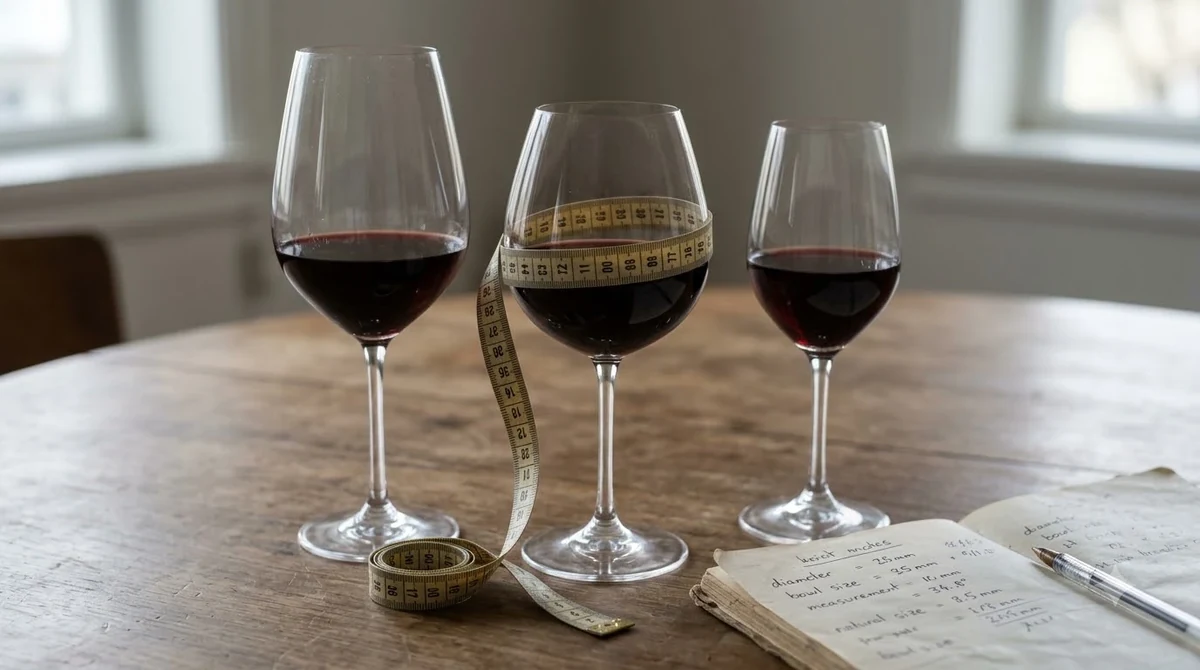
The Aroma red wine goblet has a 580 ml capacity, compared with 370 ml for its white wine goblet. Excellentia follows a similar distinction, with a 500 ml red wine glass and a 386 ml white wine glass. These differences provide more room for swirling and aroma development in the larger red wine designs.
For context, a normal wine pour is approximately 5 oz. That means even a 370 ml white wine goblet offers substantial space above the liquid for aromas to collect. Larger capacities can be useful for tasting and swirling, but they are not automatically better for every wine or every dining situation.
Buyers looking for a glass with a more decorative profile may prefer Bicos. Those who prioritize a recognizable wine-service silhouette should examine Aroma and Excellentia first. The brand’s range is broad enough to accommodate both preferences without requiring every glass on the table to look identical.
For a wider overview of glass shapes and practical selection criteria, the wine glasses guide provides useful context before choosing a specific collection.
What Owners Like About Vista Alegre Wine Glasses
The strongest documented attraction is the combination of distinctive design and traditional Portuguese glassmaking. Bicos offers a particularly recognizable textured appearance, while Aroma and Excellentia appeal to buyers who prefer more conventional stemmed wine service.
The Bicos collection is especially interesting because its design is connected to a long-standing pressed-glass tradition. Williams Sonoma describes its Bicos old-fashioned glasses as individually handmade using century-old pressed-glass techniques. Perigold gives a similar description for the Bicos wine glass and identifies its design history with Portuguese production dating to 1901.
This background gives the collection a different character from plain, mass-market drinking glasses. The raised geometric surface catches light, adds visual texture to a dining table, and creates a recognizable appearance even when the glasses are empty. Buyers who enjoy colorful table settings can also consider the documented blue, amber, and clear options offered for the Bicos wine glass.
Distinctive appearance for entertaining
One of the advantages of Bicos is that it can function as both drinkware and part of the table’s decorative presentation. Its textured surface creates visual interest without relying on elaborate painted decoration. That makes it suitable for informal dinners, celebrations, and tables where traditional clear stemware might look too understated.
Perigold’s customer feedback is limited, but its single published Bicos wine-glass review is positive. The reviewer specifically praises the glasses for parties. This is a useful indication of the design’s entertaining appeal, although one review cannot establish a broad pattern of owner satisfaction or long-term durability.
The larger Bicos family also includes old-fashioned glasses. Williams Sonoma describes a four-piece set with a 9.5 oz capacity and six available colors. Although these are not wine glasses, they demonstrate the decorative direction of the collection and provide a way to coordinate different types of drinkware.
More purposeful wine glass shapes
Another advantage is the availability of separate red and white wine goblets in Aroma and Excellentia. Instead of forcing one small universal shape to cover every wine, these collections provide different capacities and bowl dimensions.
The 580 ml Aroma red wine goblet, for example, offers more room than its 370 ml white wine counterpart. Excellentia similarly distinguishes its 500 ml red wine glass from its 386 ml white wine glass. These are practical differences for households that regularly serve several wine styles.
Buyers who enjoy exploring Portuguese wines may also appreciate the Criterium tasting glass. Vista Alegre India specifically describes this collection as suitable for red wines from Alentejo, Douro, Dão, Estremadura, and Ribatejo, as well as white and green wines. This makes it a particularly relevant option for people interested in tasting wines from different Portuguese regions.
Options for different table settings
Vista Alegre’s range makes it possible to create several distinct table styles. Bicos provides a more decorative and colorful direction, while Aroma offers straightforward stemware that can work in both formal and everyday settings. Excellentia has a similarly purposeful range of wine and champagne shapes.
That variety can be useful when building a coordinated collection. A household might use traditional wine goblets for dinner, decorative Bicos pieces for informal gatherings, and separate sparkling wine glasses for celebrations. There is no need to choose one visual style for every occasion.
The practical advantage is choice. Buyers can prioritize appearance, wine capacity, material, or a specific tasting purpose instead of purchasing a single design simply because it carries the Vista Alegre name.
Common Complaints and Potential Drawbacks
Vista Alegre wine glasses have some important limitations, particularly for buyers who expect inexpensive, highly durable everyday drinkware. The differences between glass and crystal also make it difficult to generalize about maintenance, weight, and handling across the entire collection.
The first consideration is fragility. Vista Alegre’s own care instructions warn that glass and crystal need careful handling, especially around delicate rims. The manufacturer also advises against stacking glasses and recommends warm rather than very hot washing water. These requirements are less convenient than the care routine associated with basic everyday tumblers.
Limited independent owner feedback
One drawback for prospective buyers is the relatively limited product-specific feedback available in the reviewed listings. Perigold displays one customer review for the Bicos wine glass. That buyer describes the glasses positively for parties, but the available feedback does not provide enough evidence to establish consistent performance over several years.
Williams Sonoma provides useful product information for the Bicos old-fashioned glasses, including their handmade construction and care guidance. However, those details should not be mistaken for a large body of independent reviews about the Bicos wine goblet itself.
This distinction is important when shopping for premium tableware. Attractive photographs and a manufacturer’s heritage can establish design appeal, but they cannot establish how a glass performs after repeated washing, accidental contact, or years of daily use.
Fragile rims and careful storage
The rim is a particularly vulnerable part of wine glass construction. Vista Alegre explicitly warns that the rims of wine glasses and tumblers are among their most fragile areas, especially on crystal pieces. Storing glasses upside down can also put unnecessary pressure on the rim.
The manufacturer advises against stacking crystal and glass pieces. This can be inconvenient in smaller kitchens where cabinet space is limited. Buyers with limited storage should measure their available shelves before selecting taller stemware such as the 245 mm Excellentia tasting glass.
There is also a handling issue during cleaning. Twisting the bowl while holding the stem or foot can put stress on the connection between these parts. That means washing a stemmed wine glass requires a little more care than cleaning a sturdy drinking tumbler.
Not every collection has the same cleaning instructions
Another potential disappointment is assuming that every Vista Alegre glass can go through the dishwasher without restrictions. Perigold lists the Bicos wine glass as dishwasher-safe, and Williams Sonoma lists its Bicos old-fashioned glasses as dishwasher-safe while recommending hand-washing.
Vista Alegre’s own general care instructions are more cautious. They recommend warm water and non-abrasive detergent for crystal and glass, and state that dishwashers are not recommended for thicker items. The manufacturer also advises against placing glassware in very hot water or the freezer.
These instructions do not necessarily contradict the retailer’s listing because different products can have different construction and care requirements. However, buyers should not assume that a dishwasher-safe designation for one Bicos item automatically applies to every crystal or glass collection.
Large bowls are not always convenient
Some buyers may also find the larger Aroma and Excellentia tasting glasses less practical for everyday dining. A 760 ml Aroma tasting stem or a 685 ml Excellentia tasting stem takes up more cabinet space than a compact wine goblet.
Large bowls can also feel cumbersome for people with smaller hands or crowded dining tables. Their size is useful for tasting and swirling, but it is not essential for every bottle of wine. A smaller white wine glass may be more convenient for casual meals and repeated pours.
Finally, decorative Bicos glasses have a more noticeable visual presence than minimalist stemware. That is a positive feature for some households but a disadvantage for people who prefer a completely neutral table setting.
Who Should Buy Vista Alegre Wine Glasses and Who Should Skip Them
Vista Alegre is a good match for buyers who value design, recognizable craftsmanship, and a choice of dedicated wine glass shapes. It is less compelling for people who need inexpensive, stackable, low-maintenance glasses for frequent everyday use.
Who should consider buying
Buyers interested in Portuguese craftsmanship: Bicos is particularly attractive for anyone who appreciates traditional pressed-glass techniques. Its textured appearance has a distinctive identity, and its connection to Portuguese glassmaking gives it more character than an ordinary clear tumbler.
People who entertain regularly: The Bicos wine glass offers a decorative appearance that can work well at dinner parties and celebrations. Its documented four-piece set format is also practical for serving several guests with matching glasses.
Wine enthusiasts who use different glass shapes: Aroma and Excellentia offer separate red and white wine goblets, while their tasting stems provide additional capacity. Buyers who enjoy comparing wine styles may find these distinctions more useful than a single universal glass.
Collectors of premium tableware: Vista Alegre’s combination of glass, crystal, and decorative collections provides several ways to build a distinctive collection. The Criterium tasting goblet is particularly relevant for people interested in Portuguese wine regions.
Gift buyers: The brand’s Portuguese design identity and range of glassware styles make it a reasonable candidate for wedding, anniversary, and housewarming gifts. A coordinated set can be especially attractive when the recipient already enjoys formal entertaining.
Who should skip the collection
Buyers prioritizing maximum durability: If glasses are regularly handled by children, placed in crowded dishwashers, or used in busy kitchens, a more basic everyday glass may be a better choice. Vista Alegre’s own handling instructions emphasize careful washing and storage.
People with limited cabinet space: Tall wine stems can be inconvenient in cabinets with low shelves. The 245 mm Excellentia tasting stem is a good example of a product that requires more vertical clearance than a compact tumbler.
Minimalist buyers: The decorative Bicos collection may be too visually prominent for someone who wants plain, unobtrusive drinkware. Aroma or Excellentia would be more suitable alternatives within the brand.
People who want identical specifications across a set: Different Vista Alegre collections use different materials and capacities. Anyone expecting one universal standard should examine the precise model before purchasing multiple sets.
Choosing between the main options
For decorative entertaining, Bicos is the most obvious starting point. Its textured appearance provides visual interest without requiring elaborate table decorations. However, its 7.1 oz wine-glass capacity is much smaller than the larger Aroma and Excellentia wine goblets.
For conventional wine service, Aroma offers a straightforward distinction between red and white wine glasses. Its 580 ml red wine goblet and 370 ml white wine goblet make it easier to select a shape according to the wines served.
Excellentia provides a comparable choice with slightly different capacities. Its 500 ml red wine goblet and 386 ml white wine goblet offer a balanced alternative for buyers who want dedicated stemware without choosing the larger Aroma red wine design.
Those who focus on Portuguese wine tasting should investigate Criterium. Its stated regional tasting purpose gives it a more specialized role than a general-purpose decorative glass.
For more targeted options, the red wine glasses guide can help compare bowl shapes and capacities, while the stemless wine glasses guide is useful for buyers who prefer shorter, easier-to-store drinkware.
How Vista Alegre Compares to Alternative Wine Glass Styles
Vista Alegre’s strongest advantage is the variety of design directions within one manufacturer. Bicos is more decorative than conventional plain stemware, while Aroma and Excellentia are closer to traditional wine-service designs with differentiated red and white goblets.
Rather than comparing every glass as though it serves the same purpose, it makes more sense to compare the collections by their intended use. The differences become particularly clear when looking at capacity, construction, and the amount of attention each style requires during storage.
Bicos versus conventional clear stemware
Bicos is a distinctive option for people who want their drinkware to contribute to the overall table setting. Its pressed-glass texture and available colors give it a more decorative appearance than an unpatterned clear wine goblet.
Conventional clear stemware is generally the more neutral choice. It can suit almost any dinnerware collection, makes wine color easy to examine, and tends to look appropriate at both formal and informal gatherings. Aroma and Excellentia fit this more traditional direction.
The 7.1 oz Bicos wine glass is also substantially smaller in capacity than the 580 ml Aroma red wine goblet. That difference can influence how much room is available for swirling and aroma development. People who prefer large bowls for full-bodied reds may find Aroma more appropriate.
Aroma versus Excellentia
Aroma and Excellentia are two useful collections to compare when shopping for conventional stemmed wine glasses. Both provide separate red and white wine goblets, but their documented dimensions and capacities differ.
Aroma’s red wine goblet has a 580 ml capacity, while Excellentia’s red wine goblet holds 500 ml. For white wine, the figures are 370 ml for Aroma and 386 ml for Excellentia. Neither collection is automatically superior; the more appropriate choice depends on preferred proportions and the intended serving experience.
The Aroma range also includes a larger 760 ml tasting stem. Excellentia offers a 685 ml tasting stem. These are substantial glasses intended to provide room for swirling and tasting rather than compact everyday serving.
Buyers who prefer a more generous red wine bowl may lean toward Aroma. Those who want a slightly smaller red wine goblet and a somewhat larger white wine goblet may prefer Excellentia.
Specialized tasting glasses versus universal glasses
A universal glass offers convenience because it can be used for different wine styles without maintaining several separate sets. Bicos is listed as an all-purpose wine glass, making it suitable for households that prioritize appearance and general versatility.
Specialized glassware provides more purposeful proportions. A 500 ml red wine goblet and a 386 ml white wine goblet are designed around different serving requirements. The larger red wine bowl provides additional room for swirling, while the white wine glass offers a more restrained capacity.
The Criterium tasting goblet represents another approach. Its stated purpose is tasting several Portuguese wine styles and regional expressions. It is more appropriate for an enthusiast who wants a dedicated tasting glass than for someone who simply needs an everyday dinner glass.
How to make the final comparison
Start with the type of wine you serve most often. If full-bodied reds are a regular part of your dinners, a dedicated red wine goblet with a larger bowl may be preferable. If you primarily serve lighter whites, the smaller Aroma or Excellentia white wine designs are worth examining.
Next, consider whether appearance or functionality is the main priority. Bicos has the stronger decorative identity, whereas Aroma and Excellentia provide more conventional wine-glass proportions. Neither direction is inherently better; they serve different preferences.
Finally, examine cleaning and storage requirements. A beautiful glass that does not fit the available cabinet space or suit the household’s cleaning routine may become inconvenient. Vista Alegre’s official care guidance is available on its crystal and glass care instructions page.
Tip: Before buying a complete set, measure the cabinet height and compare it with the glass dimensions. A 245 mm stemmed tasting glass needs more clearance than a compact drinking glass, and Vista Alegre recommends storing glassware without stacking or resting delicate rims against hard surfaces.
Frequently Asked Questions
These answers address additional purchasing and practical questions that are not fully covered by the collection comparisons above.
Where are Vista Alegre wine glasses made?
Vista Alegre is a Portuguese tableware and glassware brand. The Bicos product listings specifically describe the glasses as connected to Portuguese production and traditional pressed-glass techniques. For an individual purchase, the country-of-origin information should be confirmed for the exact item rather than assumed to be identical across every product category.
Can Vista Alegre wine glasses be used for cocktails?
Yes, a general-purpose wine goblet can also serve certain cocktails, particularly drinks that benefit from a larger open bowl. The Bicos collection includes decorative drinkware beyond its wine glass, while Vista Alegre’s Vinyl collection includes cocktail-oriented shapes such as a gin goblet and martini glass. A dedicated cocktail glass is preferable when the recipe requires a particular rim or bowl shape.
Does Vista Alegre offer wine glasses in matching sets?
Yes. The documented Aroma red wine goblet and white wine goblet are each listed in four-piece sets, and the Bicos wine glass is also offered as a set of four. The Criterium tasting goblet is listed as a set of two. These different set formats are useful to consider when purchasing for a household or assembling a coordinated gift.
Can Vista Alegre crystal glasses lose their clarity?
Crystal can develop visible water marks, fingerprints, and mineral deposits if it is not cleaned and dried properly. Vista Alegre recommends cleaning crystal with a soft, clean, dry cloth to maintain its brilliance. Its care instructions also identify a cloth moistened with alcohol as an option for removing stains and fingerprints.
Are Vista Alegre wine glasses suitable for restaurant use?
Vista Alegre has a dedicated Hotelware range developed for hospitality settings, with product families that include wine and tasting glasses. However, hospitality suitability should not be confused with unrestricted commercial dishwasher durability. Restaurants should confirm the exact model’s handling, washing, replacement, and supply requirements before selecting it for high-volume service.
Vista Alegre wine glasses offer a compelling combination of Portuguese design, varied glass shapes, and distinctive decorative options. Bicos is the standout choice for textured entertaining glassware, while Aroma and Excellentia are stronger candidates for conventional red and white wine service. The best purchase depends on matching the exact collection’s material, capacity, and care requirements to the way the glasses will actually be used.
More in Wine Glasses
 Zwiesel Glas Champagne Flutes for Durable Everyday Sparkling WineUpdated Nov 20, 2026
 Vera Wang Crystal Wine Glasses: Design, Quality and Buying AdviceUpdated Nov 20, 2026
 West Elm White Wine Glasses: Compare Designs for Better Everyday Wine ServiceUpdated Nov 20, 2026
 Zalto Stemless Wine Glasses: Discover Their Distinctive DesignsUpdated Nov 20, 2026
 Viski Champagne Glasses That Match Your Style and Sparkling WineUpdated Nov 20, 2026
 Vista Alegre Decanter Review: Crystal Style and Wine ServiceUpdated Nov 20, 2026