

We may earn a commission when you buy through links on this page, at no extra cost to you. Learn more.
The huski wine tumbler is a versatile insulated wine cup that combines a removable stem, a splash-reducing lid, and double-wall stainless steel construction for convenient indoor and outdoor drinking. The Huski Wine Tumbler 2.0 stands out because it can switch between stemmed and stemless configurations without requiring a separate glass. Its 12-ounce capacity, copper-lined insulation, and durable construction make it particularly appealing for patios, picnics, camping, and casual entertaining. However, its lid is not leakproof, and its relatively wide base deserves attention if you plan to use it in a vehicle.
Traditional wine glasses prioritize aroma, appearance, and the familiar feel of drinking from a stem. Insulated wine tumblers prioritize temperature retention, portability, and resistance to breakage. Huski attempts to combine both approaches in one accessory, giving wine drinkers a stainless steel vessel with a detachable stem and transparent sliding lid. The result is an interesting alternative to ordinary stemless glasses, although its features make more sense for certain occasions than others. This review examines the construction, everyday practicality, owner feedback, cleaning requirements, and important limitations to consider before choosing one.
Specs and Key Features: What the Huski Wine Tumbler Offers
The Huski Wine Tumbler 2.0 is designed around a 12-ounce stainless steel drinking vessel with three defining features: vacuum insulation, a removable stem, and a sliding lid. Its construction makes it more substantial than an ordinary wine glass, while its interchangeable configuration gives it more flexibility than a conventional insulated cup.
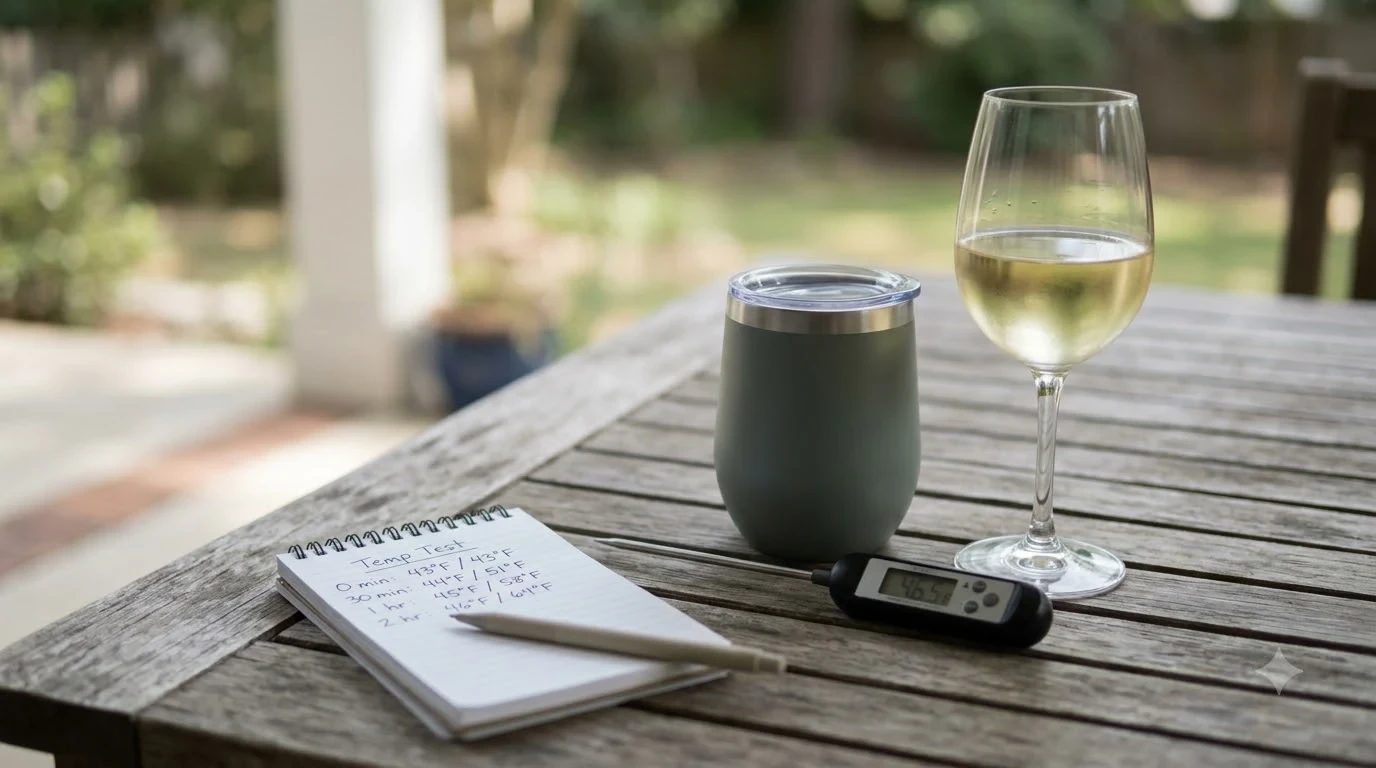
According to Huski’s published product specifications, the tumbler uses food-grade 304 stainless steel, also known as 18/8 stainless steel. The body has double-wall construction with copper lining and vacuum insulation. This arrangement reduces heat transfer between the wine and surrounding air, helping cold drinks remain chilled longer than they would in an ordinary glass. The exterior also stays dry during normal use, avoiding the condensation rings that frequently appear beneath cold drinks.
The detachable TwistLock stem is another important part of the design. With the stem attached, the product resembles a compact stemmed wine glass. Remove the stem, and it becomes a conventional insulated tumbler with a lower profile. The included EasySlider lid provides a clear cover with a movable opening, helping reduce accidental splashes and keeping outdoor debris away from the drink.
| Specification | Huski Wine Tumbler 2.0 |
|---|---|
| Capacity | 12 US fl oz |
| Main material | 304 stainless steel |
| Insulation | Double-wall vacuum insulation with copper lining |
| Lid material | Clear Tritan plastic |
| Stem | Detachable TwistLock design |
| Height with stem and lid | 8.66 inches |
| Height without stem | 4.40 inches |
| Maximum diameter | 3.46 inches |
| Product weight | 8.96 ounces |
| Chilling performance | At least 1 hour, according to Huski, starting with cold wine |
| Stem and lid cleaning | Dishwasher safe |
| Warranty | 3 years against material and workmanship defects, according to Huski support |
These specifications reveal an important distinction between the Huski and a lightweight traditional wine glass. At nearly 9 ounces before adding wine, it is a relatively substantial piece of drinkware. That weight is the trade-off for its stainless steel construction, insulation, and detachable components. Its maximum diameter of 3.46 inches also makes it wider than many conventional wine glasses, so storage and cup-holder compatibility deserve consideration.
The capacity is generous for casual wine drinking, although it should not be confused with a recommended serving size. A standard wine pour is approximately 5 ounces, meaning the 12-ounce vessel can accommodate a typical pour while leaving room above the liquid. That extra space is useful for reducing spills, but it is not a replacement for the larger bowl of a traditional glass when evaluating wine aromas.
For the full manufacturer’s feature descriptions, dimensions, and care instructions, consult the official Huski Wine Tumbler 2.0 product page.
What Owners Like About the Huski Design
The most appealing aspect of the Huski is its combination of convenience and presentation. It offers a stemmed drinking option when you want something closer to a traditional wine glass, but it can also become a compact tumbler for less formal settings.
Owner feedback published on Huski’s product pages and the Shop retail listing repeatedly highlights the removable stem, appearance, and ability to keep drinks cold. Some customers also describe using the product at home, during travel, and in recreational vehicles. These comments help explain why the design appeals to people who want a dedicated wine accessory that can handle more than one environment.
The removable stem adds flexibility
Most insulated wine tumblers are permanently stemless. That arrangement is practical, but it does not appeal to everyone. The TwistLock system provides a different option, allowing the user to attach the stem for a more familiar drinking experience and remove it when a shorter cup is preferable.
This flexibility is particularly useful for households that entertain in different settings. A stemmed configuration looks more appropriate on a dining table or outdoor entertaining area, while the stemless arrangement is convenient beside a swimming pool or on a picnic blanket. Instead of buying separate drinkware for these occasions, one Huski can serve both purposes.
Insulation helps maintain a cold pour
Temperature retention is central to the product’s appeal. White wine, sparkling wine, and rosé are generally served chilled, and a conventional glass sitting outside on a warm afternoon can quickly become less refreshing. Huski’s vacuum-insulated construction slows the warming process, giving drinkers more time to finish a pour.
The manufacturer states that the tumbler keeps wine chilled for at least one hour when filled from a cold bottle. This is a useful reference point rather than a guarantee that every drink will remain at an identical temperature. Starting temperature, room temperature, sunlight, and how often the lid is opened all influence the result.
The exterior stays dry
Condensation is a familiar inconvenience with chilled wine. A cold glass can leave water on wooden tables, outdoor furniture, and other surfaces. Huski’s insulated body is designed to prevent this exterior moisture buildup during normal use.
The non-scratch base pad adds another practical detail. It helps protect surfaces when the tumbler is placed on a countertop or table, while the flat-bottomed stemless configuration provides a stable resting position. Together, these details make the product suitable for casual outdoor entertaining without relying on a separate coaster.
The lid makes outdoor drinking easier
The transparent EasySlider lid is designed to reduce splashes while keeping insects, dust, and debris away from the wine. That is particularly useful around a barbecue, campsite, patio, or boat, where an uncovered drink can be inconvenient.
Because the lid is clear, it is possible to see the remaining wine without removing the cover. Its sliding mechanism also allows access to the drinking opening without taking the entire lid off. This makes it a practical addition for outdoor use, although it should not be mistaken for a sealed travel lid.
Common Complaints and Practical Limitations
The Huski has several useful features, but its design involves compromises. The most important limitations are the non-leakproof lid, relatively wide base, detachable parts, and less traditional drinking experience compared with a proper wine glass.
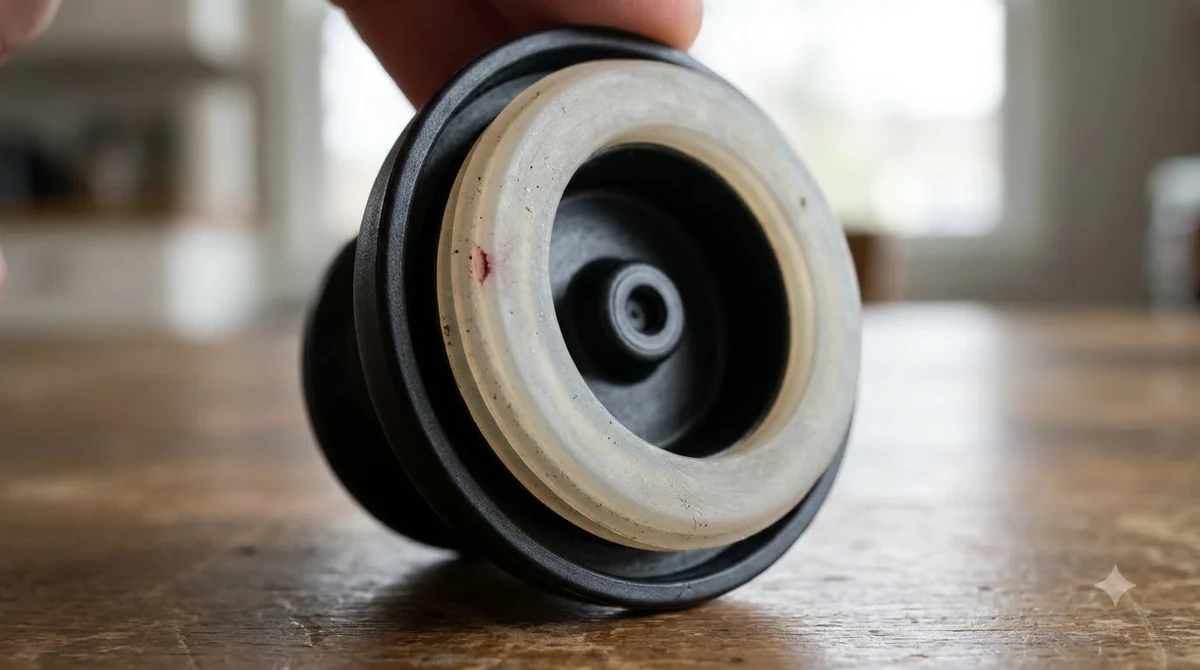
The distinction between splash resistance and leakproof construction deserves particular attention. Huski explicitly states that the tumbler is not leakproof. Its lid helps reduce accidental spills, but liquid can escape if the vessel is turned upside down. This makes it appropriate for stationary outdoor drinking but less suitable for carrying filled in a backpack or handbag.
The lid does not make it a travel bottle
A sliding lid is useful when a drink is resting on a table, but it is not equivalent to a screw-top seal or a leakproof locking closure. If the tumbler tips over, liquid can reach the sliding opening and escape.
That limitation matters for anyone planning to carry wine between locations. The Huski is better treated as a drinking vessel that can be covered between sips rather than a container for transporting a finished pour. If you need a cup for commuting, road trips, or bags, a genuinely leakproof travel tumbler is a more appropriate category.
The base may not fit every cup holder
Huski’s support documentation lists an 88 mm base diameter. Some larger vehicle cup holders can accommodate the tumbler without its stem, but smaller holders may be too narrow.
This is particularly relevant because the product is marketed for outdoor activities and travel. Its insulated construction makes it attractive for road trips, but buyers should measure their vehicle’s cup holder before assuming the tumbler will fit. The stemless configuration is the more practical option for vehicle use, although the actual fit still depends on the holder’s internal dimensions.
The detachable stem creates another component to manage
The removable stem is a distinctive advantage, but it also introduces another piece that needs to be stored, cleaned, and transported. Some owner feedback requests a shorter stem and smaller base to make the complete product easier to pack for holidays.
That concern is understandable. At 8.66 inches tall with the stem and lid, the assembled product takes up more space than a conventional short tumbler. Removing the stem reduces its height to 4.40 inches, but the separate component still needs a suitable storage location.
Stainless steel changes the wine-drinking experience
A stainless steel vessel does not provide the same visual or sensory experience as clear glass. You cannot inspect the wine’s color through the main body, and the rounded stainless interior does not have the same bowl shape as a traditional wine glass.
This is not necessarily a defect. The Huski is designed primarily around convenience, insulation, and durability. However, people who regularly compare wine aromas, examine color, or serve delicate wines in formal settings may prefer conventional stemware.
Who Should Buy the Huski Wine Tumbler and Who Should Skip It?
The Huski makes the most sense for casual wine drinkers who value insulation and portability more than traditional glassware. It is especially attractive for outdoor entertaining, but less compelling for anyone who primarily drinks wine at a formal dining table.
Who should buy it
Outdoor entertainers: Anyone who regularly drinks wine on a patio, deck, or around a barbecue can benefit from the insulated construction. The lid helps reduce splashes and keeps outdoor debris away from the wine, while the stainless steel body avoids the breakage concerns associated with ordinary glassware.
Campers and recreational vehicle owners: The stemless configuration is convenient for campsites, travel trailers, and picnic tables. Its durable body is more suitable for these settings than fragile glass, provided the user understands that the lid is not leakproof.
People who enjoy chilled white wine and rosé: Temperature retention is particularly useful for wines that are normally served cold. A Sauvignon Blanc, Pinot Grigio, or dry rosé can be enjoyed over a longer period without warming as quickly as it might in a conventional glass.
Gift buyers: The combination of a removable stem, distinctive appearance, and practical outdoor features gives the tumbler a more unusual presentation than a basic stainless steel cup. Its packaging also makes it suitable for birthdays, housewarming gifts, and holiday occasions.
Households that want versatile drinkware: The same vessel can be used with the stem attached for a more traditional presentation or without it for everyday drinking. That flexibility is useful when different members of a household have different preferences.
Who should skip it
Wine enthusiasts focused on aroma: If you regularly evaluate wines, attend structured tastings, or enjoy comparing the aromatic differences between producers, traditional glassware is a better option. The Huski’s insulation is useful, but its metal body and compact shape are not designed to replace specialized tasting glasses.
People who need a leakproof cup: Anyone who wants to carry an already-filled tumbler in a bag should consider another design. The EasySlider lid is intended to reduce spills, not create a watertight seal.
Drivers with small cup holders: The 3.46-inch maximum diameter may be too wide for some vehicle holders. Checking the actual opening before purchasing is a sensible precaution.
Minimalists who dislike detachable parts: If you prefer a simple cup with no accessories to remove or store, a conventional stemless insulated wine tumbler may be more convenient.
People who prefer lightweight glassware: At 8.96 ounces before adding wine, the Huski has more heft than an ordinary wine glass. That weight is part of its construction, but it may not appeal to someone who wants a light, delicate drinking vessel.
How It Compares to Alternative Wine Tumblers
The Huski occupies a middle ground between conventional stemware and ordinary insulated drinkware. Its removable stem and included lid make it more configurable than a basic stemless cup, although the right alternative depends on whether you prioritize portability, appearance, or everyday convenience.
Huski versus a traditional stemless wine glass
A traditional stemless wine glass offers a simple drinking experience. It is generally transparent, allows the wine’s color to remain visible, and has a bowl that provides more room for swirling than a compact insulated vessel.
The Huski offers better practical protection against accidental breakage and includes insulation. It is also less likely to leave condensation on furniture. However, its stainless steel construction changes the drinking experience, and its lid adds a component that a conventional glass does not require.
If you mainly drink wine indoors and value aroma and appearance, ordinary stemless glassware is the more straightforward choice. If you regularly drink outside or want to keep wine cold longer, the Huski has more useful features.
Huski versus a basic wine tumbler with a lid
A conventional wine tumbler with lid is usually intended to provide an insulated cup with a protective cover. These products can be less complicated than the Huski because they do not necessarily include a detachable stem or a specialized connection system.
The main advantage of Huski is its two-in-one presentation. You can use it as a stemless cup or attach the stem for a more familiar wine-glass appearance. If you never plan to use a stem, a simpler insulated tumbler may provide everything you need without the additional component.
Huski versus a standard insulated stainless steel cup
Standard insulated cups can be suitable for wine, particularly when their capacity and opening provide enough room for a comfortable pour. However, many are designed primarily for coffee, water, or general beverages rather than wine.
The Huski’s dedicated wine-oriented design, removable stem, and clear lid make it more specialized. A generic insulated cup may be preferable for people who want one vessel for several types of drinks, but the Huski is more distinctive as a dedicated wine accessory.
Huski versus personalized stemless drinkware
Some buyers are more interested in appearance and gifting than insulation. A wine tumbler personalized with a name, date, or message can be more meaningful for weddings, celebrations, and group gifts.
Huski’s support documentation says the 2.0 tumbler can be branded or personalized through an external engraver. The company does not perform engraving itself, so the process requires arranging that service separately. Buyers interested in customization should confirm the engraving method and its compatibility with the product’s finish before proceeding.
For a broader look at different manufacturers and drinkware styles, the Accessory Brands category provides another starting point for comparing wine-related accessories.
Cleaning, Maintenance, and Long-Term Ownership
Proper cleaning is important because the Huski has several separate components rather than a single-piece construction. The body, stem, and lid have different care considerations, and the sliding lid benefits from occasional disassembly to remove residue.
Cleaning the stainless steel body
Huski recommends handwashing Champagne-colored tumblers with warm, soapy water. Other color versions can go in the dishwasher according to the manufacturer’s care instructions. This distinction matters because the finish may influence which cleaning method is appropriate.
For routine maintenance, rinse the vessel after use and avoid leaving wine residue inside for extended periods. Red wine can leave visible traces if allowed to dry, while sweet wine and sparkling wine can leave sticky deposits. A soft sponge and ordinary dish soap are suitable for regular cleaning.
Cleaning the EasySlider lid
The lid can be cleaned in a dishwasher, but its sliding component should occasionally be removed for more thorough maintenance. Huski’s instructions explain that the black slider can be pushed away from the mouthpiece until it detaches completely.
This is useful because wine residue can collect around moving parts and openings. After cleaning, allow the pieces to dry before reassembling them. Take care not to force the slider at an awkward angle, particularly if it has become stiff from dried residue.
Looking after the detachable stem
The TwistLock stem is dishwasher safe according to Huski. Before storing the product, make sure the connection area is clean and dry. When attaching the stem, follow the intended locking mechanism rather than forcing the connection.
The non-scratch base pad is another component worth keeping clean. Dirt trapped underneath the tumbler can affect how it rests on a table, particularly on delicate furniture surfaces. A quick wipe of the base helps maintain the product’s intended surface protection.
Replacement components and warranty support
Huski offers replacement EasySlider lids and TwistLock stems. This is a practical advantage because damage or loss of one component does not necessarily mean replacing the entire tumbler. The replacement lid is designed to fit both the original Huski Wine Tumbler and the 2.0 version.
Huski support documentation identifies a three-year warranty covering defects in materials and workmanship. Warranty coverage is different from accidental-damage protection, so buyers should review the applicable conditions before relying on it for ordinary wear, misuse, or cosmetic changes.
For additional cleaning details, replacement-part compatibility, and support information, Huski’s customer support article provides useful product-specific guidance.
Tip: If you intend to use the Huski in a car or pack it for a trip, measure your cup holder and transport space before purchasing. Use the stemless configuration for a lower profile, and never treat the EasySlider lid as a leakproof travel closure.
Frequently Asked Questions
Can the Huski Wine Tumbler be used for hot drinks?
Yes. Huski describes the insulated vessel as suitable for hot and cold drinks, not exclusively wine. Its stainless steel construction and double-wall insulation support different beverage temperatures, although the lid and drinking opening are designed around convenient everyday sipping rather than a specialized hot-drink closure.
Can the Huski Wine Tumbler be engraved with a company logo?
Huski’s customer support documentation confirms that the Wine Tumbler 2.0 can be branded or personalized. The company does not perform the engraving itself, but it can provide information about external engravers. Businesses should confirm logo placement, engraving compatibility, and minimum order requirements directly with the service provider.
Does the original Huski Wine Tumbler use the same replacement lid as the 2.0?
Yes. Huski identifies its replacement Wine Tumbler 2.0 EasySlider lid as compatible with both the original wine tumbler and the redesigned 2.0. This is useful for existing owners who want to replace a missing or damaged cover without purchasing another complete vessel.
Can the Huski Wine Tumbler be used without its lid?
Yes. The EasySlider lid is a removable accessory, so the tumbler can be used as an uncovered drinking vessel. This is convenient indoors or when you want unrestricted access to the wine. The detachable stem can also be removed independently, allowing several combinations of the included components.
Is the Huski Wine Tumbler designed in New Zealand?
Yes. Huski identifies the Wine Tumbler 2.0 as a New Zealand-designed product manufactured in China. The manufacturer also lists New Zealand design registration information on its product page, distinguishing the design origin from the country where production takes place.
The Huski Wine Tumbler 2.0 is a distinctive choice for wine drinkers who want insulation, a removable stem, and practical outdoor features in one vessel. Its non-leakproof lid and relatively wide base are genuine limitations, but its versatile configuration and stainless steel construction make it a useful alternative to ordinary wine glasses. For patio entertaining, camping, and relaxed everyday wine drinking, it is a compelling accessory; for formal tastings and traditional stemware enthusiasts, conventional glass remains the better fit.
More in Wine Accessories
 Coravin Vs Vacu Vin: Choose the Right Wine Saver for Your BottlesUpdated Nov 21, 2026
 Zwilling Wine Stopper Review: Preserve Open Bottles LongerUpdated Nov 21, 2026
 Wine Enthusiast Wine Preserver Review: Features, Benefits and LimitationsUpdated Nov 21, 2026
 Wine Enthusiast Wine Stopper: An Easier Way to Reseal Open BottlesUpdated Nov 21, 2026
 Vintorio Wine Opener: Two-Step Cork RemovalUpdated Nov 21, 2026
 Zwilling Wine Aerator Review: Aerate, Pour, and Seal With One ToolUpdated Nov 21, 2026