
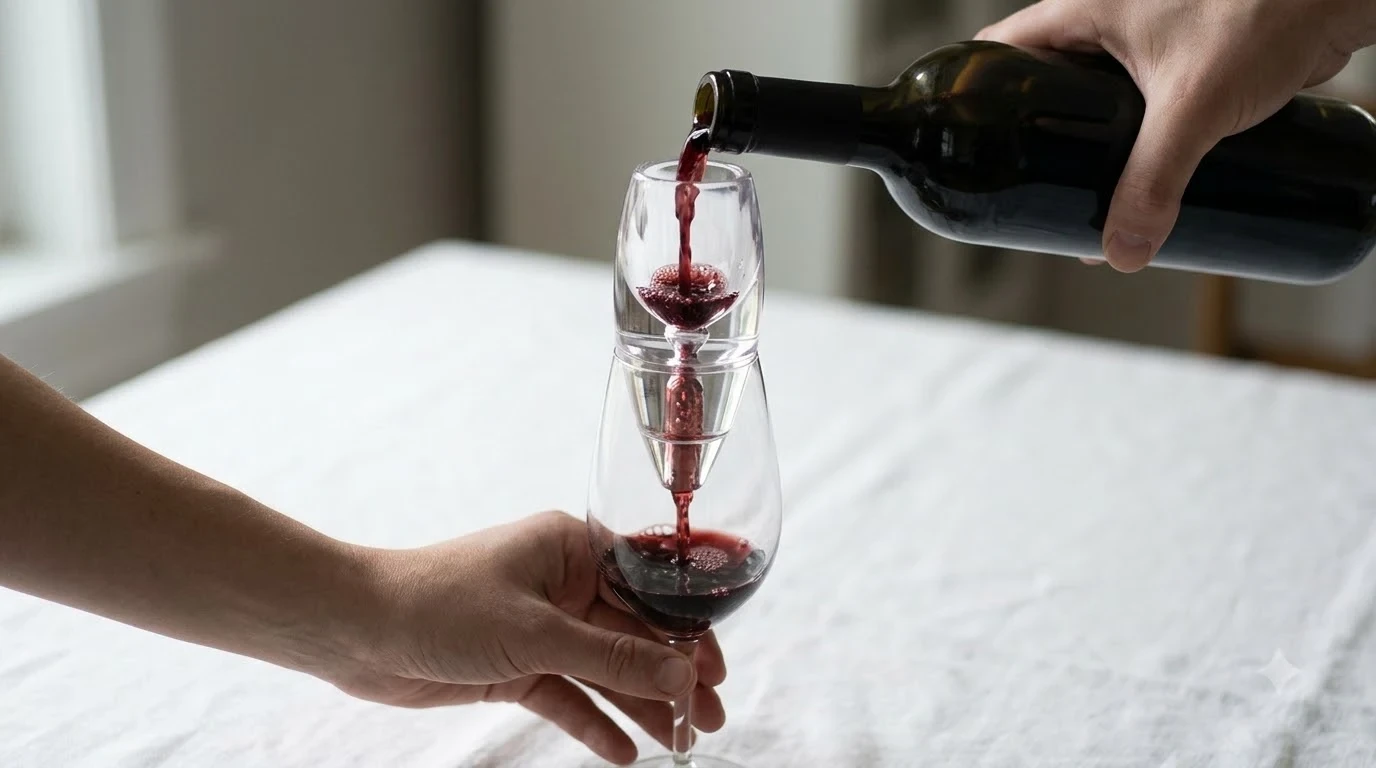

We may earn a commission when you buy through links on this page, at no extra cost to you. Learn more.
The aervana wine aerator is an electric, push-button wine dispenser that aerates wine while pouring it directly into your glass, making serving easier and helping keep sediment inside the bottle. Its upright-bottle design, telescoping stainless steel tube, and hands-free-style dispensing convenience distinguish it from traditional handheld aerators. However, battery requirements, cleaning responsibilities, limited control over aeration on the Original model, and long-term durability concerns deserve consideration before buying.
Aervana takes a different approach to wine aeration by combining an electric pump, a bottle-mounted attachment, and a dispensing spout in one accessory. Instead of lifting and tilting a bottle, you press a button to dispense an individual serving. The design is particularly interesting for people who regularly open red wines, entertain guests, or want a distinctive addition to their wine-serving equipment. This review examines the Original model, compares it with Aervana Select, and explains where the system makes sense compared with simpler aerators and traditional decanters.
Specs and Key Features
Aervana Original combines electric dispensing with individual-serving aeration. Its main advantages are the upright bottle position, push-button operation, and ability to serve wine without repeatedly lifting a heavy bottle.
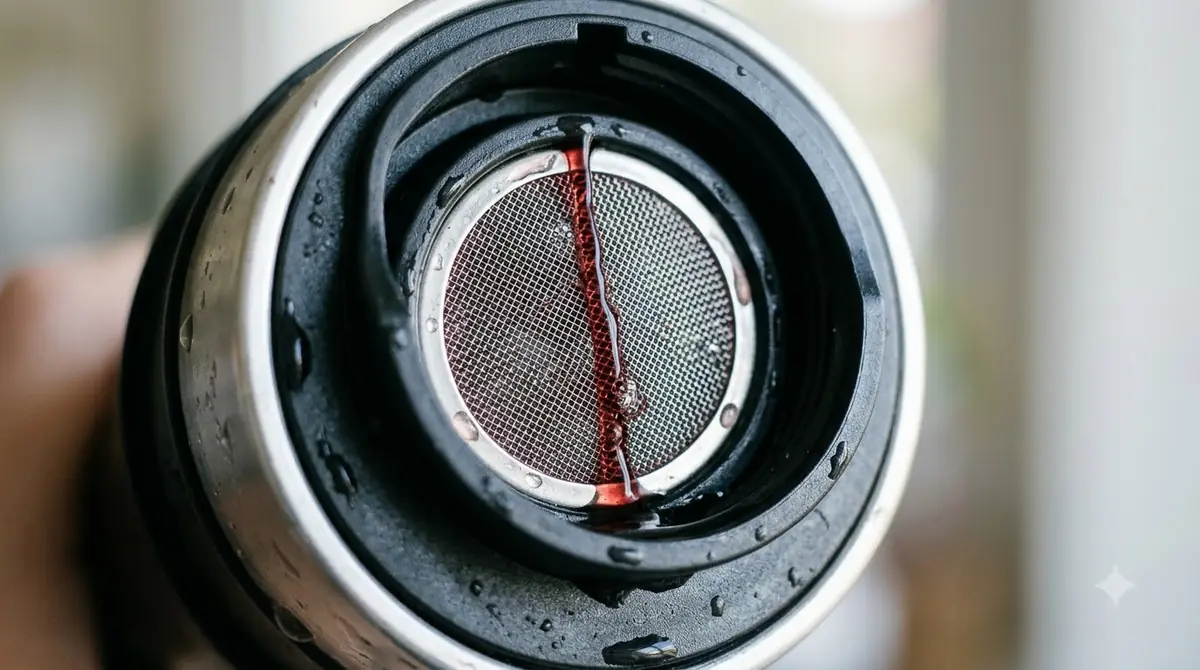
The device attaches to a wine bottle through its telescoping intake tube. Once installed, its pump moves wine from the bottle through the internal dispensing system and out through a side spout. This creates a convenient serving arrangement that resembles a small countertop wine tap. The bottle stays upright throughout the process, which is useful when serving wines that contain natural sediment.
The manufacturer’s specifications establish several practical details. Original requires six AAA batteries, accommodates most 750 ml and 1.5-liter bottles, and includes a stainless steel telescoping tube and countertop storage stand. The manufacturer also states that one battery set can serve more than 250 bottles. These specifications make it important to distinguish the Original from Select, which has additional aeration controls and a different stated battery capacity.
| Specification | Aervana Original | Aervana Select |
|---|---|---|
| Operation | Electric push button | Electric push button |
| Aeration adjustment | Fixed aeration | Three selectable levels |
| Power | 6 AAA batteries | 6 AAA batteries |
| Battery life claim | 250+ bottles | 100+ bottles |
| Intake tube | Stainless steel telescoping tube | Stainless steel telescoping tube |
| Sediment filter | No separately specified filter | Integrated sediment filter |
| Bottle compatibility | Most 750 ml and 1.5-liter bottles | Most 750 ml and 1.5-liter bottles |
| Countertop clearance | More than 10 inches | More than 10 inches |
| Included accessories | Storage stand and manual | Storage stand and manual |
These figures come from the manufacturer’s product specifications rather than independent laboratory measurements. Battery-life figures should therefore be understood as manufacturer claims, not guaranteed results under every operating condition. Battery quality, frequency of use, storage conditions, and the condition of the pump can affect actual performance.
The stainless steel intake tube is another useful feature. Its telescoping construction accommodates different bottle heights without requiring a separate fixed-length attachment for every bottle. Compatibility is described as covering most standard and larger bottles, rather than every possible bottle shape. Unusually shaped bottles and nonstandard openings may still present fitting problems.
The available specifications are published on the official Aervana Original product page. They provide a useful starting point for evaluating the equipment, although they do not establish long-term reliability or prove that every wine benefits equally from its aeration process.
One particularly important distinction is that aeration and sediment filtration are not identical functions. Original keeps the bottle upright, allowing sediment to remain at the bottom, while Select additionally identifies a dedicated sediment filter in its intake tube. Buyers who regularly serve older or unfiltered wines should pay attention to this difference.
What Owners Like
The strongest appeal of Aervana is its combination of convenient serving and aeration. Its electric pump removes the need to repeatedly lift a bottle, while its upright design offers a practical advantage for serving wines that might otherwise leave sediment in a glass.
Ease of operation is a recurring positive point in published reviews. The Gadgeteer’s earlier review described the pump as quiet, the dispensing flow as immediate, and the spout as effective at preventing countertop drips. Its reviewers also reported favorable subjective impressions when comparing aerated and non-aerated servings across three wines. That account is useful as an illustration of the product’s appeal, although the review acknowledged that its comparison was not scientifically blind.
The push-button arrangement also makes the product interesting for entertaining. A host can position a bottle on the counter, place a glass underneath the spout, and serve without repeatedly moving the bottle between guests. This can be especially convenient when pouring several glasses during a dinner or tasting session.
Convenient serving without lifting the bottle
Traditional pouring requires the bottle to be lifted, tilted, and controlled throughout the pour. That routine is familiar, but it can become inconvenient when serving a large gathering or handling a heavier bottle. Aervana replaces much of that movement with a button-operated dispensing system.
The advantage is not limited to convenience. Keeping a bottle upright can help prevent settled sediment from being disturbed. This is particularly relevant with mature red wines and some unfiltered bottlings. Sediment is a natural result of wine development and filtration choices; it is not automatically an indication that a bottle has spoiled.
Liquor.com also highlights this aspect of the product, explaining that Aervana’s pressurized system allows wine to be served while the bottle remains upright. Its discussion distinguishes the system from ordinary aerators that simply introduce air during pouring.
A more organized serving station
The included countertop stand gives the device a designated storage position between uses. This is useful for people who keep wine accessories visible rather than storing every item in a kitchen drawer. Its serving arrangement can also become a conversation piece when guests see wine dispensed from a small tap.
For a dedicated entertaining area, Aervana can complement a bar cart alongside glasses, a corkscrew, wine stoppers, and other serving accessories. The device is more specialized than a conventional pourer, but its distinctive operation makes it particularly suitable for a wine-focused setup.
Another positive is that the Original model’s stated battery capacity is substantial. The manufacturer claims more than 250 bottles per battery set, which could mean relatively infrequent battery replacement for occasional household use. Actual results will vary, and keeping spare AAA batteries available is still sensible.
Individual portions rather than batch serving
Aervana aerates and dispenses one serving at a time. That approach is useful for people who want to open a bottle and pour a glass immediately without first transferring the entire contents into a separate vessel.
It also gives drinkers the opportunity to compare successive glasses as a wine changes with exposure to air. For example, someone opening a young Cabernet Sauvignon might prefer to begin with a modest serving, allow the wine to develop in the glass, and compare it with a later serving. Aervana makes the dispensing process consistent in format, although the wine itself can continue evolving after it reaches the glass.
Common Complaints
Aervana’s specialized electric design introduces more components and maintenance requirements than a simple bottle-mounted aerator. Battery dependence, cleaning, plastic components, and long-term mechanical reliability are the main considerations for prospective buyers.
Durability deserves particular attention. ShopSavvy’s summary of customer feedback identifies reports of plastic components breaking and moisture entering the battery compartment. These reports do not establish that every unit has these problems, but they demonstrate why careful cleaning and handling matter with an electrically powered wine accessory.
The product also requires more preparation than a basic pourer. Six AAA batteries must be installed, the intake tube must be positioned correctly, and the device needs cleaning after use. Someone who opens a bottle only occasionally may find these extra steps unnecessary compared with a conventional aerator that works immediately without a power source.
Battery dependence
The Original model cannot operate as an ordinary gravity-fed wine pourer without its electric dispensing system. Its six AAA batteries are an essential part of the product, and the manufacturer does not include them. This creates a small additional purchasing and maintenance responsibility.
Although the manufacturer advertises capacity exceeding 250 bottles per set, buyers should not interpret that number as a guaranteed battery lifespan. The result will depend on the batteries used and the operating conditions. Old or depleted batteries can also interrupt service at inconvenient times, particularly during a gathering.
Battery placement and protection deserve attention during cleaning. Because the device contains electronic components, it should not be treated like an ordinary glass decanter or dishwasher-safe kitchen utensil. Liquid should be kept away from the battery compartment and electrical housing.
Cleaning requires attention
Wine residue can accumulate inside a dispensing tube or spout after repeated use. This is particularly important with red wines, which can leave visible stains and residue if the equipment is not rinsed promptly. Neglecting internal cleaning can also affect the flavor of subsequently served wines.
The manufacturer’s description calls the product easy to clean, but buyers should distinguish between flushing the wine-contact pathway and washing the entire device. The electric assembly should not be submerged or placed in a dishwasher simply because some of its components are made from metal or plastic.
A separate retailer’s product information describes flushing water through the unit as a cleaning method and wiping the exterior with a slightly damp cloth. This is a sensible general approach for electrically powered equipment, provided the specific instructions supplied with the purchased version are followed.
Plastic components and long-term reliability
The combination of plastic, metal, and rubber helps keep the product manageable, but the presence of plastic components means it should be handled with reasonable care. The telescoping tube, attachment points, and internal connections should not be forced when fitting the device onto a bottle.
ShopSavvy’s owner-feedback summary identifies concerns involving plastic parts and moisture around the battery compartment. These are useful warnings for anyone considering frequent use. However, a summary of customer reports cannot establish the failure rate across all units or determine whether every reported problem resulted from the same cause.
The most sensible buying approach is to consider Aervana a specialized electric accessory rather than an indestructible piece of bar equipment. Check the current return policy, support arrangements, and availability of replacement components before committing to regular use.
Who Should Buy and Who Should Skip
Aervana makes the most sense for wine drinkers who value dispensing convenience as much as aeration. It is less compelling for people who simply want an inexpensive way to expose wine to air or who prefer equipment with minimal cleaning and maintenance.
Frequent entertainers are among the clearest potential buyers. The push-button system can make serving easier when several guests are waiting for a pour, and the upright bottle position is useful when dealing with wines containing sediment. People who enjoy keeping specialized equipment on a countertop may also appreciate the included stand.
Good reasons to consider Aervana
- You regularly serve multiple guests. The electric spout reduces the need to lift and tilt the bottle for every serving.
- You prefer upright bottle storage during pouring. The design helps keep settled sediment away from the intake area at the bottom of the bottle.
- You enjoy experimenting with wine aeration. The dispensing process makes it convenient to compare individual servings.
- You want a distinctive wine accessory. The tap-style arrangement is different from conventional pourers and handheld aerators.
- You frequently open larger bottles. The manufacturer states that most standard 750 ml and 1.5-liter bottles are compatible.
For these buyers, Aervana offers more than an ordinary aerator. It combines a serving mechanism with an aeration function, and that combination is the main reason to consider it.
Reasons to choose another accessory
People who open wine infrequently may not benefit enough from the electric mechanism to justify the additional setup. A basic aerating pourer can be easier to store, faster to clean, and simpler to use for occasional dinners.
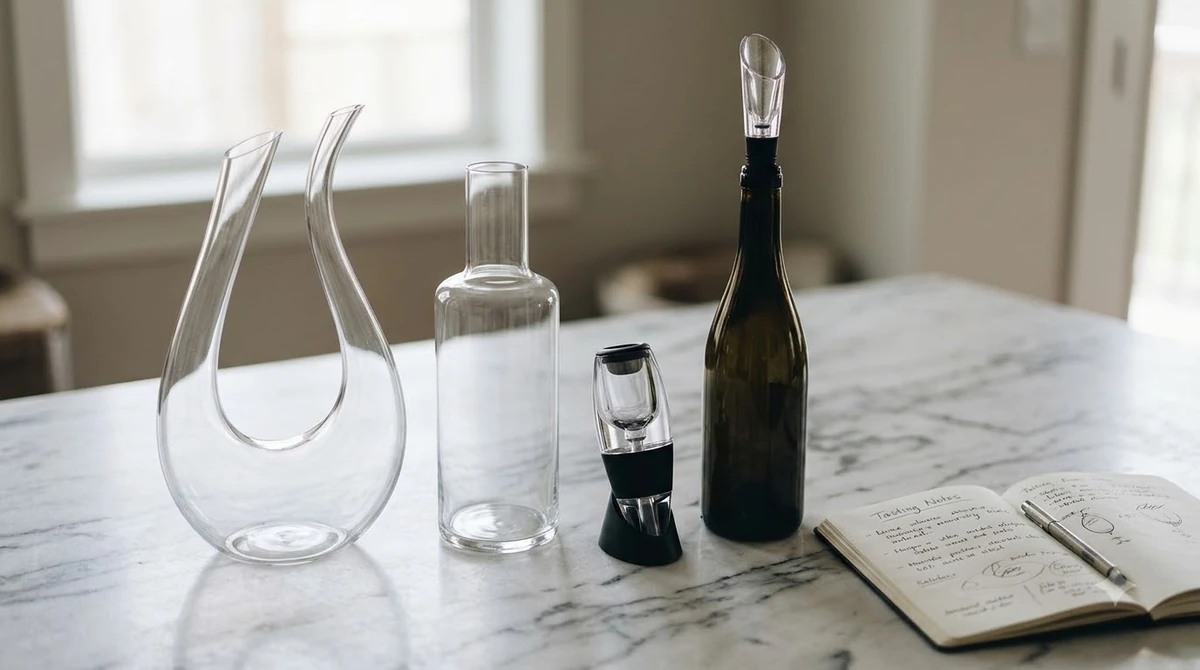
Similarly, people who prefer to aerate an entire bottle before serving may be better served by a traditional decanter. A decanter provides a larger surface area for wine exposure and allows the wine to rest for a controlled period. It can also be used to separate wine from sediment when pouring carefully.
Collectors who regularly open mature bottles should also be cautious about relying on rapid aeration. Older wines can be delicate and may lose desirable aromas after excessive exposure to oxygen. A slow, controlled decant is often a more appropriate approach when the main objective is removing sediment or allowing a particular bottle to open gradually.
For shoppers comparing different styles of equipment, the Accessory Brands category provides a useful starting point for exploring other wine-serving tools. The right choice depends on how often wine is opened, how it is served, and how much equipment maintenance is acceptable.
How It Compares to Alternatives
Aervana occupies a specific position between a traditional aerating pourer and an electric wine dispenser. Its advantage is the combination of individual-serving aeration and upright dispensing, while alternatives can offer simpler operation or more control over how long an entire bottle is exposed to air.
The important distinction is that wine aerators do not all accomplish the same task. Some introduce air as wine passes through a chamber, some dispense wine through a specialized spout, and others connect to decanters. Understanding those differences is more useful than comparing accessories solely by appearance.
Aervana versus handheld aerators
Handheld products such as the Vinturi aerator operate through a simple pouring process. Wine passes through the aerator and receives additional oxygen exposure before reaching the glass. The device does not need batteries, and there is no electric pump to maintain.
Liquor.com describes the Vinturi design as a straightforward funnel-style aerator that requires the user to hold it above the glass while pouring. It also notes that the product is dishwasher-safe. This makes it an appealing alternative for people who want a quick aeration step without maintaining an electronic accessory.
Aervana offers a different experience. It remains attached to the bottle and dispenses wine through its own spout. Rather than requiring the user to hold a separate tool while pouring, it creates a small serving station. For frequent entertaining, that distinction can be meaningful.
Aervana versus bottle-mounted pourers
A conventional aerating pourer fits into the bottle opening and allows wine to flow through an aeration chamber or specially designed spout. Liquor.com identifies the Vintorio Wine Aerator Pourer as an example of this category.
These accessories generally appeal to people who want a simpler pouring experience without batteries. They are also easier to transport and typically take up less countertop space. However, a standard aerating pourer does not offer the same electric dispensing arrangement as Aervana.
There is also a practical difference in handling sediment. Aervana keeps the bottle upright, while an ordinary bottle-mounted pourer normally requires tilting the bottle. If sediment is a regular concern, the upright arrangement may be particularly attractive.
Aervana versus traditional decanters
A decanter is a better option when the intention is to aerate a whole bottle rather than serve individual glasses. Transferring wine into a decanter increases its exposure to air and creates an opportunity to allow the wine to develop before serving.
For a young, full-bodied Cabernet Sauvignon, a resting period of approximately 30 to 60 minutes is a useful starting point. The exact requirement varies by bottle, vintage, and personal preference. Aervana instead provides aeration during dispensing, which is more convenient when there is no time to wait.
Decanters also provide a more traditional way to separate mature wine from sediment. A careful pour can leave the deposit behind while transferring the clearer wine into the serving vessel. This is a different process from simply aerating wine, a distinction also emphasized in Liquor.com’s discussion of aeration equipment.
Original versus Select
The manufacturer’s Select model addresses one limitation of Original by providing three selectable aeration levels. This gives the drinker greater control over the aeration setting rather than relying on one fixed approach.
Select also includes a sediment filter in its stainless steel telescoping tube. That is a meaningful distinction for buyers who regularly open wines with sediment or cork fragments. However, it still requires six AAA batteries, and its stated battery capacity is more than 100 bottles rather than the Original’s more than 250 bottles.
The best choice depends on priorities. Original emphasizes straightforward operation and a higher stated battery capacity. Select offers adjustable aeration and an integrated filter, making it the more feature-oriented option. Neither model eliminates the need for careful cleaning or thoughtful handling of delicate wines.
For a broader comparison of different serving arrangements, a decanter with aerator is another category worth considering. It combines a vessel for resting wine with an aeration attachment, providing a different balance of preparation time and serving convenience.
Frequently Asked Questions
Does Aervana work with screw-cap wine bottles?
Compatibility depends on the bottle opening and neck dimensions rather than whether the wine uses a screw cap. Aervana is designed to attach to suitable wine-bottle openings, so an unusually shaped or narrow-necked container may not provide a secure fit. Test compatibility carefully before operating the pump.
Can Aervana dispense wine without aerating it?
The Original is designed around its fixed aeration and dispensing process. Aervana Select provides three aeration settings, including a lower setting for drinkers who want more control. Neither should be assumed to function as an ordinary manual gravity pourer when the electric pump is not operating.
Can Aervana be used with sparkling wine?
Aervana is designed and marketed as a still-wine aerator, not as a sparkling-wine preservation or dispensing system. Carbonated wine contains dissolved carbon dioxide, which can escape during dispensing and alter the drink’s bubbles. A conventional sparkling-wine stopper and careful pouring are more appropriate for Champagne, Cava, and Prosecco.
Does Aervana remove cork fragments from wine?
The Original product description focuses on keeping sediment in the bottle rather than advertising a dedicated sediment filter. Select specifically includes a sediment filter in its intake tube. Neither feature should be treated as a guarantee that every cork fragment or other unwanted particle will be removed.
Does Aervana work with wine bottles larger than 1.5 liters?
The manufacturer’s stated compatibility covers most 750 ml and 1.5-liter bottles. Larger formats, including double-magnum bottles, are not included in that published compatibility specification. Bottle opening dimensions, neck shape, and intake-tube reach can all affect whether a particular container works.
Aervana is an interesting choice for wine drinkers who want electric dispensing, individual-serving aeration, and a convenient way to keep bottles upright during service. Its additional controls and sediment-filter options make the Select worth considering, while the Original prioritizes straightforward operation. Before choosing either model, weigh the convenience against battery requirements, cleaning responsibilities, and the availability of simpler alternatives. Aervana is most compelling when its distinctive dispensing system solves a genuine serving need rather than simply adding another gadget to the wine collection.
More in Wine Accessories
 Coravin Vs Vacu Vin: Choose the Right Wine Saver for Your BottlesUpdated Nov 21, 2026
 Zwilling Wine Stopper Review: Preserve Open Bottles LongerUpdated Nov 21, 2026
 Wine Enthusiast Wine Preserver Review: Features, Benefits and LimitationsUpdated Nov 21, 2026
 Wine Enthusiast Wine Stopper: An Easier Way to Reseal Open BottlesUpdated Nov 21, 2026
 Vintorio Wine Opener: Two-Step Cork RemovalUpdated Nov 21, 2026
 Zwilling Wine Aerator Review: Aerate, Pour, and Seal With One ToolUpdated Nov 21, 2026