

We may earn a commission when you buy through links on this page, at no extra cost to you. Learn more.
The le creuset wine opener is a well-designed manual corkscrew, and the One-Step Waiter’s Friend is a particularly practical choice for wine drinkers who want compact storage, comfortable handling, and an integrated foil cutter. Its coated stainless steel screw is designed for natural and synthetic corks, while the built-in bottle opener adds another useful function. However, its premium construction and five-year warranty do not automatically make it the right choice for everyone, particularly buyers who prefer a simple twist-style opener or need a specialist tool for fragile vintage corks.
Le Creuset makes several wine-opening accessories, and understanding the differences between them is important before purchasing. The One-Step Waiter’s Friend, the earlier two-step Waiter’s Friend, and the Table Model use different opening mechanisms and offer different handling experiences. This review examines the One-Step Waiter’s Friend in detail, explains the practical advantages and limitations of the design, and compares it with other Le Creuset options to help you choose a suitable corkscrew for your home bar.
Specs and Key Features of the One-Step Waiter’s Friend
The One-Step Waiter’s Friend combines a traditional sommelier-style corkscrew with an updated one-step extraction mechanism. Its compact construction, coated screw, and folding accessories make it a versatile manual opener for everyday bottles rather than a large countertop wine-opening device.
The stainless steel version is the clearest option for buyers who want a straightforward metal finish. Le Creuset also offers a black walnut version with the same general One-Step concept. Both versions retain the integrated foil cutter and bottle opener, although the handle materials create different appearances and maintenance considerations. The stainless steel model has a listed length of 5 inches, making it compact enough for a kitchen drawer, bar cabinet, or wine-service station.
| Specification | One-Step Waiter’s Friend |
|---|---|
| Product type | Manual sommelier-style corkscrew |
| Material option | Stainless steel |
| Alternative finish | Black walnut |
| Length | 5.0 inches |
| Width | 1.4 inches |
| Height | 0.6 inches |
| Cork compatibility | Natural and synthetic corks |
| Opening mechanism | Patented one-step design |
| Additional features | Foldable foil cutter and bottle opener |
| Cleaning | Hand wash |
| Warranty | 5 years |
| Country of origin | China |
| Pieces included | 1 |
One important feature is the coated stainless steel worm, which Le Creuset describes as grooved to help it enter natural and synthetic corks. The coating is intended to help the screw move through the cork more easily. A properly centered screw is important because an angled insertion can damage the cork or make extraction unnecessarily difficult.
The folding foil cutter is useful because it eliminates the need to keep a separate capsule-cutting tool nearby. The built-in bottle opener also makes the accessory useful for occasions when guests want beer or other capped beverages. These additions do not make it a complicated electric appliance: the opener remains a manually operated tool with moving components that fold into a compact body.
Warranty coverage is another consideration. Le Creuset lists a five-year warranty for the One-Step Waiter’s Friend. That is useful reassurance, but buyers should distinguish warranty coverage from a promise that every component will remain maintenance-free indefinitely. The screw, pivot points, and folding blade still need reasonable care.
For the complete manufacturer specification, see the official One-Step Waiter’s Friend product information.
What Owners Like About the Opening Experience
The strongest appeal of the Le Creuset Waiter’s Friend is its combination of compact size and practical functionality. It is designed to perform several wine-service tasks with one handheld accessory, making it particularly attractive to people who open bottles regularly but do not want a large wine opener taking up counter space.
The one-step mechanism is the main point of distinction. Traditional waiter’s corkscrews often require the user to position a hinged support against the bottle lip and extract the cork in two stages. Le Creuset’s updated design aims to simplify that process by providing leverage through a single-step motion. For someone who regularly opens several bottles during dinner parties, fewer adjustments can make the process feel more straightforward.
Its compact dimensions are another advantage. At 5 inches long, 1.4 inches wide, and 0.6 inches high, the stainless steel version is easy to keep in a kitchen utensil drawer. It can also be stored with wine accessories rather than occupying a dedicated counter space. Unlike larger lever systems, it does not require a wide operating area around the bottle.
Three useful functions in one accessory
The combination of corkscrew, foil cutter, and bottle opener is practical for mixed gatherings. A host can remove the capsule, uncork a bottle of Pinot Noir, and open a capped beverage without searching through several drawers for different tools. The folding design also helps keep the sharper components tucked away when the opener is stored.
The handle is intended to provide a comfortable grip, which matters because extracting a cork requires controlled pressure and rotation. A good grip can help prevent the opener from slipping while the screw enters the cork. The metal construction also gives the accessory a more substantial appearance than many inexpensive plastic-handled corkscrews.
Independent editorial experience with other Le Creuset corkscrew designs provides useful context, although it should not be confused with a direct assessment of this exact One-Step model. In its discussion of the Table Model, Serious Eats describes a simple twist-based operation and reports that the writer continued using the opener after hundreds of bottles over approximately three years. That experience supports the appeal of Le Creuset’s manual wine-opening designs, but the Table Model has a different mechanism from the Waiter’s Friend.
For buyers comparing wine accessories beyond corkscrews, Accessory Brands provides a useful starting point for evaluating the equipment that belongs in a home wine setup.
Common Complaints and Potential Drawbacks
The One-Step Waiter’s Friend has several attractive features, but its design is not universally comfortable. The most important potential drawbacks involve the folding mechanism, the learning curve associated with positioning the screw, and the difference between the stainless steel and wood-finish versions.
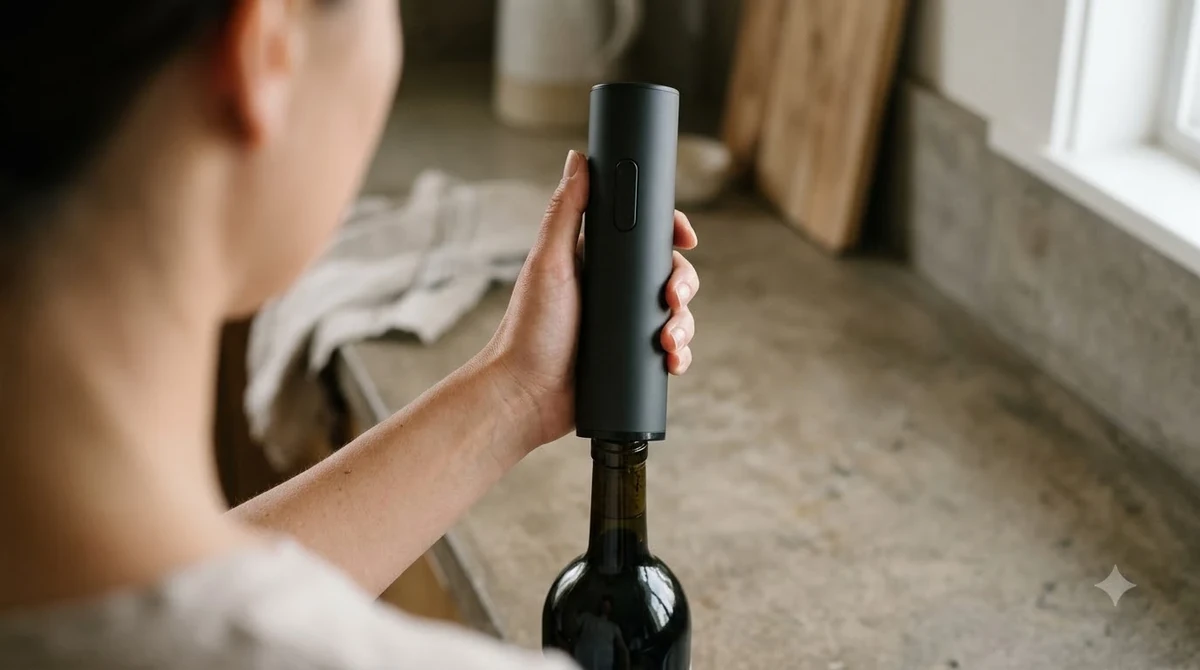
A waiter’s corkscrew requires more deliberate handling than an automatic electric opener. The user must position the worm correctly, keep the tool aligned with the bottle neck, and apply controlled movement. People who regularly struggle with traditional manual corkscrews may still find this style less convenient than a dedicated electric model, even with the updated one-step mechanism.
Handle comfort is personal
The best handle depends on hand size, grip preference, and how much force the user is comfortable applying. A compact opener is convenient for storage, but its smaller dimensions may feel less substantial to someone accustomed to a larger countertop corkscrew. The stainless steel version offers a clean, solid appearance, while the black walnut version appeals to buyers who prefer a warmer material.
Customer feedback about the wooden-handle One-Step version deserves attention. A review published through Bloomingdale’s described difficulty getting the screw into a cork, with the reviewer reporting that the worm chewed the cork during insertion. This is an individual complaint rather than proof of a widespread defect, but it highlights why the shape and sharpness of the screw should be considered before choosing a particular finish.
Moving parts require maintenance
The foldable foil cutter and bottle opener add versatility, but they also introduce additional pivot points. These components should move freely without being forced. Cork particles and wine residue can collect around moving sections, especially if the tool is used frequently without occasional cleaning.
Another limitation is its intended purpose. This is a standard manual corkscrew for conventional still-wine bottles. It should not be treated as a universal opener for every closure type. Le Creuset specifically warns that its lever corkscrews are unsuitable for sparkling wines such as Champagne and Prosecco. A corkscrew intended for ordinary wine bottles is not a substitute for safe sparkling-wine opening technique.
Finally, the five-year warranty is useful but does not eliminate the need to inspect the accessory. A bent screw, damaged hinge, or loose component can make the opening process less reliable. Buyers should also review the warranty terms applicable to their purchase rather than assuming that every type of wear or accidental damage is covered.
Who Should Buy the Le Creuset Wine Opener and Who Should Skip It
The One-Step Waiter’s Friend is best suited to wine drinkers who value a compact manual tool with several integrated functions. It makes particular sense for home hosts, regular bottle openers, and people who prefer traditional corkscrews over electric equipment.
For someone who opens a bottle of wine several times a week, the compact format is appealing. The integrated foil cutter means there is one less accessory to locate, while the built-in bottle opener offers an additional use. The coated stainless steel worm is also designed to accommodate both natural and synthetic corks, which makes it suitable for a broad range of everyday still wines.
Buyers who are likely to appreciate it
Wine enthusiasts who regularly purchase Bordeaux, Burgundy, California Cabernet Sauvignon, or other traditionally cork-closed wines may appreciate the straightforward design. The opener is small enough to keep near a wine rack or in a dedicated serving drawer. It is also an attractive gift option for someone who enjoys Le Creuset accessories and already owns basic wine-service equipment.
Restaurant-style presentation is another reason to consider this format. A traditional waiter’s corkscrew looks appropriate on a dinner table or serving station, and its folding components make it easy to carry between rooms. Someone who hosts tasting evenings can use it without setting up a large mechanical opener.
Buyers who may prefer another option
People who want the least physically demanding opening process should consider an electric wine opener instead. Those who prefer a fixed twist mechanism may also find the Le Creuset Table Model more intuitive because it does not depend on the same folding lever arrangement.
Collectors who frequently open older bottles should consider a specialist two-prong cork extractor. Vintage corks can become brittle, fragile, or partially damaged during long storage. Forcing a conventional screw into an unstable cork may cause it to crumble into the bottle.
Buyers who rarely drink wine may not need the additional functions or premium construction. A basic waiter’s corkscrew can handle occasional bottle opening without requiring a more elaborate purchase. The best choice depends on frequency of use, comfort, and the type of wine closures encountered most often.
Tip: If you regularly open both young everyday wines and older collectible bottles, consider keeping two different tools. Use the One-Step Waiter’s Friend for standard corks and a two-prong extractor for fragile vintage corks. This reduces the temptation to force a conventional screw through an unstable cork.
How It Compares to Other Le Creuset Wine Openers
Le Creuset offers more than one approach to removing wine corks, and the differences matter more than the appearance of the handle alone. The One-Step Waiter’s Friend emphasizes compact portability and integrated functions, while the Table Model uses a twist-based extraction system that appeals to people who prefer a simpler movement.
The older two-step Waiter’s Friend is another relevant alternative. It has a more conventional sommelier-style arrangement with an ergonomic plastic handle and a two-step lever mechanism. Its smaller listed dimensions and different warranty period make it a distinct option rather than simply an earlier color variation of the One-Step model.
One-Step versus two-step Waiter’s Friend
The One-Step version is designed to simplify cork extraction through a single-step motion. The two-step model uses a traditional two-stage leverage arrangement. Both include a foil cutter, a bottle opener, and a coated stainless steel screw intended for natural and synthetic corks.
The two-step model measures 4.8 inches long, 1.2 inches wide, and 0.6 inches high. The One-Step stainless steel version measures 5 inches long, 1.4 inches wide, and 0.6 inches high. The dimensional difference is modest, but the mechanism is the more meaningful distinction when choosing between them.
The warranty is also different. Le Creuset lists a ten-year warranty for the two-step Waiter’s Friend and a five-year warranty for the One-Step model. Buyers who prioritize warranty duration may therefore want to examine the older-style option before making a decision.
Waiter’s Friend versus Table Model
The Table Model is intended for people who prefer a twist-operated corkscrew. Its cage fits over the bottle neck, and the user turns the handle to drive the worm into the cork and continue extracting it. This differs from the hinged support and leverage arrangement found in the Waiter’s Friend family.
Serious Eats describes the Table Model as comfortable to operate because of its broad finger rest and straightforward turning action. The publication’s favorable experience concerns that particular design, not the One-Step Waiter’s Friend. Nevertheless, it is useful evidence that Le Creuset offers different manual approaches for people who find conventional waiter-style corkscrews awkward.
Anyone comparing these products should consider whether they prefer a folding, pocket-size tool or a dedicated twist-style opener. The former is more versatile for mixed beverage service, while the latter may be easier to understand for someone who wants to concentrate on cork extraction alone.
Readers interested in identifying different wine aromas and flavors can also explore Le Nez du Vin, a separate wine accessory category that complements a tasting-focused setup.
How to Use and Maintain the One-Step Waiter’s Friend
Correct positioning is essential for consistent cork removal. The One-Step Waiter’s Friend is designed to simplify the extraction process, but the screw still needs to enter the cork at the correct angle, and the bottle should remain stable throughout the operation.
Opening a conventional cork-closed bottle
- Inspect the bottle. Place it on a stable, level surface. Check the glass around the neck and rim for visible chips or cracks before beginning.
- Remove the foil. Use the integrated foil cutter to remove the capsule covering the cork. Keep the cutting edge controlled and away from your fingers.
- Position the opener. Center the corkscrew over the cork and ensure the tool is aligned with the bottle neck. Avoid starting at an angle.
- Insert the worm. Follow the manufacturer’s one-step operating arrangement, allowing the coated screw to enter the cork without forcing it sideways.
- Extract the cork. Use the intended leverage movement to remove the cork smoothly. Keep the bottle steady rather than pulling it toward your body.
- Release the cork. Remove the cork from the screw carefully, avoiding contact with the sharp point.
- Clean the accessory. Wipe away cork particles or wine residue, fold the accessories back into position, and store the opener in a dry place.
It is important to distinguish ordinary cork extraction from opening sparkling wine. Champagne and Prosecco bottles contain pressurized carbon dioxide, and their closures require a different approach. Le Creuset specifically advises against using its lever corkscrews for these bottles.
Cleaning and storage
Le Creuset recommends hand washing or wiping the One-Step Waiter’s Friend with a damp cloth, followed by thorough drying. It is not a dishwasher accessory. High-temperature washing and repeated exposure to moisture are unnecessary for a tool with metal components and moving parts.
Pay attention to the screw and the folding blade. Cork dust can collect around the worm after repeated use, while wine deposits can accumulate around the hinges. A gentle wipe after opening several bottles helps keep the components clean. Avoid using abrasive cleaning materials that could damage the finish.
Do not apply lubricant to Le Creuset lever corkscrews as a routine maintenance measure. The manufacturer’s care guidance specifically advises against lubricants on these mechanisms. If a coated screw becomes worn or difficult to use, the appropriate replacement procedure depends on the particular corkscrew model.
For further guidance, Le Creuset’s official wine-tool care instructions explain safe handling, synthetic cork considerations, screw replacement, and cleaning recommendations.
Storage should protect the sharp screw point and keep the mechanism dry. A dedicated drawer compartment or protective storage area is preferable to leaving the tool loose among other utensils. Avoid placing heavy kitchen equipment on top of the opener, which could put unnecessary pressure on its folding components.
If you encounter a damaged or brittle cork, stop before applying excessive force. Le Creuset recommends a two-prong Butler’s Friend for old, fragile, brittle, or broken corks. This type of extractor works differently from a conventional corkscrew and is better suited to situations where preserving the cork matters.
Frequently Asked Questions
Is the Le Creuset wine opener made in France?
No. The US product specifications for the One-Step Waiter’s Friend identify China as its country of origin. Le Creuset is a French cookware brand, but the manufacturing location of an individual accessory should not be assumed from the brand’s heritage.
Can the One-Step Waiter’s Friend remove a cork that has already been partially pulled out?
A partially extracted cork may be unstable, particularly if it has already been damaged or split. The product is designed for ordinary cork removal rather than repairing or repositioning damaged closures. If the cork is brittle or broken, a two-prong extractor is a more appropriate specialist tool.
Does the One-Step Waiter’s Friend come with a separate storage case?
The US stainless steel product specification lists one corkscrew and does not identify a separate storage case as an included accessory. Buyers should distinguish the contents of an individual opener purchase from separately packaged gift sets or accessory collections.
Can the Le Creuset corkscrew be used to reseal an opened wine bottle?
No. Le Creuset states that its lever corkscrews are not designed to replace corks in opened bottles. A dedicated wine stopper is a better choice for closing an unfinished bottle, especially if the original cork has been damaged during removal.
What should you do if a synthetic cork sticks to an older Le Creuset opener?
Le Creuset explains that older lever corkscrews can sometimes become stuck on synthetic corks. The company recommends carefully twisting the cork off the screw with your fingers, taking care because the metal point remains sharp. Do not pull forcefully or place your fingers near the exposed tip.
The Le Creuset One-Step Waiter’s Friend is a practical premium manual corkscrew for people who value compact storage, integrated tools, and a simplified opening mechanism. Its five-year warranty and compatibility with natural and synthetic corks make it a credible option for regular wine drinkers, although its smaller format and manual operation will not suit every user. Choose it for convenient everyday bottle opening, consider the Table Model if you prefer a twist mechanism, and keep a specialist extractor available for fragile older corks.
More in Wine Accessories
 Coravin Vs Vacu Vin: Choose the Right Wine Saver for Your BottlesUpdated Nov 21, 2026
 Zwilling Wine Stopper Review: Preserve Open Bottles LongerUpdated Nov 21, 2026
 Wine Enthusiast Wine Preserver Review: Features, Benefits and LimitationsUpdated Nov 21, 2026
 Wine Enthusiast Wine Stopper: An Easier Way to Reseal Open BottlesUpdated Nov 21, 2026
 Vintorio Wine Opener: Two-Step Cork RemovalUpdated Nov 21, 2026
 Zwilling Wine Aerator Review: Aerate, Pour, and Seal With One ToolUpdated Nov 21, 2026