

We may earn a commission when you buy through links on this page, at no extra cost to you. Learn more.
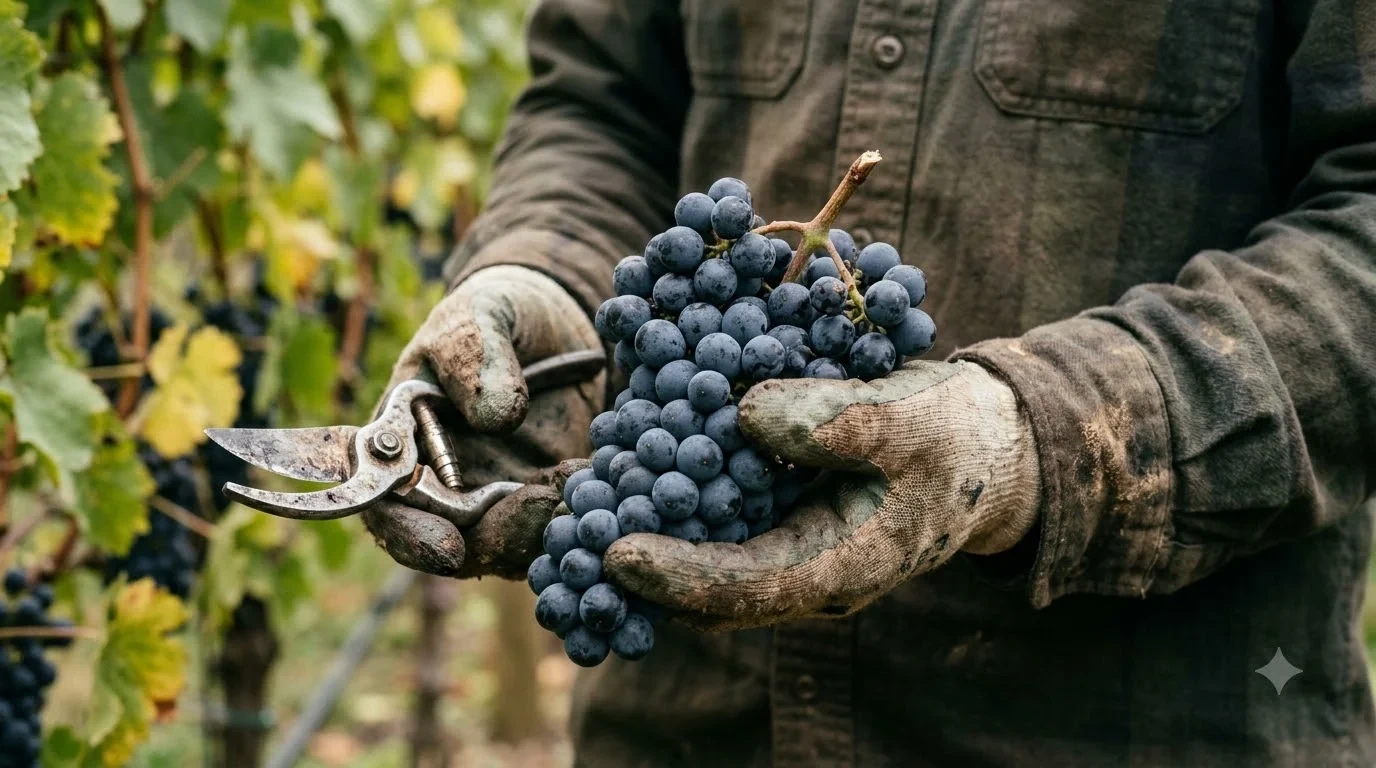
Hermitage vineyards cover about 140 hectares (345 acres) on a steep granite hill in the northern Rhône Valley of France, and they are best known for Syrah reds that can age for decades. The appellation fans out from the town of Tain l’Hermitage, and its vines face the afternoon sun on rocky, well-drained slopes. The reds are firm and structured, while the small amount of white wine made here is rich and dry.
This guide explains where the Hermitage vineyards are, how the soil and slope shape the wines, which grapes are allowed, and how to serve and age a bottle. It is written for readers who are new to the Rhône as well as for those who want to understand why a Hermitage can cost more and last longer than many other Syrahs.
Where the Hermitage Vineyards Are Located
The Hermitage appellation lies in the northern Rhône, a narrow stretch of the Rhône Valley south of Lyon. The name comes from the hill and town of Tain l’Hermitage, and the appellation spreads out from there. Hermitage is therefore a defined area of vineyards rather than a single estate, so many producers share the name on their labels.
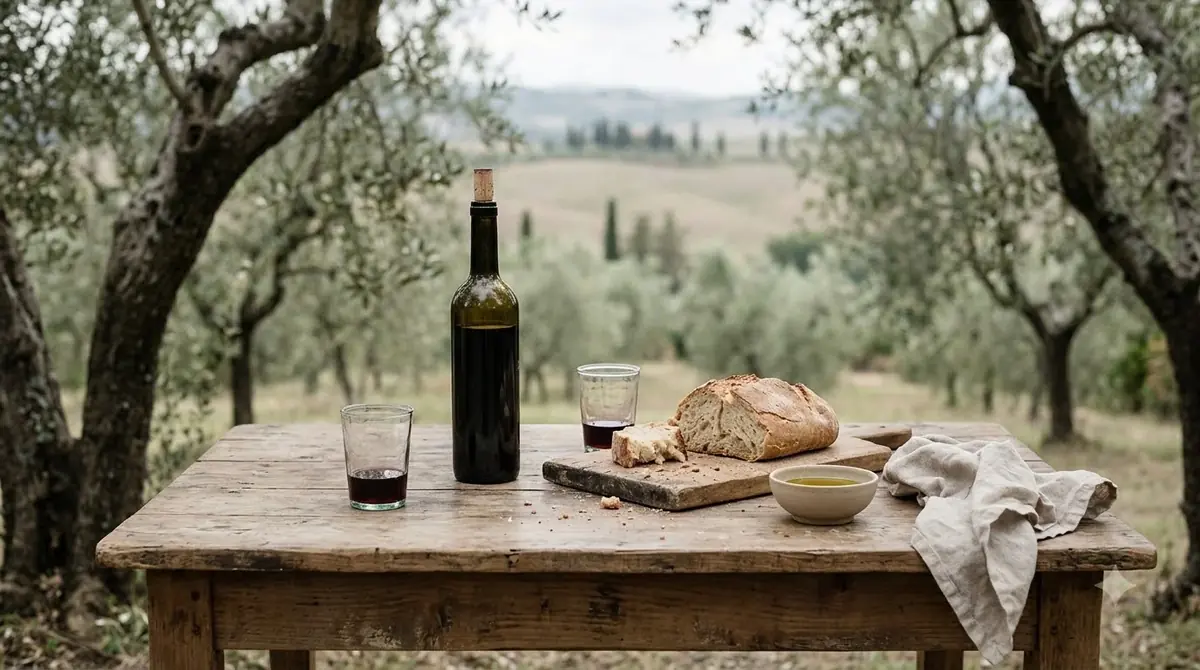
The vines grow on the southwest side of a steep granite hill, a slope that faces the afternoon sun. That exposure matters in a cool, northerly wine region, because it gives the grapes extra warmth late in the day.
The appellation is small. The vineyards cover about 140 hectares (345 acres) in total, which is far less than many better-known French appellations. Limited supply also means the best bottles can be harder to find than wines from larger appellations.
Soils, Slope and Sun Exposure
The soil is largely granite and gravel. Granite breaks down slowly, and gravel drains water quickly, so the vines on this hill have to work to find moisture. Free-draining, poor soil of this kind is generally seen as well suited to fine wine grapes, since vines in lean ground tend to produce less fruit.
The southwest exposure and the steep gradient work together. The vines catch the sun through the afternoon, which helps the grapes ripen fully in a region where the growing season can be cool. That warmth is one reason the reds develop the firm, structured profile described in the sources.
| Feature | Hermitage detail |
|---|---|
| Area under vine | About 140 hectares (345 acres) |
| Region | Northern Rhône, south of Lyon |
| Soil | Largely granite and gravel |
| Main red grape | Syrah |
| White grapes | Marsanne and Roussanne |
| Cellaring of reds | Some cellared up to 40 years |
| Cellaring of whites | Up to 15 years |
Grapes and Blending Rules
Syrah is the main red grape of the Hermitage appellation, and most reds are bottled as a single-variety Syrah. The appellation rules allow a small amount of blending, up to 15 percent Marsanne and or Roussanne, which are white grapes. That allowance gives growers some flexibility, although many producers choose to keep the wine pure Syrah.
The white wines are made from Marsanne and Roussanne in small amounts. The sources used for this guide describe them as rich, dry whites, and they make up only a small share of the appellation’s total output. The white wines are less common than the reds, so they are worth seeking out if you enjoy full-bodied whites with texture.
Because the reds are the signature of the appellation, most buyers focus on the Syrah bottles. Reading the label for the producer and the vintage year helps you understand how a given wine was made and how old it is likely to be.
What Hermitage Syrah Tastes Like
Hermitage reds share the core character of Syrah, with a dry, full-bodied profile and dark fruit at the center. According to Wine Folly’s Syrah guide, the primary flavors include blueberry, black plum, milk chocolate, tobacco, and green peppercorn. The wine typically has medium-high tannins and medium acidity, with alcohol between 13.5 and 15 percent ABV.
The region’s reds are usually firmer than many Syrahs from other parts of the world. The sources note that Hermitage reds have high tannin, which is why they tend to be aged longer than many American or Australian examples. The structure means the wine can feel tight when it is young, then soften and gain complexity with time.
Wine Folly also observes that Syrah from France and Italy tends toward higher acidity and earthy, herbaceous aromas, while Syrah from Australia, the United States, and South America is more fruit-driven and spicier. That contrast helps frame a Hermitage: it is more savory and structured than the fruit-forward styles many shoppers know first.
Aging and Serving Hermitage
Aging is one of the most important things to understand about Hermitage. The reds have high tannin and are typically cellared longer than many New World Syrahs. The source describes some Hermitage reds as cellared for up to 40 years, while the whites can age for up to 15 years. Those are upper limits, and many bottles are meant to be opened well before that point.
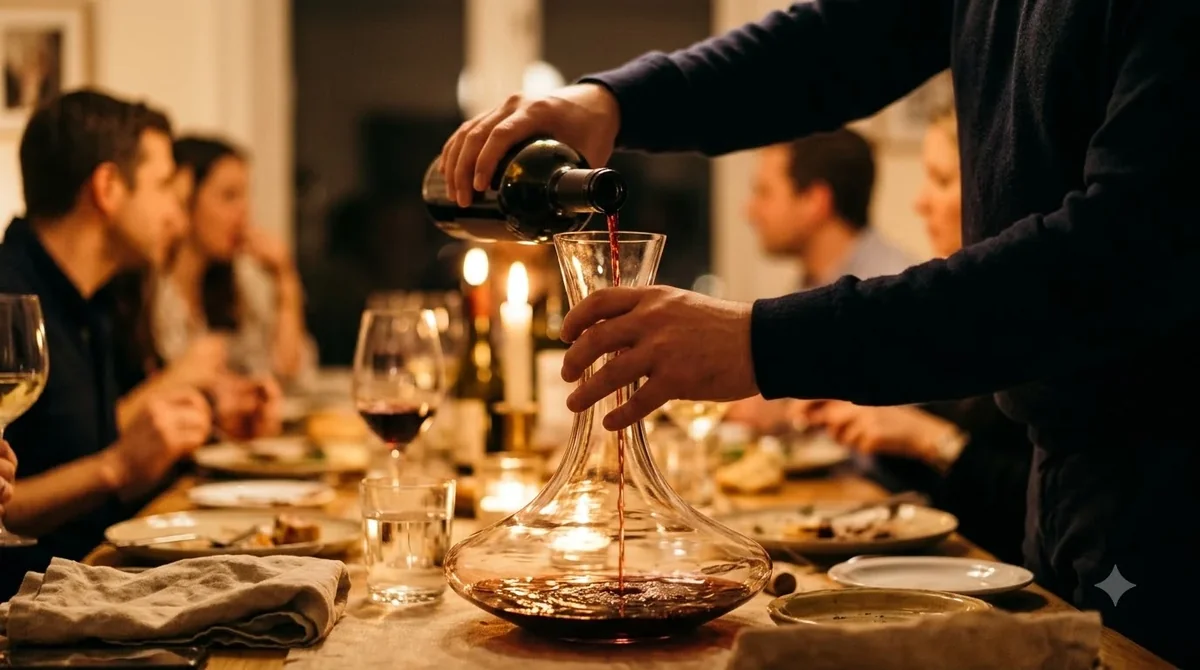
Serving temperature changes how the wine feels in the glass. Wine Folly suggests serving Syrah between 60 and 68 °F (15 to 20 °C), which is a little cooler than many people keep their reds. Serving within that range helps the fruit and spice come through without the wine tasting heavy or warm.
Tip: Because Hermitage reds carry firm tannin, a young bottle can taste closed or tight. Give a young wine more time in the cellar, and treat an older bottle as a project that rewards patience at the table.
Food Pairings for Hermitage
Rich meats and boldly spiced dishes suit Syrah’s dark fruit and savory character. Wine Folly lists lamb shawarma, gyros, Chinese five-spice pork, and Indian tandoori dishes as good matches, since the wine’s firm structure can stand up to strong spices and grilled or roasted meats.
The structure of a Hermitage also makes it a good partner for dishes with savory depth, such as braised meats and dishes with dark sauces. Its acidity and tannin help cut through fat, so the wine feels balanced rather than heavy with a rich meal.
How Hermitage Compares With Syrah From Other Regions
Readers comparing Hermitage with New World Syrah will notice a clear difference in style. Wine Folly describes Syrah from Italy and France as having higher acidity and earthy, herbaceous aromas, while Syrah from the United States and other New World regions tends to be fruit-driven and spicier. A Hermitage sits closer to the savory end of that range.
For a comparison closer to home, our guide to santa ynez valley vineyards shows how a California growing region shapes its wines. Another American region with its own distinct conditions is covered in our guide to murphys vineyards, which can help you see how climate and soil change the style of a red.
Frequently Asked Questions
How big are the Hermitage vineyards?
The appellation covers about 140 hectares, or 345 acres, of vineyards. That small size helps explain why the wines are relatively scarce.
What grape is used for Hermitage red wine?
Hermitage reds are made mainly from Syrah. The appellation allows up to 15 percent Marsanne and or Roussanne in the blend, but many producers bottle pure Syrah.
How long can Hermitage age?
The reds have high tannin and can be cellared for many years, with some sources describing bottles cellared up to 40 years. White Hermitage can age for up to 15 years.
What temperature should you serve Hermitage red?
Wine Folly suggests serving Syrah between 60 and 68 °F (15 to 20 °C). That range keeps the dark fruit and spice clear without making the wine feel heavy.
The Hermitage vineyards reward patient readers who want to understand how a small, steep, granite-based appellation shapes its wines. For a broader view of how climate and soil influence wine styles around the world, read our overview of wine regions.
More in Wine Regions
 Willcox Wine Trail: Discover Arizona’s High-Elevation Wine CountryUpdated Nov 20, 2026
 Yakima Valley Wine Region: Find the Best Styles to TryUpdated Nov 20, 2026
 Vosne Romanee Wine Tasting: Identify Aromas and Choose Better PairingsUpdated Nov 20, 2026
 Yakima Valley Wine Festival: Find the Best Seasonal Wine EventsUpdated Nov 20, 2026
 Wales Vineyards: Discover Cool-Climate Wines and Where to VisitUpdated Nov 20, 2026
 Yountville Wine Festival: Discover Napa Wines and Local FoodUpdated Nov 20, 2026