

We may earn a commission when you buy through links on this page, at no extra cost to you. Learn more.
The Gisborne wine region is a coastal growing area on the northeastern corner of New Zealand’s North Island, known for ripe Chardonnay and for claiming the first sunrise on the mainland. Its vineyards sit around the city of Gisborne on the Poverty Bay flats, where high sunshine and warm temperatures often make it one of the first regions in the country to harvest. Chardonnay is the dominant variety, followed by Pinot Gris and Sauvignon Blanc, and the wines come from three sub-regions named Ormond, Patutahi and Manutuke.
To many wine lovers outside New Zealand, the country means Sauvignon Blanc first, so Gisborne often gets overlooked. That is a missed opportunity for anyone who enjoys textured white wines from a warm, sunny coastline. If you are new to how place shapes a wine’s character, the Wine Regions overview is a useful primer before you read on.
Location, Sunshine and the First Sunrise
Gisborne sits in the northeastern corner of the North Island, facing the Pacific Ocean, and its sunshine hours are the starting point for almost every conversation about its wines.
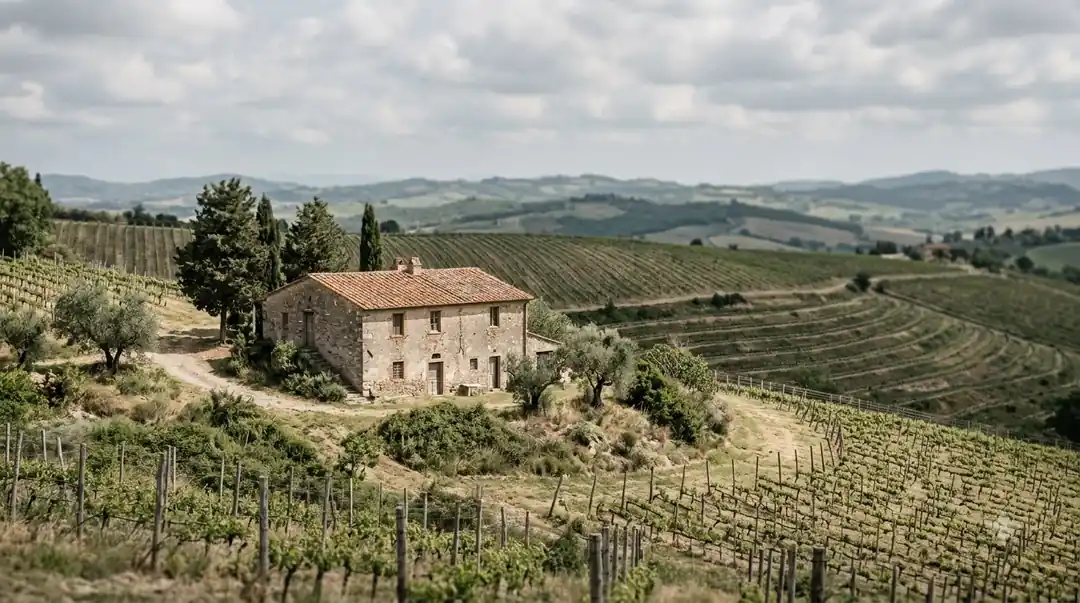
The region’s geography is dramatic. Its tallest mountain, Hikurangi, rises to 1,752 metres, and the regional wine association notes that it is the first place the emerging sun shines on mainland New Zealand. The same association says Captain James Cook made his first New Zealand landfall in the area in 1769, which gives the region a history that reaches back well before commercial viticulture. The vineyards lie largely on the Poverty Bay flats, where the Waipaoa River and other waterways have left a mix of soils behind.
Climate is the reason the region’s wines have their particular character. The New Zealand Winegrowers’ regional profile says Gisborne regularly records some of the highest sunshine hours and temperatures in the country, which frequently makes it the first place to harvest. Cooling afternoon sea breezes reach the vineyards closer to the coast, and that combination of warm days and moderating air lets grapes ripen fully while holding on to some freshness. Inland, the picture shifts. The warm Patutahi area west of the city receives low rainfall, which suits sloping, well-draining sites.
For a wine drinker, the practical takeaway is that Gisborne fruit tends to reach full ripeness early in the season. That is why the region’s whites often show ripe, generous fruit, and why its reds need a long summer to reach their best. The result reads as warmer and riper than much of New Zealand’s wine country, even though the ocean is never far away.
Three Sub-Regions: Ormond, Patutahi and Manutuke
Gisborne is usually described as three sub-regions, and each one leans toward a different style. Ormond is the prestige heartland, Patutahi is the warm inland site known for aromatic whites, and Manutuke is the coastal area with the longest winegrowing history.
The New Zealand Winegrowers’ regional profile lays out the three areas in detail. Ormond lies north of the city, where the river valley narrows toward the Raukumara Ranges. It holds the site of Gisborne’s original plantings and is home to numerous single-vineyard wines, along with the Golden Slope, a 10-kilometre, gently sloping, free-draining escarpment with limestone-influenced topsoil. The profile credits the Golden Slope with some of Gisborne’s best Chardonnay.
Patutahi, west of the city, is a warmer inland area that holds around one-third of the region’s vines. Its clay and silt soils drain well on slopes, and its low rainfall suits Gewürztraminer, which the profile describes as rich and textured with good body. Manutuke, south of the city, is the coastal sub-region and the oldest of the three for planting, with vines first established there in the late 1890s. Chardonnay is the main variety on its well-drained sandy soils, while heavier Kaiti clay to the west gives a different character. Vineyards near the river can produce botrytised wines and finely textured aromatics.
The table below summarises how the three areas differ.
| Sub-region | Position | Soils | Typical focus |
|---|---|---|---|
| Ormond | North of the city, toward the Raukumara Ranges | Limestone-influenced topsoil on the Golden Slope | Single-vineyard wines and top Chardonnay |
| Patutahi | Warm inland site west of the city, about one-third of the vines | Sloping, well-draining clay and silt | Rich, textured Gewürztraminer |
| Manutuke | Coastal area south of the city, planted from the late 1890s | Sandy, well-drained soils; heavier Kaiti clay to the west | Chardonnay, botrytised wines and aromatics near the river |
Chardonnay Capital of New Zealand: Style and Plantings
Chardonnay carries the region’s reputation, and the regional marketing calls Gisborne the Chardonnay capital of New Zealand. The grape is the most planted variety here, and the style is typically riper and more tropical than the cooler-climate Chardonnays many people associate with the country.

New Zealand Chardonnay is still a small share of national output. According to New Zealand Winegrowers, Chardonnay accounts for only about 2% of wine exports, and across the country’s vineyards the grape covers roughly 6% of planted area. A trade survey of the country’s Chardonnay zones places Gisborne alongside the bigger districts. Marlborough and Hawke’s Bay are the largest Chardonnay regions, and both are cooler-climate expressions of the grape. Gisborne offers a different picture, with a riper, more tropical style that the survey ties to its temperate climate.
| Region | Chardonnay under vine | Style reported |
|---|---|---|
| Marlborough | 1,083 hectares | Cooler-climate expression |
| Hawke’s Bay | 1,034 hectares | Cooler-climate expression |
| Gisborne | 582 hectares | Riper, more tropical |
In practice, the regional body describes Gisborne Chardonnay as highly aromatic, with rich, lush palates bursting with fruit. Simple early-drinking styles are a speciality, while the most intense wines from the best sites have real longevity. That range makes the wine useful both as an everyday glass and as a bottle that can age. If you want to see how the same grape reads in another growing setting, the tasmania wine region guide offers a useful comparison.
Pinot Gris, Gewürztraminer and Sauvignon Blanc Beyond the Flagship
Beyond Chardonnay, the region’s whites range from bold, tropical Sauvignon Blanc to aromatic Gewürztraminer and textured Pinot Gris, while the reds play a smaller role.
Pinot Gris is the second most planted variety in the region, according to regional guides. Its style shifts with the vintage and the winemaker, with sweetness and fruit intensity varying from year to year, and the wines typically show strong melon and spice aromas with a rich mouthfeel. Gisborne Sauvignon Blanc is usually made in a very tropical, ripe and bold style with broad palates. Early-picked versions are lighter, with herbaceous and zesty notes. Those two extremes show how picking time shapes style in a warm region.
Gewürztraminer is a natural fit for the Patutahi area, where the clay and silt soils and low rainfall produce wines with good texture and body. Among the reds, Merlot is challenging in Gisborne’s climate, but drier years give fleshy, flavoursome wines. Malbec does best on carefully chosen sites. A Wrights Winery grower also notes that reds such as zinfandel and syrah need an extended summer to ripen fully, which is why the region’s warmest seasons matter so much for them.
For a buyer, the aromatic whites deliver the most consistent expression of the region. Treat the reds as a side exploration and start with the whites, which show Gisborne’s character most clearly.
Recent Vintages and What Growers Reported
Recent harvest reports from the Gisborne Herald describe a season shaped by settled weather, a brief heat spike and a long, slow ripening period that favoured quality over quantity.
Millton’s director, Annie Millton, described an early bud burst and a strong start to the growing season, followed by some weather challenges and periods of bright Tairāwhiti sunshine. Flowering in November went well, and sun and light winds produced large bunch numbers per vine. A small but sharp heat wave in December was followed by a cooler, damper January, which she said gave the grapes a slower, longer ripening window. She expected the harvest to deliver some outstanding wines.
Matawhero’s winemaker, Kirsten Searle, reported a wet January followed by warm, dry February and March, which allowed the fruit to be picked with good flavours. The yield was slightly above average after a couple of lighter seasons, and she said the gewürztraminer looked particularly good. At Indevin’s Gisborne operation, the harvest brought in 10,660 tonnes of grapes, and the winery and viticulture team there employs 33 people. Indevin describes itself as New Zealand’s largest wine producer, with 4,000 vineyard hectares across Marlborough, Hawke’s Bay and Gisborne.
The reports were not uniform. Wrights Winery’s Geoff Wright said growers who kept open canopies and focused on quality rather than quantity would benefit most, and he expected the big Chardonnay from Gisborne to be a highlight. TW’s winemaker reported very good tannin ripeness in the red varieties, and described the dry end of summer, with cool nights and warm days, as optimal for physiological ripeness. Taken together, the reports point to a vintage where restraint in the vineyard paid off.
Serving, Pairing and Cellaring Gisborne Wines
Gisborne’s ripe Chardonnay and aromatic whites are easiest to enjoy when they are served at the right temperature and matched to food with similar weight and intensity.
Start with temperature. Full-bodied whites such as Gisborne Chardonnay show best between 50 and 55°F, while lighter whites and rosé sit at 45 to 50°F. Gewürztraminer with some sweetness is best between 43 and 50°F. Full reds, including Merlot and Malbec, should be served between 60 and 65°F, while lighter reds such as a Pinot Noir sit at 55 to 60°F. Pour about 5 ounces per glass, and expect roughly five glasses from a 750 ml bottle.
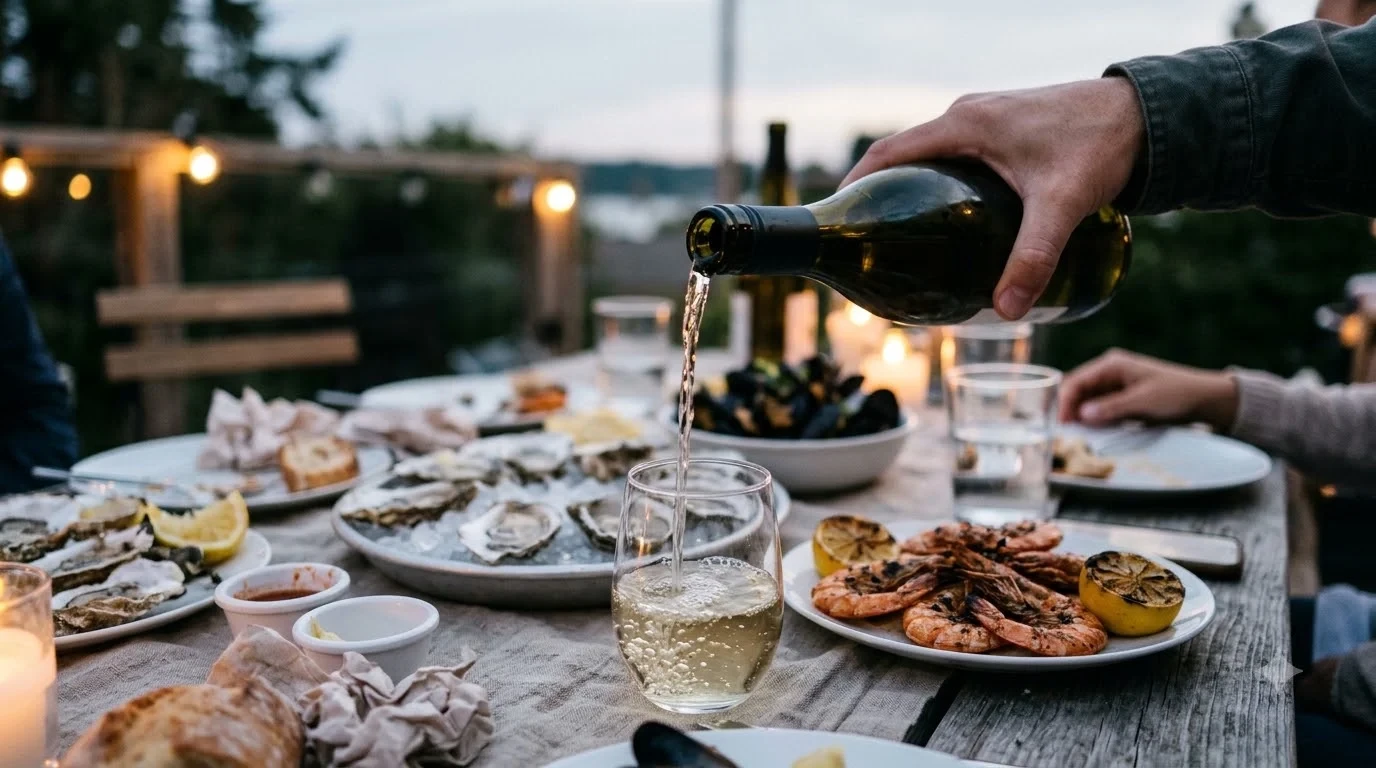
Pairing follows a few reliable rules. Acidic food needs wine with equal or higher acidity, so bright, lemony dishes suit the zesty end of Sauvignon Blanc better than a rich Chardonnay. Salt and fat soften tannin, which makes roast lamb or a steak a better partner for Merlot than a light salad. Oily fish clashes with tannic reds, so keep salmon away from a firm Merlot. Chilli heat is amplified by alcohol and tannin, so an aromatic white like Gewürztraminer usually works better with spicy food than a high-alcohol red. Gisborne’s hāngī, the traditional earth-oven dish cooked for three to four hours, suits a textured white with some weight. For dessert, the river-side botrytised wines from Manutuke should be at least as sweet as the dish.
Tip: Take a full Chardonnay out of the fridge about 15 minutes before serving so it warms into the 50 to 55°F range and shows its tropical fruit rather than its chill.
Cellaring is straightforward. Store bottles on their side in a cool place near 55°F. Young full reds benefit from 30 to 60 minutes of decanting, and once opened, still wines keep for three to five days in the fridge, so finish an open bottle of Chardonnay within that window.
Planning a Visit to the Gisborne Wine Region
Most of the region’s wineries sit close together and close to town, so you can visit several cellar doors without long drives in between.
According to New Zealand Winegrowers, the award-winning wineries are close neighbours and can all be reached within 15 minutes from the city centre or Gisborne Airport. That makes it easy to combine a tasting with a meal or a walk and lets visitors take their time. The regional association lists its member estates by name, including Ashwood Estate, Bushmere Estate, Hihi, Longbush, Matawhero, TW and Wrights Vineyard & Winery, which gives a practical starting point for planning a route.
The town itself is a relaxed coastal base. The regional tourism material describes a surf town with cafés, shops and galleries, along with trekking, fishing, surfing and cycling. Visitors who want a day away from the vineyards can head up the coast toward East Cape, where the drive is scenic in its own right. For a broader comparison of how different terroirs translate into bottles, the savoie wine region guide is worth a read. If you want to see the region at its busiest, plan around the harvest, since Gisborne’s picking season starts early compared with most of New Zealand.
Frequently Asked Questions
What does the name Tairāwhiti mean?
Tairāwhiti is the Māori name for the region and translates roughly as the coast upon which the sun shines across the water. The regional association uses the name alongside Gisborne, and locals often call the city “Gizzy.” The name reflects the same sunrise story that anchors the region’s wine marketing.
How many people live in the Gisborne region?
The regional association says the region is home to about 44,000 people. It describes the area as renowned for its dry, sunny climate, fertile soil and relaxed lifestyle. Those same qualities underpin the wine industry, from the sunshine that drives early ripening to the soils along the rivers.
Which estate planted the first gewürztraminer in New Zealand?
Matawhero says its Riverpoint vineyard was the first in New Zealand to plant gewürztraminer, and its winemaker repeated the claim in regional press coverage. The estate is one of the wineries listed by the regional association. Its gewürztraminer is one of the varieties the estate highlights in its harvest reports.
What is the Eastwoodhill arboretum?
Eastwoodhill is New Zealand’s national arboretum, and it first opened in 1910. It spreads across 135 hectares of signposted paths and displays a wide range of plant species to support global biodiversity. Its collection of Northern Hemisphere trees is described as the largest in the Southern Hemisphere.
When was the Tairāwhiti Museum established?
The Tairāwhiti Museum was first established in 1883, when its first collection occupied a single small room in the Municipal Office in Gisborne. Today it has several wings focused on the history of Ngāti Porou. Its permanent exhibition includes taonga, objects of great value, and historic photographs from the region.
Gisborne rewards curiosity more than its size suggests. Start with the Chardonnay, explore the aromatic whites from Patutahi, and pair the wines by weight and acidity. The sunshine is the thread that ties the region together, and it explains much of what ends up in the glass.
More in Wine Regions
 Willcox Wine Trail: Discover Arizona’s High-Elevation Wine CountryUpdated Nov 20, 2026
 Yakima Valley Wine Region: Find the Best Styles to TryUpdated Nov 20, 2026
 Vosne Romanee Wine Tasting: Identify Aromas and Choose Better PairingsUpdated Nov 20, 2026
 Yakima Valley Wine Festival: Find the Best Seasonal Wine EventsUpdated Nov 20, 2026
 Wales Vineyards: Discover Cool-Climate Wines and Where to VisitUpdated Nov 20, 2026
 Yountville Wine Festival: Discover Napa Wines and Local FoodUpdated Nov 20, 2026