

We may earn a commission when you buy through links on this page, at no extra cost to you. Learn more.
The cote rotie wine region is a celebrated Northern Rhône appellation in southeastern France, producing elegant, structured red wines made primarily from Syrah, sometimes blended with up to 20% Viognier. Its vineyards occupy steep, sun-facing slopes above the Rhône River near Ampuis, where terraces, varied geological formations, and careful vineyard work shape the wines. The appellation is particularly known for the contrasting terroirs of Côte Brune and Côte Blonde, its fragrant Syrah, and its ability to produce wines that develop beautifully over many years.
Côte-Rôtie is one of the most distinctive places to discover Syrah in France. Although its vineyard area is relatively small, its wines have an international reputation for combining concentrated dark fruit, floral aromas, savory complexity, and refined tannins. Understanding its geography, grape varieties, vineyard traditions, and aging potential makes it easier to appreciate what distinguishes a bottle of Côte-Rôtie from other Northern Rhône reds.
Where the Côte-Rôtie Wine Region Is Located
Côte-Rôtie lies in the Northern Rhône Valley, on the eastern side of France, along the right bank of the Rhône River. The vineyards begin just south of the historic city of Vienne and extend around three neighboring communes: Ampuis, Saint-Cyr-sur-Rhône, and Tupin-et-Semons.
The appellation occupies a particularly important position in the Northern Rhône wine landscape. It is the northernmost red cru of the Rhône Valley and sits within a corridor of vineyards that also includes Condrieu, Saint-Joseph, Hermitage, and Cornas. Lyon lies approximately 30 kilometers to the north of the main vineyard area, making Côte-Rôtie relatively accessible from one of France’s largest cities.
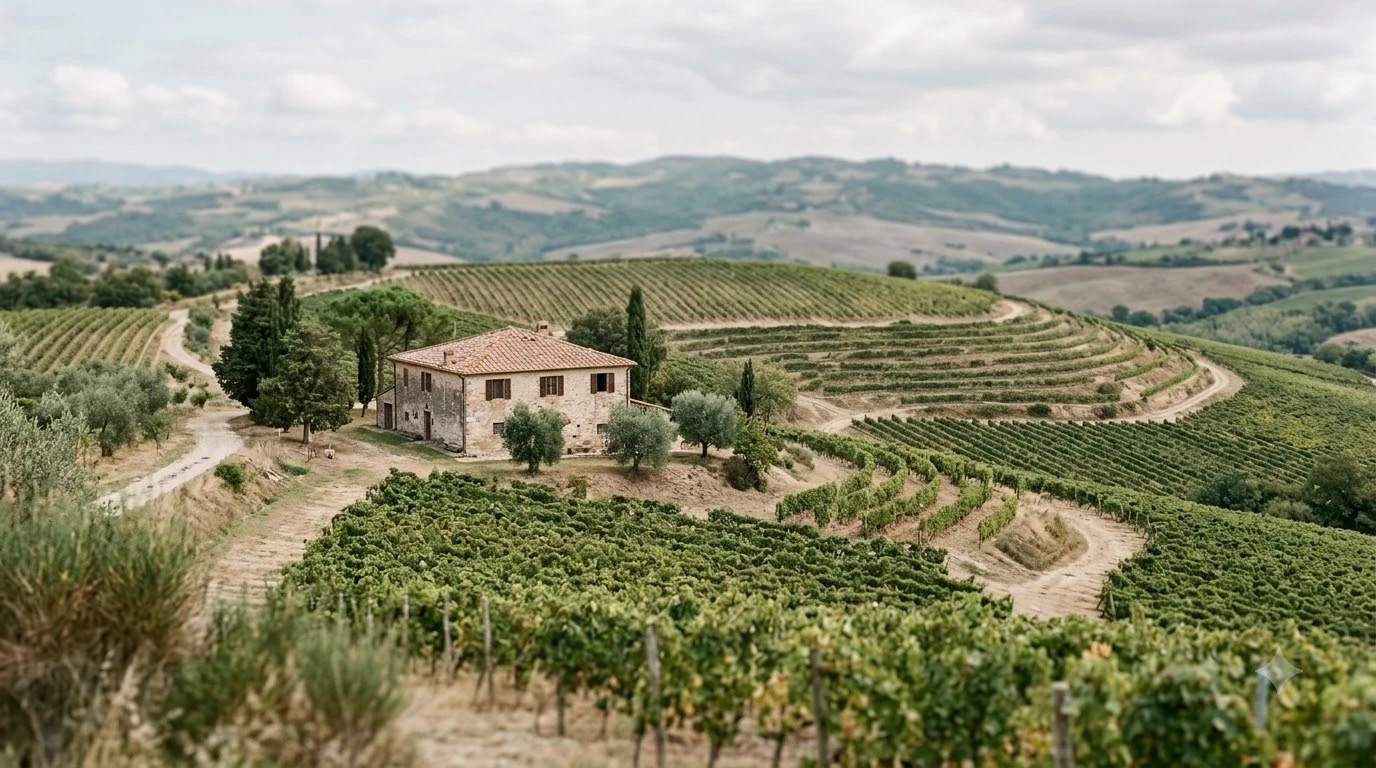
Ampuis is the historic heart of the appellation. Its village and surrounding slopes are closely associated with the development of Côte-Rôtie wine, and the vineyards form a striking landscape above the river. The combination of steep terrain, favorable sunlight, and varied rock formations makes this small geographical area particularly suited to producing distinctive Syrah.
Three communes, one appellation
The official production area includes three communes, each contributing different vineyard exposures and soil conditions. Ampuis contains many of the best-known vineyard sites and serves as an important reference point for understanding the appellation. Saint-Cyr-sur-Rhône extends the vineyard landscape to the north, while Tupin-et-Semons occupies the southern portion.
The appellation received official AOC recognition on October 18, 1940. Its regulations protect the geographical origin, permitted grape varieties, and production standards associated with the name Côte-Rôtie. Under these rules, the designation applies exclusively to red wine. The French INAO’s official Côte-Rôtie appellation profile confirms its position among the Northern Rhône crus and describes its distinctive geographical setting.
The appellation’s vineyard area was reported at 343 hectares by Inter Rhône for 2024, with total production of 11,752 hectoliters. These figures illustrate how limited the appellation’s output is compared with much larger French wine regions. Its relatively small production area, difficult terrain, and distinctive wines contribute to its reputation among collectors and wine enthusiasts.
Position within the Northern Rhône
Côte-Rôtie belongs to a group of Northern Rhône appellations where Syrah is the defining red grape. However, its position farther north, steeply sloping vineyards, and permitted use of Viognier give it a distinctive identity.
Condrieu, immediately associated with the same general vineyard landscape, is particularly famous for white Viognier. Côte-Rôtie uses that grape differently, allowing a limited proportion alongside Syrah in its red wines. Further south, the vineyards of Saint-Joseph and Hermitage offer other expressions of Northern Rhône Syrah.
For readers comparing French vineyard areas, the Wine Regions resource provides a useful starting point for understanding how geographical origin influences grape selection, wine styles, and regional traditions.
Côte Brune and Côte Blonde: Two Distinct Terroirs
Côte-Rôtie’s traditional identity revolves around two adjoining vineyard areas: Côte Brune to the north and Côte Blonde to the south. Their differences in geology, soil composition, and vineyard conditions help explain the range of styles found under the same appellation.
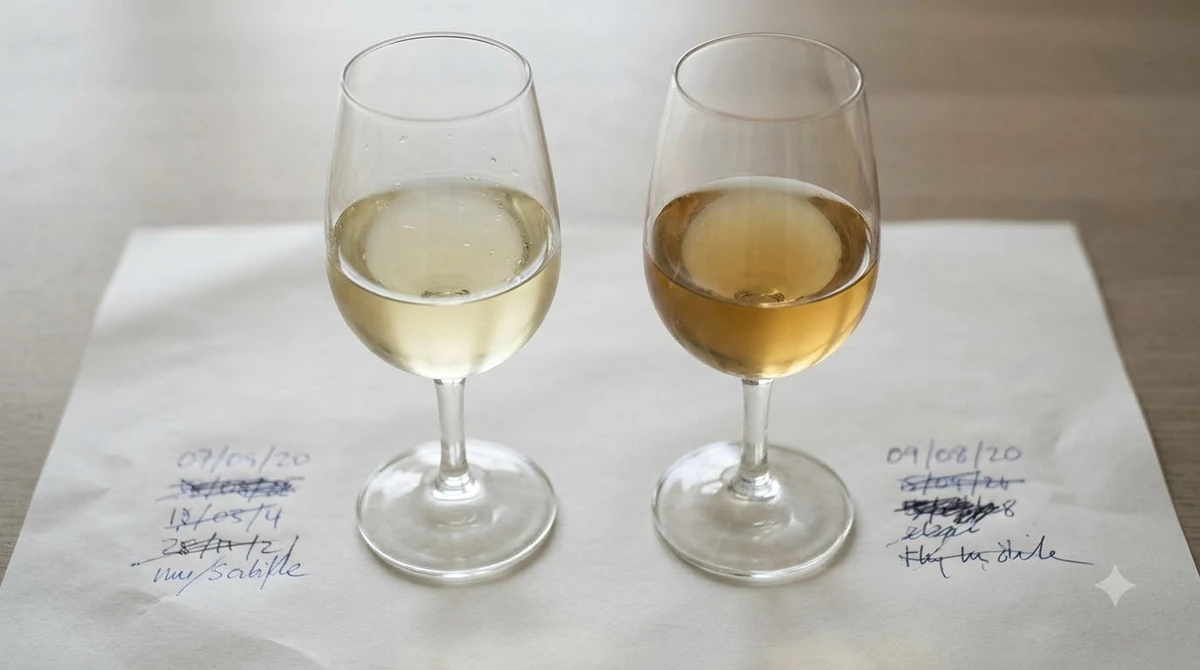
The Reynard stream near Ampuis is traditionally associated with the division between the two areas. Although both produce Syrah-based wines, Côte Brune is generally associated with darker, more structured expressions, while Côte Blonde is known for aromatic finesse, floral character, and a softer impression of tannin.
Côte Brune: structure and depth
Côte Brune occupies the northern portion of the traditional vineyard division. Its soils are associated with mica-schist and iron-rich geological materials. The darker appearance of these soils helps explain the name Brune, which means brown in French.
Wines from this area often show concentrated black fruit, black pepper, smoky notes, and firm tannins. Their structure can be particularly impressive, especially in wines made from carefully selected vineyard parcels. With bottle aging, primary fruit can gradually give way to leather, earthy aromas, dried herbs, and more complex savory characteristics.
Several celebrated vineyard names are associated with Côte Brune, including La Landonne and La Turque. These sites are frequently encountered in discussions of high-quality single-vineyard Côte-Rôtie, although the producer’s approach and the conditions of each vintage remain important influences on the finished wine.
The structured character of Côte Brune makes these wines attractive to collectors who enjoy mature Syrah. Depending on the producer, vintage, and storage conditions, well-made examples can develop over 15 to 20 years or longer.
Côte Blonde: fragrance and finesse
Côte Blonde occupies the southern portion of the traditional division. Its geological formations include altered gneiss, granitic sands, and localized lighter geological materials. The lighter appearance of the soils provides the traditional explanation for the name Blonde.
Wines from Côte Blonde are often described as more floral and supple than those from Côte Brune. Red berry fruit, raspberry, violet, and delicate spice can be prominent, accompanied by a polished texture. Their structure may appear less imposing in youth, although good examples still possess considerable aging capacity.
La Mouline is among the best-known vineyard names associated with Côte Blonde. Its reputation reflects the aromatic complexity and distinctive character that can emerge from carefully farmed individual sites.
These descriptions represent traditional tendencies rather than fixed rules. A Côte Blonde wine is not automatically lighter than every Côte Brune wine, and individual producers can create different expressions through vineyard selection, harvesting decisions, extraction, and oak aging.
How the two areas influence wine style
The following comparison summarizes the traditional differences between the two vineyard areas.
| Characteristic | Côte Brune | Côte Blonde |
|---|---|---|
| Position | Northern side | Southern side |
| Traditional soil association | Mica-schist and iron-rich materials | Gneiss and granitic sands |
| Typical fruit | Blackberry and blackcurrant | Raspberry and red berries |
| Common aromatic character | Spice, smoke, and savory notes | Violet and floral aromas |
| Typical structure | Firm and powerful | Supple and refined |
| Traditional aging potential | 15–20 years or longer | 10–15 years or longer |
Many Côte-Rôtie wines combine grapes from different vineyard parcels, bringing together the structure associated with Côte Brune and the aromatic qualities associated with Côte Blonde. This approach allows producers to create wines with a broader range of flavors and a more balanced overall profile.
Steep Vineyards, Climate, and Geological Conditions
Côte-Rôtie’s distinctive wine style begins with its physical landscape. The vineyards occupy steep slopes overlooking the Rhône, with south-facing exposures, terraced planting, and geological formations that influence drainage and vine development.
Some vineyard slopes exceed 60% gradients, making conventional mechanized vineyard work extremely difficult. Instead, growers maintain narrow terraces and stone retaining walls that prevent soil from sliding downhill. These structures are an essential part of the region’s agricultural heritage.
Terraces and traditional vineyard work
The terraced landscape is one of the most recognizable features of Côte-Rôtie. Narrow planting areas are supported by dry-stone walls, traditionally known as cheys or chéyes in local usage. The walls retain the fragile soil while allowing vines to grow on slopes that would otherwise be difficult to cultivate.
Many vineyard tasks must be completed by hand. Pruning, canopy management, harvesting, and the movement of equipment require considerable physical work. Some steep parcels are inaccessible to ordinary agricultural machinery, so growers must adapt their techniques to individual terraces.
These working conditions influence production costs and help explain why Côte-Rôtie remains a relatively limited-volume appellation. They also require considerable attention to erosion control, terrace maintenance, and the preservation of existing vineyard structures.
Sunlight and climate
The vineyards benefit from southern and southeastern exposures that maximize sunlight during the growing season. This is particularly important in a relatively northern Rhône location, where Syrah needs sufficient warmth and sunlight to reach full ripeness.
The regional climate combines continental and Mediterranean influences. Winters are generally moderate, summers are warm to hot, and rainfall is relatively regular. Dry northerly and warmer southerly winds can also influence vineyard conditions, while the Rhône corridor creates its own local airflow patterns.
Protection from northerly winds and favorable slope exposure help create conditions suitable for growing Syrah. The resulting wines can combine ripe fruit and substantial structure with an aromatic profile that remains more refined than the heavily concentrated style associated with some warmer-climate Syrah regions.
Geology and soil drainage
The geology of Côte-Rôtie includes ancient metamorphic formations, particularly mica-schist and gneiss. These rocks weather into soils that vary between vineyard sites, influencing water retention, drainage, and the physical environment in which the vine roots develop.
Rock fractures can allow roots to explore deeper geological layers. The combination of slope, soil depth, and drainage creates considerable variation even between neighboring vineyard parcels.
Granite, gneiss, and mica-schist are also important geological materials in other Northern Rhône appellations. However, the specific arrangement of these formations, combined with Côte-Rôtie’s unusual slope exposure, contributes to the identity of its individual vineyard sites.
For wine enthusiasts, this geological variation explains why two bottles from the same appellation can show noticeable differences even when both are made predominantly from Syrah.
Syrah and Viognier: The Grapes Behind Côte-Rôtie
Syrah is the principal grape of Côte-Rôtie, accounting for at least 80% of the permitted grape composition under appellation regulations. Viognier, an aromatic white grape, may accompany Syrah up to a maximum of 20%.
This combination is one of the region’s most distinctive winemaking traditions. Although Viognier is white, its inclusion does not change the classification of Côte-Rôtie as a red wine appellation.
Syrah provides structure and character
Syrah is responsible for most of the wine’s color, tannin, and fruit intensity. It produces deeply colored reds with flavors that commonly include blackberry, blackcurrant, raspberry, and plum. Pepper, violet, licorice, and smoky characteristics can add further complexity.
In Côte-Rôtie, Syrah often displays a particularly aromatic expression. The wines can feel powerful without becoming excessively heavy, combining concentrated fruit with freshness and refined tannins.
Young bottles may show pronounced black fruit, pepper, violet, and savory notes. With maturity, their aromas can develop toward leather, earth, dried flowers, tobacco, and other complex secondary and tertiary characteristics.
Viognier contributes aromatic finesse
Viognier is better known for producing aromatic white wines, particularly in the neighboring Condrieu appellation. Its characteristic aromas include apricot, peach, honeysuckle, and other floral notes.
When used in Côte-Rôtie, Viognier can add fragrance, aromatic complexity, and a softer impression to the finished wine. Its contribution is particularly interesting because the grape has a different color and aromatic profile from Syrah.
The permitted maximum is 20%, but many producers use considerably less. Some Côte-Rôtie wines are made entirely from Syrah, while others include a small Viognier component.
Co-fermentation and co-planting
Traditional Côte-Rôtie practice can involve planting Syrah and Viognier together in the same vineyard parcel, harvesting them together, and fermenting the grapes together. This is known as co-fermentation or co-vinification.
It differs from the more familiar practice of making separate wines from individual varieties and blending them afterward. The two grapes are processed together during fermentation, allowing their characteristics to interact during the winemaking process.
The regulations establish the permitted proportions and production conditions. The precise amount of Viognier used remains a producer decision, and its presence is not compulsory.
For a closer examination of the varieties, their characteristics, and their contribution to the appellation, see Côte-Rôtie wine grapes.
Tip: Do not assume that every Côte-Rôtie contains Viognier. The appellation allows up to 20%, but bottles made from 100% Syrah are also permitted. The producer’s choice influences the aromatic profile and overall style.
What Côte-Rôtie Wine Tastes Like and How It Is Made
Côte-Rôtie is generally a dry, full-bodied red wine with substantial aromatic complexity and refined tannins. Its combination of dark fruit, floral notes, spice, and savory characteristics makes it one of the most recognizable expressions of Northern Rhône Syrah.
Despite its concentration, quality Côte-Rôtie is often appreciated for its balance rather than sheer weight. Freshness, fine tannins, and a long finish help distinguish it from more aggressively structured red wines.
Primary aromas and flavors
In its youth, Côte-Rôtie commonly displays blackberry, blackcurrant, raspberry, and plum. Violet and other floral aromas can add fragrance, while black pepper, licorice, and smoked meat provide savory depth.
The precise combination depends on the vineyard site, grape proportions, vintage, and winemaking decisions. A bottle dominated by Côte Blonde fruit may appear more floral and red-fruited, while one emphasizing Côte Brune parcels may show darker fruit and firmer structure.
With bottle age, the fruit gradually develops more complex characteristics. Leather, earthy notes, dried herbs, tobacco, and subtle truffle-like aromas may emerge. These changes can produce a more integrated and layered wine than the youthful version.
Winemaking and oak aging
After harvesting, grapes are transported to the winery for sorting and processing. Producers may use different proportions of whole clusters, depending on the fruit, vintage, and desired style. Fermentation typically takes place in temperature-controlled vessels, with extraction managed to preserve both color and aromatic definition.
Some producers use traditional maceration periods of approximately two to three weeks. During this stage, winemakers manage contact between the juice, skins, and seeds to extract color, flavor, and tannin. The exact approach varies considerably between estates.
After fermentation, the wine may mature in French oak barrels. Oak aging can help integrate tannins and develop additional complexity, but the amount of new oak and the length of maturation differ among producers.
Some wines emphasize fresh fruit and aromatic purity, while others show greater oak influence and a more pronounced structure. Neither approach defines the entire appellation. The most successful examples generally maintain a balance between fruit, tannin, freshness, and the influence of the vineyard.
Production figures and appellation standards
Official production rules help preserve Côte-Rôtie’s identity and limit the amount of wine produced relative to vineyard area. The figures below provide a useful snapshot of the appellation’s scale.
| Production measure | Reported figure |
|---|---|
| Vineyard area in 2024 | 343 hectares |
| Total production in 2024 | 11,752 hectoliters |
| Average yield in 2024 | 34 hectoliters per hectare |
| Base maximum yield | 40 hectoliters per hectare |
| Exports in 2024 | 24% of production |
| Minimum Syrah proportion | 80% |
| Maximum Viognier proportion | 20% |
The 2024 vineyard area, production, average yield, and export figures are reported by Inter Rhône. The 40-hectoliter-per-hectare figure is the appellation’s stated base maximum yield, rather than the actual average recorded for that particular year.
The difference between permitted maximum production and actual average yield is important. Harvest conditions, vineyard management, and decisions about fruit selection can all affect the volume produced in a given vintage.
How to Choose, Age, Serve, and Pair Côte-Rôtie
Choosing Côte-Rôtie involves more than identifying the appellation on the label. The producer, vineyard site, vintage, and age of the bottle all influence the drinking experience, while serving temperature and food pairing help reveal the wine’s structure and aromas.
Choosing a producer and vineyard site
Begin by considering the style you prefer. If you enjoy powerful Syrah with dark fruit, firm tannins, and substantial aging potential, wines associated with Côte Brune may be particularly appealing.
If you prefer floral aromas, red berries, and a more supple texture, Côte Blonde offers an interesting starting point. However, the distinction is not absolute. Many producers blend parcels from both areas, and winemaking decisions can be just as influential as vineyard location.
Recognizable vineyard names include La Landonne, La Turque, and La Mouline. These names can help identify individual sites, but they should be considered alongside the producer’s reputation and approach to winemaking.
Producers such as Vidal-Fleury, Domaine Jamet, René Rostaing, and E. Guigal are frequently associated with discussions of Côte-Rôtie. Comparing different producers can help demonstrate how individual winemaking philosophies influence the same regional grape variety.
Understanding aging potential
Côte-Rôtie is particularly suitable for aging, although not every bottle needs to spend many years in a cellar. Some approachable examples can be enjoyed relatively young, while more concentrated wines may benefit from extended bottle maturation.
A younger bottle generally emphasizes primary fruit, violet, pepper, and fresh aromatic characteristics. As it develops, tannins can become more integrated and the wine may show leather, earthy notes, dried flowers, and additional savory complexity.
For many well-made examples, a drinking window of approximately 8 to 15 years is a useful general reference. More structured wines from strong vintages can develop for 15 to 20 years or longer, depending on the producer and storage conditions.
Côte Brune wines are traditionally associated with particularly long aging potential, while many Côte Blonde examples can become approachable earlier. These are general tendencies rather than guaranteed maturity schedules.
Serving temperature and decanting
Serve Côte-Rôtie at approximately 60–65°F (16–18°C). This temperature range helps reveal the wine’s aromatic complexity without making its alcohol or tannins feel excessively prominent.
A young, structured bottle may benefit from 30–60 minutes of decanting before serving. This allows the wine to aerate and can help soften its initial aromatic intensity. Mature bottles require more care because prolonged exposure to oxygen can diminish delicate developed aromas.
A standard 750-milliliter bottle provides approximately five 5-ounce glasses. Using appropriate red wine glasses with enough room for swirling can help release the wine’s floral, fruit, and savory aromas.
Food pairings for Côte-Rôtie
Côte-Rôtie’s dark fruit, pepper, and structured tannins make it a natural companion for savory dishes. Roasted meats, game, slow-cooked preparations, and mature cheeses are particularly suitable.
Roast lamb is a classic option. Its rich texture and savory flavor work well with Syrah’s tannins and peppery characteristics. Beef rib roast, grilled steak, and braised short ribs are also strong choices, particularly when prepared with herbs, garlic, and moderate seasoning.
Game dishes provide another excellent match. Venison, duck, and pheasant can complement the wine’s earthy and savory notes. A mushroom sauce or a preparation featuring thyme and rosemary can create additional flavor connections.
For cheese, consider aged Comté, Beaufort, or other mature firm cheeses. Their savory depth and fat content help soften the wine’s tannins, creating a more balanced pairing.
Very hot chili dishes are less suitable because alcohol and tannin can intensify the sensation of heat. Similarly, delicate oily fish can clash with a tannic red wine, making roasted or braised meat a more reliable choice.
Storage conditions
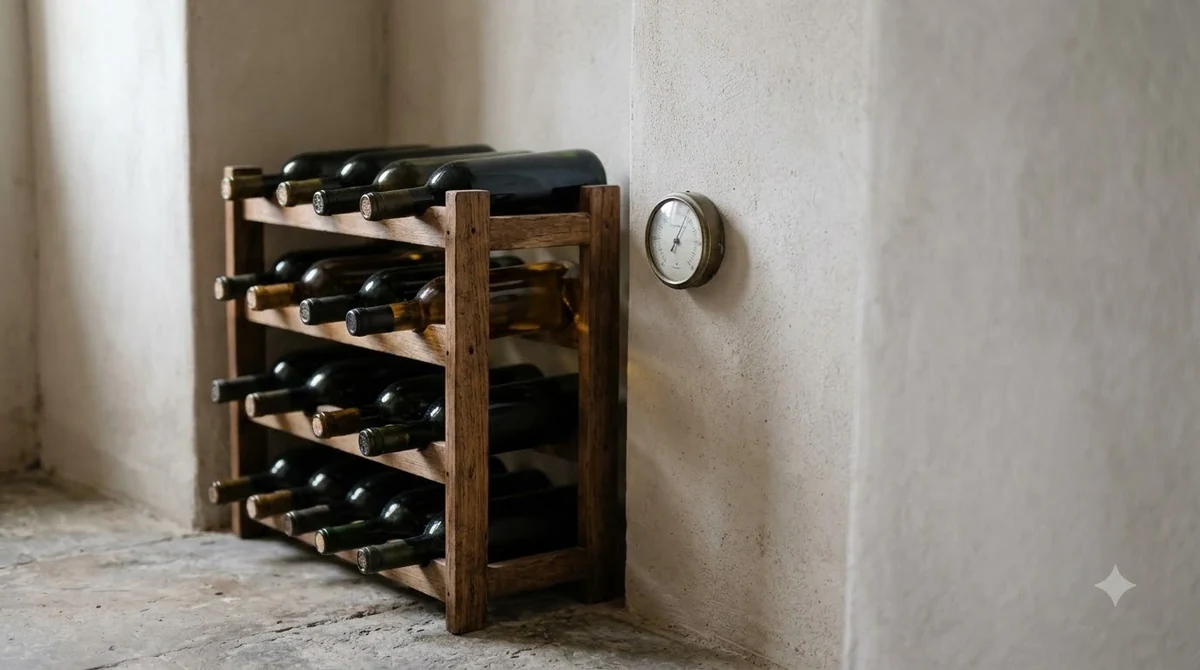
Store unopened Côte-Rôtie bottles in a cool, dark environment at approximately 55°F (13°C), with minimal temperature fluctuation. Bottles sealed with natural cork should generally be stored horizontally to keep the cork from drying out.
Protect the wine from direct sunlight, strong vibrations, and excessive warmth. Consistent storage conditions are particularly important for bottles intended for long-term aging.
Once opened, recork the bottle and keep it refrigerated. Most still wines retain their best qualities for approximately three to five days after opening, although the precise period depends on the wine’s age and condition. Allow a serving to approach the appropriate temperature before drinking.
For readers interested in another famous French wine-growing area, the Côte de Nuits wine region offers an interesting comparison. Its Pinot Noir-based red wines provide a very different expression of French terroir from the Syrah-driven wines of Côte-Rôtie.
Frequently Asked Questions
What does Côte-Rôtie mean in English?
Côte-Rôtie translates approximately as roasted slope or roasted hillside. The name refers to the sunny vineyard slopes that receive substantial warmth from their favorable southern exposures. The traditional explanation is closely connected to the landscape above the Rhône River near Ampuis.
Is Côte-Rôtie the same as Côtes du Rhône?
No. Côte-Rôtie is a specific appellation within the Rhône Valley’s wine classification system, while Côtes du Rhône is a broader regional designation. Côte-Rôtie has its own geographical boundaries and stricter grape composition requirements. It is also one of the recognized crus of the Rhône Valley.
Can Côte-Rôtie be made without Viognier?
Yes. Viognier is optional, and Côte-Rôtie may be made from 100% Syrah. The appellation’s rules permit Viognier up to 20% of the grape composition, but they do not require producers to include it. Some winemakers prefer the purity and direct expression of Syrah without an accompanying white grape.
What is the difference between Côte-Rôtie and Hermitage?
Both are prestigious Northern Rhône appellations known for Syrah, but they have different vineyard landscapes and production traditions. Côte-Rôtie is located near Ampuis, while Hermitage is centered around the hill overlooking Tain-l’Hermitage. Hermitage red wines are made predominantly from Syrah and have their own appellation rules, rather than Côte-Rôtie’s permitted Syrah and Viognier combination.
What is the annual wine market associated with Côte-Rôtie?
Ampuis is associated with the Marché aux Vins, an important regional wine event that brings together producers and wine enthusiasts. The event offers an opportunity to discover wines from Côte-Rôtie and neighboring Northern Rhône appellations. Its setting reflects the close relationship between Ampuis and the area’s wine-growing heritage.
The Côte-Rôtie wine region demonstrates how a relatively small vineyard area can produce wines with remarkable depth, fragrance, and individuality. Its steep terraces, contrasting Côte Brune and Côte Blonde terroirs, and distinctive Syrah and Viognier tradition make it one of France’s most interesting red wine appellations. Whether enjoyed relatively young or after years of careful cellaring, Côte-Rôtie offers a memorable expression of Northern Rhône winemaking.
More in Wine Regions
 Willcox Wine Trail: Discover Arizona’s High-Elevation Wine CountryUpdated Nov 20, 2026
 Yakima Valley Wine Region: Find the Best Styles to TryUpdated Nov 20, 2026
 Vosne Romanee Wine Tasting: Identify Aromas and Choose Better PairingsUpdated Nov 20, 2026
 Yakima Valley Wine Festival: Find the Best Seasonal Wine EventsUpdated Nov 20, 2026
 Wales Vineyards: Discover Cool-Climate Wines and Where to VisitUpdated Nov 20, 2026
 Yountville Wine Festival: Discover Napa Wines and Local FoodUpdated Nov 20, 2026