

We may earn a commission when you buy through links on this page, at no extra cost to you. Learn more.
The phrase asti vineyards refers to the hillside plantings of southern Piedmont, Italy, that supply Moscato Bianco for Asti DOCG wines and Barbera for the area’s celebrated red wines. These vineyards extend across the provinces of Asti, Alessandria, and Cuneo, within a landscape shaped by the Langhe and Monferrato hills. Their best-known wines include gently sparkling Moscato d’Asti, fully sparkling Asti, and structured Barbera d’Asti. Understanding the different appellations makes it easier to recognize what each part of this diverse wine region contributes.
Asti is often associated with sweet, aromatic sparkling wine, but its vineyards tell a broader story. The landscape includes historic Moscato-growing communities such as Canelli and Santo Stefano Belbo, as well as red-wine country around Nizza Monferrato. Its hills, grape varieties, cellar traditions, and local designations provide a useful introduction to Piedmont beyond the better-known wines of Barolo and Barbaresco. This profile explains the region’s geography, the wines made from its grapes, and what to look for when exploring bottles from Asti.
The Asti Denomination and the Wider Vineyard Area
Asti is a defined winegrowing territory in southern Piedmont, rather than simply the vineyards immediately surrounding the town of Asti. Its principal Moscato DOCG production area covers 51 townships in three provinces and approximately 10,000 hectares of vineyards.
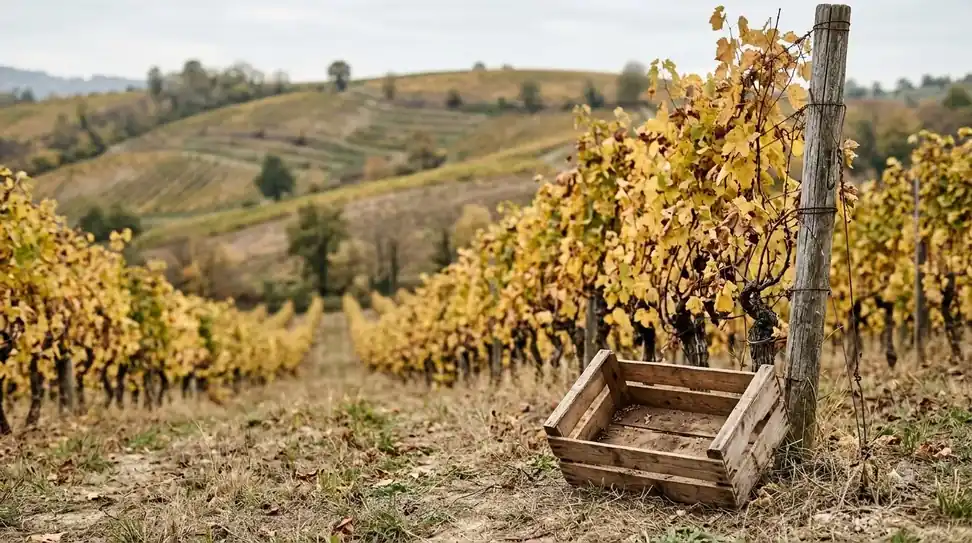
The provinces of Asti, Alessandria, and Cuneo share the production area associated with Asti DOCG. Vineyards extend through communities including Canelli, Calosso, Costigliole d’Asti, Nizza Monferrato, Santo Stefano Belbo, Mango, and Castiglione Tinella. This arrangement is important because a bottle bearing the Asti designation does not necessarily come from the municipality of Asti itself. The official boundaries encompass a much wider collection of hillside communities, each with its own combination of exposure, elevation, and local winemaking traditions.
The Asti DOCG designation is centered on wines made from Moscato Bianco. It includes the familiar sparkling Asti and the more gently effervescent Moscato d’Asti, while the broader vineyard landscape also supports separate red-wine appellations. Barbera d’Asti is particularly important, and Nizza has its own independent DOCG identity. These distinctions explain why the name Asti appears on wines with noticeably different colors, grapes, structures, and styles.
It is useful to separate the geographical region from the rules attached to individual wine names. Asti DOCG describes a specific production designation, while Barbera d’Asti DOCG has its own grape and aging requirements. Canelli now has a separate DOCG designation for its distinctive Moscato wines. Readers seeking a wider explanation of Italian wine appellations can consult our Wine Regions resource before comparing individual labels.
Hills, Soils, and the Piedmont Climate
The character of the Asti vineyards comes from rolling hills, favorable sun exposure, and the meeting of two broad Piedmont landscapes: the Langhe and Monferrato. Their slopes and limestone-rich soils provide important growing conditions for Moscato Bianco and Barbera.
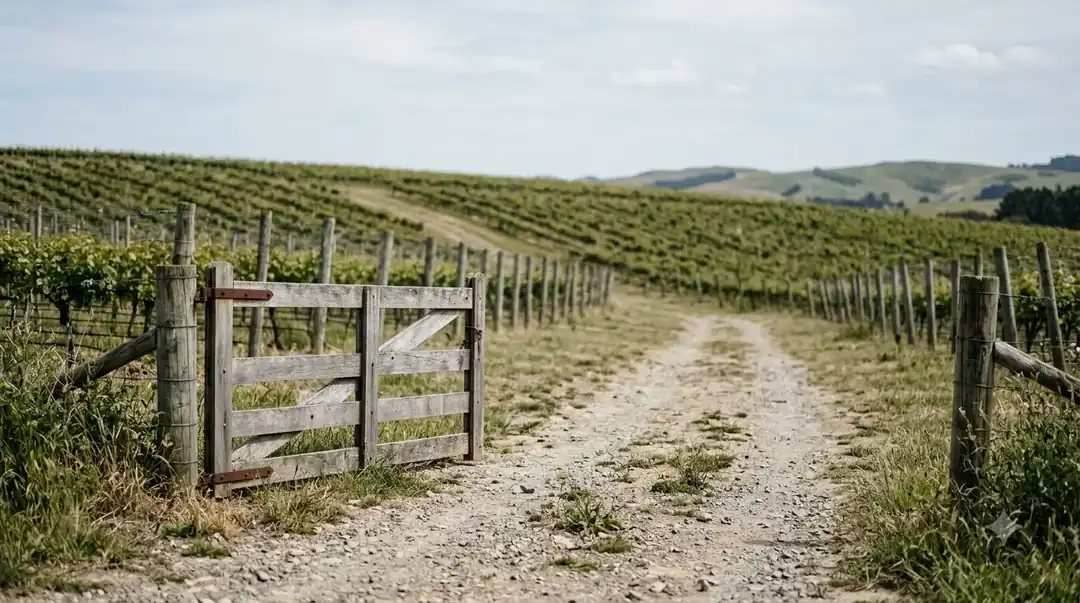
The Langhe landscape generally has steeper, more demanding vineyard slopes, while Monferrato is known for gentler hills and a more open patchwork of vines, farms, and villages. Both areas are closely linked to the regional wine economy. Across the wider Asti designation, the vineyards occupy sun-exposed hillside sites where grape growers can manage ripening through the position and orientation of each planting. The difference between a sheltered slope and a more exposed hillside can affect the fruit’s maturity and aromatic expression.
Piedmont’s broader climate is influenced by the nearby Alps and the Mediterranean. Warm, sunlit days alternate with cooler nights, and foggy mornings are a familiar feature of parts of the region. Those contrasts help explain why wines from Piedmont can combine ripe fruit character with freshness. For Moscato Bianco, preserving its delicate aromatic profile is especially important. For Barbera, the balance between ripeness and acidity is central to the variety’s recognizable style.
The hillside environment also shapes the appearance of the region. Vineyard rows follow the contours of slopes, with wooded areas, small roads, farmhouses, and historic settlements breaking up the cultivated land. The landscape is not simply an arrangement of grapevines: generations of farming, village life, and cellar construction have formed a connected cultural environment. Canelli and the surrounding Moscato-growing communities are particularly strong examples of how vineyard work has influenced the architecture and economy of a place.
Moscato Bianco, Asti, and Moscato d’Asti
Moscato Bianco is the defining grape of Asti DOCG, producing wines with pronounced floral and fruit aromas. The most important distinction for drinkers is between fully sparkling Asti and the softer, lightly sparkling Moscato d’Asti, which usually has less alcohol.
Moscato Bianco is valued for its highly expressive aromas. Typical descriptions include orange blossom, peach, apricot, citrus, sage, and fresh grape. The wines are generally aromatic and sweet, with acidity that keeps the fruit profile lively. The regional identity depends on retaining that freshness rather than making the grape’s sweetness the only feature. Well-made Moscato d’Asti can therefore feel light and fragrant rather than heavy, with gentle bubbles and a clean finish.
Asti and Moscato d’Asti differ most clearly in their pressure and presentation. Asti is the fully sparkling expression, while Moscato d’Asti is classified as frizzante, with softer effervescence. Moscato d’Asti generally contains around 5–6% alcohol by volume, while Asti Spumante commonly falls around 7–9%. The difference is not simply a matter of sweetness: the pressure, fermentation choices, and final balance all influence how the wine feels in the glass.
The region’s main sparkling-wine method uses temperature-controlled, pressurized tanks. Federico Martinotti developed the tank-fermentation technique in Asti in 1895, and Eugène Charmat later developed the autoclave design associated with the process. For Asti, fermentation is carefully controlled so producers can retain aromatic freshness and reach the intended style. Unlike traditional-method sparkling wines, which undergo their second fermentation in the bottle, Asti’s characteristic tank process captures the grape’s fresh aromas in a different way.
| Wine | Main grape | Alcohol figure | Typical style |
|---|---|---|---|
| Moscato d’Asti | Moscato Bianco | About 5–6% ABV | Sweet, lightly sparkling, aromatic |
| Asti Spumante | Moscato Bianco | About 7–9% ABV | Sweet, fully sparkling, lively |
| Barbera d’Asti | 90–100% Barbera | Minimum 12% ABV | Fresh, red-fruited, structured |
| Barbera d’Asti Superiore | 90–100% Barbera | Minimum 12.5% ABV | More developed, barrel-aged red |
There are also variations within the sparkling category. Asti is not limited to a single sweetness level, and producers can make drier expressions in addition to the familiar sweet style. The key is to distinguish the name of the wine from the broader DOCG territory: Asti DOCG is the designation, whereas Asti and Moscato d’Asti describe different wine styles within that family. For a more detailed comparison of their production and characteristics, see Decanter’s explanation of Asti and Moscato d’Asti.
Barbera d’Asti and the Red-Wine Hills
The wider Asti vineyard landscape is not exclusively a home for sweet and sparkling wine. Barbera d’Asti is one of Piedmont’s important red wines, made primarily from Barbera grapes grown on the sunny hills of Asti and Monferrato.
Barbera has a long association with the agricultural communities of Piedmont. The Barbera d’Asti designation received DOC recognition in 1970 and was elevated to DOCG status in 2008. Its production zone is extensive, covering 116 municipalities in Asti province and 51 municipalities in Alessandria province. Those boundaries are different from the Moscato-focused Asti DOCG area, even though the appellations share part of the same regional landscape.
Barbera d’Asti must contain between 90% and 100% Barbera. Up to 10% may come from other non-aromatic red grape varieties cultivated in Piedmont. The maximum permitted production yield is 9 metric tons per hectare. Grapes are generally harvested in the second half of September, and the combination of site selection, ripeness, and cellar handling influences the wine’s final expression. The result is typically a fresh, fruit-driven red with enough acidity to work well alongside rich food.
Producers make different styles according to their preferred fermentation and aging methods. Stainless-steel fermentation is often used for fresher, more straightforward wines, while wood can add greater texture and complexity to wines intended for longer aging. Barbera d’Asti Superiore has stricter requirements than the standard version, giving buyers a useful indication of the style and production approach behind the bottle.
The aging rules make the distinction concrete. Standard Barbera d’Asti requires at least four months of aging from November 1 following the harvest. Barbera d’Asti Superiore requires at least 14 months, including a minimum of six months in wooden barrels and six months in bottle. Minimum alcohol levels are 12% for standard Barbera d’Asti and 12.5% for Superiore. These regulations help establish the difference between a youthful, direct wine and a more developed expression.
Nizza is another important part of this red-wine landscape. It began as a recognized subzone within the Barbera d’Asti framework before becoming an independent DOCG. Its identity gives the area around Nizza Monferrato an especially strong connection to Barbera. For readers comparing the hill-vineyard traditions of different parts of Italy, our profile of Chianti Classico vineyards offers a useful contrast with Tuscany’s Sangiovese-centered landscape.
Canelli’s Cellars and Vineyard Work
Canelli is central to the story of Moscato and Asti sparkling wine. Its hillside vineyards are closely connected to a network of historic underground cellars, while its Moscato-growing identity is now recognized through a separate DOCG designation.
The underground cellars of Canelli are often called the Underground Cathedrals. They consist of long tunnels dug into stone, with brick-vaulted interiors where wine has been stored and matured. These spaces developed alongside the growth of sparkling-wine production during the second half of the nineteenth century. They are part of the physical history of the town, demonstrating how wine production helped shape the local economy and architecture.
The cellars are especially connected to the history of sparkling wine technology. Federico Martinotti’s tank-fermentation innovation came from the Asti area in 1895 and changed how producers could manage fermentation, sugar retention, and alcohol levels. The later development of the autoclave helped make controlled production more practical. Canelli’s historic cellars and modern sparkling-wine expertise therefore represent different parts of the same regional tradition.
The vineyards surrounding Canelli are also notable for their site-specific expressions of Moscato Bianco. A separate Canelli DOCG was established in 2023, giving the locality a designation of its own. Its wines highlight the connection between grape variety and place rather than treating all Moscato d’Asti as interchangeable. Neighboring communities such as Calosso, Calamandrana, and Cassinasco contribute to the broader Moscato-growing landscape, but the Canelli designation has its own defined geographical and production identity.
Vineyard work across the hills requires attention to the natural differences between parcels. Sun exposure, slope, soil, and the seasonal development of the grapes all influence harvest decisions. In steeper areas, vineyard operations can be demanding because machinery is harder to use and workers must manage access on uneven ground. The harvest window also matters: Moscato growers aim to retain aromatic precision, while Barbera growers balance ripe fruit with the variety’s lively acidity. These different priorities explain why two neighboring vineyards can produce wines with distinctly different characters.
The Canelli area forms part of the wider protected vineyard landscape of Langhe, Roero, and Monferrato. Its vineyards, historic villages, and underground cellars represent a close relationship between wine production and local heritage. The regional vineyard-landscape association’s profile of Canelli and Asti Spumante provides further context on its tunnels, history, and winegrowing culture.
Tasting and Visiting the Asti Hills
A useful way to understand the Asti vineyards is to compare wines from different parts of the region rather than focusing on a single famous bottle. Tastings of Moscato d’Asti, Asti Spumante, and Barbera d’Asti reveal the range of grape varieties and winemaking traditions found across the hills.
Canelli is a natural starting point for exploring the Moscato-growing area. Its town center, surrounding hillside vineyards, and historic cellars provide an accessible introduction to Asti’s sparkling-wine heritage. Nizza Monferrato offers a different perspective, with a strong emphasis on Barbera and the red-wine traditions of Monferrato. Visitors interested in both sides of the region can use these towns as contrasting reference points for tasting and understanding local appellations.
Food is an important part of the experience. Asti and Moscato d’Asti pair naturally with fresh pastries, dry biscuits, fruit desserts, and hazelnut cake. Local maize biscuits known as paste di meliga are another traditional match. Sweet wines work best when they are at least as sweet as the dessert, while the lively acidity of Moscato helps keep rich or creamy foods from feeling too heavy. Barbera takes a different role at the table: its acidity makes it a natural companion to tomato-based dishes, roasted meats, pasta, and aged cheeses.
Serving temperature makes a noticeable difference. A chilled serving range of approximately 43–50°F suits sparkling Asti and Moscato d’Asti, with the regional tourism authority recommending 6–8°C for Asti. Barbera is generally more expressive when served slightly warmer than sparkling wine. A standard 5-ounce pour is a sensible tasting portion, allowing the drinker to compare aromas and textures without filling the glass so far that the bubbles or bouquet become difficult to appreciate.
Tip: For a useful side-by-side tasting, serve Moscato d’Asti and Asti Spumante at 43–50°F, then compare them with a Barbera d’Asti served slightly warmer. Notice the difference in bubble strength, alcohol, grape aromas, acidity, and finish.
When choosing a bottle, begin with the designation and grape rather than relying on the regional name alone. Asti and Moscato d’Asti indicate aromatic Moscato-based wines, while Barbera d’Asti signals a red wine with a different structure and food role. The word Superiore on Barbera d’Asti points to longer aging requirements, including time in wood and bottle. Canelli DOCG identifies a more specific Moscato-growing origin. Those label details are practical clues for anyone trying to match a wine to a meal or explore the region through several styles.
Travelers who want to explore more than the cellar doors should allow time for the landscape itself. Roads between Canelli, Calosso, and Nizza Monferrato pass vineyards, small villages, and historic buildings that make the region’s agricultural history visible. A visit during harvest season offers a closer look at vineyard work, while other parts of the year provide opportunities to explore the cellars and tasting rooms at a quieter pace. The region is best understood through its combination of working vineyards, village traditions, and wines that reflect different local grapes.
Frequently Asked Questions
These answers address a few additional details about the 51-township Asti area, its Canelli heritage, and the different styles associated with Moscato Bianco.
Can Asti be made in a dry style?
Yes. Asti Secco is a drier expression in which fermentation proceeds further and less sugar remains in the finished wine. Naturally fermented examples can reach approximately 11–11.5% alcohol by volume.
Can Moscato d’Asti age for many years?
Some carefully made examples can develop over 10–20 years. Decanter has identified older-vine bottlings and distinctive single-vineyard wines among those with notable aging potential, although most Moscato d’Asti is enjoyed for its youthful fruit and floral character.
What does the word sorì mean in the Asti vineyard area?
Sorì is a local term associated with a particularly steep, sunny vineyard site. Such slopes can require more manual vineyard work than gentler ground and are valued for the distinctive growing conditions they provide.
What is merenda sinoira?
Merenda sinoira is a traditional Piedmontese late-afternoon country meal, historically associated with people returning from farm work. A traditional combination includes bread, butter, anchovies, and a glass of Moscato d’Asti.
Was Canelli important before modern sparkling-wine production?
Canelli has deep agricultural and winegrowing roots, and its medieval settlement history predates the development of its nineteenth-century sparkling-wine cellars. The town’s historic structure includes Villanova, which developed around its original fortified settlement, and the village area around the castle.
Asti’s appeal comes from the variety of wines and vineyard landscapes contained within a relatively compact part of southern Piedmont. From Moscato Bianco and the underground cellars of Canelli to Barbera and the hills of Nizza Monferrato, the region offers a broader experience than its famous sparkling wines alone suggest. Exploring the appellations side by side is the best way to appreciate how its grapes, geography, and traditions shape each bottle.
More in Wine Regions
 Willcox Wine Trail: Discover Arizona’s High-Elevation Wine CountryUpdated Nov 20, 2026
 Yakima Valley Wine Region: Find the Best Styles to TryUpdated Nov 20, 2026
 Vosne Romanee Wine Tasting: Identify Aromas and Choose Better PairingsUpdated Nov 20, 2026
 Yakima Valley Wine Festival: Find the Best Seasonal Wine EventsUpdated Nov 20, 2026
 Wales Vineyards: Discover Cool-Climate Wines and Where to VisitUpdated Nov 20, 2026
 Yountville Wine Festival: Discover Napa Wines and Local FoodUpdated Nov 20, 2026