

We may earn a commission when you buy through links on this page, at no extra cost to you. Learn more.
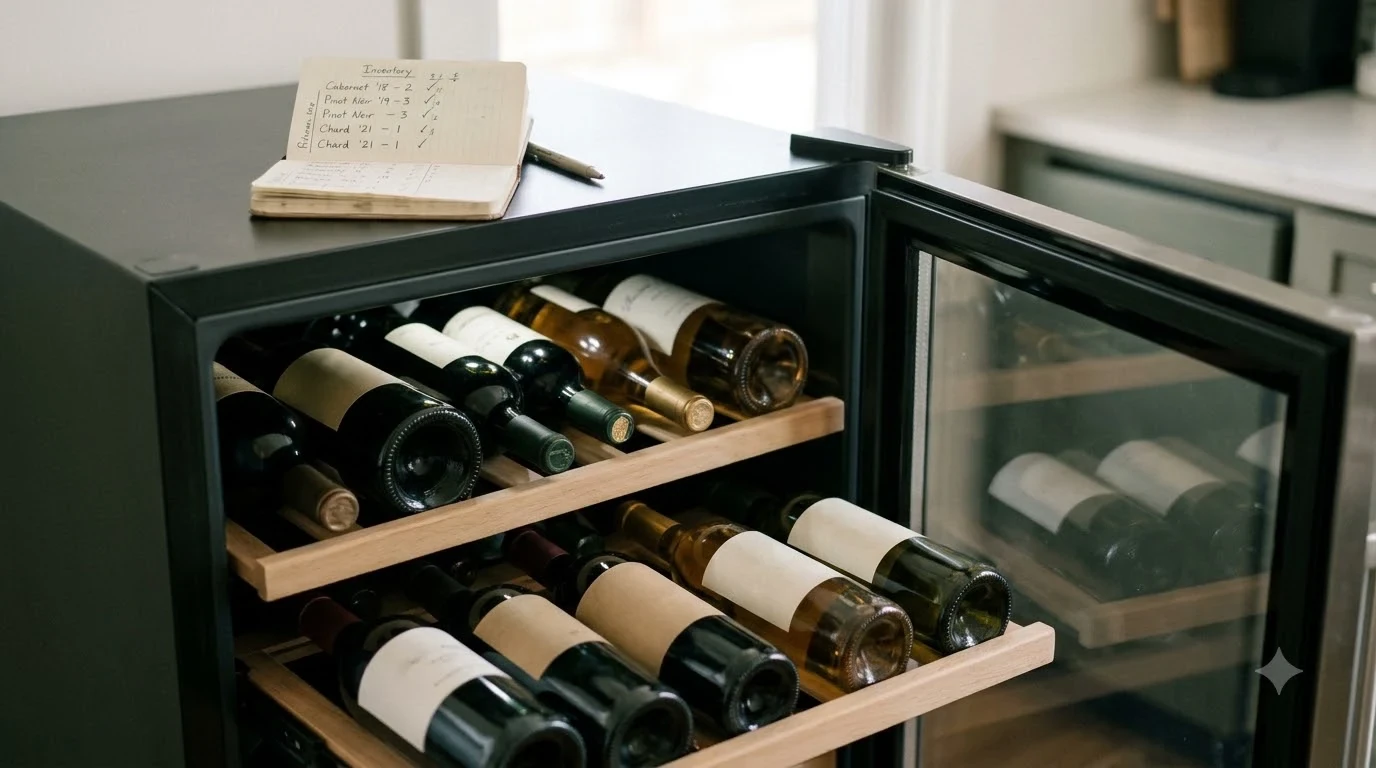
To learn how to reset wine fridge systems safely, switch off the appliance, unplug it for 3 to 5 minutes, reconnect the power, and restart the cooling system. Allow the compressor to complete its startup cycle before changing the temperature settings. Most wine refrigerators recover through this basic power reset, although the exact control sequence and temperature memory behavior depend on the manufacturer and model.
A wine refrigerator that stops cooling, displays an unexpected temperature, or fails to respond to its control panel does not necessarily need professional repair. A temporary electrical interruption, incorrect setting, blocked ventilation opening, or control panel lock can produce symptoms that resemble a mechanical failure. A careful reset is a sensible first troubleshooting step because it restores power to the appliance without requiring you to open its cabinet or handle internal electrical components.
When a Wine Refrigerator Needs a Reset
A reset is most useful when a wine fridge has experienced a power interruption, an electronic control problem, or an unexplained operating interruption. Before resetting the appliance, identify the symptom so you can distinguish a temporary control issue from a problem that requires a different solution.
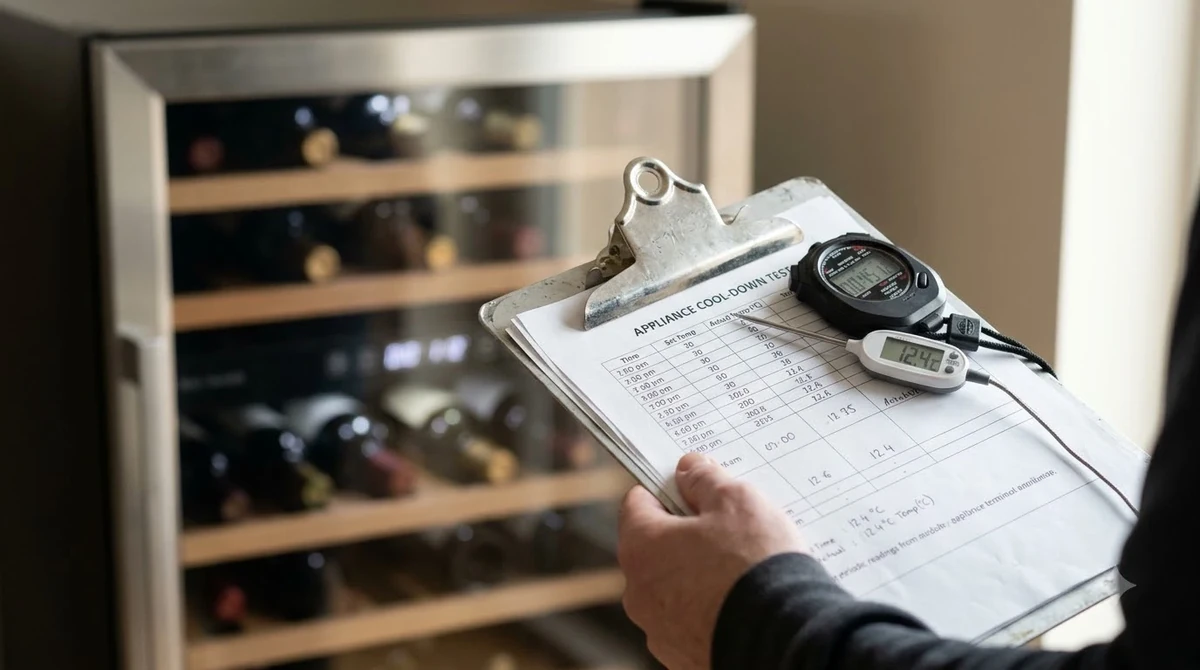
One common reason to reset a wine cooler is an unexpected change in its display. For example, the temperature may appear different after a brief power outage, or the control panel may stop responding to button presses. Some appliances automatically return to factory settings after losing power, while other models preserve their previous temperature selections.
Cooling problems can also make a reset seem necessary. A refrigerator may run continuously, cycle on and off frequently, or fail to reach its selected temperature. However, these symptoms do not always indicate an electronic fault. According to Vintec’s operating guidance, frequent door opening, an incorrectly closed door, damaged door seals, and improper temperature settings can all affect cooling performance.
Consider the following symptoms before choosing a reset:
- Blank display: The appliance may have lost its power supply, experienced a tripped circuit breaker, or switched off unexpectedly.
- Unresponsive buttons: The control panel may be locked or experiencing a temporary electronic interruption.
- Incorrect displayed temperature: A power interruption may have restored a factory setting or changed the display behavior.
- Continuous operation: The appliance may be working harder because of poor ventilation, a warm room, or frequent door opening.
- Unusual temperature fluctuations: The refrigerator may need time to stabilize after restarting or receiving a large number of bottles.
A reset is less likely to solve a damaged temperature sensor, failed compressor, refrigerant leak, or defective control board. If the appliance repeatedly stops working after a reset, avoid cycling its power over and over. Repeated interruptions can make troubleshooting more difficult and may prevent the cooling system from completing its normal startup process.
It is also important to distinguish a display problem from a genuine temperature problem. A digital screen can show the selected temperature rather than the actual air temperature inside the cabinet. Other models display the measured temperature by default. Understanding which reading your refrigerator uses helps prevent unnecessary adjustments.
How to Reset Wine Fridge Systems Step by Step
The standard reset procedure for many wine refrigerators is straightforward: switch off the unit, disconnect its electrical supply, wait 3 to 5 minutes, and reconnect it. After restarting, verify the temperature setting and give the cooling system sufficient time to stabilize.
Step 1: Protect the wine inside
Before switching off the appliance, consider how warm the cabinet has become and how long the refrigerator may remain without cooling. Keep the door closed as much as possible. Opening it repeatedly allows warmer room air to enter and makes it harder for the cabinet to maintain a stable environment.
If the refrigerator is only being reset briefly, bottles can generally remain inside. However, if the appliance has stopped cooling for an extended period or the internal temperature has risen substantially, consider moving particularly valuable bottles to another functioning wine refrigerator or suitable cool storage location.
Step 2: Switch off the appliance
Use the ON/OFF button if your wine fridge has an accessible power control. Some models require holding the button for several seconds, while others respond to a brief press. Consult the manufacturer’s instructions rather than assuming that every control panel works identically.
If the display is completely unresponsive, disconnect the appliance from its electrical supply using the plug. Grip the plug itself rather than pulling the power cord. Never handle electrical connections with wet hands or while standing on a wet surface.
Step 3: Disconnect the power
Unplug the refrigerator from its wall outlet. Leave it disconnected for at least 3 to 5 minutes before restoring power. This waiting period is particularly important for compressor-equipped wine refrigerators because the pressure within the cooling system needs time to equalize.
Both Vintec and Allavino specifically instruct owners of the models covered by their manuals to wait 3 to 5 minutes before restarting after an interruption. Whynter also provides the same waiting recommendation for its WC-201TD model. A longer wait is not automatically necessary for a routine reset unless the manufacturer’s instructions specify otherwise.
Step 4: Restore electrical power
Reconnect the refrigerator to its original grounded wall outlet. Check that the plug is firmly inserted and that the outlet supplies electricity. If the appliance has a dedicated ON/OFF switch, use it to restart the cooling system.
Watch the display for signs of normal operation. Depending on the model, you may see the current temperature, a selected temperature, a compressor indicator, or a brief startup sequence. The internal fan or compressor may begin operating after a short delay.
Step 5: Check the temperature settings
Once the refrigerator is running, verify that the temperature selections are appropriate for its intended use. A single-zone model should display one target temperature, while a dual-zone refrigerator may require separate adjustments for its upper and lower compartments.
Do not immediately make several changes if the displayed temperature seems unusual. First establish whether the screen shows the selected temperature or the measured internal temperature. Then compare the reading with the setting you intended to use.
Step 6: Allow the appliance to stabilize
Leave the refrigerator running with the door closed. The air temperature may begin changing relatively quickly, but the bottles themselves take considerably longer to respond because wine and glass retain heat.
Allow several hours for the initial operation to settle and up to 24 hours for a substantial temperature adjustment or a fully loaded cabinet to stabilize. Avoid making repeated changes during this period unless the appliance displays an error or develops another obvious problem.
Tip: A successful reset does not mean the wine fridge should immediately display its final temperature. Wait for the cooling system to stabilize, keep the door closed, and assess its performance over several hours before deciding that another reset is necessary.
Resetting Different Wine Fridge Brands
The general power-reset process is similar across many wine refrigerator brands, but control panel functions and temperature memory features can differ. Vintec, Whynter, and Allavino provide useful examples of why checking the model-specific instructions matters.
Vintec wine refrigerators
For many Vintec models, begin by switching off the cellar and disconnecting the electrical supply. Wait 3 to 5 minutes before reconnecting the power. Press the power button for a few seconds to switch the appliance back on.
Vintec’s VWS035 and VWS048 manuals explain that previous temperature settings can be erased after a power interruption, causing the refrigerator to return to its factory preset. The documented preset for the VWS035 models covered by the manual is 12°C, approximately 54°F. Other models may use different settings.
The temperature display may also differ from the selected temperature during the first few hours of operation. Vintec explains that its wine cellars can require approximately 24 hours to stabilize after temperature adjustments or substantial changes in bottle loading.
For additional model-specific instructions, see our guide on how to reset vintec wine fridge. The official Vintec wine cellar operating manual also provides information about startup delays, temperature presets, and normal operating behavior.
Whynter wine refrigerators
Whynter’s WC-201TD manual recommends waiting 3 to 5 minutes before restarting after unplugging the refrigerator, losing power, or switching it off. Reconnect the unit to its grounded electrical outlet and use the temperature control buttons to confirm the desired setting.
The WC-201TD has a documented operating range of 46°F to 66°F. Its control panel uses the downward arrow to lower the temperature and the upward arrow to raise it. The manufacturer’s instructions also explain that the temperature inside the refrigerator depends partly on the surrounding room temperature.
A power failure can cause this Whynter model to return automatically to its factory setting. Therefore, verify the selected temperature after restoring power instead of assuming that the previous setting remains active.
For a more detailed brand-specific procedure, read our article about how to reset whynter wine fridge. You can also consult the Whynter WC-201TD owner’s manual for installation clearances, temperature controls, and operating instructions.
Allavino wine refrigerators
Allavino models can have more specialized electronic controls. The VSW71LD-2 manual describes an ON/OFF button that switches the refrigerator on or off, including when the display is locked. Its UP and DOWN buttons adjust the temperature in 1-degree increments.
If the control panel is locked, the documented procedure for the VSW71LD-2 is to press and hold the plus and minus buttons simultaneously for 1.5 seconds. This releases the control panel lock and allows the owner to access its temperature controls.
The same manual states that previous temperature settings are automatically saved during a power interruption. It also instructs owners to wait 3 to 5 minutes after disconnecting power before restarting the refrigerator.
These controls should not be assumed to apply to every Allavino model. If the refrigerator continues to malfunction, consult the appropriate model manual before attempting another control sequence.
Temperature Settings and Reset Behavior
One of the most important things to understand after resetting a wine fridge is that restoring electrical power and restoring the desired temperature are two different tasks. A refrigerator may restart successfully but still need its temperature settings checked or corrected.
There are three common types of temperature behavior after a reset:
- Factory preset restoration: Some models return to a predetermined temperature after losing power.
- Temperature memory: Other refrigerators retain the previous selections and resume normal operation using those settings.
- Manual confirmation: Certain models require the owner to verify or reselect the desired temperature after restarting.
For example, the Vintec VWS035 manual documents a 12°C factory preset after a power interruption, while the Allavino VSW71LD-2 manual states that previous temperature settings are saved. Whynter’s WC-201TD manual describes automatic restoration to its factory setting after a power failure.
These differences explain why there is no universal reset temperature for all wine refrigerators. A single-zone wine fridge, a dual-zone cabinet, and a thermoelectric cooler may have different operating ranges and control arrangements.
Choosing an appropriate temperature
For long-term wine storage, a consistent temperature is generally more important than constantly changing the cabinet to match the ideal serving temperature of individual bottles. A setting around 55°F is a practical reference point for many storage applications, provided the refrigerator supports that temperature and operates within its recommended conditions.
For serving, different wine styles benefit from different temperatures. Sparkling wines are generally served at 40°F to 50°F, light white wines and rosé at 45°F to 50°F, and full-bodied whites at 50°F to 55°F. Light reds are generally served at 55°F to 60°F, while full-bodied reds are served at 60°F to 65°F.
Remember that these are serving temperatures rather than universal wine refrigerator storage settings. A wine cabinet intended for aging bottles should generally maintain a consistent environment rather than repeatedly switching between serving temperatures.
Temperature comparison after a reset
| Situation | What to expect | Recommended action |
|---|---|---|
| Power restored | Display may restart with a preset or saved setting | Verify the selected temperature |
| First few hours | Air temperature may fluctuate | Keep the door closed |
| 12 hours after adjustment | Temperature changes become more apparent in a loaded Vintec cabinet | Check the measured temperature |
| 24 hours after adjustment | Many loaded wine cabinets have had time to stabilize | Evaluate overall cooling performance |
| Repeated failure | Temperature remains incorrect or cooling stops | Investigate the underlying fault |
The timing in this comparison is a practical troubleshooting reference, not a guarantee that every model will reach its target within the same period. Bottle quantity, room temperature, ventilation, and cooling technology all affect performance.
What to Check If Your Wine Fridge Still Does Not Cool
If the refrigerator powers on but does not cool properly after a reset, investigate its electrical supply, ventilation, door seal, and surroundings before assuming that the compressor has failed. These basic checks address several common problems identified in manufacturer troubleshooting instructions.
Check the electrical outlet
Confirm that the wall outlet has power. If the wine fridge does not turn on, inspect the household circuit breaker and any accessible fuse associated with the outlet. A tripped breaker or blown fuse can interrupt operation even when the refrigerator itself is functioning correctly.
Avoid repeatedly resetting a breaker that trips again. A recurring electrical fault requires attention from a qualified electrician. Do not remove electrical covers or attempt to repair internal wiring yourself.
Inspect ventilation openings
Wine refrigerators need adequate airflow to release heat from their cooling systems. Blocked ventilation can prevent the appliance from reaching its selected temperature and may cause extended operating cycles.
Whynter’s WC-201TD manual recommends 4 inches of clearance on both sides and 6 inches behind the appliance. These measurements apply to that particular model and should not be treated as universal installation requirements. Built-in refrigerators may have different ventilation arrangements.
Check that the front grille, rear ventilation openings, and any accessible fan areas are unobstructed. Avoid pushing a freestanding refrigerator tightly against a wall if its installation instructions require additional clearance.
Examine the door and gasket
A door that does not close fully allows warmer air to enter the cabinet. This can cause the refrigerator to run for longer periods while struggling to maintain its selected temperature.
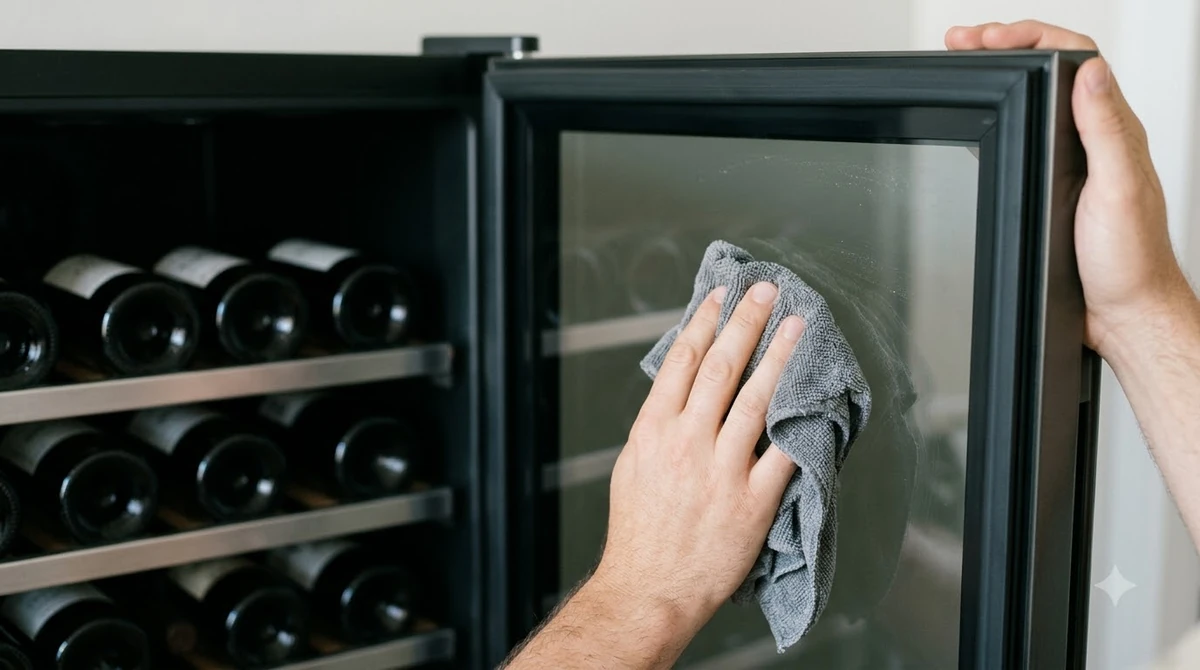
Inspect the rubber door gasket for dirt, loose sections, cracks, or visible deformation. Make sure bottles and shelves are not preventing the door from closing completely. Clean the accessible gasket with a soft cloth and mild cleaning solution if necessary.
Consider the room temperature
The surrounding environment can significantly affect wine refrigerator performance. A cabinet placed next to an oven, heating appliance, or window receiving direct sunlight may struggle to maintain a consistent internal temperature.
Check the operating temperature range specified in the manufacturer’s manual. For example, Vintec lists an ambient operating range of 5°C to 35°C for the VWS035 and VWS048 models discussed in its instructions. Whynter specifies different environmental recommendations for its WC-201TD.
Check bottle loading and internal airflow
Adding a large quantity of room-temperature bottles can temporarily increase the workload of a wine refrigerator. Closely packed bottles can also restrict airflow, particularly when they cover internal fans or sit directly against the cabinet walls.
Distribute bottles evenly across the shelves and avoid overloading the compartments. Vintec specifically advises owners to leave gaps around bottles and keep internal fans unobstructed. Allow the refrigerator to recover before making additional temperature adjustments.
If your refrigerator still runs without cooling adequately, our guide to Allavino wine fridge not cooling explains additional symptoms and troubleshooting considerations. You can also find more general advice in our Wine Fridge Troubleshooting section.
Resetting Safely and Knowing When to Call a Technician
A basic power reset is a reasonable owner-level troubleshooting procedure, but internal refrigeration and electrical repairs are different matters. If the refrigerator continues to malfunction, stop experimenting with the controls and arrange an appropriate inspection.
Before working around the appliance, remember these important precautions:
- Always disconnect power before cleaning or carrying out maintenance that requires access to internal components.
- Never remove the grounding prong from the electrical plug.
- Do not use damaged power cords or plugs.
- Keep ventilation openings clear and avoid placing combustible materials near the appliance.
- Never open sealed refrigeration lines or attempt to add refrigerant.
- Do not remove electrical panels or attempt to replace internal control boards without the appropriate qualifications.
These precautions matter because wine refrigerators contain electrical components and refrigeration systems that can present serious safety risks. Some models also use flammable refrigerants. Vintec’s manual specifically warns that refrigeration circuit servicing should be performed by an authorized service person.
Warning signs that require professional attention
Contact the manufacturer or a qualified appliance technician if you notice any of the following conditions:
- The refrigerator repeatedly trips the household circuit breaker.
- The compressor does not operate despite a confirmed power supply.
- The appliance runs continuously but the interior temperature keeps increasing.
- The display repeatedly shows an error code that cannot be cleared using the owner’s manual.
- The refrigerator makes unusually loud mechanical noises or develops significant vibration.
- There are signs of damaged wiring, burning smells, or a suspected refrigerant leak.
- The appliance repeatedly loses its temperature settings without an identifiable power interruption.
If you suspect a refrigerant leak, disconnect the appliance from power if this can be done safely, avoid ignition sources, ventilate the area, and contact qualified service personnel. Do not attempt to locate or repair a leak yourself.
It is also sensible to keep a record of the problem before contacting support. Write down the model number, the displayed temperature, any error messages, how long the refrigerator has been operating, and whether the problem started after a power outage. This information can help a technician narrow down the likely cause without unnecessary diagnostic steps.
A reset should restore normal operation when the issue is temporary. It should not be treated as a permanent solution for a failing compressor, faulty temperature sensor, damaged power supply, or defective electronic controller.
Frequently Asked Questions
Does unplugging a wine fridge reset its temperature sensor?
Not necessarily. Unplugging the appliance interrupts its electrical supply but does not physically recalibrate a temperature sensor. If the sensor is reporting an incorrect reading after a normal restart, it may need professional testing or replacement.
Can a wine fridge be reset while it is full of bottles?
Yes, a routine power reset generally does not require removing the bottles. Keep the door closed during the interruption and avoid disturbing the shelves. If the appliance has been without cooling for a prolonged period, consider transferring valuable bottles to another suitable storage location.
Why does my wine fridge display an E1 or E2 error after restarting?
Error codes are manufacturer-specific and can indicate different conditions, including temperature sensor faults, communication problems, or abnormal operating temperatures. The meaning of E1 on one model may differ from its meaning on another. Consult the exact model’s error-code list rather than assuming that another brand uses the same definition.
Can a wine fridge reset fix excessive condensation?
A reset may restore normal cooling controls, but condensation is not necessarily an electronic problem. High room humidity, frequent door opening, warm air entering through an imperfect seal, and temperature differences can contribute to moisture accumulation. Check the door gasket and room conditions before requesting service.
Does a wine refrigerator have a dedicated factory reset button?
Some wine refrigerators provide specialized control combinations or electronic reset functions, while many models rely on a simple power interruption. The Allavino VSW71LD-2, for example, documents a button combination for releasing its control-panel lock rather than a universal factory reset command. Always distinguish a control-panel release procedure from a complete restoration of factory settings.
Resetting a wine refrigerator is usually a simple process: switch it off, disconnect the power for 3 to 5 minutes, restart it, and verify the temperature settings. Allow adequate stabilization time before judging the result, and investigate ventilation, electrical supply, and door sealing if cooling remains inconsistent. If the problem returns or involves electrical or refrigeration components, professional diagnosis is the safer next step.
More in Storage & Fridge Care
 How Long Can You Store Wine in a Wine Fridge? Protect Bottle QualityUpdated Nov 20, 2026
 Can You Store Beer in a Wine Fridge? Keep Both Drinks FreshUpdated Nov 20, 2026
 Is It Worth Repairing a Wine Fridge? Spot the Cheap Fixes Before You ReplaceUpdated Nov 20, 2026
 Wine Fridge Condensation: Identify Causes and Fix Moisture ProblemsUpdated Nov 20, 2026
 Wine Fridge Too Cold: Protect Your Wine and Fix the TemperatureUpdated Nov 20, 2026
 Wine Fridge Fan Not Working: Diagnose Problems and Restore CoolingUpdated Nov 20, 2026