

We may earn a commission when you buy through links on this page, at no extra cost to you. Learn more.
Riesling history begins along the Rhine River in Germany, where the earliest surviving written record of the grape dates to March 13, 1435, in the cellar accounts of Count John IV of Katzenelnbogen. From those medieval plantings near Frankfurt, the late-ripening white grape rose to rival Bordeaux and Champagne in price and prestige during the nineteenth century. After a twentieth-century slump caused by mass-produced sweet blends, a quality-driven revival restored Riesling as one of the world’s most respected white wines.
Few grapes have experienced sharper swings in reputation than Riesling, yet its core identity has remained remarkably consistent for nearly six centuries. Tracing how a hardy, high-acid German vine conquered royal courts, fell out of favor, and reclaimed international acclaim explains why modern bottles range from razor-sharp dry whites to age-worthy dessert wines.
Early Origins Along the Rhine River
Riesling originated in Germany’s Rhine Valley, evolving from wild European vines cultivated along riverbanks that Roman legions had first planted with grapes centuries earlier. Ampelographers and wine historians consider the variety native to the Upper Rhine region, where cool temperatures and steep, sun-catching slopes suited its slow ripening cycle.
According to Wine Enthusiast, viticulture along the Mosel and Rhine rivers was already thriving by the fourth century AD after Roman settlers introduced grape growing north of the Alps. Over the following millennium, monastic orders and local nobility carefully selected vines that could survive harsh winters while still ripening reliably before autumn frosts arrived. DNA research has confirmed that Riesling is an offspring of Gouais Blanc, a prolific medieval grape, crossed with a wild vine and the aromatic Traminer family.
The first indisputable historical appearance of the grape occurs on March 13, 1435, in a cellar ledger belonging to Count John IV of Katzenelnbogen in Rüsselsheim, near the modern Rheingau region. The entry records a payment of 22 shillings for vine cuttings spelled “Riesslingen” to be planted in the count’s vineyard. More than a century later, in 1552, German botanist and physician Hieronymus Bock standardized the modern spelling “Riesling” in his herbal reference book, noting that the vine grew along the Mosel, the Rhine, and around Worms.
Rise to Nobility and the Nineteenth-Century Golden Age
During the eighteenth and nineteenth centuries, coordinated vineyard laws and accidental winemaking discoveries turned Riesling into Europe’s most prized white wine. Rulers and monastic estates recognized that replacing lower-quality mixed plantings with pure Riesling dramatically improved wine structure and longevity.
One of the most influential decrees came in 1787, when Clemens Wenzeslaus of Saxony, the Archbishop-Elector of Trier, ordered growers in the Mosel to uproot inferior vines and plant Riesling exclusively. Around the same era, at Schloss Johannisberg in the Rheingau, a delayed harvest messenger accidentally revealed the magic of noble rot, or Botrytis cinerea. Grapes left hanging late into autumn shriveled and concentrated their sugars while keeping brisk acidity, giving birth to the Spätlese and Auslese late-harvest styles still celebrated today.
By the 1850s, fine Rieslings from the Rheingau and Mosel were status symbols across London, Paris, St. Petersburg, and New York. Wine Enthusiast notes that top German Rieslings regularly commanded higher prices than classified red Bordeaux and prestige Champagne during this golden era. British royalty favored dry and off-dry “Hock” wines from the Rhine, while distinctive tall, slender flute bottles helped shoppers spot authentic Riesling at a glance.
Twentieth-Century Decline and the Quality Renaissance
Two world wars, shifting global tastes, and the 1971 German Wine Law severely damaged Riesling’s reputation during the mid-twentieth century. As export markets craved inexpensive, mildly sweet white wine, bulk producers flooded shelves with simple blends that obscured what true Riesling could achieve.
Much of that mass-market wine—most famously Liebfraumilch—relied heavily on high-yielding crossbreeds like Müller-Thurgau and Silvaner rather than pure Riesling. Meanwhile, Germany’s 1971 wine legislation classified wines primarily by grape sugar levels at harvest rather than vineyard quality, inadvertently confusing international buyers and encouraging overcropping. Many shoppers came to assume all Riesling was syrupy, inexpensive, and uniform.
A determined generation of growers reversed that trajectory starting in the late 1980s and 1990s. Producers slashed yields on steep heritage slopes, replanted noble Riesling in place of hybrid crossings, and championed dry winemaking alongside traditional off-dry styles. Organizations like the Verband Deutscher Prädikats- und Qualitätsweingüter (VDP) established strict vineyard classifications modeled on Burgundy, helping Riesling reclaim its standing among serious collectors by the turn of the twenty-first century.
Key Milestones Across Six Centuries
Riesling’s evolution spans nearly six hundred years of documented vineyard decrees, stylistic breakthroughs, and geographic expansion. Reviewing the major turning points shows how historical shifts directly shaped the labels shoppers see today.
| Era or Year | Historical Milestone | Impact on Modern Riesling |
|---|---|---|
| 1435 | Count John IV of Katzenelnbogen purchases “Riesslingen” cuttings in Rüsselsheim. | Establishes the earliest surviving written proof of Riesling cultivation in Germany. |
| 1552 | Botanist Hieronymus Bock publishes the modern spelling “Riesling” in his herbal text. | Confirms widespread planting along the Rhine and Mosel rivers. |
| 1787 | Elector of Trier mandates replacing inferior Mosel vines with pure Riesling. | Transforms the Mosel Valley into a benchmark region for aromatic white wines. |
| 1850s | Rhine and Mosel Rieslings outsell top Bordeaux and Champagne in international markets. | Cements Riesling’s reputation as a collectible, cellar-worthy white wine. |
| 1971 | Germany overhauls its wine law around harvest sugar ripeness rather than site origin. | Creates label confusion and fuels a wave of inexpensive sweet bulk exports. |
| 1990s–Present | VDP vineyard classifications and dry styles lead a global quality resurgence. | Restores dry and off-dry Rieslings as sommelier favorites worldwide. |
Each turning point reinforced Riesling’s defining trait: transparent expression of vineyard soil and climate. Even when market trends pushed growers toward sweeter or drier profiles, the grape’s naturally high tartaric acidity preserved its freshness and aging potential.
Global Expansion Beyond Germany
While Germany remains Riesling’s spiritual homeland and largest producer, historical trade routes and nineteenth-century emigration carried the vine across Europe and into the New World. In every new region, local climates and winemaking traditions produced distinct regional interpretations.
Just across the Rhine in Alsace, France, Riesling was planted by the late fifteenth century and eventually became one of the region’s four noble grapes. Protected by the rain shadow of the Vosges Mountains, Alsatian growers historically favored fully dry, fuller-bodied styles built for the dining table. In neighboring Austria, particularly along the terraced Danube hillsides of the Wachau, Kamptal, and Kremstal, dry Rieslings gained renown for steely minerality and structured power.
German immigrants also carried Riesling cuttings to South Australia in the 1830s and 1840s, establishing historic vineyards in the Clare and Eden Valleys that thrive on cool nighttime temperatures and dry-farmed slopes. In North America, Riesling took root in New York’s Finger Lakes, Washington’s Columbia Valley, and Ontario’s Niagara Peninsula, where cold winters and glacial lakes mirror Germany’s northern latitudes. As Decanter highlights, top estates from Alsace to Australia continue to prove how faithfully the variety mirrors local soils while maintaining bright lime and stone-fruit character.
How History Shaped Modern Styles and Tasting Notes
Understanding Riesling’s past makes decoding a wine shop shelf much easier, because almost every traditional label term reflects a specific historical winemaking method. Winemakers rarely age Riesling in new oak barrels, preferring neutral stainless steel or large old casks so the grape’s pure fruit and mineral aromas shine.
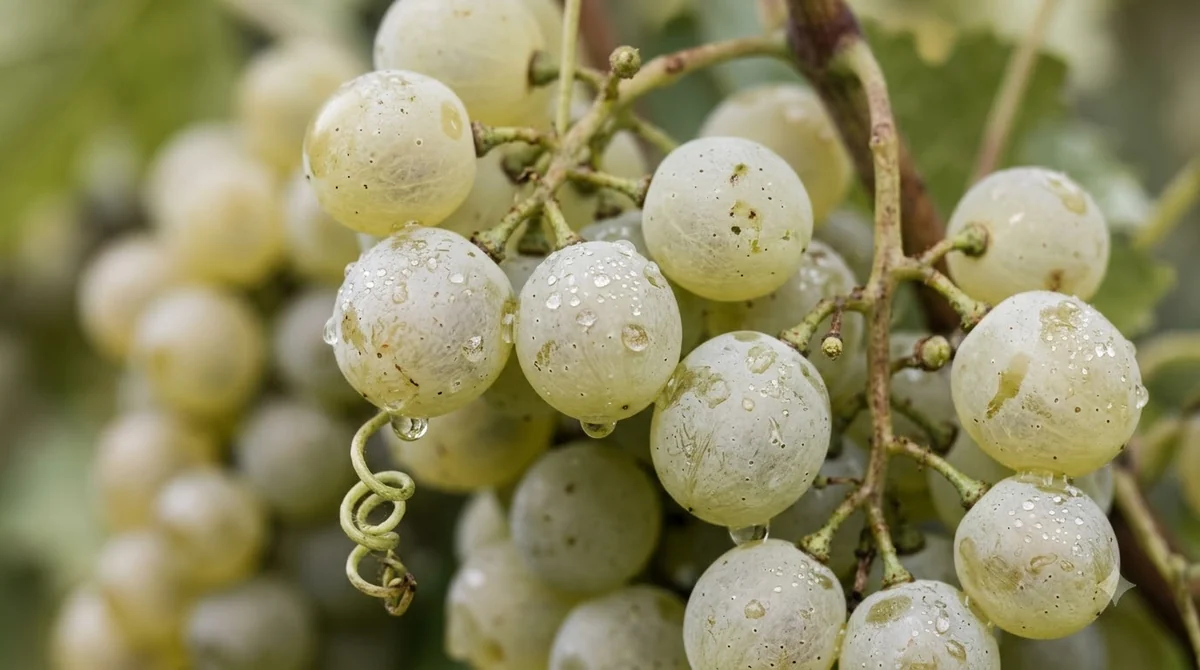
Young bottles typically show bright lime, green apple, white peach, and floral notes, paired with a pale straw hue—a visual cue explored further in our guide to riesling color. Because Riesling naturally carries high acidity alongside varying levels of residual sugar, a bottle labeled Trocken tastes crisp and bone-dry, while Kabinett or Spätlese versions balance delicate sweetness with mouthwatering tension. You can explore these flavor differences in detail through our breakdown of riesling tasting notes.
History also explains why aged Riesling is prized by collectors. Over ten to twenty years in the cellar, high acidity preserves the wine while natural compounds like TDN gradually introduce honey, beeswax, and a classic kerosene or petrol aroma that enthusiasts prize as a marker of maturity.
Tip: Check the alcohol by volume on the back label before buying—bottles around 8% to 10% ABV usually retain noticeable sweetness, while bottles at 12% to 13% ABV have fermented nearly all their grape sugars dry.
Whether poured neat in a chilled tulip glass or mixed into a refreshing riesling cocktail, the grape’s historical versatility fits smoothly alongside other classic Wine by Type categories.
Frequently Asked Questions
Where and when was Riesling first recorded in history?
The earliest surviving written mention of Riesling dates to March 13, 1435, in Germany. Cellar accounts for Count John IV of Katzenelnbogen in Rüsselsheim record paying 22 shillings for “Riesslingen” vine cuttings planted near the Rhine River.
Why did people start thinking all Riesling is sweet?
During the mid-twentieth century, export markets were flooded with inexpensive, mildly sweet German blends like Liebfraumilch that often used higher-yielding grapes rather than pure Riesling. Combined with confusing 1971 German label laws, those bulk exports overshadowed Germany’s historic tradition of crisp, dry Rieslings.
Is Riesling genetically related to other famous grapes?
Yes, DNA profiling shows that Riesling descends from Gouais Blanc, an ancient parent grape responsible for Chardonnay and many other European varieties. Its other parent is a cross between a wild Rhine vine and a grape from the aromatic Traminer family.
Why does aged Riesling sometimes smell like petrol or kerosene?
As Riesling ages in the bottle, natural chemical precursors break down into a compound called TDN (1,1,6-trimethyl-1,2-dihydronaphthalene). Wine collectors consider this subtle petrol or mineral aroma a hallmark of authentic, well-aged Riesling from sun-exposed slate or limestone vineyards.
Six centuries after its first documented vineyard planting along the Rhine, Riesling remains one of the clearest lenses through which to taste wine history. Every bottle reflects centuries of European viticultural refinement, offering a rare combination of vivid acidity, regional character, and multi-decade aging potential.
More in Wine Types & Grapes
 What Does Mourvèdre Taste Like? Flavor Profile, Regions, and PairingsUpdated Nov 20, 2026
 What Does Marsanne Taste Like? Flavors, Styles, and Food PairingsUpdated Nov 20, 2026
 What Does Malvasia Taste Like? Styles, Flavors, and Food PairingsUpdated Nov 20, 2026
 What Does Grenache Blanc Taste Like? Flavor Profile, Styles, and PairingsUpdated Nov 20, 2026
 What Does Garnacha Taste Like? Key Flavors, Styles, and Pairing TipsUpdated Nov 20, 2026
 What Does Fruit Wine Taste Like? A Complete Flavor and Style BreakdownUpdated Nov 20, 2026