

We may earn a commission when you buy through links on this page, at no extra cost to you. Learn more.
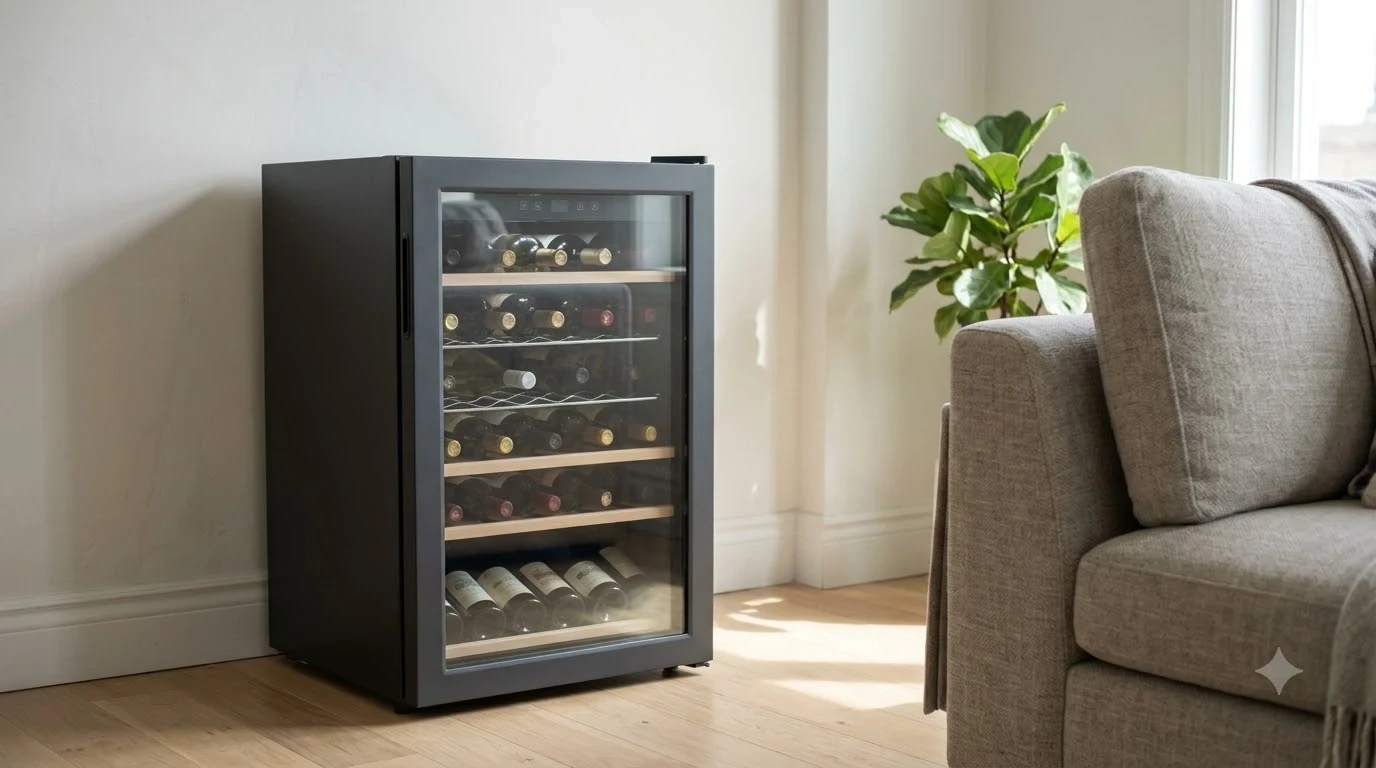
Can a freestanding wine fridge be built in? Generally, no: a freestanding wine fridge should not be enclosed in cabinetry unless its manufacturer specifically approves built-in installation for that model. Most freestanding wine refrigerators release heat through their rear or side panels and need open space for proper airflow. Enclosing one can cause overheating, poor cooling performance, increased compressor workload, and potentially premature appliance failure. If you want an undercounter installation, a front-venting wine refrigerator designed for built-in use is usually the better choice.
A wine refrigerator can look like a natural fit beneath a kitchen counter, particularly when its width and height match the available cabinet opening. However, physical dimensions are only part of the installation requirements. The ventilation system, heat-discharge location, electrical connections, and manufacturer specifications determine whether an appliance can operate safely inside cabinetry. Understanding these differences before modifying a kitchen can prevent expensive repairs and unnecessary replacement.
Why Most Freestanding Wine Fridges Cannot Be Built In
Most freestanding wine refrigerators are designed to operate with open space around their cabinets. Their cooling systems release heat through rear or side ventilation areas, and surrounding cabinetry can restrict the airflow needed to maintain normal operating temperatures.
A compressor-based wine refrigerator removes heat from its interior and transfers that heat to the surrounding room. The condenser and associated ventilation components need an appropriate path for releasing this heat. In many freestanding models, that path depends on air circulating around the back and sides of the appliance rather than passing through a dedicated front grille.
Placing such a refrigerator inside a tight cabinet opening changes the conditions under which its cooling system operates. The heat that should escape into the room can accumulate in the enclosed space. As temperatures around the condenser rise, the compressor may need to run longer or more frequently to maintain the selected temperature inside the refrigerator.
According to Whynter’s installation guidance, freestanding models release heat through the rear and sides and should not be enclosed because trapped heat can reduce cooling performance and shorten appliance life. Its guidance recommends approximately 4 to 6 inches of clearance behind and beside freestanding units, although the requirements for individual models can differ.
This distinction matters particularly in kitchens. Cabinet openings are often designed to minimize visible gaps, while refrigerators designed for freestanding placement may need substantial breathing room. A unit that operates properly in an open kitchen corner might struggle when surrounded by cabinet panels on three sides.
Another consideration is that the exterior of a wine refrigerator does not necessarily reveal its complete ventilation arrangement. A decorative grille, small rear opening, or apparently smooth side panel does not establish whether the appliance is approved for enclosed installation. The manufacturer’s installation documentation provides the reliable answer.
For this reason, do not assume that removing a cabinet door or leaving a small opening above the appliance makes an otherwise unsuitable freestanding model safe for built-in use. The entire airflow arrangement must meet the manufacturer’s requirements.
How Wine Refrigerator Ventilation Works
The most important difference between freestanding and built-in wine refrigerators is where they take in air and release heat. Understanding the ventilation arrangement helps explain why some appliances fit beneath countertops while others require open placement.
Freestanding wine refrigerators generally use rear or side ventilation. Their cooling components transfer heat into the surrounding air, which must circulate away from the appliance. Cabinet panels placed too close to these areas can restrict that movement and allow heat to collect around the refrigerator.
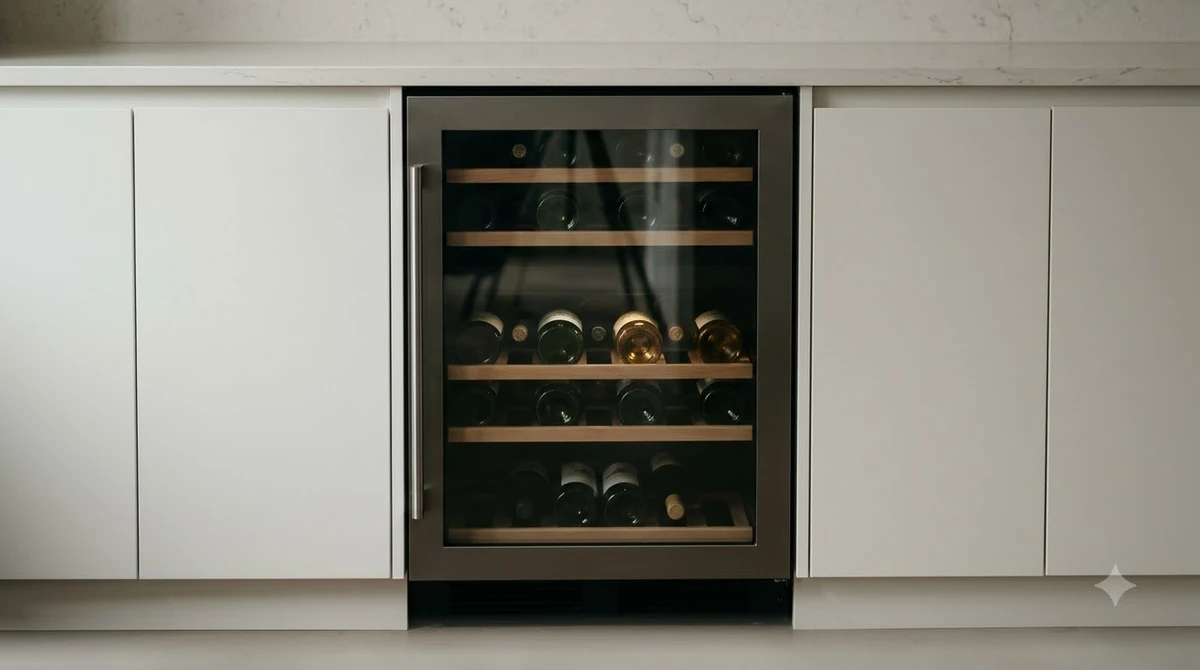
Built-in wine refrigerators typically use front ventilation. Their ventilation grille is usually positioned near the bottom of the front panel, allowing the appliance to draw in or discharge air through a designated opening without depending on large open spaces beside the cabinet.
This arrangement makes undercounter installation practical. The refrigerator can sit between kitchen cabinets while its ventilation system continues to operate through the front grille. However, front ventilation does not mean that every built-in appliance can be installed without any clearance. Individual models can still require rear spacing, side gaps, top clearance, or additional cabinet ventilation.
For example, Vintec’s installation manual for its VWS050 and related models describes a front-venting arrangement that draws air from the rear and expels it through a metal grille beneath the door. The specified installation includes 10 mm of clearance on each side, 30 mm above, and 30 mm behind the appliance.
The manual also specifies a minimum 150 cm² airflow allowance if an additional kickboard grille is installed in front of the appliance’s ventilation outlet. This illustrates why the location and unobstructed area of ventilation openings matter more than simply having some empty space nearby.
For a closer look at an actual manufacturer’s installation requirements, consult the Vintec wine cellar installation manual.
Front-venting versus rear-venting designs
The following comparison explains the typical differences between the two arrangements:
| Feature | Freestanding design | Built-in design |
|---|---|---|
| Typical ventilation | Rear or side | Front grille |
| Cabinet installation | Generally unsuitable | Designed for approved cabinetry |
| Side clearance | Often several inches | Model-specific, sometimes 10 mm |
| Rear clearance | Often 4–6 inches | Model-specific, sometimes 30 mm |
| Undercounter placement | Generally not recommended | Usually supported |
| Front grille access | Not usually the primary heat outlet | Must remain unobstructed |
These figures are general examples rather than universal installation specifications. A built-in appliance can require different clearances, and a freestanding model may have manufacturer-approved alternative installation arrangements. Always use the documentation for the exact refrigerator.
When a Freestanding Wine Refrigerator Can Be Installed in a Cabinet
There are exceptions to the general rule. Some wine refrigerators are specifically approved for both freestanding and built-in installation, while certain manufacturers publish instructions for particular cavity installations that include additional ventilation and clearance requirements.
The distinction is manufacturer approval. A refrigerator that is physically capable of operating inside a ventilated cabinet is not automatically approved for that installation. The manufacturer must specify the permitted arrangement and the conditions required to maintain proper operation.
For example, an EdgeStar CWR361FD owner’s manual describes both freestanding and built-in installation. Its instructions allow undercounter placement when the specified clearances and ventilation requirements are followed. The manual calls for at least 2/5 inch of rear clearance and 1/5 inch at the top and sides.
It also warns against installing the refrigerator behind a closed cabinet door. The appliance must remain accessible for ventilation and operation. This is an example of a model whose installation approval is based on its specific design rather than a general rule that applies to all freestanding wine refrigerators.
Some manufacturers also provide installation diagrams showing how a cavity can be ventilated. Liebherr’s illustrated guidance, for example, describes a cavity arrangement with 50 mm of clearance above and behind the cabinet and 15 mm at the sides. Its alternative ventilated-cavity arrangement specifies 15 mm above, 50 mm behind, and 15 mm at the sides, together with a minimum 300 cm² ventilation opening at the upper rear.
These examples demonstrate that installation requirements can vary considerably between appliances. One model may require several inches of open space, while another may permit a carefully designed cabinet installation with specific ventilation openings.
What to verify in the owner’s manual
Before considering cabinet installation, locate the installation section of the manual and look for the following information:
- Approved installation types: Determine whether the model is freestanding only, built-in only, or approved for both arrangements.
- Ventilation location: Identify where the appliance takes in air and releases heat.
- Required clearances: Find the minimum distances needed above, behind, and beside the refrigerator.
- Ventilation openings: Check whether the cabinet needs additional grilles or cutouts.
- Door restrictions: Determine whether the appliance can operate behind a cabinet door or requires an exposed front.
- Warranty conditions: Check whether installation outside the manufacturer’s approved arrangement affects warranty coverage.
Tip: Look up the complete model number rather than relying on the manufacturer’s general product category. Two wine refrigerators from the same brand can have different ventilation systems and installation approvals. If the manual is unclear, ask the manufacturer to confirm the permitted installation in writing before modifying your cabinetry.
What Happens If You Enclose a Rear-Venting Wine Fridge?
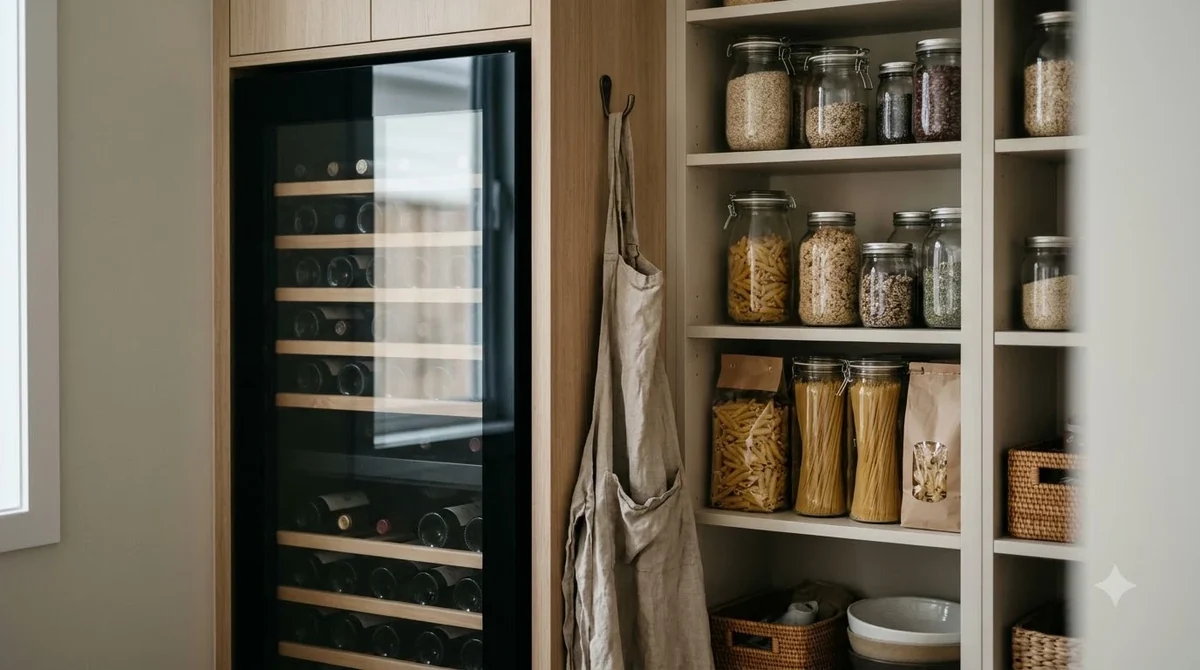
Installing a rear-venting wine refrigerator in a restrictive cabinet opening can interfere with heat removal. The resulting problems can include longer cooling cycles, inconsistent internal temperatures, additional compressor workload, and reduced appliance life.
The first potential problem is heat accumulation. A wine refrigerator transfers heat from its interior into the surrounding air. If that heat cannot escape, the temperature around the cooling components increases. The refrigerator then has to work under less favorable conditions to maintain its intended internal temperature.
One possible result is that the compressor runs more frequently or for longer periods. This can increase electricity consumption and place additional operating demands on the cooling system. Although the exact effects depend on the appliance and installation conditions, restricted ventilation is a problem that should not be ignored.
Another concern is inconsistent wine storage temperature. A refrigerator that cannot remove heat effectively may struggle to maintain its selected setting, especially in a warm kitchen or a cabinet positioned near an oven or dishwasher.
Stable storage conditions are important for preserving wine over time. Repeated temperature fluctuations are undesirable, particularly for bottles intended for extended aging. A refrigerator that appears to be cooling adequately during a short inspection may still struggle during prolonged operation.
Noise can also become more noticeable. Cooling components may operate for longer periods, and enclosed cabinetry can amplify compressor and fan sounds. A wine refrigerator that was relatively quiet in an open space may become distracting when installed between kitchen cabinets.
Finally, improper installation can create warranty complications. Some manufacturers specify that their freestanding-only models must not be enclosed. If a cooling problem develops after an installation that contradicts the manual, the manufacturer may decline warranty coverage for damage associated with that installation.
Warning signs of restricted ventilation
If a wine refrigerator is already installed in a cabinet, watch for operational changes such as:
- The compressor running noticeably longer than it did before installation.
- The interior temperature failing to reach the selected setting.
- Unusual heat accumulating around the rear or sides of the appliance.
- More frequent cooling cycles during warm weather.
- Unusual fan noise or persistent operating sounds.
- Temperature fluctuations that cannot be explained by normal door opening or room conditions.
These symptoms do not prove that restricted ventilation is the cause. Dirty components, faulty door seals, poor leveling, and other mechanical problems can produce similar behavior. However, if the refrigerator is enclosed against its installation instructions, restoring the approved ventilation arrangement should be an immediate priority.
How Much Clearance Does a Wine Fridge Need?
There is no single clearance measurement that applies to every wine refrigerator. The correct spacing depends on the ventilation design, the manufacturer’s installation diagram, and whether the appliance is approved for freestanding or built-in use.
For a typical freestanding wine refrigerator, several inches of open space around the rear and sides are common recommendations. Whynter’s general guidance, for example, identifies 4 to 6 inches at the back and sides for freestanding models. This space helps maintain airflow around the cooling components.
Built-in wine refrigerators use different requirements. The Vintec VWS050 series provides a useful example: its manual specifies 10 mm on each side, 30 mm above, and 30 mm behind. The refrigerator also requires a minimum 615 mm installation cutout width for the specified models.
These dimensions should not be transferred to a different wine refrigerator. A cabinet designed around one model may be unsuitable for another even if both appliances have similar bottle capacities or exterior dimensions.
When measuring a cabinet opening, consider more than the refrigerator’s width and height. Account for the depth of the appliance, the position of the power cord, door swing, hinge clearance, and the space required to remove the refrigerator for servicing.
Example clearance requirements
The following measurements come from specific published installation guidance and illustrate how different arrangements can work:
| Appliance or arrangement | Rear clearance | Side clearance | Top clearance |
|---|---|---|---|
| Whynter general freestanding guidance | 4–6 inches | 4–6 inches | Follow model manual |
| EdgeStar CWR361FD built-in instructions | 2/5 inch | 1/5 inch | 1/5 inch |
| Vintec VWS050 built-in series | 30 mm | 10 mm | 30 mm |
| Liebherr illustrated cavity arrangement | 50 mm | 15 mm | 50 mm |
The EdgeStar and Vintec measurements apply to the particular models and installation arrangements described in their manuals. Liebherr’s figures are also tied to its illustrated cavity arrangement. None of these measurements should be treated as universal dimensions for an unrelated refrigerator.
Cabinet ventilation may require additional planning beyond the gaps around the appliance. For example, Vintec specifies a 200 mm by 40 mm ventilation opening in certain hot-climate installation conditions. Its instructions describe positioning this opening at the rear top of the cabinet partition or at the top of either side.
In other words, simply leaving a small gap between a refrigerator and a cabinet panel is not necessarily enough. The entire ventilation path must work as intended, from the air intake to the heat outlet.
Safer Alternatives to Building In a Freestanding Wine Fridge
If your existing wine refrigerator is freestanding only, there are several practical alternatives to enclosing it. The best option depends on your kitchen layout, available floor space, bottle capacity requirements, and whether you want the appliance to remain visible.
1. Keep the refrigerator in an open location
The simplest solution is to position the wine refrigerator in an open area where its required ventilation spaces remain unobstructed. It can sit beside kitchen cabinets, against an appropriate wall, or in a dedicated beverage area.
Maintain the manufacturer’s recommended clearances at the back, sides, and top. Avoid placing the refrigerator immediately beside an oven, range, radiator, or other significant heat source. Also make sure the electrical connection remains accessible and the floor can support the fully loaded appliance.
This option is usually the most economical because it avoids cabinet modifications and replacement equipment. If appearance is important, a freestanding refrigerator can be incorporated into a beverage station with surrounding shelves or decorative panels that do not obstruct the required airflow.
2. Purchase a front-venting built-in wine refrigerator
If an undercounter installation is essential, replacing the existing unit with a model designed for built-in use is usually the most reliable solution. These appliances are engineered to release heat through a designated front ventilation system.
Before choosing a replacement, measure the available opening and compare it with the appliance’s installation diagram. Check its width, height, depth, door projection, hinge position, and ventilation requirements.
Also consider bottle capacity. A refrigerator advertised for 40 standard bottles may accommodate fewer bottles if your collection includes wider Champagne, Burgundy, or oversized bottles. Shelf spacing and bottle arrangement can affect the usable capacity.
3. Use a manufacturer-approved cabinet installation
If the current refrigerator has explicit approval for built-in installation, follow its instructions rather than applying generic cabinet dimensions. This may involve leaving a rear ventilation gap, adding a grille, or creating an unobstructed air passage through the surrounding joinery.
For more detailed installation planning, see how to install a built in wine fridge. That process involves coordinating the cabinet opening, ventilation, electrical supply, and appliance positioning before the refrigerator is moved into place.
4. Consider a separate beverage storage arrangement
If you need additional storage for drinks, a dedicated beverage refrigerator may be a better fit than trying to repurpose a freestanding wine cooler. Different beverages can have different ideal storage temperatures, and a separate appliance can provide more flexibility.
For example, if you are considering keeping beer alongside wine, read can you store beer in a wine fridge before deciding whether a combination appliance would suit your needs.
Whatever option you choose, avoid treating a decorative cabinet enclosure as a substitute for an approved ventilation system. An installation that looks integrated but restricts airflow can create ongoing operating problems.
How to Prepare for a Safe Wine Refrigerator Installation
Good installation planning begins before the appliance is moved or the cabinetry is modified. Checking the model specifications, measuring the available space, and planning the electrical connection can help avoid costly changes later.
Start by identifying the exact model number. This is commonly printed on a rating label located on the rear or inside the appliance. Use that number to locate the manufacturer’s installation manual and confirm the approved installation type.
Next, inspect the refrigerator’s ventilation system. Look for the manufacturer’s designated air intake and exhaust locations. Do not assume that a grille on the front means the entire appliance is front-venting, or that a rear panel can safely sit against a wall simply because it appears flat.
Measure the proposed installation opening carefully. Record the internal width, height, and depth, and compare those dimensions with the installation drawing. Include space for any rear spacers, power connections, ventilation channels, and door movement.
Electrical access is another important consideration. The outlet should comply with the appliance’s electrical requirements and applicable local codes. Avoid pinching the power cord between the refrigerator and cabinetry, and do not use an extension cord unless the manufacturer specifically permits it.
The EdgeStar CWR361FD manual, for example, specifies a grounded 115 V, 60 Hz supply and recommends a separate circuit. Electrical specifications differ between appliances and countries, so the rating label and manual should guide the installation rather than assumptions based on another refrigerator.
Before loading wine, make sure the refrigerator is positioned on a stable, level surface. Adjustable feet can help compensate for minor unevenness, and proper leveling supports normal door operation and appliance performance.
It is also useful to plan how the refrigerator will be removed for maintenance. A unit that fits perfectly into a cabinet but cannot be pulled forward without dismantling surrounding panels can become difficult and expensive to service.
Installation checklist
- Confirm that the model is approved for the intended installation type.
- Read the complete manufacturer’s installation instructions.
- Identify the air intake and heat exhaust locations.
- Measure the cabinet opening and required clearances.
- Keep all ventilation grilles and openings unobstructed.
- Check door swing, hinge clearance, and shelf access.
- Provide an appropriate electrical outlet and accessible connection.
- Keep the refrigerator away from excessive heat and direct sunlight.
- Ensure the appliance is level before loading bottles.
- Maintain sufficient access for future cleaning and servicing.
Once installation is complete, allow the refrigerator to reach a stable operating temperature before filling it with wine. Some manufacturers recommend waiting approximately 24 hours after initial installation or transportation before normal use. Follow the instructions for the particular appliance.
For additional storage and maintenance information, visit Installation & Care. You can also review how long you can store wine in a wine fridge to understand how appropriate storage conditions affect bottles intended for short-term enjoyment or longer keeping.
Frequently Asked Questions
Can I put a freestanding wine fridge under a countertop?
Only if the manufacturer explicitly approves undercounter installation for that model. Some wine refrigerators are designed for both installation types, while others require open space around their rear and sides. An appliance’s height and width matching the cabinet opening does not establish that it is suitable for undercounter use.
Can I build a cabinet around a freestanding wine cooler?
You can build a decorative surround only if it preserves the ventilation arrangement required by the manufacturer. A cabinet that encloses the refrigerator’s heat-discharge areas can interfere with cooling. If the manual specifies freestanding-only placement, a custom cabinet should not be used to override that restriction.
Does a freestanding wine fridge need a ventilation grille?
Some models use open space around their rear and sides rather than a dedicated front grille. Others have manufacturer-specified ventilation openings for approved cavity installations. For example, Liebherr illustrates an arrangement requiring a 300 cm² upper-rear ventilation opening. The correct configuration depends on the particular appliance.
Can I remove the back panel to improve ventilation?
No, removing structural or protective panels is not an appropriate substitute for proper installation. Internal components, electrical connections, and refrigerant tubing may be exposed or damaged. Only perform modifications expressly authorized by the manufacturer or a qualified service professional.
Can I convert a freestanding wine fridge into a built-in model?
There is no universal conversion kit that makes every freestanding refrigerator suitable for cabinetry. Changing ventilation openings or adding cabinet grilles does not necessarily change the appliance’s approved installation classification. If an undercounter installation is required, choosing a purpose-designed built-in model is generally the more dependable approach.
A freestanding wine refrigerator should generally remain in an open location unless its manufacturer specifically approves an alternative installation. The most important factors are ventilation, heat removal, proper clearance, and access for maintenance. If you are planning an undercounter wine storage area, choosing a front-venting built-in refrigerator from the beginning can provide a more dependable installation and help protect your wine collection.
More in Storage & Fridge Care
 How Long Can You Store Wine in a Wine Fridge? Protect Bottle QualityUpdated Nov 20, 2026
 Can You Store Beer in a Wine Fridge? Keep Both Drinks FreshUpdated Nov 20, 2026
 Is It Worth Repairing a Wine Fridge? Spot the Cheap Fixes Before You ReplaceUpdated Nov 20, 2026
 Wine Fridge Condensation: Identify Causes and Fix Moisture ProblemsUpdated Nov 20, 2026
 Wine Fridge Too Cold: Protect Your Wine and Fix the TemperatureUpdated Nov 20, 2026
 How to Reset Wine Fridge: Restore Cooling and SettingsUpdated Nov 20, 2026