

We may earn a commission when you buy through links on this page, at no extra cost to you. Learn more.
For most cooling complaints, miele wine fridge repair starts with four free checks: confirm the unit has power and is switched on, make sure demo mode is off, clear the vents and air filter, and confirm the condenser fan spins. Only after those checks does a sealed-system or compressor fault become the likely cause. Miele’s own troubleshooting pages put power and settings first, and the airflow and fan checks follow naturally from them. Working in that order rules out the simple faults before you pay for a service visit.
A wine fridge that stops cooling puts a collection at risk, and the cause is often something you can check in minutes. A compressor wine cooler depends on a handful of parts working together: a power supply and display, a thermostat or temperature sensor, a condenser fan, a condenser coil, a compressor and a door seal. Each one fails in its own pattern, so the most useful approach is to move from the easiest checks to the hardest. The sections below follow that order, from power and settings through airflow, fan, seals and room conditions, and finish with the point where a technician should take over.
Check Power, the Display and the Breaker First
A dark display and a warm cabinet usually point to a power problem before they point to a cooling fault. Miele’s support pages start with these checks for that reason.
Miele’s wine unit troubleshooting begins at the plug. If the interior light stays off when you open the door and the display is dark, the electrical plug may not be properly seated in the socket. Once it is inserted, a power connection symbol should appear in the display. Miele’s wine unit support page walks through these steps, and it is the quickest reference for the first few minutes of any visit.
If the symbol still does not light, the unit may simply be switched off, so switch it on and allow time before judging the result. A circuit breaker that has tripped calls for more caution. Miele says a tripped breaker can point to a fault in the wine unit, the household wiring or another electrical appliance, and it directs owners to contact a qualified electrician or Miele Service in that case. If the breaker holds, check that the plug connector at the back of the unit sits firmly in its socket, because Miele lists a connector that is not inserted correctly as a reason a unit fails to cool.
Confirm Demo Mode and the Temperature Setting
A unit left in demo mode will not cool, and a set point colder than the wine needs keeps the compressor running longer than necessary. Both problems are fixed through the settings rather than with tools.
Demo mode is worth ruling out early, particularly on a unit that was displayed in a showroom before it reached your home. According to Miele, demo mode lets a refrigeration appliance be shown on a dealer floor without its cooling system switched on, and the company says not to activate it for domestic use. Depending on the model, you can deactivate demo mode through the settings. Where the setting cannot be cleared, Miele asks owners to contact its service team. On models that show one, a flag symbol on the display indicates that demo mode is active.
The set point is the second check. Wine is served at temperatures far warmer than a freezer setting, and the table below summarizes typical ranges for common wine styles. A target set too low makes the compressor run nearly nonstop, which Miele lists as a cause of constant running, and its remedy is simply to set the correct temperature. Make one change at a time, then allow the cabinet to settle before judging it. Comparing the display with a separate thermometer placed inside the cabinet shows whether the reading and the actual temperature agree.
| Wine style | Typical serving temperature | Examples |
|---|---|---|
| Sparkling | 40 to 50 F | Champagne, Prosecco, Cava |
| Sweet whites | 43 to 50 F | Riesling, Moscato |
| Light whites and rosé | 45 to 50 F | Sauvignon Blanc, dry rosé |
| Full whites | 50 to 55 F | Oaked Chardonnay |
| Light reds | 55 to 60 F | Pinot Noir |
| Full reds | 60 to 65 F | Cabernet Sauvignon, Syrah |
For long-term storage, a cellar setting near 55 F suits most collections, and bottles should rest on their sides so corks stay moist. Use the serving figures to decide what to chill and what to hold at storage temperature. Keeping those two uses separate avoids chasing a fault when the real issue is only a serving question.
Tip: RemoveAndReplace, a repair guide, puts a first-run window of 12 to 24 hours before a new unit reaches its set temperature, especially on a dual-zone unit. Judge the setting only after that window has passed.
Clean the Vents, Air Filter and Condenser Coil
Blocked or dusty airflow is one of the cheapest causes of poor cooling to fix. Miele’s support pages name it directly as a reason a unit cannot cool properly.
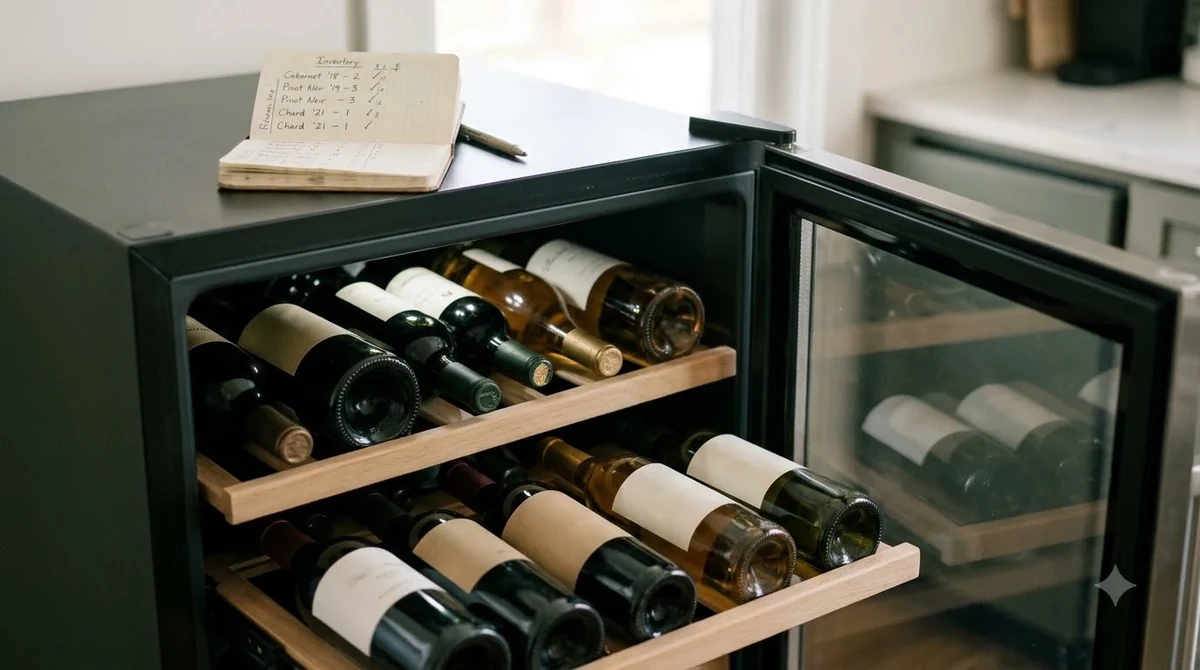
Miele’s compressor troubleshooting page lists ventilation openings that are obstructed or dusty as a cause of a compressor that runs constantly. The remedy is to make sure air can circulate freely and to remove dust regularly. On its built-under wine unit page, Miele explains that the air filter keeps dirt away from the compressor compartment, and that a soiled filter can result in the unit not cooling sufficiently. On that model the filter sits behind the ventilation grille on the left-hand side of the base area.
The cleaning routine Miele describes is short. Remove the ventilation grille, take out the air filter, and clean both sides with a vacuum cleaner. Reinstall the filter and then the grille. Miele recommends cleaning the filter at least once a year, and doing it on the same date each year makes it easy to remember. Owners of other brands can compare the basic steps with our allavino wine fridge repair notes, since the cooling principles are similar even when panel layouts differ.
Vinotemp’s troubleshooting chart handles a warm cabinet in much the same way. Its high-temperature entries list a dirty condenser and improper condenser airflow, with the remedies to clean the condenser and check for airflow restrictions. A heavy load of bottles also raises the workload. Miele says a large quantity of bottles makes the unit work harder and that no remedy is needed beyond normal use, so the goal is to keep the vents clear, avoid overfilling the cabinet, and recheck the temperature after cleaning.
Test the Condenser Fan Before Buying Parts
According to RemoveAndReplace, a condenser fan that has stopped is the most common cause of a warm cabinet that still hums. The check takes minutes and needs no parts.

The fan sits behind the vents beside the condenser coil and pulls air across it so the compressor can release heat. The symptom to watch for is a cabinet that stays warm while the compressor hums, with no sound from the fan. RemoveAndReplace says a fan usually quits because its bearing dries out, a wire is damaged, or dust builds up around the blade. Unplug the unit before touching anything, then pull it forward far enough to reach the back panel, or the bottom panel on a built-in model, and remove the panel screws.
With the panel off, spin the blade by hand. A healthy fan turns freely. If the blade feels stiff, vacuum the coil and blade with a soft brush attachment and try again. RemoveAndReplace advises against spraying lubricant into the fan hub, because the residue attracts more dust and can gum up the bearing. Replace the motor only when vacuuming has not freed the blade, and check that the new motor’s part number matches the rating plate or manual before ordering.
Once the fan spins freely, reconnect the unit and confirm the fan runs whenever the compressor does. Vinotemp’s chart lists a malfunctioning condenser fan as a cause of high cabinet temperature, and its remedy is to call service for a replacement. As RemoveAndReplace points out, a full compressor swap is rarely the real fix, so a fan that has power but still will not turn is the part to focus on.
Inspect the Door Seal and Loading Habits
A door that does not seal lets cold air escape, and the compressor then runs longer to replace it. The fix is often a small adjustment or an inexpensive gasket.
Miele’s compressor page lists a door that is not completely closed as a cause of constant running. Its remedy is to check that the door is not blocked by foreign objects, confirm that the doors are seated correctly, and use the screws in the door hinges to adjust them if necessary. Vinotemp’s chart points to the same area under improper seals, advising a check of the gasket and of any door openings that happen more often than they should.
A simple paper test shows whether a gasket still grips. Close the door on a dollar bill so that about half of it sticks out, then pull it. If the bill slides free with no resistance along the seal, the gasket has lost its grip. RemoveAndReplace describes replacement gaskets that usually peel-and-stick or snap into a channel around the door frame, and budgets about 20 minutes for the job. Clean the seal before you test it, since dust and residue reduce grip.
Door habits matter as well. Miele notes that frequent door opening makes the unit work harder, and it treats that as normal load rather than a fault. Vinotemp recommends reducing how long the door stays open. Open the door only when you need to, and close it fully after each visit so the compressor does not have to make up for lost cold. Zephyr owners can also consult our zephyr wine fridge repair page for a separate set of notes.
Room Temperature and Installation Limits
A wine cooler depends on a stable room, and both very warm and very cold spaces can prevent normal operation. Installation matters too, especially for built-in units.
Miele lists an ambient temperature that is too high as a cause of a compressor that runs constantly, and its remedy is to lower the surrounding temperature. For built-in models, Miele also lists a unit that was not properly installed in its niche, and advises fitting it as described in the installation instructions. RemoveAndReplace advises keeping a cooler out of direct sun and away from ovens and dishwashers, which is sensible for a unit that depends on airflow around its coil.
Cold rooms cause the opposite problem. According to RemoveAndReplace, many compressor coolers include a low-ambient cutoff that stops the compressor from starting when the room drops below roughly 50 to 60 F. A garage in winter or an unheated basement can trigger it even when nothing inside is broken. Vinotemp’s chart suggests raising the temperature setting when the surrounding temperature is low. Hot garages create strain at the other end: RemoveAndReplace notes that a garage running well over 100 F in summer pushes the compressor hard.
Some behavior is normal and should not be repaired. Miele explains that when less cooling is needed, the unit drops to a lower speed to save energy, which lengthens compressor running time. Miele calls this a normal function and says no remedy is required. Judge a fault by whether the cabinet holds its set temperature over a full day rather than by the sound of the compressor alone.
When a Technician Should Take Over
Some faults sit inside the sealed refrigerant system, and that work belongs to a technician. Knowing where the line falls saves time and avoids damage.
Vinotemp’s chart lists refrigerant leakage as a cause of high cabinet temperature, and its remedy is to call service for a check of the system. The same chart states that it is not a substitute for the training a professional refrigeration service person receives. If the fan spins, the coil is clean, the door seals and the room sits within range, yet the cabinet still stays warm, a sealed-system problem becomes the likely explanation. Compare your findings with the Vinotemp troubleshooting chart before you call.
Warning signs point the same way. RemoveAndReplace says a sweet or oily smell near the back panel, or oily residue on the coil, indicates a refrigerant leak and should stop any DIY attempt. Always unplug the unit at the wall before removing a panel, because the start relay near the compressor can deliver a shock even when the unit is switched off. Refrigerant work requires equipment that most homeowners do not own, so leave the sealed system to a technician.
For Miele units, booking is straightforward. Miele’s pages say repair bookings can be taken online, and its contact form promises a reply as soon as possible. Have the model number, the display reading, a separate thermometer reading and a note on whether the compressor runs constantly or cycles off ready before you call. Those details shorten the conversation and help the technician focus on the right system. For a wider view across storage equipment, see our Brand Troubleshooting hub.
Tip: Write down what you have already checked before a technician visit. The plug, breaker, demo mode, vents, fan and door seal each take only minutes, and a written list lets the technician start where you left off.
Frequently Asked Questions
How long can wine stay in the fridge while a repair is pending?
Opened wine keeps for a limited time in a refrigerator. Still wines last about three to five days, sparkling wine lasts one to three days, and fortified wines keep for several weeks. Bag-in-box wine stays fresh for about four to six weeks after opening.
How often should I clean the condenser coil and fan?
RemoveAndReplace recommends vacuuming the condenser coil and fan twice a year, in spring and fall, because that routine stops dust from building up over a season. The same guide advises leaving a few inches of clearance behind a freestanding unit so that air can move freely. Miele’s once-a-year cleaning applies to the built-under filter described above.
Why does my wine fridge make noise after a repair?
Vinotemp’s troubleshooting chart lists a noise that comes from a mounting area that is not firm, and its suggested fix is to add support to improve the installation. Check that the unit sits solidly on the floor and does not touch surrounding cabinetry before assuming a mechanical failure.
Can a loose temperature sensor cause a wrong reading?
Yes. RemoveAndReplace describes a sensor probe that has slipped from its clip and rests near the back wall, reading the air behind the cabinet instead of the air inside it. Check that the probe sits snugly in its clip and touches the cabinet wall, then compare the display with a thermometer placed inside after about an hour. Reseating a probe is usually a five-minute job that requires no parts.
Can I open the cabinet myself if the unit is still under warranty?
Check the warranty terms before removing any panel, because RemoveAndReplace warns that opening a unit still under manufacturer warranty can void that coverage. Miele lists product warranty and registration separately under My Miele on its site, so registering the appliance and keeping proof of purchase are worth doing early.
Most miele wine fridge repair work begins with power, demo mode, airflow and the condenser fan, and each check takes minutes instead of days. Keep bottles stored on their sides near 55 F while you work through the list, and escalate to a technician once the breaker or the sealed system is involved.
More in Storage & Fridge Care
 How Long Can You Store Wine in a Wine Fridge? Protect Bottle QualityUpdated Nov 20, 2026
 Can You Store Beer in a Wine Fridge? Keep Both Drinks FreshUpdated Nov 20, 2026
 Is It Worth Repairing a Wine Fridge? Spot the Cheap Fixes Before You ReplaceUpdated Nov 20, 2026
 Wine Fridge Condensation: Identify Causes and Fix Moisture ProblemsUpdated Nov 20, 2026
 Wine Fridge Too Cold: Protect Your Wine and Fix the TemperatureUpdated Nov 20, 2026
 How to Reset Wine Fridge: Restore Cooling and SettingsUpdated Nov 20, 2026