

We may earn a commission when you buy through links on this page, at no extra cost to you. Learn more.
If your Koolatron wine fridge not cooling properly, check its temperature setting, ventilation clearance, room temperature, door seal, and power supply first. Many cooling problems come from restricted airflow, frequent door openings, excessive heat, or an incorrectly adjusted thermostat rather than a failed cooling component. The correct troubleshooting process depends on whether your model uses a thermoelectric cooling system, a single temperature zone, or dual-zone controls.
A wine refrigerator needs consistent operating conditions to maintain its selected temperature. Koolatron makes several wine cooler configurations, including compact six-bottle models, 12-bottle thermoelectric units, and larger dual-zone cabinets. Their controls, ventilation requirements, and temperature ranges are not identical. This guide explains how to identify the likely cause, perform safe checks, recognize mechanical problems, and decide when professional service is appropriate.
1. Check the Temperature Setting and Cooling System
The first step is confirming that the cooler is actually set to a temperature below the current temperature inside the cabinet. An incorrect setting can make a functioning appliance appear defective. The type of cooling technology also affects how quickly the temperature changes.
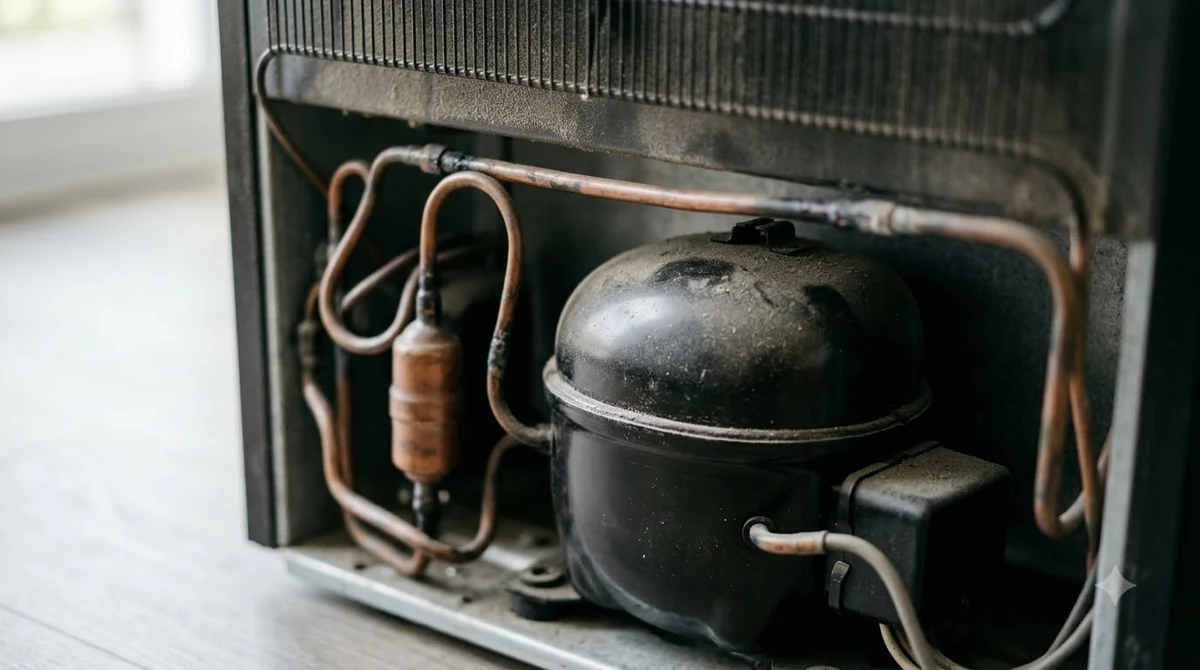
Many compact Koolatron wine refrigerators use thermoelectric cooling. Instead of relying on a conventional compressor, this technology transfers heat through a thermoelectric module and uses fans to move air across the cooling components. Because this arrangement depends on effective heat transfer and ventilation, a warm room can make the cabinet struggle to reach its target.
Start by checking the temperature display and comparing the actual reading with the selected setting. For a digital WC06, press the up or down temperature buttons to enter adjustment mode. The display should flash while the desired temperature is being selected. Once the adjustment stops, the display returns to showing the internal temperature.
Some older or different Koolatron models use a mechanical temperature dial instead. The WC12 manual describes a control where Low provides more cooling and High provides less cooling. This distinction is important because turning a dial toward High does not make the appliance colder.
Understand the cooling limits
The WC06 has a stated operating temperature range of 46°F to 66°F, while the WC12 has a typical range of 46°F to 66°F. The WC18MG dual-zone model has a different arrangement: its upper zone ranges from 54°F to 66°F, and its lower zone ranges from 46°F to 66°F.
These specifications show why the model number matters. A user expecting the upper section of a WC18MG to reach 46°F may mistake a normal operating limitation for a malfunction. Before changing settings repeatedly, establish the correct temperature range for the particular cabinet.
Also distinguish the selected temperature from the actual cabinet temperature. A display that briefly shows the newly selected setting does not necessarily mean the interior has already reached that temperature. Some digital controls temporarily show the target during adjustment before returning to the actual reading.
Tip: Make one reasonable temperature adjustment, close the door, and allow several hours for the cabinet to respond. Repeatedly changing the setting makes it harder to determine whether the cooling system is working.
If the temperature remains above the target after sufficient operating time, move on to ventilation and room conditions. These are particularly important for thermoelectric models.
2. Inspect Ventilation and Room Temperature
Poor ventilation is one of the most important causes of inadequate cooling in a thermoelectric Koolatron wine fridge. The appliance needs room to release heat through its ventilation openings. A cooler pushed against a wall, trapped inside a cabinet, or positioned beside a heat-producing appliance may struggle to maintain its selected temperature.
Start by inspecting the sides, back, and top of the cabinet. Look for walls, furniture, curtains, storage boxes, and other objects that might restrict airflow. Check that ventilation grilles are not covered by dust or household items.
Clearance requirements vary by model. The WC06 manual specifies at least 5 inches behind and beside the unit. The WC12 manual specifies at least 4 inches in those locations, while the WC18MG instructions require at least 5 inches on the sides and back and 10 inches above the appliance.
These differences are not interchangeable recommendations. Follow the requirements for the exact model rather than assuming every Koolatron cooler needs the same amount of open space.
| Model | Cooling system | Temperature range | Ventilation clearance |
|---|---|---|---|
| WC06 | Thermoelectric | 46–66°F | 5 inches at back and sides |
| WC12 | Thermoelectric | 46–66°F | 4 inches at back and sides |
| WC18MG | Thermoelectric, dual zone | Upper: 54–66°F; lower: 46–66°F | 5 inches at sides and back; 10 inches above |
Another important factor is the surrounding room temperature. The WC06 troubleshooting instructions identify excessive ambient temperature as a possible reason for insufficient cooling and recommend keeping the room within the operating conditions specified for the thermoelectric appliance. The manual specifically identifies temperatures above approximately 77–78°F as a concern.
If your cooler sits in a warm kitchen, enclosed entertainment area, garage, or sunlit room, the surrounding heat may be preventing it from achieving the desired temperature. Relocating it to a cooler, better-ventilated indoor location can improve performance.
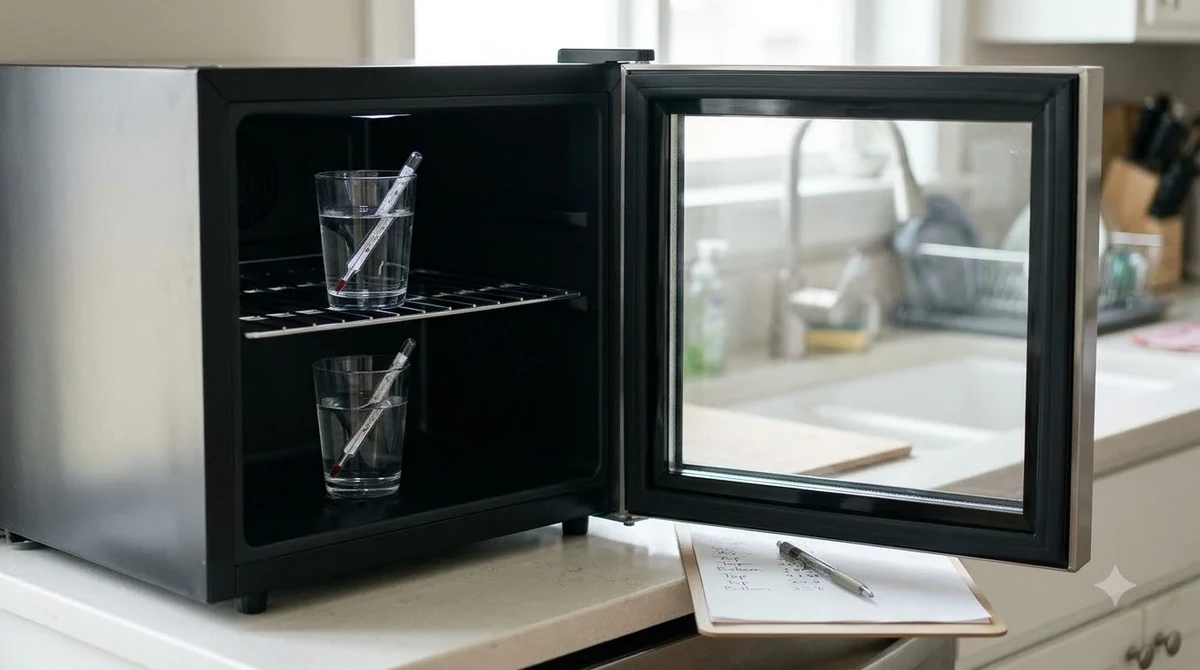
Direct sunlight can also heat the glass door and cabinet surfaces. Avoid placing the refrigerator beside an oven, radiator, heating vent, or other source of concentrated heat. A location with relatively stable room temperature is preferable to one that becomes very warm during cooking or afternoon sunlight.
Finally, check the ventilation openings for dust. Disconnect the appliance from power before cleaning accessible exterior vents. Use a soft brush or dry cloth to remove loose dust without pushing debris into the fan or electrical components.
3. Check the Door Seal, Bottle Loading, and Internal Airflow
A wine cooler can run continuously and still fail to maintain its temperature if warm air enters through the door. A damaged gasket, an obstructed door, or frequent opening can increase the cooling demand. Overloading the shelves can also restrict the movement of cooled air.
Begin with a visual inspection of the door gasket. This flexible seal runs around the inside edge of the door and helps prevent warm room air from entering the cabinet. Look for cracks, flattened sections, dirt, loose areas, and visible gaps.
Clean an accessible gasket with a soft cloth and mild soapy water. Dry it completely before closing the door. Do not use abrasive tools or strong solvents that could damage the sealing surface.
Perform a simple door-seal test
A piece of ordinary paper can help identify a weak sealing area. Place a narrow strip between the door and cabinet, close the door, and gently pull the paper outward. Repeat the test at several positions around the perimeter.
Some resistance is generally expected when the seal is making contact. If the paper slides out freely in one section but remains held elsewhere, inspect that area more closely. This test is a basic screening method, not a definitive measurement of gasket performance.
Also check whether bottles or shelves are preventing the door from closing fully. A bottle positioned too far forward can interfere with the door, while a poorly seated shelf may prevent proper closure. Rearrange the contents so the door shuts without resistance.
Avoid excessive loading
Koolatron wine coolers are designed around specific bottle capacities. The WC06 accommodates six standard bottles, the WC12 accommodates 12, and the WC18MG accommodates 18 across its two zones.
Capacity figures are based on standard bottle dimensions. Larger sparkling wine bottles, unusually shaped bottles, and oversized containers may reduce the usable space. Trying to fit additional bottles can block internal airflow or interfere with the shelves.
Keep bottles arranged so they do not obstruct the cooling plate or internal fan. Avoid pressing bottles against the rear cooling surface, and do not force shelves into positions that interfere with circulation.
Frequent door openings are another source of temperature instability. Each opening allows warmer room air to enter, particularly when the cooler is being used regularly during entertaining. Close the door promptly after retrieving a bottle and avoid leaving it open while organizing the collection.
If the appliance becomes noticeably colder after the door remains closed for several hours, inspect the gasket and loading arrangement before assuming that the cooling module has failed.
4. Check the Electrical Supply, Display, and Cooling Fan
When a Koolatron wine refrigerator is completely inactive, the electrical supply should be checked before investigating cooling components. A loose plug, failed outlet, tripped circuit breaker, or damaged power cord can interrupt operation. A functioning display does not necessarily prove that every cooling component is receiving power.
Start with the simplest checks. Make sure the plug is fully inserted into the outlet and inspect the visible length of the power cord for damage. If the cord is frayed, crushed, or exposed, stop using the appliance and arrange appropriate service.
Test the wall outlet
The WC06 troubleshooting instructions recommend checking the outlet with another appliance when the wine cooler does not operate. Use a suitable, known-working device to establish whether the outlet supplies power.
If the outlet is dead, check the corresponding circuit breaker. A breaker that trips repeatedly should not be reset over and over. Have an electrician investigate the underlying electrical problem.
Use the electrical connection specified in the model’s instructions. For example, the WC06 manual specifies a 120-volt AC supply, while the WC12 documentation specifies a 110-volt AC connection. The WC18MG specifies 115 volts AC at 60 Hz.
Listen for the cooling fan
Thermoelectric cooling systems rely on fans to move air across their heat-transfer components. A blocked, damaged, or nonfunctioning fan can reduce cooling performance even if the appliance appears to be powered.
Listen for a gentle fan hum while the unit operates. A quiet humming sound is normal for many thermoelectric wine refrigerators. However, a fan that repeatedly starts and stops, makes grinding noises, or produces unusual rattling deserves further inspection.
Check accessible exterior ventilation areas for obstructions, but do not reach inside electrical compartments or attempt to turn internal fan blades while the unit is connected to power.
When the digital display stops responding
If the display is blank or the touch controls do not respond, the WC06 manual recommends disconnecting the appliance for five minutes and reconnecting it. This can help clear a temporary electronic control issue.
Before performing this reset, record the previous temperature setting if possible. After reconnecting the appliance, check whether the display returns and whether the temperature controls respond normally.
A reset is not a repair for a failed control board, damaged wiring, or defective cooling module. If the display remains blank or the controls repeatedly become unresponsive, contact the manufacturer rather than opening the electrical enclosure.
5. Allow for Cooling Time and Check for Frost Buildup
A wine cooler does not necessarily reach its target temperature immediately after being switched on, adjusted, or filled with bottles. Cooling takes time, and a large change in the amount of stored wine can affect how quickly the cabinet stabilizes.
The WC18MG manual specifically recommends allowing several hours for the temperature to reach the selected setting after initial setup or adjustment. The WC06 instructions also emphasize allowing sufficient cooling time after setup and loading.
This is particularly relevant when a cooler has been filled with several bottles that were previously stored at room temperature. The cooling system must remove heat from both the air and the contents, so the display may remain above the selected temperature for a while.
Try to distinguish a gradual temperature decrease from a complete lack of cooling. A cabinet that becomes progressively colder is showing a different pattern from one that remains unchanged despite continuous operation.
Check the cooling surface for frost
Some Koolatron wine coolers develop frost on their interior cooling surfaces. A thin layer may occur during normal operation, but excessive accumulation can interfere with cooling performance and internal airflow.
Defrosting instructions depend on the model. The WC12 and WC18MG documentation describes manual defrosting. The WC06 manual describes an automatic defrost system, although it also provides instructions for naturally defrosting excessive frost if necessary.
For a model that requires manual defrosting, disconnect the power, remove the bottles, and allow the frost to melt naturally. Place a towel inside or beneath the appliance where water may collect. Once the interior is dry, reconnect the cooler according to its instructions.
Never chip away frost with a knife, screwdriver, or other sharp object. The cooling plate and nearby components can be damaged by mechanical force. Do not use a hair dryer, heat gun, or other improvised heating method to accelerate defrosting.
If excessive frost returns quickly after a proper defrost, investigate possible causes such as a poorly closing door, damaged gasket, high room humidity, or a control problem.
Tip: Photograph the temperature display before defrosting and again after the cooler has stabilized. Keeping a simple record helps establish whether the appliance is gradually improving or repeatedly developing the same problem.
6. Recognize Cooling Component Failures and Arrange Service
If the power supply, thermostat, ventilation, door seal, and loading arrangement are all satisfactory but the cooler still cannot maintain its temperature, an internal component may have failed. At this stage, additional adjustments are unlikely to solve the problem.
Thermoelectric models depend on several connected components working together. These include the thermoelectric cooling module, internal fan, external heat-dissipation fan, temperature sensor, and electronic control system. A problem with any one of these parts can reduce cooling performance.
Signs of a possible cooling-module problem
A cooling module problem becomes more likely when the cooler has a stable electrical supply, adequate ventilation, and a suitable room temperature but produces little or no cooling.
Other warning signs include unusual heat around the ventilation area, repeated temperature fluctuations, and cooling performance that has gradually deteriorated despite routine cleaning and correct placement.
However, these symptoms do not independently prove that the thermoelectric module has failed. A defective fan or temperature sensor can create similar symptoms. Proper diagnosis requires checking the relevant components rather than replacing parts based only on the display reading.
Temperature sensor and control-board problems
The temperature sensor helps the appliance determine how much cooling is needed. If it provides inaccurate readings, the control system may not operate the cooling components correctly.
For example, a cooler that displays a temperature much lower than an independent thermometer reading may have a sensor or display problem. A unit that repeatedly ignores its temperature settings may have a control-system fault.
These components are not appropriate targets for casual household repairs. Accessing the internal electronics can expose electrical connections and damage the appliance. A qualified service technician should perform electrical diagnosis and component replacement.
Know when to stop troubleshooting
Stop operating the cooler if you notice a burning smell, damaged electrical wiring, repeated breaker trips, smoke, or signs of electrical overheating. Disconnect the appliance if it is safe to do so and arrange professional inspection.
Do not dismantle the sealed cooling assembly or attempt to modify its electrical wiring. If your model has a damaged power cord, obtain appropriate manufacturer-approved service rather than using an improvised replacement.
For model-specific documentation, use the official Koolatron product-manual search. Enter the model number to locate the appropriate instructions and resources.
Keep the model number, purchase information, a description of the symptoms, and any temperature readings available when contacting support. These details help distinguish a control problem from a ventilation or cooling-component failure.
For additional appliance troubleshooting comparisons, see our guides to Allavino wine fridge not cooling and Magic Chef wine fridge not cooling. The basic diagnostic principles are similar, although installation requirements and component designs differ between manufacturers.
7. Prevent Future Cooling Problems With Proper Wine Storage
Good operating habits can reduce temperature fluctuations and help a Koolatron wine refrigerator maintain consistent conditions. Proper placement, moderate bottle loading, and regular inspection of the ventilation openings are particularly important for thermoelectric models.
Start by keeping the cooler in a location with relatively stable room temperature. Avoid placing it beside an oven, dishwasher, heating vent, or sunny window. Maintain the required clearance around the cabinet and keep exterior ventilation openings clean.
Check the door gasket periodically for dirt, damage, or deformation. Make sure bottles do not prevent the door from closing completely. If the appliance has adjustable leveling feet, use them to keep the cabinet stable and help the door align properly.
Use sensible temperature settings
Wine storage temperatures depend on the style of wine and the intended storage conditions. A single-zone wine cooler can be useful for keeping a mixed collection at a consistent temperature, while a dual-zone cabinet allows separate settings for different wine styles.
For general wine storage, a stable temperature near 55°F is a useful target when the model supports it. The exact setting should remain within the appliance’s operating range. The WC18MG, for example, has different minimum temperatures for its upper and lower zones.
Remember that serving temperatures are not necessarily the same as long-term storage temperatures. A bottle of sparkling wine may be served around 40–50°F, while light reds are generally served around 55–60°F. A cooler’s storage setting does not have to match the serving temperature for every bottle.
Keep a basic maintenance routine
Regular maintenance does not need to be complicated. A few simple checks can help identify problems before they become serious.
- Inspect the power cord and plug for visible damage.
- Check that the cooler remains level and stable.
- Keep ventilation openings free of dust and obstructions.
- Clean the door gasket with a soft cloth and mild detergent.
- Confirm that bottles and shelves do not interfere with door closure.
- Monitor the actual cabinet temperature periodically.
- Follow the model-specific instructions for frost removal and cleaning.
Unplug the cooler before cleaning or carrying out permitted maintenance. Avoid getting water into the display, control panel, or electrical areas. Allow cleaned surfaces to dry before reconnecting the appliance.
If you are comparing troubleshooting procedures across manufacturers, our Haier wine fridge not cooling guide covers another common wine refrigerator design. You can also explore Brand Troubleshooting for more appliance maintenance information.
Good storage conditions help protect wine quality as well as appliance performance. A properly operating wine cooler should maintain a reasonably stable interior temperature without requiring constant changes to its controls.
Frequently Asked Questions
Can I use a Koolatron wine fridge in a garage?
That depends on the ambient temperature range specified for your particular model. An unheated garage can become too cold in winter, while an enclosed garage can become excessively hot in summer. Check the model’s operating instructions before installing it in a garage or other unconditioned space.
Why does my Koolatron wine cooler get cold at the bottom but not at the top?
Temperature differences can occur when the cabinet has uneven airflow or when its cooling system cannot distribute cooled air effectively. Check that bottles are not blocking the circulation path and that internal fans are operating normally. For a dual-zone WC18MG, also remember that the two sections have separate controls and different minimum temperature specifications.
Can a power outage change my Koolatron wine cooler settings?
Yes, some models may restart with different settings after an interruption. The WC06 instructions describe checking the display and selected temperature after reconnecting the appliance. The WC06 and WC18MG also use different control arrangements, so verify the behavior against the instructions for your model.
Can I use a separate thermometer to monitor my wine cooler?
Yes. A small independent refrigerator thermometer can help you compare the cabinet’s actual temperature with its digital display. Place it away from the cooling plate and avoid positioning it directly against a bottle or ventilation outlet. Allow time for the reading to stabilize before drawing conclusions.
Does a Koolatron thermoelectric wine cooler need to make compressor noises?
No. Thermoelectric wine coolers do not use the conventional compressor arrangement found in many household refrigerators. Their operating sounds generally come from fans and normal electrical operation. A gentle fan hum is common, although grinding, scraping, or repeated rattling should be investigated.
A Koolatron wine fridge that is not cooling often has a problem that can be identified through a few straightforward checks. Start with the temperature controls, ventilation, ambient conditions, door seal, and power supply before considering internal component failure. If the appliance still cannot maintain its selected temperature after these checks, use the model-specific documentation and contact Koolatron support for further assistance.
More in Storage & Fridge Care
 How Long Can You Store Wine in a Wine Fridge? Protect Bottle QualityUpdated Nov 20, 2026
 Can You Store Beer in a Wine Fridge? Keep Both Drinks FreshUpdated Nov 20, 2026
 Is It Worth Repairing a Wine Fridge? Spot the Cheap Fixes Before You ReplaceUpdated Nov 20, 2026
 Wine Fridge Condensation: Identify Causes and Fix Moisture ProblemsUpdated Nov 20, 2026
 Wine Fridge Too Cold: Protect Your Wine and Fix the TemperatureUpdated Nov 20, 2026
 How to Reset Wine Fridge: Restore Cooling and SettingsUpdated Nov 20, 2026