

We may earn a commission when you buy through links on this page, at no extra cost to you. Learn more.
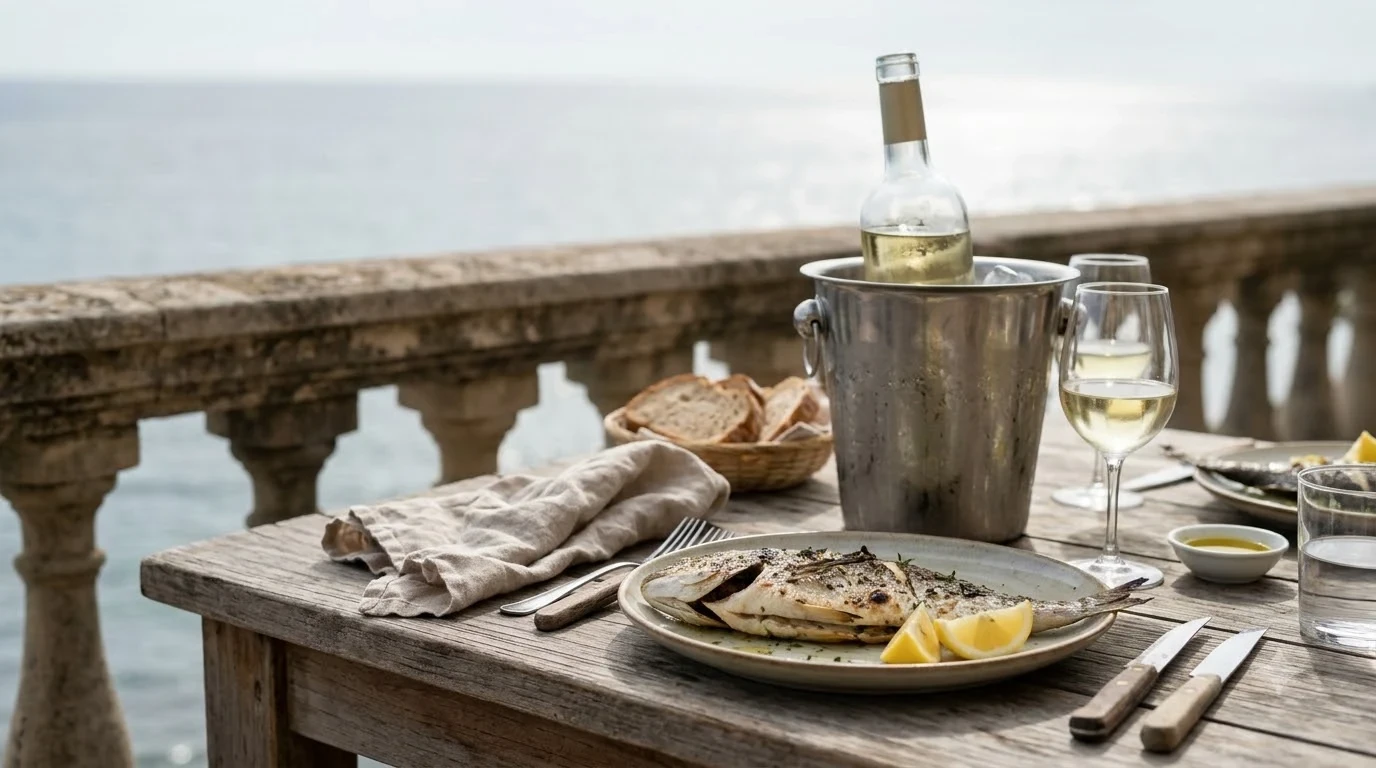
The Cassis Wine Region is a small coastal appellation in Provence, France, best known for dry white wines made chiefly from Marsanne and Clairette. Its vineyards occupy limestone terraces near the Mediterranean port of Cassis, about 20 kilometers east of Marseille. Sea breezes, a sheltered amphitheater of hills, and a long local winegrowing history help give the wines a distinctive combination of freshness, texture, and saline character.
Cassis is an unusual stop on the Provençal wine map: while much of the region is associated with rosé, this compact appellation is led by white wine. Understanding its boundaries, grapes, and coastal setting makes it easier to recognize what belongs in the glass and why local seafood is such a natural partner.
Where Cassis Sits and What the Appellation Covers
Cassis is a seaside town in the Bouches-du-Rhône department, on the Mediterranean coast about 20 kilometers from Marseille. The Cassis AOC is unusually focused: its vineyard area is limited to the commune of Cassis, and its protected wines are still whites, rosés, and reds.
The appellation received official AOC recognition in 1936, placing it among France’s early protected wine names. That date matters because the designation protects more than a label: it ties the wine to a defined place and to rules governing grapes and production. Cassis is not a broad zone that stretches inland across Provence. A bottle bearing the appellation points to grapes grown within this small coastal municipality, where vineyards share space with the town, the port, and the landscape of the Calanques.
The scale is modest. The Cassis Tourism vineyard overview describes about 215 hectares of vines and 10 estates, a small footprint beside the larger wine areas of southern France. The vineyards form a visible band above the village and below the limestone slopes. A geographic study of Cassis describes the vines as having community value beyond grape production: maintaining them helps preserve a visible part of local identity in a place also shaped by tourism and property development. This close relationship between town and vines is part of the appeal: the wine is not an abstract regional style but a product of a clearly defined coastal landscape.
The name also causes a common misunderstanding. Cassis wine is not made from blackcurrants, and it is not the same product as crème de cassis, the dark liqueur associated with Burgundy and kir cocktails. A bottle of AOC Cassis is a grape wine from Provence. For broader context on how French appellations connect wine names with place, see our Wine Regions overview.
The Mediterranean Climate and Limestone Terraces
The vineyards face the Mediterranean in a natural amphitheater of slopes, limestone, and small terraces known locally as restanques. Their setting combines strong sunshine with maritime moderation, helping grapes ripen while retaining freshness.
Cap Canaille rises above the coast, and Cassis Tourism describes the maritime cliff as reaching almost 400 meters. The same local source reports about 3,000 hours of sunshine a year. Those figures help explain the ripe, sunlit side of the wines, but sunshine is only part of the picture: sea air moves through the rows and moderates the heat, while the surrounding pine-covered hills soften the force of the Mistral wind.
Soils on the slopes are largely limestone and clay-limestone, with vines often planted on terraces that follow the shape of the land. Stone walls help hold the terraces in place and reflect generations of work in a narrow, rugged setting. In a small area where sea, hillside, and village sit close together, the aspect of an individual parcel can influence how quickly its grapes ripen and how much afternoon exposure it receives.
Local vineyard management reflects the value of that landscape. Cassis Tourism reports that 85% of the vines are organic or in conversion, and says grapes are hand-harvested before being carried in small containers. The work is practical as well as traditional: hand picking allows crews to select bunches in steep or irregular rows, while small containers reduce crushing before the fruit reaches the winery. The Calanques setting gives vineyard preservation added importance, since the vines sit within a nationally protected landscape.
Marsanne, Clairette, and the White-Wine Blend
White wine is the defining style of Cassis, accounting for about 70% of production according to France’s INAO. Most bottles are blends led by Marsanne and Clairette, with several other white grapes permitted to contribute aroma, freshness, or balance.
INAO lists Bourboulenc, Pascal, Sauvignon Blanc, Terret Blanc, and Ugni Blanc among the authorized accessory varieties for white wines. They do not all appear in every blend. Their presence gives producers room to shape the wine around the vintage and the character of each parcel, while Marsanne and Clairette remain the central reference points for the appellation. Marsanne is often associated with body and a rounded texture; Clairette can help keep the blend lively and lifted.
The blending rules have also been adjusted. The current European Union specification allows Marsanne to make up 20% to 80% of a white blend, lowering the previous minimum from 30% while keeping the upper limit. This is a rule about the composition of the wine, not a promise that every bottle will taste alike. Producers can work within that range and still create different balances of weight, perfume, and freshness.
| Wine color | Approximate share of AOC production | Principal grapes |
|---|---|---|
| White | 70% | Marsanne, Clairette |
| Rosé | 28% | Cinsaut, Grenache, Mourvèdre |
| Red | 2% | Cinsaut, Grenache, Mourvèdre |
The production proportions above are rounded figures published by INAO. They are useful as a picture of the appellation’s identity: roughly seven bottles in ten are white, while rosé makes up most of the balance and red wine remains rare. The appellation’s maximum yield is 45 hectoliters per hectare, a production limit that helps keep the focus on a small, defined vineyard area rather than high-volume output. In the glass, the legal description of Cassis whites emphasizes dry, round wines with subtle floral, fruity, and balsamic aromas. The sea’s proximity is associated with an iodine-like impression and a lively, almost salty finish. Citrus peel, white flowers, fennel, and gentle Mediterranean herb notes are useful tasting references, although the exact mix varies with the blend, site, vintage, and cellar choices.
Rosé and Red Wines in a White-Led Appellation
Cassis also produces dry rosé and red wine, but these styles are much less common than its whites. Rosé represents about 28% of production and red about 2%, according to INAO, so a visitor is far more likely to encounter a white-led range than a broad selection of reds.
Cinsaut, Grenache, and Mourvèdre are the principal red grapes for both rosé and red wines. The appellation also permits supporting varieties, including Barbaroux and Carignan for some styles, and a limited group of white grapes in rosé blends. That range of grapes connects Cassis to the wider Provençal tradition, but the local wines remain defined by their own coastal setting and the proportions permitted by the appellation.
Cassis rosé generally suits drinkers looking for a dry, food-friendly wine rather than a sweet, fruit-forward style. Red Cassis is a small specialty: INAO describes these wines as coming from old vines, with tannic structure and notes reminiscent of forest floor. That description suggests a more substantial partner for food than the pale, brisk rosés for which Provence is better known. It also helps explain why the red category remains a small part of local production rather than the appellation’s calling card.
When comparing the three colors, keep their proportions in mind. A white-focused estate may devote most of its attention to Marsanne and Clairette, while a rosé or red bottling offers a different view of the same village and coastal climate. The most representative first bottle is usually a white, but tasting a rosé alongside it is a useful way to see how local red grapes respond to the same maritime conditions.
How to Taste, Serve, and Store a Bottle
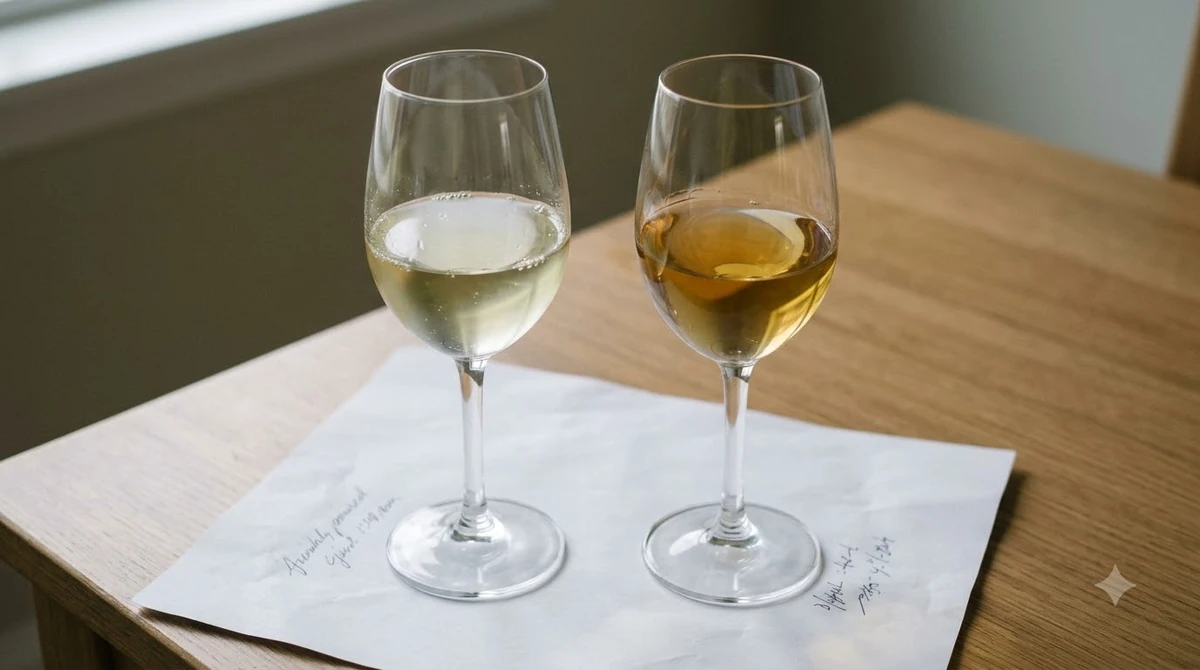
Start a Cassis white cool but not icy, so its citrus and floral notes remain clear while its rounded texture can show. A serving range of 48 to 52°F is a useful starting point; a broader, richer bottling can open up closer to 50 to 55°F.
Too much chill can mute the aromas that make the wine interesting, especially its white-flower, balsamic, and herbal notes. Take the bottle out of a very cold refrigerator for a short period before pouring, then let the wine warm slightly in the glass. A small tulip-shaped white-wine glass works well because it directs the aromas upward without making the wine feel heavy. Rosé is best served a little colder, around 45 to 50°F, while a red Cassis is more expressive around 60 to 65°F. Those temperatures are serving guides, not tests that a bottle must pass. If a red feels tight at first, give it time in the glass; if a white seems subdued, allow a few degrees of warming before deciding that it lacks aroma.
Tip: Pour a modest 5-ounce glass of Cassis white with the first course, then revisit it after it has warmed slightly. Its saline and herbal notes can become easier to identify as the chill fades.
A standard 750-milliliter bottle gives about five 5-ounce pours. Store unopened bottles on their sides in a cool, dark place near 55°F, away from sharp temperature swings. After opening, keep still wine in the refrigerator and aim to finish it within three to five days; reseal it promptly to slow oxidation. Cassis whites are usually best enjoyed young, although local tourism guidance notes that they gain roundness with age; Decanter describes an older Clos Sainte Magdeleine vintage developing honeyed and saffron-like notes over time. For a useful contrast in climate and wine style, compare Cassis with the cooler alpine whites of the Savoie wine region. Both can work at the table, but Cassis tends to offer a rounder Mediterranean profile, while Savoie is a different expression of mountain vineyards and freshness.
Food Pairings for Seafood and Provençal Cooking
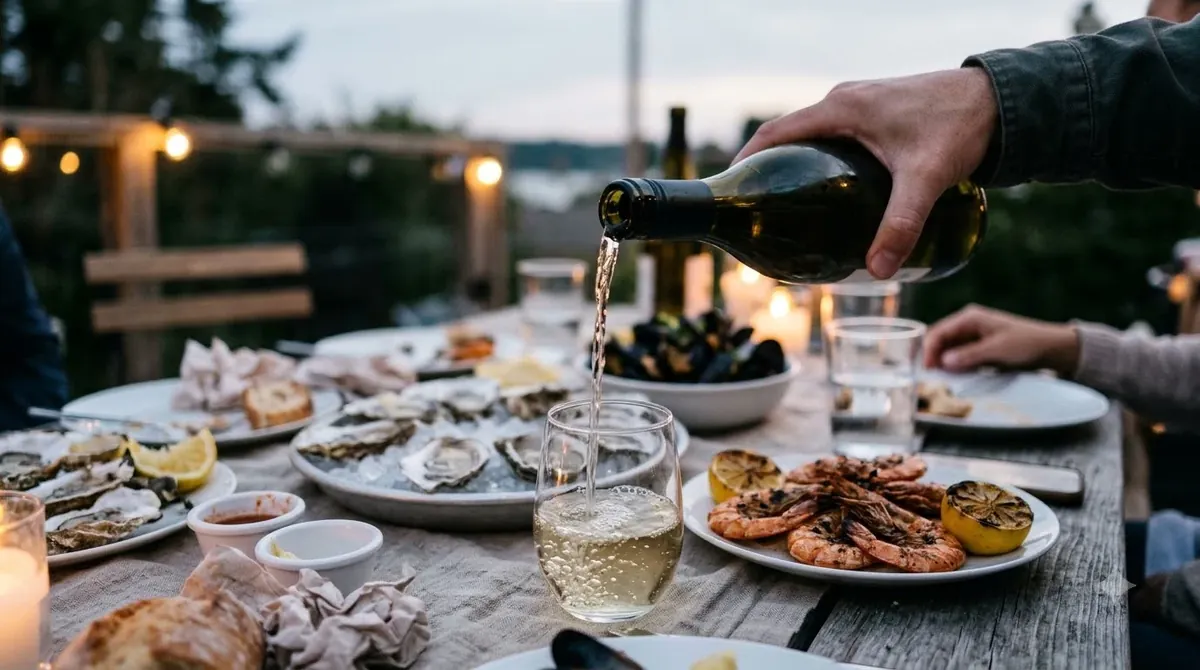
Cassis white is especially well suited to seafood because its dry, lively profile can meet the natural salinity of shellfish, fish, and coastal dishes. The local pairing reference is bouillabaisse, but the wine also works with grilled fish, mussels, prawns, and a simple plate of oysters.
Try a Marsanne-Clairette blend with bouillabaisse or fish soup, where the broth’s depth and saffron, garlic, and fennel notes need a wine with enough texture to stand alongside them. Grilled sea bass, red mullet, or John Dory with lemon and olive oil make a simpler match. The wine’s freshness can cut through olive oil and aioli, while its rounded middle gives it enough presence for richer seafood preparations.
For shellfish, avoid serving the wine so cold that its aromas disappear. Oysters, clams, and shrimp bring their own salt and sweetness, so a dry white with a fresh finish can complement them without adding sugar. If the dish includes lemon, tomato, or a sharp vinaigrette, keep the food’s acidity in mind: an acidic dish needs a wine with equal or greater acidity to avoid making the wine seem flat. Rosé is a flexible partner for tomato salads, grilled vegetables, herbed chicken, and the olive-rich flavors of southern French cooking. A red Cassis is better kept for dishes with more savory depth, such as roast lamb, grilled sausages, or mushroom preparations. Its tannin can work with protein and savory flavors, but a tannic red is less suitable for delicate oily fish, where the wine can make the fish taste metallic or harsh. For an easy menu, pour white Cassis with seafood to start, serve rosé with grilled vegetables or chicken, and reserve a red bottle for a later meat course. The sequence follows the local production mix and gives each style a dish that suits its weight. It also shows why the appellation’s white wines are more than an aperitif: they have the structure and savory character to stay at the table.
Frequently Asked Questions
These answers cover the name, history, and background details that often come up when people first encounter wine from Cassis.
Is Cassis wine made from blackcurrants?
No. AOC Cassis is a grape wine from the French commune of Cassis, while crème de cassis is a separate blackcurrant liqueur. The similar names refer to different products and different raw ingredients.
Did Cassis historically make sweet wine?
Yes. Decanter’s account of the appellation reports that Muscat-based sweet wines were important in Cassis before phylloxera devastated the vineyards. After replanting in the 20th century, growers continued to favor white grapes but shifted the local identity toward dry wine.
Did the Greeks and Romans make wine in Cassis?
Cassis Tourism says vines were cultivated here in ancient times, with both Greek settlers and Romans making wine on terraces still used by growers today. That long history predates the modern AOC system by many centuries.
Which historic family helped shape Cassis wine?
The Albizzi family, originally from Florence, moved to Cassis in the early 16th century. Historical material summarized in the European product specification links the family with the introduction and wider planting of Muscat varieties in the area.
Was Cassis the first coastal vineyard in France to receive AOC status?
Cassis Tourism describes it as the first coastal vineyard in France to be classified as an AOC. Its protected appellation status dates to 1936, making it one of the early examples of France’s place-based wine protections.
The best introduction to Cassis is a dry white built around Marsanne and Clairette, served cool beside seafood or another savory Mediterranean dish. Once its limestone coast, small vineyard area, and saline character are clear, the appellation becomes easier to recognize among the many wine styles of Provence.
More in Wine Regions
 Willcox Wine Trail: Discover Arizona’s High-Elevation Wine CountryUpdated Nov 20, 2026
 Yakima Valley Wine Region: Find the Best Styles to TryUpdated Nov 20, 2026
 Vosne Romanee Wine Tasting: Identify Aromas and Choose Better PairingsUpdated Nov 20, 2026
 Yakima Valley Wine Festival: Find the Best Seasonal Wine EventsUpdated Nov 20, 2026
 Wales Vineyards: Discover Cool-Climate Wines and Where to VisitUpdated Nov 20, 2026
 Yountville Wine Festival: Discover Napa Wines and Local FoodUpdated Nov 20, 2026